
Masking pain with medication or a single injection can feel like progress, but for many people living with chronic pain in North Dallas, relief that fades within weeks is not the same as healing. Research increasingly confirms that chronic pain is sustained by mechanisms far more complex than a damaged disc or an inflamed joint, and that lasting improvement requires addressing those underlying drivers rather than quieting signals at the surface. This article explains what root cause treatment actually means, what the evidence says about it, and how you can apply this framework to your own care decisions.
Table of Contents
- What keeps chronic pain alive? The science behind root causes
- Root cause vs symptom relief: Evidence from major guidelines
- Lasting improvement: What evidence-based root cause treatment looks like
- What to expect on your journey: Steps and pitfalls in treating the root cause
- Conventional wisdom versus root cause: What actually works in pain care
- Take the next step toward lasting pain relief
- Frequently asked questions
Key Takeaways
| Point | Details |
|---|---|
| Root cause matters | Treating underlying pain drivers leads to longer-lasting relief than symptom management alone. |
| Evidence favors non-surgical care | Major guidelines recommend conservative, mechanism-based therapies for most chronic pain. |
| Central sensitization is common | Many chronic pain sufferers have altered nervous system processing, which requires specialized interventions. |
| Multi-modal therapy works best | Combining exercise, CBT, and physical therapy can sustain improvements and reduce pain interference. |
| Avoid quick fixes | Procedures that only suppress symptoms rarely solve the problem for chronic pain. |
What keeps chronic pain alive? The science behind root causes
Let’s build a clear foundation for why so many chronic pain cases persist, even when structural healing occurs.
Most people assume that pain equals tissue damage. If the MRI shows a bulging disc, that must be the source of the suffering. But the relationship between structural findings and pain experience is far less straightforward than that assumption suggests. Many individuals with significant disc degeneration on imaging report no pain at all, while others with minimal structural changes experience debilitating, daily discomfort.
The explanation lies partly in a process called central sensitization, a condition in which the central nervous system becomes amplified in its response to stimuli. In this state, the brain and spinal cord process pain signals with heightened sensitivity, meaning that inputs that would normally be harmless can register as painful. Central sensitization in chronic pain means that peripheral symptom suppression alone, such as blocking a pain signal with an injection, may not fully address the actual drivers of that pain.
Understanding CRPS and chronic pain mechanisms illustrates just how far pain can travel from its original structural source. Complex regional pain syndrome, for example, can produce intense, widespread pain long after the initial injury has resolved, because the nervous system itself has changed.
Several key mechanisms sustain chronic pain beyond the initial injury:
- Nervous system sensitization: The brain and spinal cord become more reactive, lowering the threshold for pain signals.
- Movement avoidance: Fear of pain leads to reduced activity, which weakens supporting muscles and perpetuates the cycle.
- Biopsychosocial factors: Stress, anxiety, depression, sleep disruption, and social isolation all amplify pain perception and slow recovery.
- Biomechanical drivers: Poor movement patterns, muscle imbalances, and joint loading issues can continuously irritate tissues.
- Inflammation: Persistent low-grade inflammation, particularly in conditions like osteoarthritis, can keep the nervous system in a heightened state.
“If pain does not match structural findings or is disproportionate to observable injury, clinicians may consider central mechanisms.” This perspective, grounded in biopsychosocial and multimodal thinking, is now central to how leading pain researchers understand chronic conditions.
The clinical implication is significant. Treating only symptoms in chronic pain is less likely to produce lasting improvement than targeting the mechanisms that actually sustain the pain. That distinction shapes everything about how care should be designed and delivered.
Root cause vs symptom relief: Evidence from major guidelines
Given these complex pain drivers, comparing root-cause and symptom-centric strategies reveals what actually works.
Major clinical guidelines have shifted considerably in recent years, moving away from a procedure-first approach and toward therapies that address the functional and psychological mechanisms behind chronic pain. This shift is not ideological. It is driven by evidence that symptom-focused interventions, while sometimes appropriate, frequently deliver temporary results that do not hold up over time.
For low back pain specifically, nonpharmacologic, function-focused care is prioritized by evidence-based guidance, including exercise and physical therapy, cognitive behavioral therapy (CBT), and mindfulness-based approaches. These options tend to have lower risk profiles and, when applied correctly, produce functional improvements that patients can sustain.
A particularly striking finding comes from a high-level synthesis of interventional procedures for chronic spine pain. When chronic spine pain is not linked to cancer or inflammatory spondyloarthropathy, many common interventional procedures provide little to no benefit compared with sham, reinforcing the need for mechanism-based, patient-centered conservative strategies. This does not mean procedures are never appropriate. It means they should be selected carefully and paired with therapies that address root causes.
Here is a side-by-side comparison of the two approaches:
| Feature | Root-cause treatment | Symptom-focused treatment |
|---|---|---|
| Primary goal | Restore function, address pain drivers | Reduce pain signals in the short term |
| Examples | Exercise therapy, CBT, physical therapy, PRP | Opioids, steroid injections, nerve blocks |
| Duration of benefit | Often sustained, especially with multimodal care | Frequently temporary; may require repeated treatment |
| Evidence base | Strong for function-focused, nonpharmacologic care | Mixed; many procedures show limited vs. sham benefit |
| Risk profile | Generally lower | Higher with long-term medication or repeated procedures |
| Patient role | Active participant in recovery | Often passive recipient of treatment |
The numbered steps that evidence-based guidelines recommend for chronic pain care follow a logical sequence:
- Accurate diagnosis that accounts for both structural and non-structural drivers
- Education about pain science and the role of sensitization
- Graded exercise and movement restoration
- Psychological support through CBT or mindfulness where indicated
- Targeted interventions, such as facet joint injection evidence, used selectively and in combination with conservative care
- Ongoing monitoring of functional outcomes, not just pain scores
For a detailed breakdown of what this looks like in practice, reviewing best treatments for lower back pain and non-surgical pain treatment options can help you understand how these principles translate to real clinical decisions.
Lasting improvement: What evidence-based root cause treatment looks like
Moving from theory to real-world care, evidence-based strategies make a measurable difference.
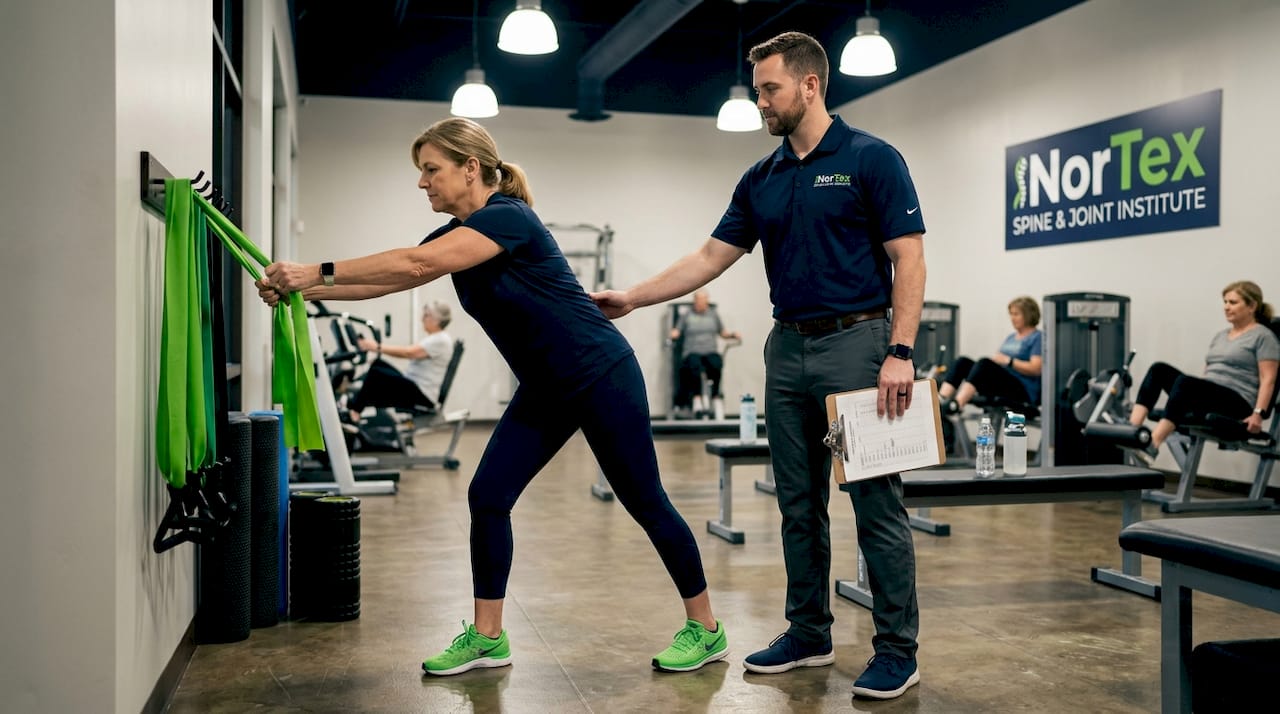
Root cause treatment is not a single therapy. It is a coordinated approach that addresses the multiple mechanisms sustaining your pain. For most patients with chronic musculoskeletal pain, this means combining physical rehabilitation with education, psychological support, and, where appropriate, regenerative or minimally invasive procedures.
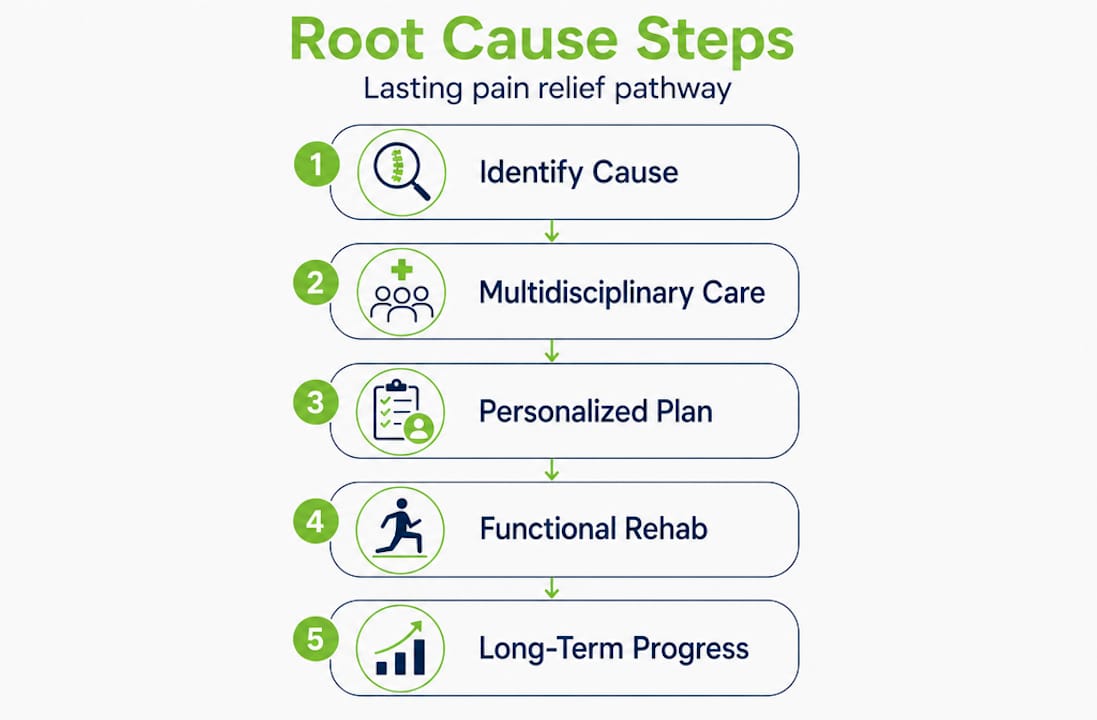
Multidisciplinary, pain-focused CBT can produce pain and health improvements that are maintained for years in many patients, which strongly supports the idea that treating the mechanisms maintaining pain, beyond tissue injury alone, produces durable outcomes. This is a meaningful distinction from the temporary relief that many patients experience with symptom-only approaches.
Pro Tip: When evaluating a clinic or provider, ask whether they assess your pain from multiple angles, including movement quality, psychological factors, and lifestyle drivers. A provider who only asks where it hurts and reaches for a prescription pad is likely not working from a root-cause framework.
Evidence-based, non-surgical therapies that address root causes include:
- Graded exercise therapy: Progressively rebuilds movement capacity and reduces fear-avoidance behavior, which is one of the strongest predictors of chronic pain persistence.
- Physical therapy with movement retraining: Corrects biomechanical patterns that continuously load and irritate painful structures. Learn more about physical therapy evidence and how it applies to back pain specifically.
- Cognitive behavioral therapy (CBT): Addresses catastrophizing, fear of movement, and the psychological amplification of pain signals.
- Yoga and mindfulness: Builds body awareness, reduces stress-related pain amplification, and improves function. Yoga for pain management has a growing evidence base for chronic low back pain.
- Platelet-rich plasma (PRP) therapy: Targets tissue-level healing by delivering concentrated growth factors to damaged structures, supporting repair rather than just blocking pain.
- Regenerative medicine approaches: Including stem cell therapy, which aims to address degenerative changes at a cellular level rather than masking their effects.
The following table summarizes the evidence quality for several root-cause therapies commonly used in chronic musculoskeletal pain:
| Therapy | Primary mechanism addressed | Evidence quality | Typical outcome |
|---|---|---|---|
| Graded exercise | Movement avoidance, deconditioning | High | Improved function, reduced disability |
| CBT | Psychological amplification, catastrophizing | High | Sustained pain and quality-of-life gains |
| Physical therapy | Biomechanical drivers | Moderate to high | Improved movement, reduced recurrence |
| PRP therapy | Tissue degeneration and repair | Moderate | Reduced pain, improved joint function |
| Yoga and mindfulness | Sensitization, stress response | Moderate | Improved pain tolerance and function |
For patients in North Dallas curious about how these approaches have worked for others, reviewing real-world case studies from a clinical setting provides a grounded perspective on outcomes.
What to expect on your journey: Steps and pitfalls in treating the root cause
As you explore care for your pain, understanding the steps and avoiding common mistakes is crucial.
Pursuing root-cause care is not always straightforward. Many patients arrive at a specialist’s office after months or years of symptom-focused treatment that has not delivered lasting results. Knowing what to expect and what to watch out for can save you significant time, money, and frustration.
Evidence-supported approaches aim to restore what chronic pain erodes: movement capacity, confidence and safety with activity, and pain modulation, rather than only dampening pain signals. This framework gives you a practical lens for evaluating whether a proposed treatment plan is actually targeting your root cause.
Here is a step-by-step guide to pursuing root-cause-focused care:
- Request a thorough evaluation. A good root-cause assessment goes beyond imaging. It includes movement analysis, pain history, functional limitations, and a conversation about psychological and lifestyle factors.
- Ask about the diagnosis behind the diagnosis. If a provider tells you that you have a herniated disc, ask what is sustaining your pain and what mechanisms they plan to address.
- Establish functional goals, not just pain reduction goals. Returning to hiking, playing with your children, or sleeping through the night are meaningful outcomes. Pain scores alone do not capture recovery.
- Commit to active participation. Root-cause care requires your engagement. Exercise programs, home practice, and behavioral changes are part of the treatment, not optional extras.
- Monitor progress over weeks and months, not just days. Sustainable improvement in chronic pain typically unfolds over a longer timeline than symptom suppression.
- Reassess regularly. If a therapy is not producing functional improvement after a reasonable trial period, work with your provider to adjust the approach.
Common pitfalls to avoid include focusing exclusively on pain scores as the measure of success, skipping movement and exercise because it feels uncomfortable in the short term, and accepting a treatment plan that does not address biopsychosocial drivers alongside physical ones.
Pro Tip: Ask any provider you consider, “How do you measure long-term progress, and what does success look like beyond pain reduction?” Their answer will tell you a great deal about whether they practice root-cause care or symptom management.
For guidance on choosing between specific therapies, comparing physical therapy vs chiropractic can clarify which approach fits your specific condition and goals. Additionally, understanding what home remedies for back pain actually have evidence behind them can help you support your clinical care between appointments.
Conventional wisdom versus root cause: What actually works in pain care
There is a persistent gap between what the evidence supports and what most patients actually receive for chronic pain. That gap is not primarily the result of bad intentions. It reflects how deeply symptom suppression is embedded in both public expectations and clinical habits.
Patients often arrive expecting an injection or a prescription because that is what they have received before. Providers, facing time constraints and patient pressure, sometimes default to familiar interventional options. The problem is that many interventional options for chronic non-cancer spine pain have little to no benefit compared with sham, according to a high-level BMJ synthesis. Evidence-aligned care must be cautious and mechanism-based when selecting interventions.
What we observe in practice is that the patients who achieve the most meaningful, sustained improvement are those who engage with their pain as a system problem rather than a single-site structural problem. They address movement, mindset, lifestyle, and tissue health together. They ask harder questions of their providers. And they accept that recovery from chronic pain is a process, not an event.
The most successful outcomes we see, as reflected in real-world case studies, involve patients who moved past the idea that a single procedure would fix everything and committed instead to a coordinated, root-cause-focused plan. That shift in perspective is often the turning point.
Symptom suppression has its place. Pain relief can create the window needed to begin rehabilitation. But it is the rehabilitation, the movement restoration, the psychological recalibration, and the tissue-level healing that produce lasting change. Treating the root cause is not a rejection of modern medicine. It is the most sophisticated application of it.
Take the next step toward lasting pain relief
With the facts and perspective in mind, getting started on your own root-cause journey is easier than you might think. At Nortex Spine and Joint, our approach begins with a thorough evaluation that looks beyond imaging to identify the mechanisms sustaining your pain. From there, we build personalized plans that may include regenerative options such as PRP for back pain and personalized PRP therapy, as well as stem cell pain management for patients with degenerative conditions. These therapies are integrated with rehabilitation and education so that every element of your care targets a real driver of your pain. If you are ready to move beyond temporary relief and toward lasting improvement, contact Nortex Spine and Joint to schedule your consultation.
Frequently asked questions
What types of pain are best addressed by treating the root cause?
Chronic pain conditions such as low back pain, osteoarthritis, and nerve-related pain respond best to root-cause-focused therapies, because lasting improvement requires targeting the mechanisms that sustain pain rather than only suppressing symptoms.
How do experts identify the root cause of my pain?
Clinicians use a combination of detailed history, movement assessment, biopsychosocial evaluation, and sometimes advanced imaging or diagnostic tests to pinpoint the specific drivers of your pain rather than relying on structural findings alone.
Is non-surgical treatment effective for chronic spine pain?
Yes, evidence strongly supports nonpharmacologic, mechanism-based options as first-line care, because nonpharmacologic, function-focused care is prioritized for chronic low back pain by major clinical guidelines.
Can changing my daily movement or mindset really help my pain?
Yes, therapies like exercise, yoga, and CBT can yield sustained improvements by targeting root causes, and multidisciplinary CBT leads to maintained improvements in pain and health outcomes for many patients over the long term.
Why do some pain procedures fail to deliver lasting results?
Because many common interventions do not address the underlying mechanisms sustaining pain, and evidence shows that many interventional procedures provide little to no benefit compared with sham for chronic non-cancer spine pain.
Recommended
- Can Physical Therapy Help Back Pain? Evidence-Based Relief Options Explained – Nortex | Pain Management | Allen, Garland, McKinney & Plano Texas
- Physical Therapy vs Chiropractic: Which Is Better for Pain Relief? – Nortex | Pain Management | Allen, Garland, McKinney & Plano Texas
- Home Remedies for Lower Back Pain: What Really Works? – Nortex | Pain Management | Allen, Garland, McKinney & Plano Texas
- Best Treatments for Lower Back Pain: What Your Doctor Might Recommend – Nortex | Pain Management | Allen, Garland, McKinney & Plano Texas