
Spine pain, clinically referred to as spinal pain or vertebral pain syndrome, is one of the most common musculoskeletal complaints in the United States, and knowing how to address spine pain effectively can determine whether you recover in weeks or struggle for months. About 80% of Americans experience back pain at some point in their lives, and the majority of those cases resolve without surgery. The good news is that a structured, nonsurgical approach combining physical therapy, targeted exercise, heat and cold therapy, and mindfulness can control symptoms, restore function, and prevent recurrence. Understanding the type and phase of your pain is the first step toward choosing the right treatment.
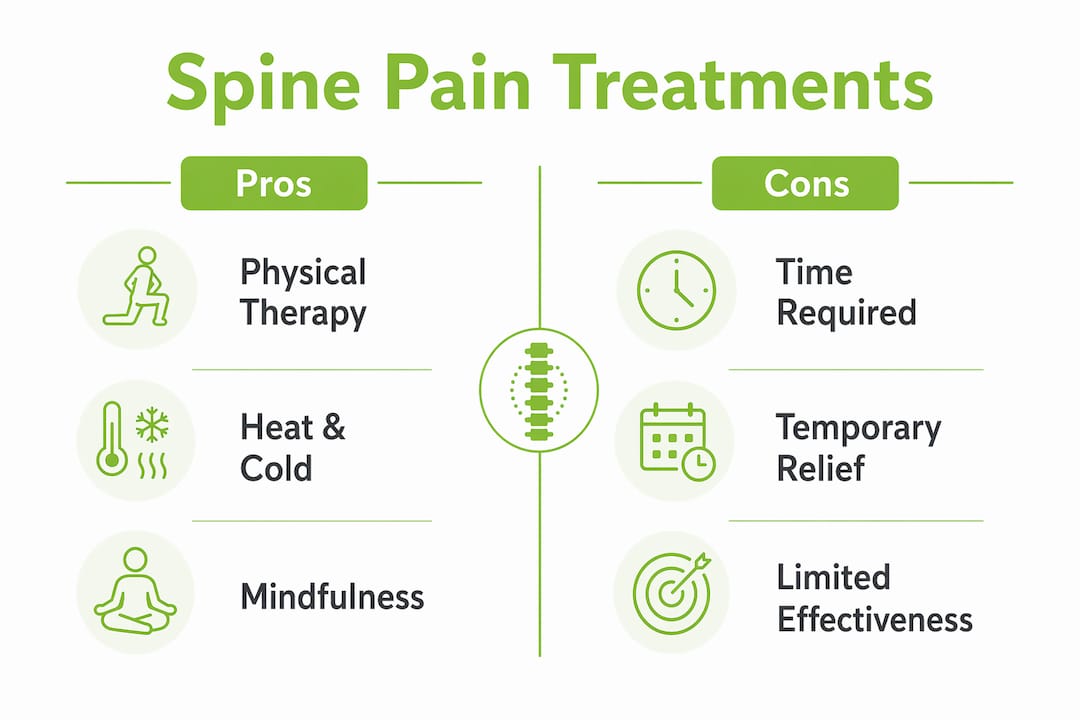
What are the most effective nonsurgical treatments for spine pain?
Physical therapy is the foundation of spinal pain treatment. A custom physical therapy program that includes stretching, strengthening, and posture training reduces pain and improves mobility more reliably than rest alone. Many patients who come into Nortexspineandjoint have already tried over-the-counter medications without lasting results. What they often haven’t tried is a structured, clinician-guided exercise plan.

Heat and cold therapy: timing matters
Cold and heat serve different purposes at different stages of injury. Ice for 15–20 minutes every few hours during the first 48 hours after injury reduces inflammation and blunts sharp pain. After that window closes, heat becomes the better choice because it relaxes muscle tension and improves blood flow to stiff tissue. Using heat too early can increase swelling; using ice too late can slow the healing process.
Mindfulness, CBT, and the psychology of pain
Chronic spine pain is not purely mechanical. Mindfulness programs and cognitive-behavioral therapy (CBT) reduce pain-related stress and interrupt the amplification cycle that makes chronic pain feel worse over time. This does not mean the pain is imaginary. It means the nervous system learns to amplify pain signals, and targeted psychological tools can retrain that response. Programs like Mindfulness-Based Stress Reduction (MBSR) have demonstrated measurable reductions in pain intensity and emotional burden.
Pharmacologic options and injection therapies
NSAIDs such as ibuprofen and naproxen remain the first-line pharmacologic option for acute spinal pain. Muscle relaxants are useful short-term but carry sedation risks and are not appropriate for long-term use. Advanced drug delivery methods, including epidural steroid injections and nerve blocks, are reserved for cases that do not respond to conservative care. They bypass systemic circulation for more targeted pain control, but they are second-line tools, not starting points.
Pro Tip: If you are considering an injection, ask your clinician whether it is diagnostic (to identify the pain source) or therapeutic (to reduce inflammation). The answer changes how you interpret the outcome.
Treatment comparison: pros and cons at a glance
| Treatment | Pros | Cons |
|---|---|---|
| Physical therapy | Addresses root cause, improves function | Requires time and consistency |
| Heat and cold therapy | Low cost, immediate symptom relief | Temporary effect only |
| NSAIDs | Fast acting, widely available | GI side effects with prolonged use |
| Mindfulness and CBT | Reduces chronic pain amplification | Requires trained provider, takes weeks |
| Epidural steroid injections | Targeted relief for nerve-related pain | Second-line only, not curative |
| PRP therapy | Regenerative, low systemic side effects | Variable insurance coverage |
How should you manage spine pain recovery and avoid common mistakes?
Active recovery starts sooner than most people expect. Prolonged bed rest beyond 48 hours increases stiffness and delays healing. The standard clinical recommendation is to begin gentle movement as soon as acute pain allows. Many patients resist this because they fear movement will cause further damage. That fear is understandable, but inactivity consistently produces worse outcomes than cautious, progressive activity.
How to start moving safely after a spine injury
Follow this sequence to reintroduce movement without aggravating your injury:
- Hours 0–48: Rest in a supported position. Apply ice for 15–20 minutes every 2–3 hours. Avoid lifting, twisting, or prolonged sitting.
- Day 2–4: Begin short, slow walks of 5–10 minutes. Gentle knee-to-chest stretches while lying flat are appropriate for most patients.
- Day 4–7: Add cat-cow stretches, pelvic tilts, and supported bridges if pain is decreasing. Stop any movement that causes sharp or radiating pain.
- Week 2 onward: Transition to a structured physical therapy program. Introduce core stabilization exercises under clinician guidance.
- Week 4 and beyond: Progress to low-impact aerobic activity such as walking, swimming, or cycling to maintain spinal health and prevent recurrence.
Distinguishing good pain from bad pain
Differentiating productive stretch-related discomfort from harmful pain is one of the most clinically important skills in recovery. Mild muscle soreness or a pulling sensation during a stretch is expected and acceptable. Sharp, stabbing, or radiating pain that travels down your leg or arm is a signal to stop immediately. Radiating pain may indicate nerve involvement, which requires clinical evaluation before you continue exercising.
“The goal of early movement is not to push through pain. It is to prevent the stiffness and deconditioning that make recovery harder and longer.”
Pro Tip: Switch from ice to heat at the 48-hour mark after injury. Set a phone reminder on the day of injury so you don’t miss the transition window.
Sleep position also affects recovery. Sleeping on your side with a pillow between your knees reduces rotational stress on the lumbar spine. Sleeping on your back with a pillow under your knees keeps the spine in a neutral position. Stomach sleeping is the least supported position for spinal pain and is best avoided during recovery.
What long-term spine pain management strategies support sustained relief?
Sustained relief from spinal pain requires more than treating flare-ups. It requires building a lifestyle that reduces the conditions that cause pain to return. Chronic spine pain is a complex condition that responds best to personalized, multidisciplinary care rather than any single intervention.
Exercise as a long-term prescription
A 2025 meta-analysis confirmed that Tai Chi, yoga, Pilates, core training, and walking all reduce chronic spine pain, with the best outcomes depending on individual patient context. Core strengthening is particularly important because the deep stabilizing muscles of the lumbar spine, including the multifidus and transversus abdominis, directly support spinal alignment and reduce mechanical load on discs and joints. Yoga and Pilates build both flexibility and core control, making them well-suited for long-term maintenance.
Weight, nutrition, and inflammation control
Diet and weight management do not correct structural spinal problems, but they do reduce the inflammatory load and mechanical stress that drive pain recurrence. Excess body weight increases compressive force on lumbar discs and facet joints. An anti-inflammatory diet rich in omega-3 fatty acids, leafy greens, and whole grains supports tissue health and reduces systemic inflammation. This is not a cure, but it is a meaningful modifier.
Daily habits that protect spine health
- Stand and move for at least 2 minutes every 30–45 minutes if you work at a desk.
- Position your monitor at eye level to prevent forward head posture.
- Use a lumbar support cushion in chairs that lack built-in back support.
- Lift objects by bending at the knees, not the waist, and keep the load close to your body.
- Practice diaphragmatic breathing to reduce thoracic tension and activate deep core muscles.
- Limit high-impact activities during flare-ups and replace them with swimming or cycling.
Pro Tip: A standing desk alone does not prevent spine pain. Alternating between sitting and standing every 30–45 minutes is what produces the benefit. Static standing for hours creates its own strain.
Stress management belongs in this list too. Chronic psychological stress increases cortisol, which promotes systemic inflammation and lowers pain tolerance. CBT and mindfulness, discussed earlier as acute treatments, are equally valuable as long-term maintenance tools. Patients who integrate stress management into their routine report fewer pain flare-ups and better quality of life over time.
How do advanced nonsurgical treatments fit into spine pain care?
Advanced nonsurgical therapies are not replacements for physical therapy and lifestyle management. They are adjuncts, used when conservative care has been given a fair trial and has not produced sufficient relief. Nortexspineandjoint specializes in regenerative medicine approaches that target the biological source of pain rather than masking symptoms.
PRP, stem cell therapy, and EMTT: what the evidence shows
| Treatment | Mechanism | Best Indication | Realistic Expectation |
|---|---|---|---|
| PRP (platelet-rich plasma) | Concentrates growth factors to promote tissue repair | Facet joint pain, disc-related pain | Gradual improvement over 4–12 weeks |
| Stem cell therapy | Introduces regenerative cells to damaged tissue | Degenerative disc disease, joint degeneration | Variable; best in early-to-moderate degeneration |
| EMTT (electromagnetic transduction therapy) | Stimulates cellular repair via electromagnetic fields | Soft tissue and bone healing | Adjunct benefit; typically combined with other care |
| Spinal cord stimulation | Modulates pain signals via implanted device | Refractory chronic spine pain | Significant relief in carefully selected patients |
A randomized trial of 1,000 adults showed that clinician-supported self-management combining physical therapy and chiropractic care produced improved outcomes at 10–12 months compared to traditional medical care alone. This finding supports the model Nortexspineandjoint uses: pairing advanced therapies with structured rehabilitation rather than offering injections or regenerative treatments in isolation.
PRP therapy draws a small sample of your own blood, concentrates the platelets, and injects the resulting plasma into the affected spinal structure. Because it uses your own biological material, systemic side effects are minimal. Stem cell therapy follows a similar autologous approach, using cells derived from your own bone marrow or adipose tissue. Neither treatment is a guaranteed cure, and both require realistic expectations about timelines. You can learn more about advanced chronic back pain treatments to understand how these options compare in clinical practice.
Key takeaways
Effective spinal pain management combines early active recovery, structured physical therapy, and long-term lifestyle changes, with advanced therapies reserved for cases where conservative care is insufficient.
| Point | Details |
|---|---|
| Start with conservative care | Physical therapy, heat and cold therapy, and NSAIDs address most acute spine pain effectively. |
| Move early, move carefully | Active recovery within 48 hours produces better outcomes than prolonged bed rest. |
| Know your pain signals | Sharp or radiating pain during exercise requires immediate rest and clinical evaluation. |
| Build long-term habits | Core strengthening, weight management, and stress reduction reduce pain recurrence significantly. |
| Advanced therapies are adjuncts | PRP and stem cell treatments work best alongside rehabilitation, not as standalone solutions. |
What i’ve learned treating spine pain nonsurgically
After years of evaluating patients with spine pain at Nortexspineandjoint, one pattern stands out clearly: the patients who recover best are not the ones who found the most aggressive treatment. They are the ones who committed to the process.
Many patients arrive after months of trying one thing at a time. They tried rest, then medication, then a single injection, then stopped when it didn’t resolve everything. What works is not any single intervention. It is the combination of physical rehabilitation, movement education, and addressing the psychological weight that chronic pain carries.
The misconception I encounter most often is that pain equals damage. A patient who feels pain during a gentle stretch assumes they are making things worse. In most cases, that discomfort is the spine adapting to movement it has been avoiding. Teaching patients to interpret their body’s signals accurately is as therapeutic as any injection or exercise program.
I also want to be direct about advanced therapies: PRP and stem cell treatments are genuinely promising, and the evidence base is growing. But they are not shortcuts. A patient who receives PRP without committing to physical therapy afterward is leaving most of the benefit on the table. The biology of regeneration requires mechanical loading and movement to translate into functional improvement.
If you are managing spine pain right now, the most useful thing you can do today is take one small step toward movement. Not a workout. A walk. A stretch. The spine responds to use, and every day of careful, progressive activity builds toward a better outcome than any day of waiting.
— Felix
Take the next step with Nortexspineandjoint
If conservative methods have not delivered the relief you need, Nortexspineandjoint offers personalized evaluations and advanced nonsurgical care for chronic spine pain in North Dallas. The clinic’s approach begins with identifying the root cause of your pain, not just managing symptoms. For patients whose pain persists despite physical therapy and lifestyle changes, PRP therapy for back pain offers a regenerative option with a strong safety profile and growing clinical support. You can also explore the full range of pain management treatments available at Nortexspineandjoint to find the approach best suited to your condition. Schedule a consultation to discuss your options with Dr. Ghalambor directly.
FAQ
What is the fastest way to relieve spine pain at home?
Apply ice for 15–20 minutes every few hours during the first 48 hours, then switch to heat. Begin gentle movement as soon as acute pain allows, since prolonged rest worsens recovery.
How long does it take for spine pain to resolve without surgery?
Most mechanical spine pain resolves within a few weeks with conservative care. Cases involving nerve compression or degenerative disc disease may take several months and benefit from structured physical therapy or advanced treatment.
When should i consider PRP therapy for spine pain?
PRP therapy is appropriate when conservative treatments including physical therapy, NSAIDs, and lifestyle changes have not produced sufficient relief after a consistent trial. It works best as part of a broader rehabilitation plan, not as a standalone treatment.
Are exercises safe during a spine pain flare-up?
Gentle movement such as walking and supported stretching is generally safe and beneficial during a flare-up. Stop any exercise that produces sharp or radiating pain, as this may indicate nerve involvement requiring clinical assessment.
Does stress make spine pain worse?
Yes. Chronic stress elevates cortisol, promotes systemic inflammation, and lowers pain tolerance. Mindfulness and CBT programs reduce pain amplification and are recognized complements to physical treatment in chronic spine pain management.