
Most Achilles tendonitis is treated without surgery, and the core of that treatment is progressive loading of the tendon, not rest. MedlinePlus states that the main treatments do not involve surgery, and that pain can take at least 2 to 3 months to go away. This guide walks through what that looks like in practice: activity changes, a loading program, footwear, the role of in-clinic therapies, realistic timelines, and the signs that mean you should be seen sooner.
TL;DR
- Non-surgical care is the standard first approach: reduced aggravating activity, a structured tendon-loading program, and sensible footwear changes.
- Complete rest is usually not the goal. Current guidelines favor loading the tendon as hard as you can tolerate, at least 3 times a week, with guidance.
- Plan for months, not weeks. Symptoms commonly take longer than 3 months to settle, even when treatment starts early.
- A sudden pop in the calf or heel needs prompt medical attention, and so does pain that has not improved after about 2 weeks of self-care.
- If a well-run rehab program stalls, a clinician can look at other options, including shockwave therapy, laser, and regenerative evaluation.
Table of Contents
- What Achilles tendonitis feels like and how it is assessed
- Step one: change the load, do not stop moving
- Step two: a tendon-loading program
- Footwear, heel lifts, and braces
- Other non-surgical options a clinician may discuss
- Where PRP and stem cell therapy fit
- A realistic timeline
- When to be seen sooner
- Our perspective
- Talk with us about your heel or tendon pain
- FAQ
- Sources
What Achilles tendonitis feels like and how it is assessed
The Achilles is the thick tendon that connects your calf muscles to the heel bone. When it becomes irritated or overloaded, the pain usually shows up with walking or running, and many people notice stiffness in the tendon first thing in the morning. MedlinePlus lists tenderness, swelling, warmth, difficulty standing on the toes, and discomfort when shoes press on the area.
The American Academy of Orthopaedic Surgeons separates two patterns, and the distinction matters for treatment:
- Noninsertional: pain and thickening in the middle portion of the tendon, a few centimeters above the heel.
- Insertional: pain where the tendon attaches to the heel bone, sometimes with a bone spur.
Assessment is mostly a physical exam. A clinician checks for tenderness along the tendon, pain when you rise onto your toes, pain when stretching the calf, and how far your ankle can point downward. X-rays can show bone problems, and MRI is generally reserved for cases where a tear is possible or surgery is being considered, according to MedlinePlus.
The word “tendonitis” is common in everyday speech, but many clinicians now say “tendinopathy” because the problem is often a overloaded, structurally changed tendon rather than simple inflammation. The practical consequence is the same: the tendon needs a plan that rebuilds its capacity, not just something to calm it down.
Step one: change the load, do not stop moving
Many patients arrive after weeks of resting completely, then flaring up the first time they return to normal activity. That cycle is common, and it happens because rest alone does not make the tendon stronger.
MedlinePlus aftercare guidance gives a practical starting point:
- Stop or reduce the activities that cause pain, such as running or jumping.
- Substitute activities that do not strain the tendon, such as swimming or cycling.
- Choose soft, smooth surfaces for walking or running, and avoid hills.
- Increase activity gradually once symptoms allow.
- See a provider if symptoms have not improved with self-care in 2 weeks.
Hills deserve a specific mention for hikers and runners. A 2024 study in the Scandinavian Journal of Medicine & Science in Sports found that uphill running increased cumulative Achilles tendon damage, while downhill running showed the reverse pattern. The authors suggested that people trying to reduce cumulative tendon damage focus first on reducing running speed, and consider avoiding large volumes of uphill running. If you love trail hiking, that translates to shorter, flatter outings while the tendon recovers, then a gradual return to climbing.
Ice can help with comfort. MedlinePlus suggests 15 to 20 minutes, 2 to 3 times per day. If you are unsure whether ice or heat suits your situation, our guide on ice versus heat explains when each makes sense and when to call a clinician. Over-the-counter anti-inflammatory medicines such as ibuprofen are also listed by MedlinePlus; check with your physician first if you have kidney disease, stomach problems, or take blood thinners.
Step two: a tendon-loading program
This is the part of conservative care with the strongest evidence. The 2024 JOSPT clinical practice guideline recommends tendon-loading exercise as first-line treatment for midportion Achilles tendinopathy, performed at loads as high as tolerated, at least 3 times a week, along with education and counseling. It also states that complete rest is not indicated and that patients should continue activity within their pain tolerance.
A clinical review by Grävare Silbernagel and colleagues describes the same conclusion: exercise rehabilitation carries the highest level of evidence, and the tendon appears to respond better to higher loads over longer durations than to lighter, shorter work. The authors also note that an upper limit probably exists, beyond which load becomes harmful. That is why a program should be progressed deliberately, not by guesswork.
The four phases of rehab
The same review divides rehabilitation for an athlete into four phases:
| Phase | Goal | What it typically involves |
|---|---|---|
| 1. Symptom management and load reduction | Settle irritation | Reduce provoking activity, keep moving within comfort, use cross-training |
| 2. Recovery | Restart tendon loading | Introduce controlled calf strengthening |
| 3. Rebuilding | Increase strength and capacity | Heavier, progressed loading, then more dynamic work |
| 4. Return to sport | Resume running, jumping, or hiking | Graded exposure to your actual activity |
The review notes that complete rest during early phases may not be necessary when rest is adjusted to symptoms. It also describes body-weight-supported treadmill or deep-water running as an effective way to keep running while controlling tendon load.
Why the last phase matters
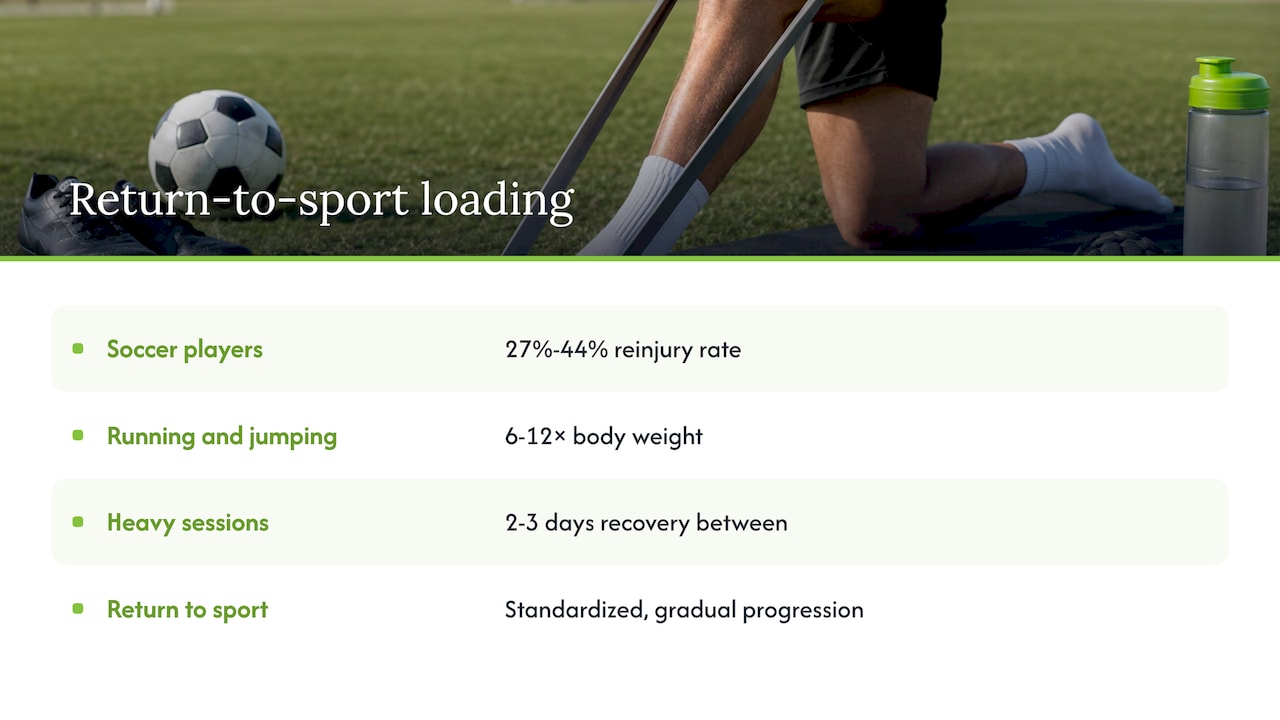
People tend to stop rehab when the pain fades. That is where many setbacks begin. A 2015 JOSPT paper reports reinjury rates of 27% to 44% in soccer players with Achilles tendinopathy, and says reinjury was more common after short recovery periods and in those who had no guidance during return to sport, compared with those who followed a standardized, gradually progressing program. The same paper notes that the tendon can see forces 6 to 12 times body weight during running and jumping, and suggests planning 2 to 3 days of recovery between heavy Achilles-loading sessions.
In plain terms: finish the program, build back in steps, and space out your hardest sessions.
If you are curious about how recovery timelines compare across conditions, our article on how long physical therapy takes gives general ranges, and how often to attend physical therapy covers session frequency. Our broader piece on rehab exercises for joint pain explains how progression works in general. For a related tendon condition, see our evidence-based rehab for patellar tendonitis, which follows the same loading principles.
Some readers also ask about newer biological approaches that are being studied alongside exercise, and a review of peptides and tendon repair evidence is one place to read about that research. In every case, the loading program remains the foundation.
Footwear, heel lifts, and braces
Equipment will not replace rehab, but it can reduce irritation while you work through it. A review of braces and orthotics for Achilles conditions found the following:
- Heel lifts and open-back shoes or Achilles sleeves can reduce rubbing and irritation.
- Orthotics may reduce strain when excessive pronation contributes, although their effectiveness is not well documented.
- A CAM walking boot can help quiet acute noninsertional symptoms, and braces may help control chronic symptoms.
MedlinePlus similarly mentions heel lifts, softer shoes with cushioned heels, and, for more severe cases, a brace, boot or cast. Insertional pain often responds well to shoes that avoid pressure on the back of the heel. If a boot is recommended, it is typically a short-term measure, because prolonged immobilization can leave the calf weaker.
Other non-surgical options a clinician may discuss
When a loading program has been done properly and progress stalls, the next conversation is about adjuncts. A 2026 American Family Physician article describes the nonoperative landscape as a set of options with varying quality of evidence and durability of benefit. These include heel lifts, structured physical therapy, progressive high-load strength training, short-term immobilization when indicated, extracorporeal shockwave therapy, bipolar radiofrequency microtenotomy, selective corticosteroid injection, and pain psychology.
Two cautions belong here. Corticosteroid injections near the Achilles should be approached thoughtfully and only in select cases, as the AFP framing suggests. And a sudden pop or snap in the calf or heel is not tendonitis; it needs urgent evaluation for a possible rupture.
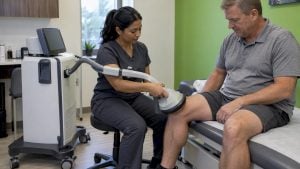
At Nortex Spine and Joint, our physical therapy program is the starting point for tendon problems, and we also offer shockwave therapy and Class IV laser as part of non-surgical care. Which of these fits depends on your exam, your activity goals, and how the tendon has responded so far.
Where PRP and stem cell therapy fit
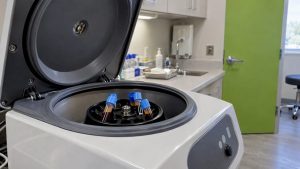
Patients often ask about platelet-rich plasma (PRP), an autologous preparation made from your own blood, and about cell-based treatments. The research on Achilles tendinopathy is still developing, and it is worth understanding what it does and does not show.
- A 2026 systematic review reported that PRP supported early pain relief and functional gains, while stem cell therapies contributed to more sustained regenerative effects. It cited a study in which adipose-derived stromal vascular fraction produced a greater reduction in pain than PRP, and it called for more high-quality trials because protocols varied widely.
- A meta-analysis of ultrasound-guided PRP injection trials included 5 Achilles studies and found no clear between-group differences in pain or function, with low or very low certainty of evidence.
- A 2025 review in Premier Science notes that clinical evidence is inconsistent because of differences in patient response, formulation, dosage, and injection technique, while describing PRP as a low-risk adjunctive therapy.
Our reading is that these treatments are best considered as an addition to a good loading program for selected patients, not as a substitute for it. Standardization across the field is still improving, which is why the details of preparation, imaging guidance, and rehab afterward matter. If you want to see how we think about evidence for a related tendon problem, read our summary of PRP for hamstring tendinopathy, and our guidance on post-PRP rehabilitation shows how strengthening is restarted after an injection.
A realistic timeline
Tendons adapt slowly. The AAOS says symptoms may take a few months to improve and can last longer than 3 months even when treatment starts early. MedlinePlus likewise says at least 2 to 3 months may pass before pain goes away.
A useful way to set expectations:
- First 2 weeks: reduce provoking load, use ice for comfort, wear sensible shoes, and start gentle movement. If there is no improvement, get examined.
- Weeks 2 to 12: progress the loading program at least 3 times a week, adjusting by symptoms. Expect gradual change, with occasional flat spells.
- Months 3 to 6: rebuild strength, then reintroduce running, jumping, or hiking in graded steps.
- After about 6 months without improvement: the AAOS notes surgery may be considered when nonsurgical treatment has not worked. That is a point to review the whole plan with a specialist, including whether the diagnosis is right.
A patient who runs 20 miles a week and one who walks for fitness will have different return-to-activity plans, so treat these ranges as a frame, not a promise.
When to be seen sooner
- A sudden pop or snap in the calf or heel, especially with trouble pushing off: seek medical care right away, as the AAOS advises.
- No improvement after 2 weeks of self-care: see a provider, per MedlinePlus.
- Pain that wakes you at night, a swollen or warm tendon that keeps worsening, or an inability to stand on your toes: schedule an exam rather than waiting.
- Pain that returns every time you resume activity: this usually means the loading plan needs adjusting, which is a good reason to involve a physical therapist.
If you have diabetes, take fluoroquinolone antibiotics, or have had steroid injections near the tendon, mention that at your visit, since they bear on tendon health and treatment choices.
Our perspective
Many patients come to us after trying several things in sequence: a few weeks of rest, an anti-inflammatory, a new pair of shoes, perhaps an injection. Each helps a little and then the pain returns, because none of them rebuilt the tendon’s ability to handle load.
Our approach starts with a careful exam to confirm where the problem sits, insertional or midportion, and what is driving it. From there we build a loading program the patient can actually follow, and we progress it by symptoms and by goals, whether that is walking the dog comfortably or returning to running.
When progress plateaus, we think it is reasonable to look at additional non-surgical tools, including shockwave therapy, Class IV laser, and regenerative medicine, in the context of the evidence and the individual patient. We aim to set honest expectations about timelines and outcomes, and we prefer a plan that avoids surgery when a patient can reach their goals without it.
Felix
Talk with us about your heel or tendon pain
If your Achilles pain has lasted beyond a few weeks, or you have tried rest and stretching without lasting change, an exam can clarify what is going on and what to do next. You can learn about our regenerative medicine options, or contact the clinic through our website to schedule a consultation in North Dallas.
FAQ
Can Achilles tendonitis heal without surgery?
Yes, in most cases. MedlinePlus states that the main treatments do not involve surgery, and the 2024 JOSPT guideline recommends tendon-loading exercise as first-line care. Healing is slow, so plan on at least 2 to 3 months, and sometimes longer.
Should I rest completely or keep exercising?
Complete rest is not recommended. Reduce the activities that provoke pain, such as running, jumping, and hills, and substitute swimming or cycling. Keep loading the tendon through a guided exercise program within your pain tolerance.
Can hiking cause Achilles tendonitis?
It can contribute, particularly with a sudden jump in distance or steep climbs. Research on running found that uphill work raised cumulative Achilles tendon damage. While recovering, choose flatter, softer routes and build back gradually.
Do heel lifts and boots help?
Often, for comfort. Heel lifts and open-back shoes can reduce irritation, and a walking boot can quiet acute midportion symptoms. They support rehab but do not replace it, since the tendon still needs to be strengthened.
When should I worry about a rupture?
If you feel or hear a sudden pop in the calf or heel, or cannot push off the foot normally, seek medical care immediately. A rupture is a different problem from tendonitis and needs prompt evaluation.
Sources
- Achilles tendinitis: MedlinePlus Medical Encyclopedia
- Heel pain and Achilles tendonitis aftercare: MedlinePlus
- Achilles Tendinitis: OrthoInfo, AAOS
- JOSPT 2024 clinical practice guideline for Achilles pain, stiffness, and muscle power deficits
- Current Clinical Concepts: Conservative Management of Achilles Tendinopathy
- A Proposed Return-to-Sport Program for Patients With Midportion Achilles Tendinopathy, JOSPT 2015
- Per-step and cumulative load at three common running injury locations, Scandinavian Journal of Medicine & Science in Sports
- Uses of Braces and Orthotics for Conservative Management of Achilles Tendon Conditions
- Nonoperative Interventions for Achilles Pathology, American Family Physician
- Management of platelet-rich plasma and stem cells versus conventional treatments: a systematic review
- Ultrasound-guided injection of platelet-rich plasma: systematic review and meta-analysis
- Recovery Strategies After Tendon Injuries in Athletes, Premier Science