
Most people assume that chronic back pain eventually leads to one of two places: a surgeon’s table or a lifetime prescription for pain medication. That assumption is understandable, but it’s largely incorrect. Evidence-based care pathways show that the majority of chronic back pain cases respond well to structured, non-surgical management designed around monitoring outcomes, minimizing risk, and gradually restoring function. This guide will explain what back pain management actually means, walk you through first-line options supported by clinical research, help you understand how personalized plans are built, and clarify when advanced therapies like PRP and stem cell treatment deserve a serious look.
Table of Contents
- What is back pain management?
- First-line non-surgical treatments: Evidence and options
- Personalizing your management plan: Why one size doesn’t fit all
- When to consider advanced options: Injections, PRP, and stem cells
- Red flags: Knowing when to seek urgent medical help
- The real keys to lasting back pain management: Our experience
- Explore advanced, personalized care with Nortex Spine and Joint
- Frequently asked questions
Key Takeaways
| Point | Details |
|---|---|
| Structured, personal care | Back pain management works best when it’s proactive, tailored, and monitored over time for your changing needs. |
| Start with evidence-based methods | Exercise, multidisciplinary care, and education offer strong results for most chronic cases before escalating therapy. |
| Advanced options require timing | Consider PRP or stem cell treatment only if conservative care hasn’t helped and after reviewing current evidence. |
| Urgent warning signs matter | Know the symptoms that require immediate medical evaluation so you stay safe while pursuing long-term relief. |
| Active participation pays off | Staying engaged and following your management plan leads to better day-to-day function and satisfaction long term. |
What is back pain management?
Back pain management is not a single treatment or a quick fix. It is an ongoing, structured process focused on reducing pain, improving your quality of life, and avoiding unnecessary escalation to procedures that carry real risks. Conservative care pathways are evidence-based sequences of treatment that include documenting your care plan, monitoring your outcomes over time, and screening continuously for serious causes that require urgent referral.
Understanding the difference between acute and chronic pain matters here. Acute back pain typically resolves within four to six weeks and responds well to activity modification and basic interventions. Chronic back pain, defined as pain lasting longer than twelve weeks, requires a more deliberate and layered approach, one that adapts as your condition changes rather than staying static.
The following are core features of well-structured back pain management:
- Outcome monitoring: Tracking how your function, mobility, and pain change over time with validated tools
- Personalized care pathways: Building a plan around your specific symptoms, history, and goals
- Red flag screening: Identifying symptoms that signal urgent or serious conditions
- Conservative escalation: Starting with the safest, most evidence-supported options before considering anything more invasive
- Shared decision-making: You and your clinician jointly choosing the next steps based on your progress and preferences
“Red flags” in back pain are symptoms that suggest a serious underlying condition requiring immediate referral. These include signs of cauda equina syndrome (sudden loss of bladder or bowel control), spinal infection, vertebral fracture, known or suspected malignancy, and inflammatory arthropathies such as ankylosing spondylitis. Recognizing these early can be life-changing.
For the vast majority of people, chronic back pain is benign in origin. It is real, it is often debilitating, and it absolutely needs treatment, but it does not involve cancer, fractures, or infections. Understanding this distinction frees you to focus on best treatments for lower back pain that actually build long-term capacity rather than simply suppressing symptoms temporarily.
First-line non-surgical treatments: Evidence and options
The foundation of chronic back pain management is built on a set of non-surgical interventions that carry moderate to strong clinical evidence. According to Cochrane systematic review findings, exercise therapy, acupuncture, and multidisciplinary rehabilitation all probably reduce pain and improve function for patients with non-specific chronic low back pain lasting beyond twelve weeks. That word “probably” reflects the rigorous standards of evidence review, not clinical uncertainty about whether these treatments work.
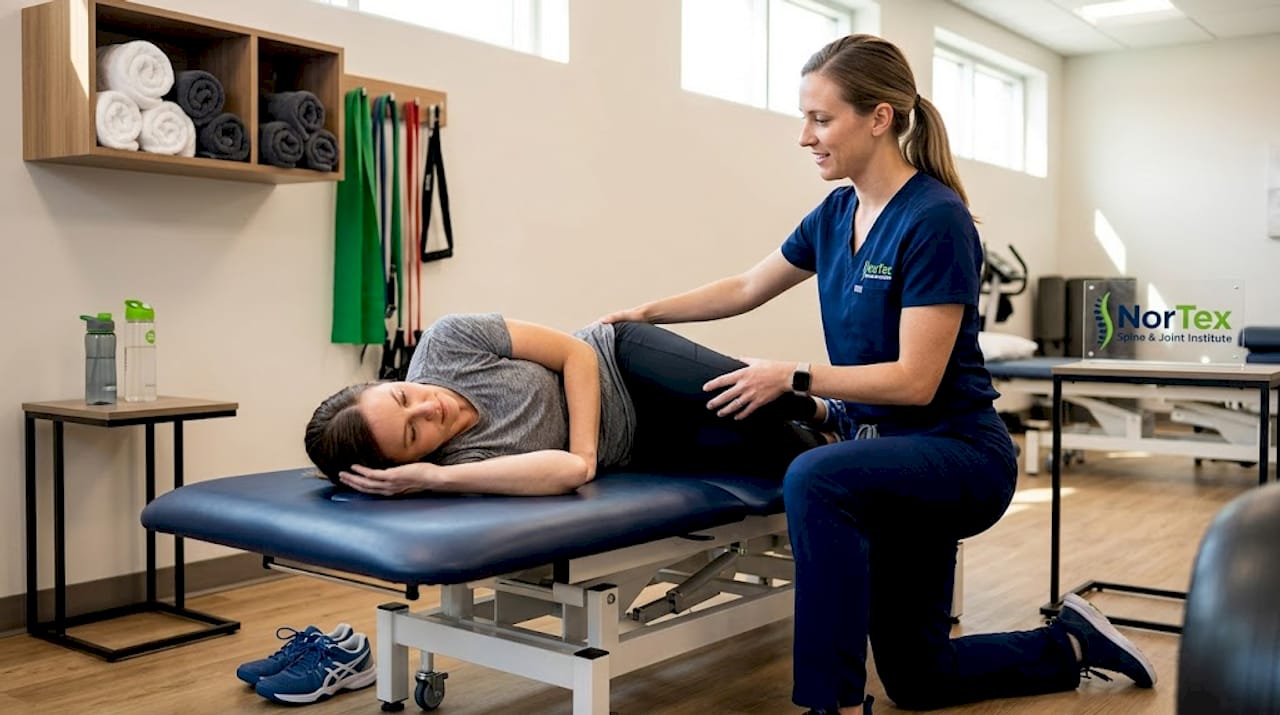
Here is a summary of the core options and what the evidence says:
| Treatment | Strength of evidence | Typical benefits |
|---|---|---|
| Exercise therapy | Moderate (Cochrane) | Reduced pain, improved function, better mobility |
| Acupuncture | Moderate (Cochrane) | Pain relief, improved function over 3 to 12 months |
| Multidisciplinary rehabilitation | Moderate (Cochrane) | Pain reduction, functional gains, psychological support |
| Education and self-management | Moderate | Reduced fear-avoidance, better long-term adherence |
| Passive therapies (traction, bed rest) | Not recommended | Minimal to no benefit; may worsen outcomes |
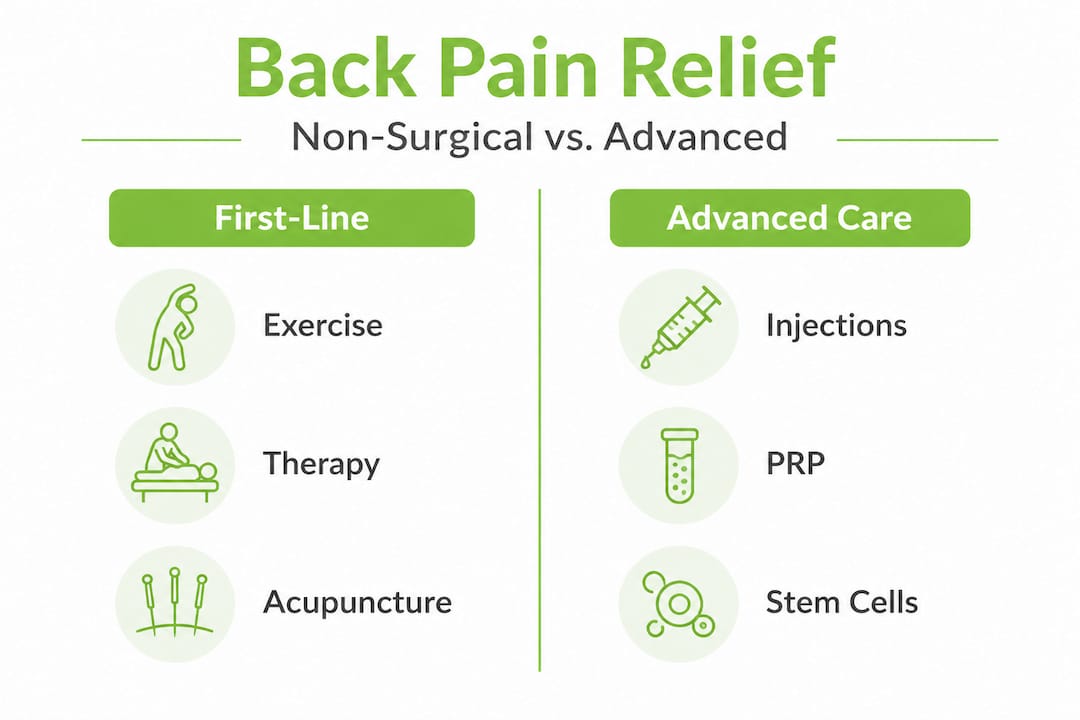
What stands out in the research is that passive approaches, especially prolonged bed rest and spinal traction, consistently underperform. Staying active, even at a modified level, is among the most important things you can do.
Steps for starting non-surgical care:
- Consult a qualified clinician to confirm diagnosis and rule out red flags
- Establish a baseline for pain, mobility, and function using simple tracking tools
- Begin a supervised exercise program tailored to your tolerance and goals
- Add adjunctive care such as acupuncture or manual therapy as appropriate
- Engage in patient education to address fear-avoidance and build self-management skills
- Schedule structured follow-ups every four to six weeks to assess progress
- Adjust the plan based on outcomes, not just pain levels alone
You can also explore non-surgical treatment options in more detail to understand how these approaches are applied in clinical settings similar to yours.
Pro Tip: One of the most counterintuitive but well-supported strategies in chronic back pain management is to keep moving even when it’s uncomfortable. Extended rest disrupts circulation, weakens stabilizing muscles, and reinforces the fear-avoidance cycle that makes pain feel more threatening than it is. Even gentle walking for ten to fifteen minutes can help break that cycle.
Looking for practical day-to-day strategies? The lower back pain relief tips that practitioners recommend most are often simple, consistent actions rather than dramatic interventions.
Personalizing your management plan: Why one size doesn’t fit all
A critical insight that often gets overlooked in back pain care is that how you hurt matters as much as where you hurt. A 2025 review on non-surgical lumbar pain emphasizes that effective management requires tailoring treatment to symptom duration and combining physical, psychological, educational, and selective interventional options rather than relying on a single procedure. This multimodal approach consistently outperforms single-modality care.
Pain in chronic back conditions typically falls into distinct types, or phenotypes, each requiring a different strategy:
- Mechanical pain: Triggered or worsened by specific postures or movements; responds well to targeted exercise and manual therapy
- Neuropathic pain: Involves nerve irritation or damage with burning, shooting, or tingling qualities; may need nerve-directed treatments
- Nociplastic pain: A sensitization of the nervous system without clear structural cause; responds best to graded exercise, cognitive strategies, and education
| Approach | Single-modality | Multimodal/Personalized |
|---|---|---|
| Benefits | Simple, low cost initially | Addresses multiple contributing factors |
| Risks | Misses root cause, poor long-term results | Requires more coordination and time |
| Typical results | Short-term relief, high recurrence | More sustained function and independence |
Factors your clinician should consider when building your individual plan include:
- Duration and pattern of your symptoms
- History of previous treatments and how you responded
- Results of red flag and structural screening
- Psychosocial factors such as stress, sleep, and fear-avoidance beliefs
- Your activity goals, occupation demands, and physical baseline
- Preferences for certain modalities and your capacity for active participation
Progress tracking is not optional in personalized care. It is the mechanism that allows the plan to evolve as you do. Shared decision-making, where both you and your care team review outcomes and choose next steps together, has been shown to improve adherence and long-term satisfaction. For a deeper look at how leading clinicians approach this, the insights available on advanced treatments for chronic back pain are well worth reviewing.
When to consider advanced options: Injections, PRP, and stem cells
Advanced and interventional therapies have a legitimate role in chronic back pain management, but that role is clearly defined: they come after structured, conservative care has been optimized, not before. BMJ clinical practice guidelines issue strong recommendations against routine epidural steroid injections, radiofrequency ablation, and several other interventional procedures for chronic axial and radicular spine pain in non-cancer patients. This does not mean these procedures are never appropriate, but it does mean they should not be the first or default response.
Decision-making steps before pursuing advanced therapy:
- Confirm you have completed at least eight to twelve weeks of structured, multimodal conservative care
- Document that conservative care has been insufficient for meaningful functional improvement
- Confirm red flags have been screened and serious pathology ruled out
- Discuss the specific evidence for the proposed procedure relative to your diagnosis
- Understand what outcomes to expect, including realistic timelines and possible limitations
- Ask whether participation in ongoing rehabilitation will continue alongside the advanced treatment
Where do PRP (platelet-rich plasma) and stem cell therapies fit? These regenerative or orthobiologic approaches concentrate the body’s own healing factors, either from processed blood (PRP) or from tissue-derived stem cells, and deliver them to damaged structures to promote repair. The concept is biologically sound, and the clinical interest is growing, but current evidence shows that PRP demonstrates more favorable effects on pain and disability than stem cell therapy in short-to-mid term comparisons for lumbar degenerative disc disease, while stem cell therapy shows only modest improvements with limited imaging evidence of structural repair.
Important statistic: Quantitative syntheses of randomized controlled trials suggest PRP offers favorable pain and disability outcomes in the short-to-mid term for lumbar degenerative disc disease. However, standardized protocols and larger head-to-head trials are still needed before these treatments are considered routine. The picture for stem cell therapy is even earlier in development.
The evidence-based relief with physical therapy context is important here. Advanced therapies work best when paired with, not substituted for, rehabilitation and active self-management.
Pro Tip: Before agreeing to any advanced injection or regenerative therapy, ask your provider two direct questions: “What does the clinical evidence say for someone with my specific diagnosis?” and “What happens if this doesn’t work?” The answers will tell you a great deal about how the clinic approaches care.
Red flags: Knowing when to seek urgent medical help
Long-term management is reassuring for most people with chronic back pain, but it should never create a false sense of security around symptoms that warrant urgent evaluation. Not all back pain is the same, and knowing the warning signs that require immediate medical attention is part of being an informed patient.
Immediate referral is recommended when back pain is accompanied by any of the following: bilateral leg weakness or progressive neurological deficit, sudden loss of bladder or bowel control, fever, night sweats, or unexplained weight loss alongside spinal pain, significant trauma history, or a personal history of cancer. These presentations should not be managed conservatively without urgent specialist involvement.
Long-term management benchmarks established in the clinical literature confirm that responsible management keeps patients active while screening continuously for these escalation signals. That balance is what makes structured care both safe and effective.
Seek immediate medical attention if you experience:
- Sudden or rapidly worsening weakness or numbness in one or both legs
- Loss of control over bladder or bowel function
- Fever combined with back pain, especially if you have had recent surgery or infection
- Back pain following a fall, vehicle accident, or significant physical trauma
- Unexplained weight loss over several weeks alongside worsening back pain
- Back pain that is constant, progressive, and unaffected by position or movement
For the great majority of patients, none of these warning signs are present. But it is worth reviewing the case series on pain management to understand how experienced clinicians identify, triage, and manage complex presentations across different patient profiles.
The real keys to lasting back pain management: Our experience
Here is something most articles on back pain management will not tell you directly. The patients who achieve the most durable, meaningful improvement are rarely the ones who found the “perfect” procedure. They are the ones who committed to a consistent, proactive plan and kept showing up even when progress felt slow.
In our clinical experience in North Dallas, the biggest driver of long-term outcomes is active participation, not passive treatment. Patients who engage in their own care, who track their function, modify their movement habits, and attend structured follow-ups, consistently outperform those seeking a single injection or procedure to solve everything. This is not a criticism. It is a pattern we see repeatedly.
The expert insights on chronic back pain from experienced clinicians reinforce this consistently. Chronic pain is not a static condition, and neither should your approach to managing it be. Plans need revision. What worked in month two may need adjustment by month six. That adaptability is a strength of personalized care, not a sign that something is wrong.
Miracle cures for back pain tend to share one thing in common: they fade. What holds up over time is the combination of structured exercise, meaningful education, appropriate adjunctive care, and thoughtful use of advanced therapies when and if they are indicated. The goal is not to be pain-free every single day. The goal is to be functional, confident, and in control of your own health trajectory.
Pro Tip: Track your functional capacity, such as how far you can walk, how long you can sit comfortably, and what activities you can participate in, not just your pain score on a scale of one to ten. Function is a more reliable indicator of progress and a better guide for adjusting your plan.
Explore advanced, personalized care with Nortex Spine and Joint
If you are living with chronic back pain in North Dallas and have not found lasting relief through standard approaches, the team at Nortex Spine and Joint is here to help you take the next step. We offer evidence-based, non-surgical management built around your individual history, pain phenotype, and goals. When conservative care has been exhausted, we can walk you through PRP therapy for chronic back pain and discuss whether stem cell therapy for back pain is an appropriate option for your specific diagnosis. Every recommendation we make is grounded in current clinical evidence, explained clearly, and tailored to your situation. We do not escalate treatment unnecessarily. We build plans that put your long-term function first.
Frequently asked questions
What are the main types of non-surgical treatments for chronic back pain?
The main non-surgical treatments with moderate clinical evidence include exercise therapy, acupuncture, multidisciplinary rehabilitation, and structured patient education for self-management, all of which probably reduce pain and improve function over three to twelve months.
When should I consider PRP or stem cell therapy for back pain?
You should consider PRP or stem cell therapy only after conservative care has failed to produce meaningful improvement, and after a thorough discussion with a specialist about the current clinical evidence and safety profile for your specific diagnosis.
What are the signs that I need urgent medical care for back pain?
Seek immediate care for sudden leg weakness or numbness, loss of bladder or bowel control, fever with back pain, recent trauma, or unexplained weight loss. These are red flags requiring urgent referral regardless of how long the underlying pain has been present.
How is a back pain management plan created for me?
A plan is built around your specific pain type, symptom duration, previous treatment responses, and safety screening results, then adapted over time using multimodal principles that combine physical, educational, and psychological strategies.
Do I need an MRI or X-ray for chronic back pain?
Most chronic back pain cases do not require imaging unless red flags are identified or initial conservative care does not produce adequate progress within a reasonable timeframe. Routine imaging often does not change treatment decisions for non-specific low back pain.
Recommended
- Lower Back Pain Relief Tips That Really Work – Nortex | Pain Management | Allen, Garland, McKinney & Plano Texas
- Skip the Scalpel: Expert-Approved Back Pain Relief – Nortex | Pain Management | Allen, Garland, McKinney & Plano Texas
- How to Relieve Lower Back Pain at Home: A Quick Guide for Fast Relief – Nortex | Pain Management | Allen, Garland, McKinney & Plano Texas
- How Do You Manage Your Neck Pain Without Surgery? – Nortex
- Back Pain Relief Without Medication: Effective At-Home Solutions – Lunix
- Massage for sciatica relief: a step-by-step guide