
If chronic joint pain is shortening your workouts, limiting your range of motion, or making you question how much longer you can stay active, you are not alone — and surgery is not your only option. Understanding how to improve joint health through targeted exercise, nutrition, biomechanical support, and regenerative treatments like platelet-rich plasma (PRP) can make a measurable difference. This guide is built specifically for active adults and athletes in North Dallas who want evidence-based, non-surgical strategies to reduce pain, restore mobility, and protect their joints for the long term.
Table of Contents
- Understanding joint health and the role of exercise
- Nutrition and weight management for joint longevity
- Biomechanical optimization and assistive strategies
- Regenerative treatments: Platelet-rich plasma (PRP) therapy
- A clinician’s perspective: What really works for joint health
- Explore personalized regenerative treatments at Nortex Spine & Joint
- Frequently asked questions
Understanding joint health and the role of exercise
Joint health is not simply about cartilage. It depends on the coordinated strength of surrounding muscles, ligament integrity, joint fluid quality, and your nervous system’s ability to control movement. When any of these components weakens, the joint compensates, stress accumulates unevenly, and pain follows. Exercise is the most direct way to address all of these factors simultaneously.
According to 2025 clinical guidelines, therapeutic exercise is the primary non-surgical management for osteoarthritis, with a recommended target of 150 minutes of moderate-intensity aerobic activity per week, supplemented by at least two weekly sessions of muscle-strengthening exercises targeting major muscle groups. This is not a suggestion — it is the clinical standard.
Here is what those exercise targets look like in practice:
Aerobic activity options for joint health:
- Walking at a brisk pace (outdoors or treadmill)
- Cycling, either stationary or road
- Swimming or pool walking, which reduces joint loading
- Elliptical training, which provides low-impact cardiovascular benefit
- Rowing, which supports hip and knee function while building back muscles
Strength training fundamentals:
- Begin with light weights, approximately 50 to 60 percent of your maximal strength capacity
- Perform 8 to 12 repetitions per set with emphasis on controlled form
- Target major muscle groups including quadriceps, hamstrings, glutes, and core
- Progress gradually, increasing resistance only when form is consistent
- Allow 48 hours of recovery between sessions targeting the same muscle groups
Muscle mass declines by roughly 3 to 5 percent per decade after age 30, and that loss directly reduces joint stability. Rebuilding and maintaining muscle is one of the most reliable ways to improve joint function and reduce pain risk over time.
| Exercise type | Frequency | Primary joint benefit |
|---|---|---|
| Moderate aerobic | 5 days/week, 30 min each | Lubrication, pain modulation |
| Strength training | 2 to 3 days/week | Stability, load absorption |
| Flexibility/mobility | Daily | Range of motion, tissue health |
| Balance training | 2 to 3 days/week | Proprioception, fall prevention |
Pro Tip: If you are new to strength training with joint pain, isometric exercises (contracting the muscle without moving the joint) allow you to build strength without aggravating inflamed tissue. Wall sits and straight-leg raises are excellent starting points.
One aspect often missed in general fitness advice: exercise stimulates the production of synovial fluid, the joint’s natural lubricant, and triggers the release of endorphins and anti-inflammatory cytokines. The joint literally functions better because of movement, not despite it. For athletes managing early-stage cartilage wear, PRP injection considerations may complement your exercise program, but exercise remains the non-negotiable foundation.
Now that you understand why exercise is vital, let’s explore how nutrition and weight management further protect your joints.
Nutrition and weight management for joint longevity
Weight management is one of the highest-impact variables in joint health for weight-bearing joints, and it is often underestimated. The mechanical reality is direct: each pound of body weight translates to roughly four pounds of force on your knee joint during normal walking. At that ratio, even modest reductions in body weight produce meaningful reductions in joint load.
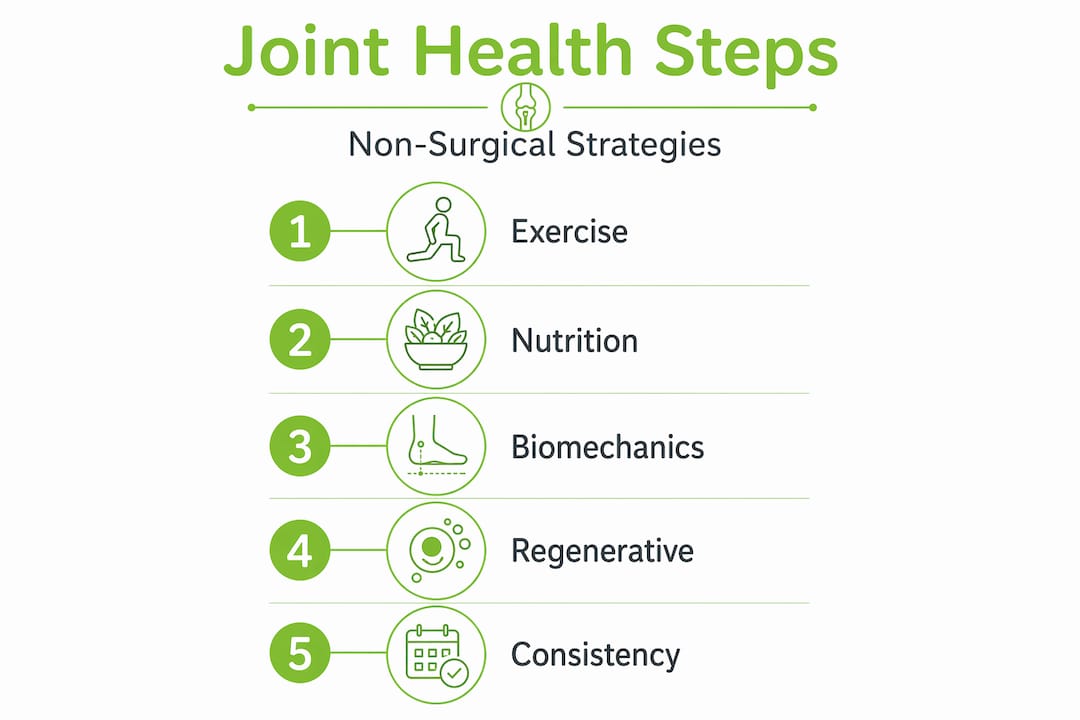
Research confirms that losing 5 to 10 percent of body weight produces clinically meaningful improvements in pain and function in patients with knee osteoarthritis. For a 200-pound person, that is 10 to 20 pounds — an achievable target with consistent effort.
Key nutrition strategies for joint health:
- Prioritize anti-inflammatory foods including fatty fish (salmon, sardines), leafy greens, berries, and olive oil
- Reduce ultra-processed foods, refined sugars, and trans fats, which promote systemic inflammation
- Ensure adequate protein intake (0.7 to 1 gram per pound of body weight) to support muscle retention during weight loss
- Stay consistently hydrated, as cartilage is approximately 65 to 80 percent water by composition
- Consider foods rich in collagen precursors including vitamin C, bone broth, and gelatin
The connection between weight and joint pain is well documented, but the combination of weight loss with strength training is where results compound. Weight loss alone can cause muscle loss, which worsens joint stability. Pairing a modest caloric deficit with resistance training preserves lean mass while reducing mechanical joint load — a strategy supported by 2025 research confirming this combination slows cartilage breakdown more effectively than diet change alone.
| Dietary approach | Effect on joints | Evidence level |
|---|---|---|
| Anti-inflammatory diet | Reduces systemic inflammation markers | Moderate to strong |
| Weight loss (5 to 10%) | Reduces mechanical load, improves pain scores | Strong |
| Adequate protein intake | Preserves muscle during caloric deficit | Strong |
| Omega-3 supplementation | May reduce joint pain and stiffness | Moderate |
| Collagen peptides | Supports cartilage matrix health | Emerging |
Pro Tip: Omega-3 fatty acids from fish oil, at doses of 2 to 4 grams per day, have shown enough evidence for joint pain reduction that many rheumatologists now recommend them as part of a broader PRP arthritis treatment plan or as a standalone supplement for early-stage joint discomfort.
With better nutrition and weight control supporting your joints, let’s look at biomechanical strategies to reduce joint stress.
Biomechanical optimization and assistive strategies
Even with ideal exercise and nutrition habits, faulty movement mechanics can undermine your progress. Limb misalignment, muscle imbalances, and compensatory movement patterns place uneven stress on joint surfaces, accelerating wear in localized areas of cartilage. Addressing these mechanics is an essential layer of any comprehensive joint health plan.
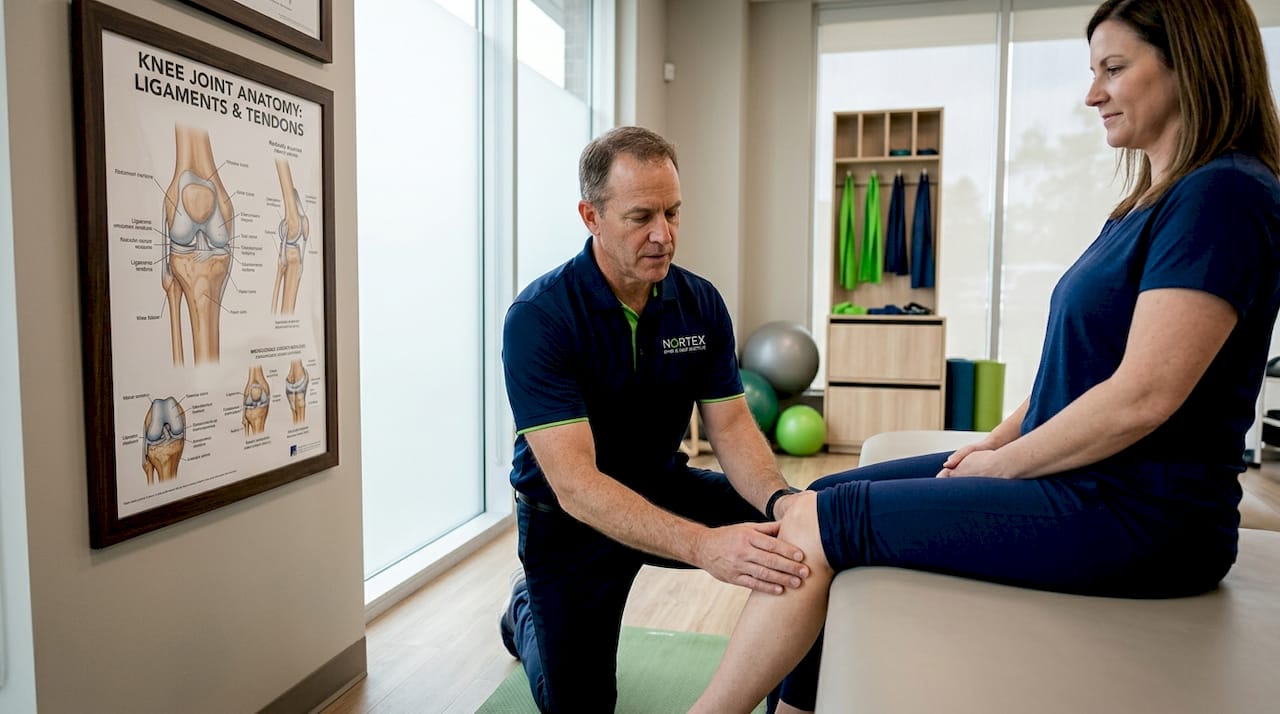
Biomechanical interventions including braces, orthotics, and gait retraining modify the forces acting on joints during movement, reduce localized loading, and improve overall functional stability.
Common biomechanical tools and their applications:
- Unloader braces: Shift load away from the most damaged compartment of the knee, particularly useful in medial compartment osteoarthritis
- Foot orthotics: Correct pronation or supination that cascades upward to affect knee and hip mechanics
- Kinesiology taping: Provides proprioceptive feedback and mild joint support during activity
- Canes and walking aids: Offload significant force from weight-bearing joints, especially during flare periods
- Gait retraining: A physical therapist-guided process using real-time feedback to reduce peak joint loads during walking or running
| Tool | Primary benefit | Best suited for | Approximate cost |
|---|---|---|---|
| Unloader brace | Reduces compartmental knee load | Medial/lateral OA | $300 to $700 |
| Custom orthotics | Corrects foot and lower limb alignment | Foot, knee, hip issues | $200 to $500 |
| Cane | Offloads 20 to 30% of weight-bearing load | Hip and knee OA | $15 to $60 |
| Gait retraining program | Reduces peak joint contact forces | Runners, active adults | Varies by provider |
Pro Tip: Before investing in custom orthotics, have a gait analysis performed by a sports medicine provider. Many biomechanical issues respond well to targeted strengthening and movement retraining before any device is needed. For deeper guidance on knee pain management strategies, a combined biomechanical and rehabilitative approach often delivers the best outcomes.
Beyond mechanical support, regenerative therapies offer promising adjuncts to conventional care.
Regenerative treatments: Platelet-rich plasma (PRP) therapy
Platelet-rich plasma therapy, commonly called PRP, uses your own blood to create a concentrated solution of growth factors and bioactive proteins that are then injected directly into the affected joint. The goal is to modulate inflammation, reduce pain signaling, and potentially support tissue repair. It is autologous, meaning it comes from your own body, which eliminates the risk of rejection or allergic reaction.
Meta-analyses published in 2026 confirm that PRP injections provide superior functional improvement compared to hyaluronic acid or physical therapy alone, particularly in mild to moderate osteoarthritis classified at Kellgren-Lawrence grades I through III. Optimal results occur with a series of 3 to 5 injections administered at 7 to 14 day intervals.
How a PRP treatment series works:
- Blood is drawn from the patient (typically 15 to 60 mL)
- The sample is centrifuged to separate and concentrate platelets
- The platelet-rich fraction is prepared according to the intended protocol
- The concentrate is injected into the target joint under ultrasound guidance
- Steps are repeated every 1 to 2 weeks for the prescribed number of sessions
- Response is assessed at 3 to 6 months post-treatment
Key clinical considerations:
- Leukocyte-poor PRP formulations are generally better tolerated in joints with active inflammation
- Patients with early to moderate joint degeneration respond better than those with advanced bone-on-bone arthritis
- Benefits are not immediate; most patients notice meaningful improvement at 3 to 6 months
- PRP should be integrated with exercise and weight management, not used as a standalone fix
As clinical evidence notes, PRP is not a universal solution. Outcomes depend heavily on formulation, patient selection, and whether lifestyle changes support the treatment. For an overview of PRP treatment that covers what to expect from the procedure itself, or a detailed look at PRP knee therapy including costs and recovery, understanding the evidence helps you enter treatment with realistic and accurate expectations.
A clinician’s perspective: What really works for joint health
The most consistent predictor of long-term joint health outcomes is not the sophistication of the treatment — it is patient adherence. Exercise programs, weight loss plans, and regenerative therapies all require sustained commitment to produce lasting results. That reality is often inconvenient to hear, but it is the truth.
Clinical data shows that approximately 12 consistent training sessions are required before patients reliably achieve and sustain pain reduction from strength training. Missed weeks do not just pause progress — they erode it. This is why building a manageable, sustainable exercise habit matters far more than pursuing aggressive intensity in the short term.
Pain management during exercise requires nuance. Not all discomfort signals damage. Isometric exercises allow muscle activation without joint movement, making them appropriate during periods of acute inflammation. The clinical principle is this: discomfort that resolves within 24 hours of activity is generally acceptable; pain that worsens or persists beyond that window warrants reassessment.
Regenerative therapies like PRP are most effective when they are integrated into a broader plan, not positioned as a shortcut around it. A patient who receives PRP but does not address weight, movement quality, or muscle strength is leaving most of the therapy’s potential unrealized. The evidence on PRP for arthritis consistently shows that patients who pair injections with supervised rehabilitation outperform those who rely on injections alone. Treatment plans must be personalized because patient responses to any intervention, whether exercise or regenerative therapy, vary meaningfully based on age, disease severity, and overall health status.
Explore personalized regenerative treatments at Nortex Spine & Joint
If you are ready to move beyond generic advice and work with a clinical team that understands the specific demands of active adults and athletes in North Dallas, Nortex Spine & Joint offers personalized treatment plans built around your joint health goals. From expert PRP therapy designed for mild to moderate osteoarthritis to targeted PRP knee injections for chronic knee pain, every protocol is paired with lifestyle and exercise guidance to maximize your results. Explore the full range of regenerative medicine services available at Nortex and schedule a consultation to determine whether you are a candidate for treatments that address the root cause of your pain, not just the symptoms.
Frequently asked questions
How much exercise do I need weekly to improve joint health?
You should aim for at least 150 minutes of moderate aerobic activity plus two or more sessions of muscle-strengthening exercises targeting major muscle groups each week. Consistency across weeks matters more than any single session’s intensity.
Is platelet-rich plasma (PRP) therapy effective for joint pain?
Meta-analyses show PRP offers superior functional improvement in mild to moderate osteoarthritis with a series of 3 to 5 injections, though results vary and outcomes improve significantly when PRP is paired with exercise and lifestyle changes.
Can weight loss really reduce joint pain?
Yes. Losing 5 to 10 percent of your body weight produces clinically meaningful reductions in pain and improved function, especially in weight-bearing joints like the hips and knees, with the effect compounding when combined with strength training.
What should I expect regarding pain during joint exercise?
Some muscle discomfort during exercise is normal and expected. Isometric exercises allow you to build strength safely when joints are too inflamed for full movement, and any pain persisting beyond 24 hours post-exercise should be evaluated by a provider.