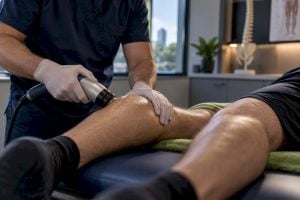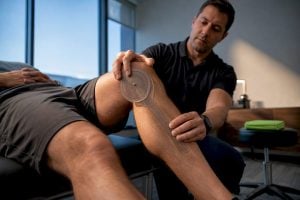

For most people with lumbar radiculopathy, the right starting point is active, non-surgical care: education, staying mobile, and a structured physical therapy program. Epidural or transforaminal steroid injections can calm severe nerve pain enough to let you participate in rehab. Surgery stays on the table, but we typically reserve it for progressive weakness or when a genuine trial of conservative care has failed.
TL;DR:
- Seek emergency care for new or rapidly worsening leg weakness, saddle numbness, sudden bladder or bowel changes, or fever after trauma.
- During the first six weeks, guidelines favor activity and early physical therapy while discouraging routine imaging unless red flags require urgent assessment.
- When severe pain blocks therapy, transforaminal injections can reduce pain by more than half short term, but long term benefit is inconsistent.
- Surgery may relieve leg pain faster, but SPORT found outcomes often similar after one to two years; progressive weakness warrants prompt evaluation.
Table of Contents
- What Lumbar Radiculopathy Is and What Causes It
- Symptoms and Red Flags: Routine Pain Versus a Medical Emergency
- First-Line Non-Surgical Treatments: What Works and How to Use It
- Interventional Options: Epidural and Transforaminal Steroid Injections
- Surgery: Common Procedures, Indications, and Realistic Outcomes
- Care Pathway and Timing: When to Image and When to Refer
- Clinical Perspective: How Stepped Care Guides Treatment Decisions
- Alternative and Complementary Therapies: What the Evidence Supports
- Long-Term Management Strategies and Prognosis
- Pain Management Options: Medications and What to Watch For
- Lifestyle and Ergonomic Changes to Prevent Recurrence
- Practical Next Steps Checklist You Can Use Today
- How We Can Help You Move Forward
- FAQ
- Sources
What Lumbar Radiculopathy Is and What Causes It
When you have lumbar radiculopathy, a nerve root in your lower spine is irritated or compressed as it exits through a narrow bony passage called the foramen. That compression can come from several sources, and knowing which one is at play shapes how we treat it.
- A herniated disc pressing against the nerve root
- Foraminal or central spinal stenosis narrowing the space the nerve travels through
- Degenerative changes and bone spurs that develop over years
Two things happen at once: mechanical pressure on the nerve, and chemical inflammation from disc material irritating the surrounding tissue. That is why treatments that reduce inflammation, like anti-inflammatory medication or steroid injections, often help even when nothing has changed about the physical pressure itself.
Symptoms and Red Flags: Routine Pain Versus a Medical Emergency
Most patients describe pain running down one leg, often paired with tingling, numbness along a specific strip of skin, or a feeling of heaviness in the limb. Some notice mild weakness, such as difficulty pushing off when walking.
- Shooting leg pain that follows a specific nerve pattern
- Numbness or tingling in the foot, calf, or thigh
- Mild to moderate weakness when lifting the toes or pushing off the foot
A smaller group of symptoms demands same-day attention. New or rapidly worsening leg weakness, numbness in the saddle region, sudden loss of bladder or bowel control, or fever following trauma can signal cauda equina syndrome or another surgical emergency. Immediate medical evaluation is critical when these red flag symptoms appear, since delay can mean permanent nerve damage. A quick bedside check we use in clinic: ask the patient to rise on their toes and heels several times on each side. Asymmetric difficulty often points to a specific nerve level worth investigating further.
Pro Tip: If you notice sudden bladder changes along with leg weakness, do not wait for a scheduled appointment. Go to the emergency room.
First-Line Non-Surgical Treatments: What Works and How to Use It
Guideline reviews consistently point to the same starting combination: staying active and getting into physical therapy early. A systematic review of clinical practice guidelines found that education and physical activity are recommended as first-line treatment across guidelines worldwide, with routine imaging specifically discouraged in the early weeks.
- Keep moving. Prolonged bed rest slows recovery; short, frequent walks are usually better tolerated than long ones.
- Start physical therapy focused on directional preference exercises, nerve mobility work, and gradual strengthening, progressed by a clinician who adjusts the program as your symptoms shift.
- Use over-the-counter NSAIDs or acetaminophen as your first medication choice. Guidance from the NICE low back pain and sciatica review cautions against routine long-term use of opioids or gabapentinoids for sciatica, since the risks tend to outweigh modest benefit in most patients.
- Set realistic short-term goals: walking farther before pain sets in, sitting through a meal without shifting constantly, or sleeping through the night.
Many patients come in after trying a mix of rest, heat, and whatever medication a friend recommended, frustrated that nothing has clicked. What usually moves the needle is consistency: a few weeks of graded activity and targeted exercise, done daily, rather than sporadic effort.
Pro Tip: Track your walking tolerance in minutes each day. A steady upward trend is often the clearest early sign that conservative care is working.
Interventional Options: Epidural and Transforaminal Steroid Injections
When pain is severe enough to block participation in therapy, we often consider an epidural steroid injection. These injections deliver anti-inflammatory medication near the irritated nerve root, and the approach varies by anatomy.
- Transforaminal: medication delivered directly alongside the nerve root as it exits the spine, often preferred for pinpoint accuracy
- Interlaminar: medication placed from the back of the spinal canal, covering a broader area
- Caudal: medication delivered through an opening near the tailbone, useful when higher approaches are not ideal
Professional reviews report that transforaminal epidural steroid injections can reduce pain by more than half for many patients in the short term, which can be enough to unlock meaningful progress in physical therapy. NICE guidance notes the evidence for epidural injections in acute severe sciatica is variable, and long-term benefit is inconsistent across studies. We generally limit repeat injections to two or three per year unless there is documented, sustained improvement, consistent with payer guidance that discourages repeated injections without clear benefit. The honest goal is not a cure. It is a window of relief wide enough to let your body do the harder work of rehabilitation.
Surgery: Common Procedures, Indications, and Realistic Outcomes
Surgery becomes a serious conversation when conservative care has had a fair trial and hasn’t moved the needle, or when your nerve is losing function in real time.
- Microdiscectomy: removes the portion of disc material pressing on the nerve root, the most common procedure for a herniated disc
- Decompression (laminectomy or laminotomy): widens the space around compressed nerves, typically used for stenosis
- Fusion: rarely needed for straightforward radiculopathy, generally reserved for instability or recurrent herniation at the same level
The clearest indications for surgery are progressive neurologic deficit, cauda equina syndrome, or persistent disabling symptoms after an adequate conservative trial. Analysis from the SPORT trial found that surgery delivers faster short-term relief of leg pain than nonoperative care, but outcomes at one to two years are often similar between the two groups. That single fact changes a lot of conversations in our office. Patients who value getting back to normal life quickly sometimes choose surgery even knowing that similar relief, on average, might arrive without it. That is a legitimate, personal choice, not a mistake, as long as it is made with clear eyes about the recovery, infection risk, and anesthesia exposure that come with any operation.
Care Pathway and Timing: When to Image and When to Refer
Most patients do well following a predictable timeline, and knowing it helps you understand what your clinician is watching for at each step.
- Weeks 1 through 6: conservative care, consisting of activity, physical therapy, and medication, unless red flags are present.
- Persistent or worsening symptoms beyond that window: this is typically when imaging such as MRI becomes useful, since ordering it earlier often shows findings unrelated to your actual pain. An early MRI can reveal incidental disc changes that have nothing to do with your symptoms, which is part of why guidelines discourage routine imaging in the first weeks.
- Specialist referral: triggered by failed conservative therapy, a stoppage gait, or any red flag. A specialist’s job at this stage is to correlate what the imaging shows with what your exam and function actually reveal, not just read the scan in isolation.
Clinical Perspective: How Stepped Care Guides Treatment Decisions
Our approach at Nortex Spine and Joint follows the same logic the guidelines point to: evaluate thoroughly, start with active conservative care, add targeted injections when pain is blocking progress, and reserve advanced interventions for patients who genuinely need them.
- We begin with a detailed history and exam to confirm the nerve level involved before recommending any procedure.
- For patients who need more than exercise and medication, we offer transforaminal epidural steroid injections, radiofrequency neurotomy, and regenerative options such as PRP therapy when appropriate.
- We measure progress against functional milestones, like walking distance or sitting tolerance, rather than chasing complete pain elimination, which is rarely a realistic short-term target.
— Felix
Alternative and Complementary Therapies: What the Evidence Supports
Patients often ask about acupuncture, chiropractic manipulation, or massage as alternatives to medication and injections. These therapies can have a place, though the evidence supporting them for lumbar radiculopathy specifically is thinner and more mixed than it is for active exercise-based rehabilitation.
Chiropractic spinal manipulation may offer modest short-term relief for some patients with mechanical low back pain, though the evidence specific to radiculopathy with nerve root involvement is less consistent, and manipulation is generally avoided when there is significant disc herniation with neurologic signs until a clinician has ruled out contraindications. Acupuncture has a similarly mixed evidence base: some patients report meaningful symptom relief, but trial results vary widely, and it is best viewed as a possible adjunct rather than a primary treatment.
We tend to frame these options the same way we frame injections: as potential bridges that might make it easier to stay active and participate in therapy, not as standalone solutions. If you are drawn to a hands-on or complementary approach, it is worth discussing timing with your treating clinician, particularly if you have significant nerve compression or any weakness, since manipulation under those circumstances calls for extra caution.
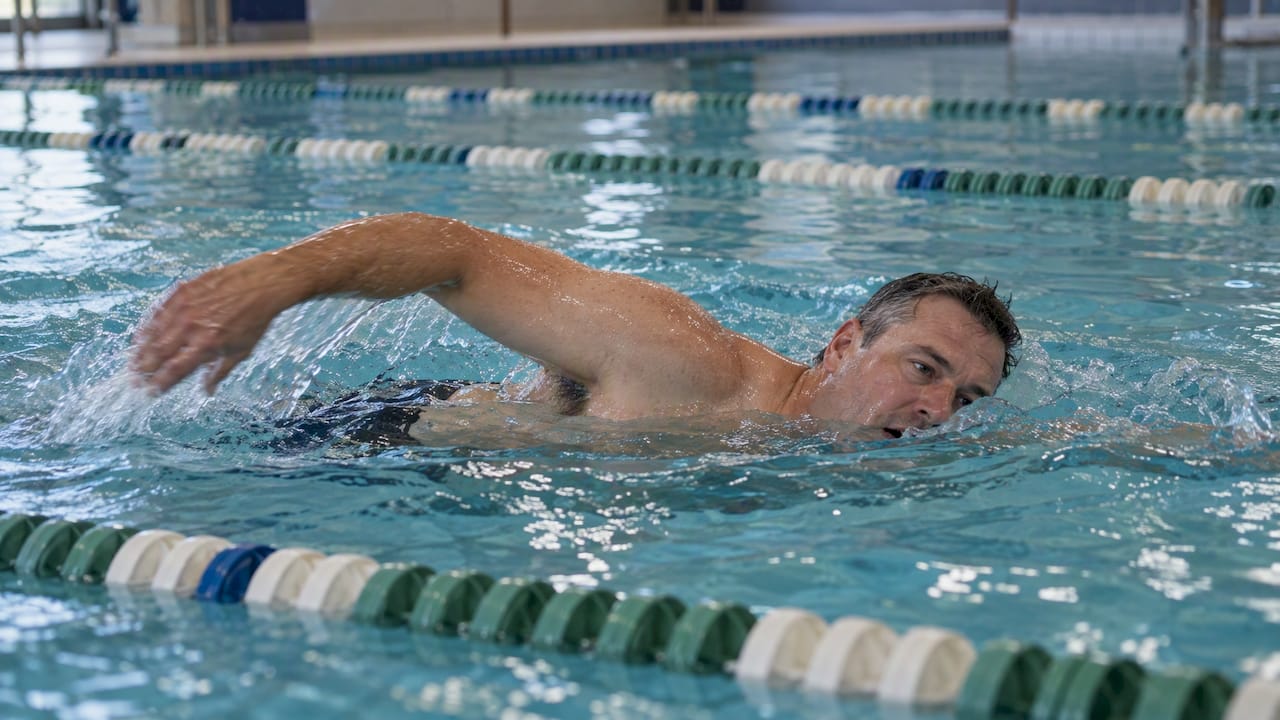
Low-impact aerobic exercise, including swimming, is a reasonable complement to formal physical therapy for many patients, since it keeps you moving without loading the spine the way walking or running can. A guide to swimming and low back pain walks through exercise adaptations worth discussing with your physical therapist if pool access is available to you.
Long-Term Management Strategies and Prognosis
Most patients with lumbar radiculopathy improve substantially within the first several weeks to a few months of active, consistent conservative care. That said, improvement is rarely a straight line. Many people have good stretches followed by brief flares, especially after a long drive, a poor night’s sleep, or a return to a physically demanding task before the body is fully ready.
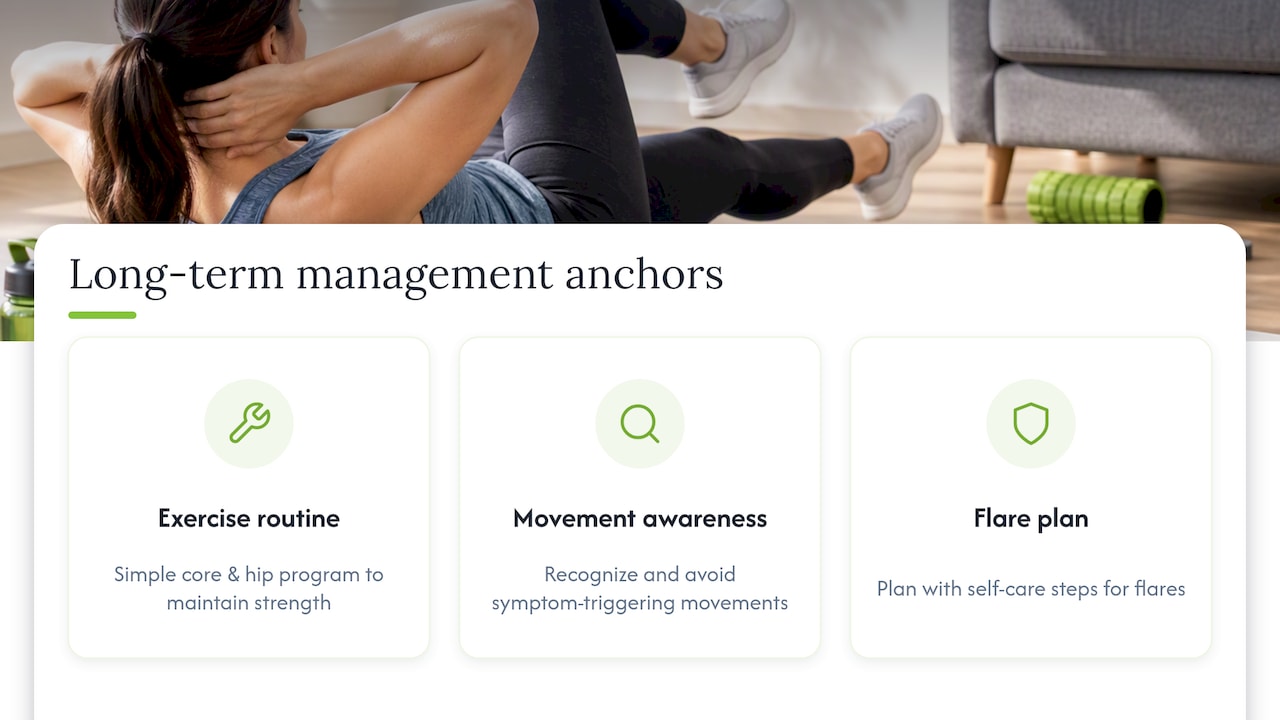
Long-term management is less about chasing a permanent fix and more about building a maintenance routine: a core and hip strengthening program you can return to on your own, awareness of which movements tend to trigger symptoms, and a plan for what to do if a flare occurs, rather than starting from scratch each time. Patients who stick with a simple maintenance routine after their acute symptoms resolve tend to have fewer, shorter flares than those who stop all exercise the moment pain fades.
For patients whose radiculopathy stems from degenerative changes like stenosis or bone spurs, symptoms can be more cyclical over the years, with periods of relative calm punctuated by flares as the underlying anatomy continues to change gradually. Setting that expectation early, rather than treating every flare as a failure of treatment, tends to reduce frustration and unnecessary repeat procedures.
Pain Management Options: Medications and What to Watch For
Beyond NSAIDs and acetaminophen, some patients with persistent nerve-type pain are prescribed neuropathic agents such as gabapentin or pregabalin, medications originally developed for nerve pain conditions like diabetic neuropathy. These can help some patients with burning or electric-shock sensations, though guideline reviews are cautious about routine use for sciatica specifically, since benefit is inconsistent and side effects like drowsiness, dizziness, and weight gain are common enough to matter.
Muscle relaxants are sometimes used short-term for significant spasm, though they carry sedation risk and are not typically recommended beyond a few weeks. Opioids are generally discouraged for chronic sciatica given the dependence risk relative to modest pain benefit, a point reinforced by guidance cautioning against their routine use for this condition.
In our experience, patients do best when medication is treated as a temporary tool to enable function, not a long-term solution on its own. If a medication makes it possible to do your physical therapy exercises and sleep through the night, it is doing its job. If it is simply masking pain while you remain sedentary, it is worth revisiting the plan with your clinician.
Lifestyle and Ergonomic Changes to Prevent Recurrence
Once acute symptoms settle, the next question most patients ask is how to keep this from happening again. A few adjustments tend to matter more than people expect.
- Set up your workstation so your screen is at eye level and your hips are slightly higher than your knees when seated, which reduces strain on the lower back during long sitting periods.
- Break up long sitting or standing stretches with brief position changes every 30 to 45 minutes.
- Lift with your knees and keep loads close to your body rather than bending and twisting at the waist.
- Maintain the core and hip strengthening routine from physical therapy even after symptoms resolve, since deconditioning is a common contributor to recurrence.
None of these changes are dramatic, but consistency matters more than intensity. A patient who takes a two-minute walk every half hour at a desk job often does better over time than one who exercises hard once a week and sits still the rest of it.
Practical Next Steps Checklist You Can Use Today
If you are dealing with new or ongoing leg pain, a few concrete steps can help you get the most out of your next appointment.
- Start gentle, graded walking today unless a red flag symptom is present.
- Use an NSAID if it is appropriate for you and track whether it meaningfully helps.
- Keep a simple log of your symptom pattern, including what makes it better or worse.
Before your visit, write down where exactly the pain travels, any numbness or weakness you’ve noticed, whether bowel or bladder habits have changed, and what you have already tried. Ask your clinician directly what imaging would change about your treatment plan, what the realistic risks and benefits of an injection would be for your case, and what timeline you should expect for improvement.
Pro Tip: Bring your symptom log and a list of prior treatments to your first visit. It saves time and helps your clinician build a more precise plan faster.
How We Can Help You Move Forward
If conservative care alone has not given you the relief you need, our team offers a stepped approach built around your specific situation rather than a one-size-fits-all protocol. We provide physical therapy programs tailored to nerve-related back pain, transforaminal epidural steroid injections for patients whose pain is limiting their ability to participate in rehab, and regenerative options like PRP therapy for appropriate candidates.
When you schedule a consultation, bring your symptom log, any prior imaging, and a current list of medications so we can build a plan around where you actually are, not a generic protocol. You can request an appointment to talk through your options and get a clear, individualized recommendation.
This article is general information, not a substitute for advice from a qualified doctor. Consult a qualified healthcare professional about your own circumstances before acting on anything here.
FAQ
What not to do with lumbar radiculopathy?
Avoid prolonged bed rest, since it tends to slow recovery compared with staying gently active. Also avoid ignoring red flag symptoms like new leg weakness or bladder changes, which require immediate evaluation rather than a wait-and-see approach.
Does lumbar radiculopathy go away?
Many patients improve substantially within weeks to a few months through active conservative care, though the timeline varies by cause and severity. Degenerative causes like stenosis can follow a more cyclical course with occasional flares over the years.
Can a chiropractor help radiculopathy?
Chiropractic manipulation may offer modest relief for some patients with mechanical back pain, but the evidence specific to nerve root compression is less consistent than it is for active exercise-based rehabilitation. Manipulation is generally approached cautiously when significant disc herniation or neurologic signs are present.
Is walking good for radiculopathy?
Yes, for most patients, gentle and gradually increasing walking is encouraged as part of first-line conservative care rather than avoided. Guideline reviews recommend staying active and discourage prolonged rest, since inactivity tends to delay recovery.
Sources
- Recommendations for Diagnosis and Treatment of Lumbosacral Radicular Pain: A Systematic Review of Clinical Practice Guidelines
- Surgical vs Nonoperative Treatment for Lumbar Disk Herniation (SPORT trial analysis)
- Low back pain and sciatica in over 16s: assessment and management (NICE guideline summary)