
Personalizing pain management plans is defined as the process of co-creating individualized treatment strategies with your clinician that align with your specific pain experience, functional goals, lifestyle, and values. Unlike one-size-fits-all protocols, this approach draws on the biopsychosocial model, which addresses biological, psychological, and social contributors to pain simultaneously. Scotland’s 2026 Quality Prescribing for Chronic Pain guide, the VA’s wHOPE randomized clinical trial published in JAMA, and outcomes research from the Journal of Pain all confirm that tailored, interdisciplinary plans produce meaningfully better results than standard care alone. The core principle is straightforward: treatment decisions should follow from what matters to you, not from a generic protocol.
What does personalizing pain management plans actually require?
Before you can build a plan that works, you need a thorough clinical picture. That means more than a pain score from zero to ten. A complete evaluation covers pain type and severity, including whether your pain has a neuropathic component, which tools like the S-LANSS questionnaire can help identify. It also covers how pain interferes with your daily function, your mood, your sleep, and your social life.
The following elements form the foundation of any well-structured, individualized pain assessment:
- Pain characterization: Location, duration, quality, and whether the pain is nociceptive, neuropathic, or mixed.
- Functional impact: Which activities have you stopped or reduced because of pain? Walking, working, sleeping, and socializing all count.
- Psychological factors: Anxiety, depression, catastrophizing, and fear-avoidance behaviors significantly shape treatment response.
- Lifestyle factors: Physical activity levels, nutrition habits, sleep quality, and social support networks.
- Patient preferences and values: What does recovery mean to you? Returning to hiking? Sitting through a workday without discomfort? These answers drive goal-setting.
Shared decision-making in the initial consultation also means being honest about what medications can and cannot do. Clinicians who validate your pain experience and explain the limits of pharmacological treatment from the start build the therapeutic trust that makes the rest of the plan sustainable.
Pro Tip: Before your first consultation, write down three specific activities pain has taken away from you. These become the raw material for your SMART functional goals and give your clinician a concrete starting point.

How to build and implement your personalized pain plan step by step
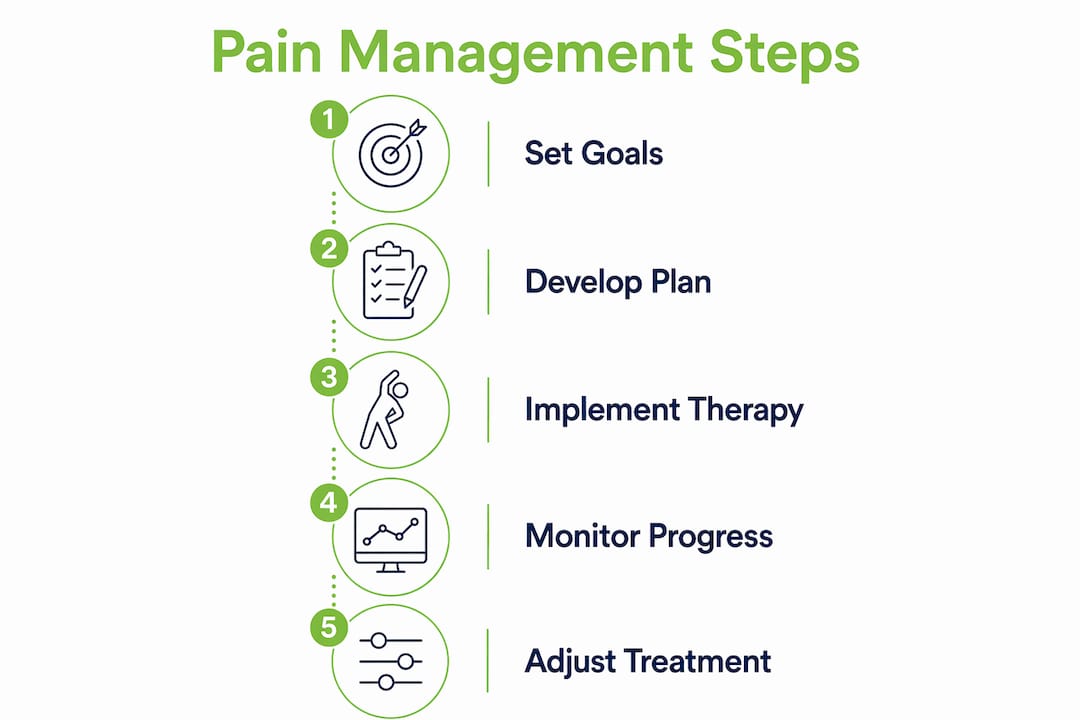
Building a custom pain management strategy is a structured process, not a single appointment. The steps below reflect current evidence from Scotland’s 2026 prescribing guide and the VA wHOPE trial, adapted for adults managing chronic musculoskeletal and spine conditions.
-
Identify meaningful goals tied to your values. Start with the question your clinician should ask: “What matters most to you?” From there, translate your answer into SMART/IES goals — Specific, Measurable, Achievable, Relevant, Time-bound, with an Importance, Ease, and Success rating. Goals should focus on actions you can take, not outcomes you cannot fully control. “Walk for 20 minutes three times per week” is a SMART goal. “Stop hurting” is not.
-
Integrate non-pharmacological therapies as the primary framework. Non-pharmacological approaches include cognitive behavioral therapy (CBT), acceptance and commitment therapy (ACT), mindfulness-based stress reduction, graded physical activity, sleep hygiene protocols, nutritional support, and structured social connection. These are not secondary options. They are the core of any effective tailored pain relief plan.
-
Set pharmacological treatment as a time-limited trial. Medications should be prescribed with a clear functional goal attached and a scheduled review date. Trial-based prescribing means that if a drug does not improve your function within the agreed timeframe, tapering becomes the next step. This prevents the accumulation of medications that provide little benefit while adding side effects.
-
Assemble an interdisciplinary care team. The VA wHOPE trial demonstrated that a whole health interdisciplinary team produced greater pain interference reduction than CBT alone or usual care at 12 months, with pain interference scores dropping from 6.6 to 4.9 in the whole health group. That reduction represents a clinically meaningful shift in daily function. Your team may include a pain physician, physical therapist, occupational therapist, health coach, and integrative clinician depending on your needs.
-
Monitor psychological safety throughout behavioral therapies. This step is often overlooked in self-directed plans. The wHOPE trial tracked suicidal ideation across all treatment groups, finding rates of approximately 13 to 16 percent at 12 months. Behavioral pain therapies can surface difficult emotions. Having a clinician who screens for psychological risk is not optional. It is part of responsible plan design.
| Plan component | Primary method | Review frequency |
|---|---|---|
| Functional goal-setting | SMART/IES framework | Every 4 to 6 weeks |
| Non-pharmacological therapy | CBT, ACT, graded exercise | Ongoing, with monthly check-ins |
| Pharmacological trial | Function-linked prescribing | 4 to 8 weeks per trial |
| Psychological monitoring | Mood and ideation screening | At each clinical contact |
| Interdisciplinary coordination | Physician, PT, coach, integrative clinician | Quarterly or as needed |
Pro Tip: Ask your clinician to document your functional goals in your medical record. When goals are written down and revisited at each visit, both you and your care team stay accountable to the plan rather than defaulting to symptom management alone.
How to monitor progress and adjust your plan over time
Effective pain management does not end when the plan is written. It requires ongoing evaluation, and the metrics you track matter as much as the treatments you choose. Tracking pain intensity alone is insufficient. Pain interference, which measures how much pain disrupts sleep, mood, work, and relationships, is a more clinically meaningful indicator of whether your plan is working.
Practical monitoring strategies include:
- Use validated outcome measures. Pain interference scales, quality of life questionnaires, and mood assessments give you and your clinician objective data to work with at each review.
- Break large goals into smaller steps. Achievable steps with meaningful rewards maintain motivation during the slow middle phase of recovery, when pain may still be present but function is quietly improving.
- Identify barriers early. Motivational barriers, physical limitations, and psychological obstacles all require different responses. Naming them at a scheduled review prevents them from silently derailing your progress.
- Schedule medication reassessments. Medications that are not producing functional improvement should be reviewed and tapered systematically, not continued indefinitely by default.
- Track trends, not single data points. One difficult week does not mean the plan has failed. A pattern of worsening function over four to six weeks is the signal to reassess.
Many patients who come in after trying multiple treatments report that no one ever asked them whether their function had improved, only whether their pain score had changed. That distinction shapes everything about how you measure success.
What are the most common challenges in personalizing pain treatment?
Personalizing a pain plan does not guarantee a smooth path. Knowing the most common obstacles in advance helps you stay engaged when progress feels slow.
Higher baseline pain and disability predict more limited improvements across most treatment domains. Research tracking multidisciplinary treatment outcomes over six months found that patients with severe baseline pain showed less improvement in pain measures, though they did see meaningful gains in anxiety, sleep quality, and overall quality of life. This finding carries an important implication: if your pain is severe, realistic success may look like sleeping better and feeling less anxious, not eliminating pain entirely.
Managing expectations is not pessimism. It is clinical honesty. Functional improvements with personalized plans often require months to manifest, even when non-pharmacological components begin producing benefits earlier. Frustration during this period is predictable and normal.
“The therapeutic relationship is not a soft skill. It is the mechanism through which patients stay engaged long enough for the plan to work. Trust built in the first few consultations determines whether someone returns after a difficult month or quietly gives up.”
Building trust with your care team is not incidental to the plan. It is the plan’s infrastructure. When you feel heard and validated, you are more likely to persist through setbacks, report honestly when something is not working, and engage with behavioral strategies that require sustained effort. Interdisciplinary care teams that include both medical and behavioral clinicians are best positioned to provide this kind of sustained support.
Key takeaways
Personalizing pain management plans works because it aligns treatment decisions with your functional goals, integrates non-pharmacological therapies as the primary framework, and uses interdisciplinary teams to address biological, psychological, and social contributors simultaneously.
| Point | Details |
|---|---|
| Start with meaningful goals | Use the SMART/IES framework to set function-focused goals tied to what matters most to you. |
| Non-pharmacological therapies come first | CBT, ACT, graded exercise, and sleep hygiene form the core of any individualized plan. |
| Medications require functional benchmarks | Prescribe as a time-limited trial with a clear review date and taper if function does not improve. |
| Interdisciplinary teams outperform single-provider care | The VA wHOPE trial showed whole health teams reduced pain interference significantly more than CBT alone. |
| Severe baseline pain requires adjusted expectations | Gains in sleep, anxiety, and quality of life are clinically meaningful outcomes even when pain scores change slowly. |
What I’ve learned from years of treating chronic pain patients
By Felix
After years of working with adults who carry chronic pain into every part of their lives, the pattern I see most often is this: patients arrive having been treated for their pain score, not for their life. Someone has been managing a 7 out of 10 for three years, cycling through medications, and no one has asked them whether they can still walk their dog or sit through dinner with their family.
The most effective personalized treatment approaches I have seen share one quality: they start with listening. Not just to the pain description, but to what the person has lost and what they want back. That conversation changes the entire clinical trajectory.
I am also cautious about timelines. Patients often expect a personalized plan to produce dramatic results within weeks. The evidence does not support that expectation, and neither does clinical experience. Functional improvements accumulate over months. The patients who do best are those who commit to the process during the slow middle phase, when they are doing the work but cannot yet feel the full benefit.
One more thing worth saying directly: medication is not the enemy, but it is also not the foundation. The most durable outcomes I have observed come from plans where non-opioid pain relief strategies carry the structural weight, and pharmacological tools play a supporting, time-limited role. That balance is harder to achieve than it sounds, but it is the standard worth working toward.
— Felix
How Nortex Spine and Joint supports your personalized pain plan
At Nortexspineandjoint, personalized care is not a marketing phrase. It is the clinical structure behind every treatment decision. For patients whose pain involves joint degeneration, tendon damage, or spinal conditions, regenerative options like PRP therapy can complement a broader individualized plan by targeting the biological source of pain rather than masking symptoms. PRP, or platelet-rich plasma therapy, uses your own blood’s growth factors to support tissue repair in areas where conventional treatments have plateaued. Nortexspineandjoint integrates these advanced options with physical therapy, health coaching, and self-management education to build plans that address your full clinical picture. If you are ready to move beyond symptom management, a consultation is the right first step.
FAQ
What is a personalized pain management plan?
A personalized pain management plan is a co-created treatment strategy that aligns clinical interventions with your specific pain type, functional goals, lifestyle, and psychological needs. It integrates non-pharmacological therapies, time-limited medication trials, and interdisciplinary support rather than applying a standard protocol.
How long does it take to see results from a tailored pain plan?
Functional improvements from individualized pain therapy typically require several months to become measurable, though non-pharmacological components like improved sleep and reduced anxiety may show benefits earlier. The VA wHOPE trial observed significant pain interference reductions at the 12-month mark.
What non-surgical options are included in personalized pain plans?
Effective pain management techniques in a personalized plan include CBT, ACT, mindfulness, graded physical activity, sleep hygiene, nutritional support, and regenerative treatments like PRP therapy, all selected based on your individual assessment.
Why does baseline pain severity affect treatment outcomes?
Patients with higher baseline pain and disability show more limited improvements in pain measures over six months, though they often gain meaningfully in sleep quality, anxiety, and quality of life. This makes realistic goal-setting and adjusted outcome tracking critical for this group.
Who should be on my pain management care team?
Your care team should ideally include a pain physician, physical therapist, and health coach, with access to behavioral health support and integrative clinicians when needed. The whole-person team approach has demonstrated better functional outcomes than single-provider care in clinical trials.