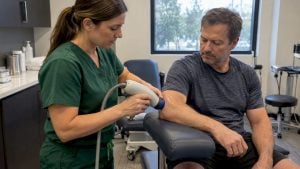

When patients or their families ask me whether physical therapy safe for seniors, it usually comes from a place of concern. I often hear it after a fall, a surgery, or a period of declining mobility. There is hesitation—sometimes fear—that movement might make things worse instead of better. In my clinical experience, those concerns are valid, but they are often based on misunderstandings about how modern rehabilitation is designed and delivered.
In reality, when done appropriately, physical therapy programs tailored to individual needs are not only safe for older adults—they are often one of the most effective conservative care approaches we have for improving function and maintaining independence.
Understanding Why Physical Therapy Safe for Seniors
Safety in physical therapy is not about avoiding movement. It is about using the right movement at the right time, in a structured and supervised way. That distinction matters.
In my experience treating older adults, safety comes from three key factors:
- A clear and accurate diagnosis
- A personalized treatment plan
- Gradual, monitored progression
Seniors are not treated the same way as younger patients. We account for bone density, joint health, balance, cardiovascular tolerance, and any underlying medical conditions. Physical therapy safe for seniors sessions are adjusted accordingly, often starting with low-impact exercises and controlled movements.
I often remind patients that inactivity carries its own risks. Loss of strength, reduced balance, and stiffness can progress quickly without intervention. In many cases, avoiding movement entirely is more harmful than engaging in guided rehabilitation.
No One-Size-Fits-All Approach to Care
There is no single treatment that works for every senior patient. What I see in practice is a range of needs, from mild mobility limitations to more complex, chronic pain conditions.
Physical therapy is one component of a broader care plan. Depending on the individual, that plan may also include:
- Medication management for pain or inflammation
- Interventional procedures such as targeted injections
- Regenerative therapies in select cases
- Lifestyle adjustments and daily movement strategies
For many patients, I integrate structured physical therapy as part of a comprehensive treatment plan alongside other conservative interventions. The goal is not just symptom relief but improved function.In some cases, I may also recommend complementary services available through our non-surgical treatment options to support overall recovery. The key is coordination—making sure each part of the plan supports the others.
What Actually Drives Results in Practice
Over time, I have found that outcomes in seniors are less about physical therapy safe for seniors the specific modality and more about how consistently and appropriately care is applied.
What tends to make the biggest difference includes:
Consistency Over Intensity
Progress does not come from pushing too hard. It comes from showing up regularly and following the plan. Even small, repeated efforts lead to measurable improvements.
Proper Diagnosis
If we are not addressing the underlying cause—whether it is joint degeneration, muscle weakness, or nerve involvement—progress will be limited. This is why the initial evaluation is so important.
Structured Rehabilitation
Exercises are not random. They are selected to improve strength, balance, flexibility, and coordination in a targeted way. Each phase builds on the last.
Patient Accountability
I often tell patients that physical therapy safe for seniors does not stop when the session ends. What they do at home matters just as much. Adherence to home exercise programs is a major factor in long-term success.
Gradual Progression
We increase difficulty slowly. This might mean adding resistance, increasing repetitions, or introducing more complex movements. The goal is steady improvement without unnecessary strain.
Addressing Root Causes
Pain is often a symptom. In seniors, it may be linked to weakness, instability, or compensatory movement patterns. Effective physical therapy safe for seniors focuses on correcting these underlying issues.
What Improvement Looks Like in Seniors
One of the most important conversations I have with patients is about expectations. Improvement is rarely dramatic or immediate. Instead, it tends to show up in subtle, meaningful ways.
Patients often report:
- Walking longer distances without needing to stop
- Fewer episodes of pain flare-ups
- Improved balance and reduced fear of falling
- Better ability to perform daily tasks such as dressing or cooking
- More restful sleep due to reduced discomfort
These changes may seem modest, but they have a significant impact on quality of life. In many cases, they allow patients to maintain independence longer, which is often the primary goal.
Long-Term Management and Prevention
of Physical Therapy for seniors is not just about recovery. It is also about maintaining progress and preventing future problems.
In older adults, muscle strength and joint stability naturally decline over time. Without ongoing attention, gains made during physical therapy safe for seniorscan diminish. That is why I emphasize long-term strategies such as:
Strength and Stability Training
Continuing exercises that support core strength, joint stability, and posture helps reduce the risk of reinjury.
Balance Training
Falls are a major concern in seniors. Ongoing balance training can help reduce that risk.
Movement Awareness
Learning how to move safely—whether lifting, walking, or transitioning between positions—is an essential part of therapy.
Periodic Follow-Up
Some patients benefit from occasional reassessment to adjust their program as their needs change.
The goal is durability—not just short-term relief, but sustained function over time.
A Practical Perspective on Safety
So, is physical therapy safe for seniors? In my experience, when it is guided by a qualified team and tailored to the individual, it is one of the safest and most effective non-surgical options available.
The key is not to avoid movement, but to approach it with structure, supervision, and realistic expectations. Most patients I see are capable of improving their mobility and reducing discomfort, even if progress is gradual.
If you or a family member are considering therapy and are unsure where to begin, a proper evaluation can help clarify the next steps. You can explore care options or schedule a visit through our Allen location to see what a personalized approach might look like.