
Chronic pain rarely behaves the way most people expect. You may have had a scan, been told the injury has healed, and yet the pain persists, sometimes intensifying in ways that don’t correspond to any visible tissue damage. This disconnect frustrates patients and clinicians alike, but modern pain science offers a more complete explanation. Pain is not simply a tissue problem. It involves the nervous system, movement patterns, thoughts, emotions, and behaviors. Understanding this broader picture is exactly what effective rehabilitation addresses, and for those living with chronic musculoskeletal pain in North Dallas, that understanding can open the door to meaningful, lasting relief.
Table of Contents
- How rehabilitation works in pain relief
- Comparing common rehabilitation strategies
- Navigating evidence gaps and real-world results
- Integrating rehabilitation with regenerative and non-surgical treatments
- Maximizing the benefits of your rehabilitation journey
- The hidden reality: success means managing, not erasing, pain
- Connect with advanced pain relief and rehabilitation options in North Dallas
- Frequently asked questions
Key Takeaways
| Point | Details |
|---|---|
| Holistic approach matters | Successful pain relief relies on treating movement, nervous system, and behavior together. |
| Personalization is key | Rehabilitation programs should be tailored to your pain type, background, and response. |
| Evidence varies | Some rehab and regenerative treatments have stronger evidence than others—set realistic goals. |
| Function over cure | The main goal is to improve mobility and life quality, not just eliminate pain. |
| Teamwork yields progress | Communicate openly with your care team for optimal results and ongoing plan adjustment. |
How rehabilitation works in pain relief
The conventional view of pain as a straightforward signal from damaged tissue is incomplete. Pain can persist long after tissues have healed because the nervous system itself becomes sensitized, continuing to generate pain signals even without an ongoing injury. This phenomenon, known as central sensitization, means that treatment focused solely on the original injury site will often fall short.
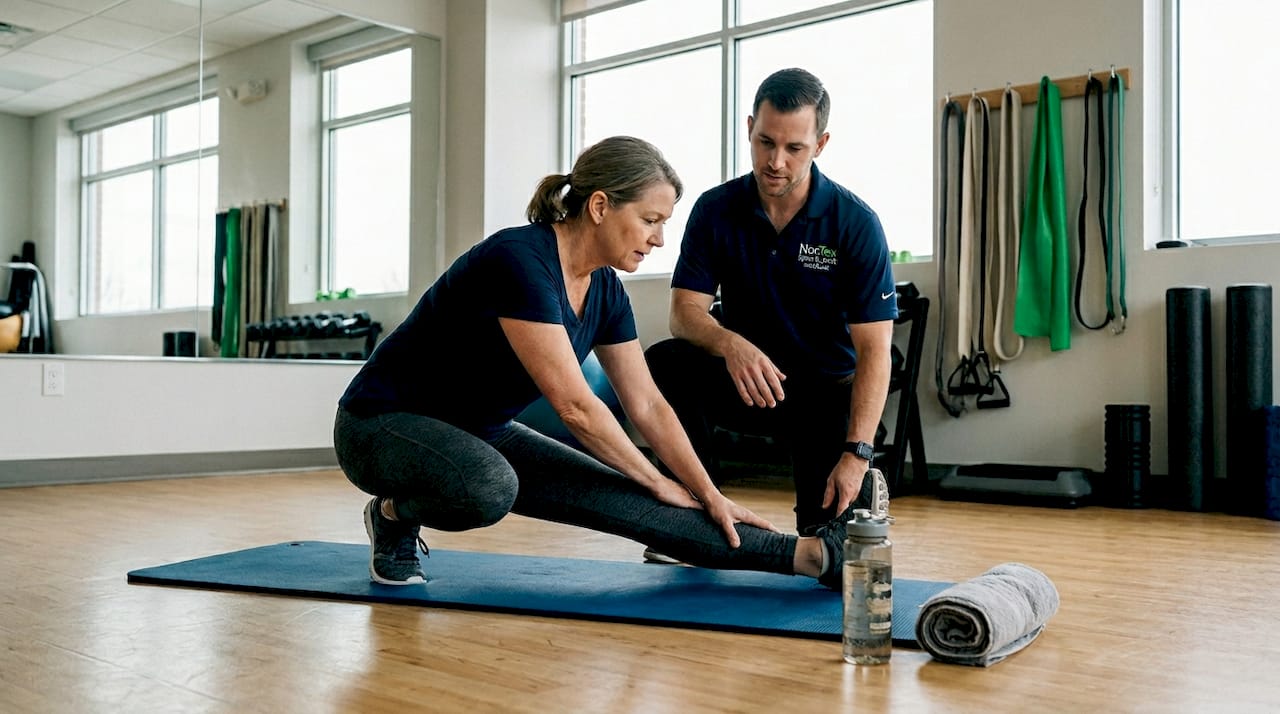
Effective rehabilitation recognizes this complexity. As pain management basics illustrate, modern rehab programs work on multiple levels simultaneously: restoring movement, calming an overactive nervous system, and addressing the thoughts and behaviors that can inadvertently maintain pain.
The mechanisms at play include:
- Movement restoration: Graded physical activity gradually rebuilds strength, flexibility, and normal movement patterns while reducing fear-avoidance behaviors.
- Nervous system recalibration: Therapeutic exercise and manual therapy can reduce central sensitization by promoting healthier pain-signaling pathways.
- Cognitive and behavioral change: Addressing unhelpful beliefs about pain, fear of movement, and catastrophizing reduces the psychological load that amplifies pain perception.
- Mind-body interaction: Relaxation, mindfulness-based strategies, and education help patients develop a more accurate and less threatening understanding of their pain.
Research confirms that rehabilitation care should target mechanisms sustaining pain beyond tissue damage, not just the original injury. In practice, this means that a program combining movement, education, and psychological support will consistently outperform one focused on passive treatments alone.
It is also worth understanding that rehab-oriented relief is best understood as “nervous system plus movement plus cognition and behavior” rather than only tissue repair. This framework explains why two patients with identical MRI findings can respond so differently to the same treatment.
Rehabilitation is not about making your body perfect. It is about making your nervous system and movement system resilient enough to support a full life.
Pro Tip: Early, active participation in your rehab program matters more than the specific technique used. Patients who engage consistently with their provider and take an active role in their care tend to achieve stronger and more durable outcomes.
Comparing common rehabilitation strategies
Now that you understand modern pain science, let’s look at what makes an effective rehabilitation program by examining the three main categories of intervention most commonly recommended for chronic musculoskeletal pain.
Physical rehabilitation includes therapeutic exercise, stretching, manual therapy, and progressive loading programs. These approaches directly address movement impairments, muscle weakness, and structural contributors to pain. Evidence supports their effectiveness for improving physical function and reducing pain intensity in conditions like low back pain, knee osteoarthritis, and rotator cuff injuries.
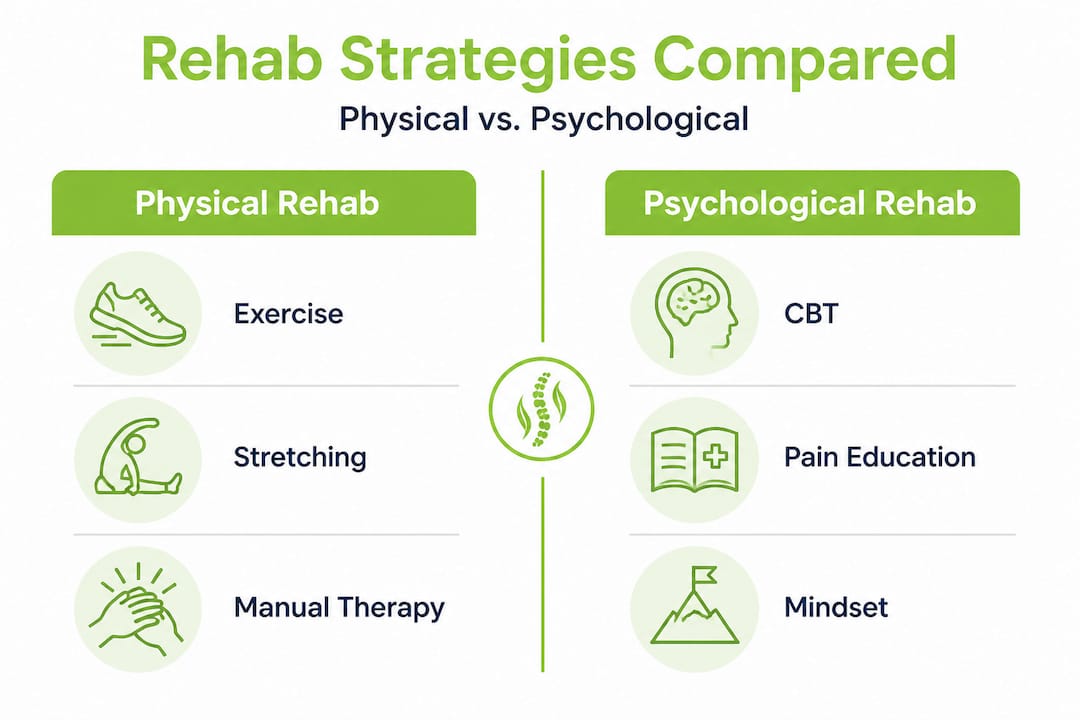
Psychological strategies include cognitive behavioral therapy (CBT), pain education (also called pain neuroscience education), acceptance and commitment therapy, and mindfulness. These approaches target the cognitive and emotional factors that amplify pain and limit recovery. Psychosocial treatments post-injury help with immediate pain and function, but current evidence shows low certainty for sustained long-term relief when used alone.
Neuromodulation refers to therapies that directly alter nerve activity. Common examples include transcutaneous electrical nerve stimulation (TENS), transcranial direct current stimulation (tDCS), and spinal cord stimulation. Research shows that rehabilitation and neuromodulation reduce pain after spinal cord injury and other complex conditions, but trial quality in this area is often limited, making it difficult to draw firm conclusions.
| Strategy | Primary mechanism | Short-term benefit | Long-term evidence | Side effects |
|---|---|---|---|---|
| Physical exercise and movement | Structural and neurological | Strong | Moderate | Rare, mostly soreness |
| Psychological (CBT, education) | Cognitive and emotional | Moderate | Low certainty | Minimal |
| Neuromodulation (TENS, tDCS) | Nerve signal modulation | Moderate | Emerging | Generally low |
| Combined multimodal programs | Multiple mechanisms | Strong | Moderate to strong | Rare |
The most consistent finding across research is that combining physical and psychological approaches outperforms either alone. For patients exploring holistic back pain solutions, this multimodal framework is the current evidence-based standard.
Key factors that influence which strategy is appropriate for you include:
- The specific diagnosis and anatomical location of pain
- How long you have been living with pain (acute versus chronic timelines)
- Your current activity level, fitness, and any comorbid conditions
- Psychological factors such as anxiety, depression, or pain catastrophizing
- Your personal goals, preferences, and available time for participation
Navigating evidence gaps and real-world results
Understanding these overlapping strategies makes it easier to navigate your options. But there is an important gap between what clinical guidelines recommend and what any individual patient actually experiences in practice.
Guidelines are built on population-level data, which means they reflect what works on average across large groups. They do not always account for the real-world clinical heterogeneity and non-responder rates that clinicians see every day. In simpler terms, some patients respond beautifully to a standard protocol, while others see little or no benefit from the same approach.
This reality is not a reason for pessimism. It is a reason for individualization.
Only a subset of patients experience substantial long-term relief from any single rehabilitation approach. For many, ongoing management and periodic adjustment are part of the process.
Several factors beyond the treatment itself influence outcomes:
- Adherence and consistency: Patients who follow through with prescribed exercise and behavioral strategies consistently see better outcomes than those who participate sporadically.
- Social and environmental context: Work demands, home responsibilities, social support, and access to care all shape how well rehabilitation translates into daily life improvement.
- Lifestyle factors: Sleep quality, nutrition, stress management, and physical activity habits outside of formal rehab sessions significantly affect how the nervous system and musculoskeletal system respond to treatment.
- Expectations and mindset: Patients who understand that improvement is gradual and non-linear tend to stay engaged longer, which improves outcomes.
For advanced treatments for chronic back pain, this means that monitoring your response and being willing to adapt your plan is not a sign of failure. It is evidence-based practice.
Pro Tip: If you have not seen meaningful progress after six to eight weeks of consistent effort in a rehabilitation program, speak with your provider about adjusting your plan rather than waiting passively. Regular reassessment is a hallmark of effective care.
Integrating rehabilitation with regenerative and non-surgical treatments
After establishing the importance of personalization, let’s examine how rehabilitation interfaces with regenerative medicine treatments such as PRP (platelet-rich plasma) therapy and mesenchymal stem cell (MSC) therapy, which are increasingly available in North Dallas.
Regenerative treatments work by introducing biological agents designed to stimulate the body’s natural repair processes. PRP uses concentrated platelets from your own blood to deliver growth factors to an injured area. MSC therapy introduces stem cells with the potential to modulate inflammation and support tissue repair. Neither treatment is a standalone solution. Research confirms that rehabilitation should be integrated with and tailored to the biological and mechanical problem targeted by regenerative therapies.
| Treatment | Evidence level | Expected benefit | Rehab integration |
|---|---|---|---|
| PRP therapy | Moderate | Pain reduction, tissue support | Custom loading and activity program post-injection |
| MSC (stem cell) therapy | Emerging and limited | Inflammation modulation | Graduated return to activity with monitoring |
| Exercise rehabilitation alone | Moderate to strong | Function and pain | Core of any program |
| Multimodal (combined) | Strong | Function, pain, quality of life | Fully integrated approach |
Explore regenerative medicine overview and stem cell therapy basics to understand the biological rationale for these approaches before combining them with rehab.
Here is how to approach combining rehabilitation with regenerative injections effectively:
- Establish care team alignment. Before any injection, your physiatrist, physical therapist, and regenerative medicine provider should agree on the treatment rationale, expected timeline, and post-procedure protocol.
- Adjust activity during the biological window. In the days to weeks following a PRP or stem cell injection, activity should be modified to allow the biological process to begin without disrupting the treatment site. Your provider will outline specific restrictions.
- Reintroduce loading progressively. Gradual, structured reloading of the treated tissue encourages the biological response and rebuilds functional strength. Jumping back to full activity prematurely can compromise results.
- Monitor functional outcomes, not just pain scores. Track changes in your ability to perform daily tasks, not just numeric pain ratings. Function often improves before pain fully resolves.
- Reassess and adjust. Schedule follow-up appointments at defined intervals to evaluate progress and modify the rehabilitation program based on how your body is responding.
For patients interested in PRP for back pain, the integration of a structured rehab program is not optional. It is a central part of how results are achieved and sustained.
Maximizing the benefits of your rehabilitation journey
These practical steps make the science real. How should you actually approach rehabilitation to give yourself the best possible chance of meaningful improvement?
Behavioral interventions and structured rehabilitation after procedures like lumbar surgery improve physical activity and reduce sedentary time, which supports function and disability reduction over the long term. The same principles apply to non-surgical programs.
Here is a clear framework to follow:
- Clarify your pain sources before starting. Work with your provider to identify whether your pain is primarily structural, neurological, or a combination. This guides which strategies will be most relevant.
- Set realistic, function-focused goals. Define success in terms of activities you want to return to, such as walking without limitation, returning to work, or playing with grandchildren, rather than targeting complete pain elimination.
- Participate actively in every session. Passive treatments feel appealing when you are in pain, but active participation in exercise and self-management education produces stronger, longer-lasting results.
- Track your progress consistently. Use a simple pain and function diary to document changes week by week. Report early setbacks to your provider before they become plateaus.
- Build sustainable habits after your formal program ends. The transition from structured rehab to independent maintenance is where many patients lose ground. Work with your provider on a realistic home program.
- Address sleep and stress as part of your plan. Poor sleep quality and high stress both amplify pain perception and slow rehabilitation progress. These are not secondary concerns.
For practical back pain management tips from specialists, these principles translate directly into the kinds of conversations patients should be having with their care teams.
Pro Tip: Supportive mindset matters measurably. Patients who approach rehabilitation with realistic optimism, understanding that progress is gradual and setbacks are normal, consistently outperform those who approach it with either passive hope or resigned pessimism.
The hidden reality: success means managing, not erasing, pain
Here is a perspective worth stating directly. The rehabilitation field, and the healthcare system more broadly, has not always been honest enough with patients about what success actually looks like. Marketing language promises relief. Guidelines emphasize evidence of efficacy. But the clinical reality is more nuanced, and patients deserve to understand it.
Rehabilitation rarely delivers a cure for chronic pain. What it reliably delivers, when done well, is a meaningful increase in your capacity to function, move, and participate in life. That is not a consolation prize. For many people, it is genuinely life-changing. But it requires an honest reframing of what you are working toward.
Research illustrates this clearly. In studies of psychological treatments for musculoskeletal pain, only depression symptoms remained significantly lower at six months after treatment. Pain intensity itself may not be completely resolved, even with evidence-based care. This finding is not a failure of rehabilitation. It reflects the biological reality of how the nervous system changes over time in people with chronic pain.
What this means practically is that the most successful rehabilitation patients are those who treat it as an ongoing process rather than a one-time course of treatment. They build habits, revisit their program when life changes, communicate openly with their providers, and measure success by what they are able to do rather than by a number on a pain scale.
For holistic pain management to be effective long-term, this shift in perspective may be the most important change a patient can make. The goal is not to eliminate pain entirely. It is to reduce its control over your life and to restore the activities and relationships that matter most to you.
Connect with advanced pain relief and rehabilitation options in North Dallas
At Nortex Spine and Joint, we combine evidence-based rehabilitation with advanced non-surgical treatments including personalized PRP therapy and stem cell pain therapy to help patients in North Dallas reduce pain, rebuild function, and avoid surgery. Our approach is built on individualized care, meaning your program is designed around your specific diagnosis, goals, and lifestyle, not a generic template. Whether you are managing chronic back pain, joint degeneration, or post-injury discomfort, our team can help you understand your options and build a realistic plan. Explore our full regenerative medicine options and take the first step toward a more functional, active life by scheduling a consultation with our North Dallas team today.
Frequently asked questions
How quickly can rehabilitation reduce my pain?
Some individuals notice improvements within a few weeks, but responses vary considerably, and durable long-term benefits typically require sustained effort and periodic program adjustment. Research shows that pain reductions occurred immediately after psychological and physical rehabilitation, but certainty about lasting effects remains low.
Is non-surgical rehabilitation effective for all types of chronic pain?
Effectiveness depends on pain type, individual biology, and adherence. Not all patients respond equally to guideline-based programs, and non-responder rates highlight the importance of individualized monitoring and plan adjustment.
How does rehabilitation fit with PRP or stem cell injections?
Rehabilitation should be carefully tailored to complement and protect the biological work done by regenerative injections. Research confirms that rehab should be calibrated to the biological and mechanical target of any regenerative therapy being used.
Can rehabilitation improve my quality of life even if pain is still present?
Yes. Physical function and mobility commonly improve with structured rehabilitation even when pain is not fully eliminated, and physical function often improves with rehab even when persistent pain remains.
Recommended
- Can Physical Therapy Help Post-Surgery Recovery? – Nortex | Pain Management | Allen, Garland, McKinney & Plano Texas
- The Road to Recovery: Working with a Shoulder Pain Specialist – Nortex | Pain Management | Allen, Garland, McKinney & Plano Texas
- Advanced Pain Management Strategies in Knee Care – Nortex | Pain Management | Allen, Garland, McKinney & Plano Texas
- The Role of Physical Therapy in Back Pain: A Specialist’s View – Nortex | Pain Management | Allen, Garland, McKinney & Plano Texas