
The honest answer is: it depends on the patient and the product. Current research shows modest, statistically meaningful pain and function improvements from intradiscal stem cell injections in carefully selected patients with discogenic back pain, with some allogeneic cell products showing more durable results than autologous preparations. Benefits typically build over months, not days, and these procedures remain elective, with insurance coverage inconsistent at best.
TL;DR:
- Allogeneic stem cell products, delivered with a carrier, tend to show more durable and consistent results up to 36 months than autologous options, which vary based on patient health.
- Candidates usually have chronic discogenic pain lasting more than six months, with MRI evidence of disc degeneration, and must have failed conservative treatments before consideration.
- The procedure involves harvesting cells (if autologous), precise injection under imaging guidance, and requires a recovery period with activity restrictions; pain improvement typically appears between three and twelve months.
- Risks are generally low but include rare infections and disc reherniation, with no confirmed increased cancer risk; safety depends heavily on sterile techniques and provider experience.
- Insurance coverage is limited, making out-of-pocket costs unpredictable, with prices depending on the biologic type, preparation, and facility, so detailed estimates and thorough documentation are essential.
Table of Contents
- Does Stem Cell Therapy Work for Back Pain?
- Who Is a Good Candidate for Stem Cell Injections?
- What Happens During the Procedure and Recovery?
- PRP, BMAC, and Stem Cells: What’s the Difference?
- How Much Pain Relief Can You Realistically Expect?
- What Are the Risks of Stem Cell Injections?
- How Much Does Stem Cell Therapy for Back Pain Cost?
- How Do Doctors Decide If You’re a Candidate?
- A Clinician’s View on Choosing the Right Path
- Get an Evidence-Based Evaluation at a qualified regenerative medicine clinic
- Sources
- FAQ
Does Stem Cell Therapy Work for Back Pain?
You’ve probably read conflicting things about this. One article calls it a breakthrough. Another calls it unproven. Both are partly right, and the truth sits in the space between.
Recent meta-analyses of randomized trials pooling roughly 518 to 594 patients across seven studies found intradiscal mesenchymal stem cell (MSC) therapy produces modest but statistically significant improvements in pain scores (VAS) and functional scores (ODI) compared with control groups. Responder rates, meaning the share of patients who hit a meaningful threshold like 30% or 50% pain reduction, tend to climb starting around 6 to 12 months after injection. That delayed timeline surprises a lot of patients who expect relief within weeks, the way they might after a steroid injection.
The American Society of Interventional Pain Physicians issued 2025 guidelines that classify intradiscal PRP and MSC injections as Level III, or “Fair,” evidence. In plain terms, Level III means there’s a real signal worth acting on in the right patient, but the research base isn’t yet strong enough to call these treatments a default first line. ASIPP’s guidance is to use them selectively, after thorough diagnostic workup, and with clear informed consent about what the evidence does and doesn’t support.
Here’s where it gets more interesting clinically. Not all biologic products perform the same in trials.
- Some allogeneic mesenchymal precursor cell (MPC) products, delivered with a carrier vehicle like hyaluronic acid, show durable and statistically significant improvements out to 36 months in certain multicenter trials.
- Autologous bone marrow aspirate concentrate (BMAC) and autologous MSC preparations show far more variable results, some strongly positive, some no better than saline.
- A systematic review of RCTs found that trial design differences and placebo/saline response rates complicate direct comparisons between studies.
Quick fact: Meta-analyses tracking intradiscal MSC therapy through 36 months report no consistent increase in serious adverse events compared with control injections, though sample sizes remain small enough that rare risks could still be underdetected.
Why the split between allogeneic and autologous results? Allogeneic products come from donor tissue, processed and expanded in controlled lab conditions, so dose and cell viability are standardized batch to batch. Autologous products depend on your own cells, harvested that day, and your age, health status, and marrow quality all affect what actually gets injected. A 55-year-old with well-preserved marrow and a 68-year-old with several comorbidities are not getting the same product, even though both call it “your own stem cells.”
There’s also an active comparative trial worth knowing about. Clinicaltrials directly comparing intradiscal autologous stem cells against intradiscal steroid injections, using standardized follow-up at 3, 6, and 12 months. That kind of head-to-head design is exactly what the field needs more of before we can make confident, universal claims.
Who Is a Good Candidate for Stem Cell Injections?
Not everyone with a bad back qualifies, and that’s actually good news. It means clinicians have identified patterns that predict who’s likely to benefit.
The typical candidate profile includes chronic discogenic pain, usually present for more than six months, with MRI findings showing disc degeneration that correlates with the pain pattern. Just as important: you’ve already tried structured conservative care, including physical therapy, medication management, and often a targeted injection, without lasting relief. Many patients come in after trying multiple treatments over a year or two, frustrated that nothing has stuck. That history isn’t a failure on your part. It’s actually part of what makes you a reasonable candidate for the next step.
Certain findings tend to rule people out:
- Severe disc height loss, generally greater than 50% of normal, which suggests the disc has degenerated past the point where cellular therapy has much to work with.
- Multilevel, advanced degeneration across three or more disc levels.
- Active infection anywhere in the body, or a bleeding disorder (coagulopathy) that complicates safe injection.
- Uncontrolled systemic disease, such as poorly managed diabetes or autoimmune conditions that impair healing.
Clinicians confirm discogenic pain isn’t coming from somewhere else first. That usually means correlating your MRI findings with your symptom pattern, and in select cases, using provocative discography, a diagnostic injection into the disc itself to reproduce your pain and confirm the source. Diagnostic injections targeting the facet joints or sacroiliac joint may also be used to rule out those as the real culprit before anyone talks about stem cells.
Pro Tip: Bring your actual imaging files, not just a radiology report, along with records of every conservative treatment you’ve tried and roughly when you tried it. A pain diary from the last few weeks helps your provider see patterns your memory alone won’t capture.
If you’re unsure whether your history qualifies, our guide to regenerative injection options and what to ask walks through the questions worth raising at a first consult.
What Happens During the Procedure and Recovery?
Picture the visit in three phases: evaluation, the injection itself, and a short recovery window before you know much of anything.
- Pre-procedure evaluation. Your provider reviews imaging, confirms the disc level, and checks labs if the plan involves harvesting your own cells. If you’re on blood thinners or NSAIDs, you’ll likely be asked to hold them for a set window beforehand, since many trial protocols restrict anti-inflammatory medications around the procedure to avoid blunting the biologic response.
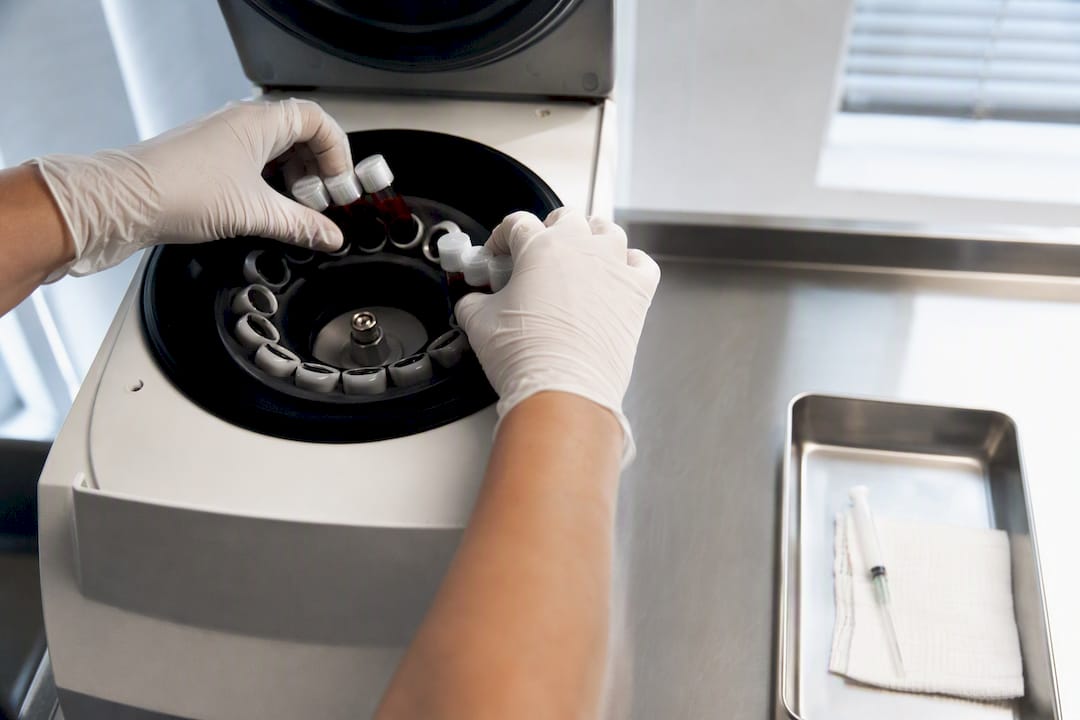
- Harvest and processing (autologous cases only). Bone marrow aspirate is typically drawn from the pelvis under local anesthesia, then spun down in a centrifuge to concentrate the cellular fraction. Allogeneic products skip this step entirely since they arrive pre-processed.
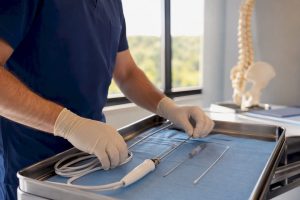
- Sterile injection under imaging guidance. Using fluoroscopy or CT for precise needle placement, the provider delivers the biologic directly into the disc. You’re awake, usually with light sedation or local numbing, and most patients describe pressure rather than sharp pain.
- Observation and discharge. A short monitoring period follows to watch for immediate reactions, then you go home the same day.
Immediate aftercare is intentionally low-key. Expect restricted bending, lifting, and twisting for a period your provider will specify, along with instructions to watch for fever, worsening pain, or redness at the injection site, which could signal infection. Most protocols also ask patients to avoid NSAIDs and corticosteroids for a stretch after the injection, since these medications can dampen the inflammatory signaling that helps drive tissue response.
Here’s what I want you to hear clearly: don’t expect to feel better next week. Many patients notice little to no early change in the first few weeks, and that’s normal, not a sign the treatment failed. Trial data consistently shows measurable improvement building between 3 and 12 months, with some products showing durability well beyond that. If you walk in expecting a quick fix, you’ll likely be disappointed even in a technically successful case.
PRP, BMAC, and Stem Cells: What’s the Difference?
Patients often use “stem cell therapy” as a catch-all term, but the biologic categories differ substantially, and that matters for what you should expect.
Platelet-rich plasma (PRP) comes from your own blood, spun down to concentrate platelets and their growth factors. It contains no stem cells at all. A 2025 systematic review of RCTs found PRP provided greater improvement than corticosteroid injections by 3 to 6 months for lumbar radiculopathy and facet-mediated pain, but intradiscal PRP results for discogenic pain specifically were mixed, less consistent than its performance on nerve or joint-related pain.
Autologous BMAC and MSCs come from your own bone marrow or fat tissue. Results vary widely because your cell quality, age, and marrow health directly affect the dose delivered.
Allogeneic MPC/MSC products come from donor tissue lines, processed and expanded under lab conditions for consistent potency. These showed some of the more durable trial results, particularly when delivered with a carrier vehicle.
Cellular allografts are processed donor tissue products marketed in some clinics, though evidence quality and regulatory status vary considerably by product.
Preparation details matter more than most marketing materials admit. Platelet concentration in PRP, cell dose and viability in stem cell products, and whether a carrier vehicle like hyaluronic acid is used all shape outcomes and explain why one clinic’s results don’t necessarily transfer to another’s. Some allogeneic products remain investigational or limited to registered trial sites, so availability varies by region. Our breakdown of how PRP promotes healing covers the mechanism in more depth if you’re weighing PRP against cellular options.
How Much Pain Relief Can You Realistically Expect?
This is the question every patient actually wants answered, and it deserves a specific answer rather than a vague reassurance.
Researchers typically measure success using two tools: the VAS (Visual Analog Scale) for pain intensity, and the ODI (Oswestry Disability Index) for functional limitation. The minimum clinically important difference, the smallest change a patient would actually notice and value, generally falls around a 2-point drop on a 10-point VAS scale or roughly a 10-point improvement on ODI.
What the numbers say: In pooled trial data, mean improvements across intradiscal MSC studies are modest, but responder rates (the percentage of patients hitting that meaningful threshold) climb higher for certain allogeneic products through 36 months than for autologous alternatives.
Why do some patients respond dramatically while others feel little change? A handful of factors seem to matter most:
- The disc’s internal environment, meaning how much inflammation and how little blood supply the target area has, affects whether injected cells survive and function.
- Cell dose and potency, which varies by preparation method and, for autologous products, by your own biology.
- Comorbidities like diabetes or smoking history, both of which impair tissue healing broadly.
- A genuine placebo effect, which shows up in nearly every injection-based pain trial and complicates how confidently we can attribute improvement to the biologic itself.
I’d encourage every patient considering this to track their own data. Keep a simple pain diary and note specific functional benchmarks, like how far you can walk or how long you can sit, before and after treatment. Group averages from a study tell you what’s possible. Your own numbers tell you what actually happened.
What Are the Risks of Stem Cell Injections?
Most trials report a reassuring safety profile, but “low risk” doesn’t mean “no risk,” and you deserve the full picture.
Serious adverse events remain uncommon across published RCTs and reviews, and a systematic review of clinical studies through 2026 supports acceptable mid-term safety with follow-up extending to 72 months in some cohorts. That said, procedure-related infections, including spondylodiscitis (infection of the disc and adjacent vertebrae), have been reported, along with occasional post-procedure disc reherniation. These are rare, but they’re not theoretical.
One honest caveat: long-term oncologic risk from stem cell therapy has historically been a theoretical concern given cells’ proliferative capacity. Current trial data shows no signal of increased cancer risk, but follow-up periods in most studies still fall short of what would be needed to fully rule this out over a patient’s lifetime.
Practical steps that reduce risk on your end:
- Confirm the facility follows strict sterile technique and holds appropriate accreditation.
- Ask about your provider’s specific training and experience with image-guided spinal injections.
- Get a clear written follow-up plan before the procedure, not after.
- Report any fever, increasing pain, or new neurological symptoms immediately rather than waiting it out.
How Much Does Stem Cell Therapy for Back Pain Cost?
Here’s something clinics don’t always lead with: most insurers still classify intradiscal biologic injections as elective or investigational, which means coverage is inconsistent and often absent entirely. You should plan financially as though you’ll be paying out of pocket, then be pleasantly surprised if any of it gets reimbursed.
Costs vary widely depending on the biologic product used, whether cells are harvested and processed on-site, the imaging guidance required, and facility fees. Autologous procedures tend to cost less than specialized allogeneic products, and pricing differs by clinic and region. Our detailed breakdown of U.S. stem cell therapy costs walks through the specific price drivers if you want a fuller picture before your consult.
A few steps make the financial conversation easier:
- Request an itemized estimate before scheduling, not a vague ballpark.
- Ask directly whether bundled pricing covers imaging, the procedure, and follow-up visits, or whether those are billed separately.
- Keep documentation of every conservative treatment you’ve tried. If you ever appeal an insurance denial, that paper trail is your strongest evidence that this wasn’t a shortcut.
How Do Doctors Decide If You’re a Candidate?
Confirming discogenic pain, and ruling out other sources, is a deliberate, stepwise process, not a quick judgment call from a single MRI glance.
- Clinical history and targeted exam. Your provider maps your pain pattern, aggravating movements, and prior treatment responses against what discogenic pain typically looks like.
- MRI correlation. Imaging findings need to match your symptoms; a degenerated disc that doesn’t correlate with your pain location isn’t necessarily the source.
- Selective diagnostic injections. Facet or sacroiliac joint injections may be used to rule those structures out, and provocative discography can help confirm the disc itself as the pain generator in select cases.
- Documented failure of conservative care. Structured physical therapy, medication trials, and targeted injections generally need to have been tried and failed before intradiscal biologics enter the conversation.
Once a patient moves forward, the injection itself isn’t treated as a standalone event. Post-procedure rehab, usually a graded physical therapy program, gets built into the plan from the start. If response is partial, some patients are candidates for a repeat injection or a different modality; if there’s minimal response and structural findings are severe, surgical evaluation becomes the more appropriate next conversation.
Pro Tip: Ask your provider directly what specific outcome measure they’ll use to judge success at your follow-up visit, whether that’s a percentage pain reduction, a functional milestone, or an ODI score change. If they can’t answer that clearly, that’s worth noting.
A Clinician’s View on Choosing the Right Path
Here’s what I’ve come to believe after years of walking patients through this decision: the biggest failure point isn’t the biologic itself, it’s skipping the diagnostic groundwork. A stem cell injection placed into the wrong disc, or into a disc that’s degenerated past the point of benefit, was never going to work regardless of how good the product was.
I’m also cautious of any clinic that talks about these injections as a cure rather than a tool. The evidence, even the encouraging allogeneic data, describes probability and degree, not certainty. A responsible consult should walk you through what the trials actually show, including where autologous results get inconsistent, what alternatives exist, what this will cost you, and what the follow-up plan looks like if it doesn’t work as hoped.
Watch for red flags: absolute cure language, no willingness to discuss failure rates, or a pitch that skips diagnostic imaging entirely. Good regenerative medicine looks more like careful selection than aggressive selling.
— Felix
Get an Evidence-Based Evaluation at a qualified regenerative medicine clinic
Nortex Spine and Joint gives you what a lot of regenerative clinics skip: a full diagnostic workup before anyone discusses biologics, so you’re not guessing whether your disc is actually the pain source. Our approach pairs imaging review, targeted diagnostic injections when needed, and PRP or stem cell assessment with a structured rehab plan, rather than treating the injection as a one-time fix. A consult includes a transparent look at what current evidence supports for your specific presentation, realistic timelines, and what documentation from prior treatments will help build your case.
Bring recent MRI imaging, records of conservative treatments you’ve tried, and any pain diary notes you’ve kept. From there, our team can walk you through whether you fit the candidate profile the research actually supports. Visit our stem cell therapy page to review the evaluation process and schedule a consultation.
Sources
The research behind this article comes from a handful of sources worth bringing up directly with your provider:
- Intradiscal mesenchymal stem cell therapy meta-analyses (2025)
- Comprehensive evidence-based guidelines for regenerative therapies in chronic low back pain — ASIPP (2025)
This article is general information, not a substitute for advice from a qualified doctor. Consult a qualified healthcare professional about your own circumstances before acting on anything here.
FAQ
How long does it take to recover from stem cell treatment?
Most patients resume light normal activity within days, but you’re generally asked to avoid heavy lifting, bending, and twisting for a period of time specified by your provider, while the biologic takes effect internally.
When will I actually feel less pain after the injection?
Don’t expect early relief. Trial data shows measurable pain and function improvement typically building between 3 and 12 months, with some allogeneic products showing continued benefit out to 36 months.
What are the potential side effects of stem cell therapy for back pain?
Serious complications are uncommon, but reported risks include procedure-related infection (such as spondylodiscitis) and, rarely, post-procedure disc reherniation; most trials show no consistent increase in serious adverse events versus control groups.
How many stem cell treatments are needed for back pain?
Most protocols start with a single intradiscal injection and reassess response at follow-up intervals over several months; a repeat injection or alternative approach may be considered if response is partial.
Is stem cell therapy covered by insurance for back pain?
Coverage is inconsistent. Most insurers currently classify intradiscal biologic injections as elective or investigational, so plan for significant out-of-pocket costs and document your conservative-care history in case you want to appeal a denial.
Who is not a good candidate for stem cell injections?
Poor candidates typically include those with severe disc height loss over 50%, multilevel advanced degeneration, active infection, uncontrolled systemic disease, or bleeding disorders that complicate safe injection.