

Therapy for chronic pain is defined as a structured set of physical and psychological interventions designed to improve function, reduce pain interference, and restore quality of life. The goal is not to eliminate pain entirely. Chronic pain is a biopsychosocial condition, meaning it involves physical, emotional, and social factors that all require attention. Techniques like Cognitive Behavioral Therapy (CBT), Pain Reprocessing Therapy (PRT), and graded physical exercise each address a different layer of the pain experience. When these approaches are coordinated, patients gain real, measurable improvements in daily function, even when some level of pain persists.
What is the role of therapy in chronic pain?
Therapy targets the way pain interferes with your life, not just the pain signal itself. This distinction matters because chronic pain, unlike acute pain, does not reliably respond to treatments aimed at fixing a structural source. The nervous system becomes sensitized over time, amplifying pain signals even when tissue damage is minimal or absent. Therapy works by addressing that sensitization directly, through both the mind and the body.
Many patients arrive at a clinic after trying multiple treatments, including medications, injections, and imaging-guided procedures, without lasting relief. What they often have not tried is a coordinated, multidisciplinary approach. Multidisciplinary therapy is the most effective management strategy for chronic pain, involving pain-informed psychologists and physical therapists working together. That coordination produces outcomes that neither discipline achieves alone.
Chronic pain management strategies work best when they address all three dimensions of the biopsychosocial model: the physical experience of pain, the emotional response to it, and the social consequences of living with it. Therapy gives you tools to manage each dimension. The result is not a cure. It is a meaningful, sustained improvement in what you can do and how you feel day to day.

How does psychological therapy help manage chronic pain?
Psychological therapy for chronic pain targets the emotional and cognitive layers that amplify physical pain. Fear, catastrophizing, and avoidance behaviors all increase pain intensity and disability. Therapy interrupts those patterns.
Cognitive Behavioral Therapy (CBT)
CBT is the most widely studied psychological approach for chronic pain. It helps you identify and change unhelpful thought patterns, such as believing that all movement will cause harm or that pain signals permanent damage. Self-directed CBT produces a mean pain interference score of 5.26 versus 6.23 for clinician-delivered CBT at four months. That finding means patients who engage actively with CBT content, even outside of formal sessions, achieve better outcomes than those who remain passive recipients of care.
Pain Reprocessing Therapy (PRT)
PRT is a newer approach that targets the brain’s learned association between movement and danger. In a clinical trial, PRT led to 24% of participants being pain-free or nearly pain-free post-treatment, compared to 0% for CBT and 2% for usual care. Those results, with sustained effects reported up to five years, represent a significant advance in what psychological therapy can achieve for chronic pain.
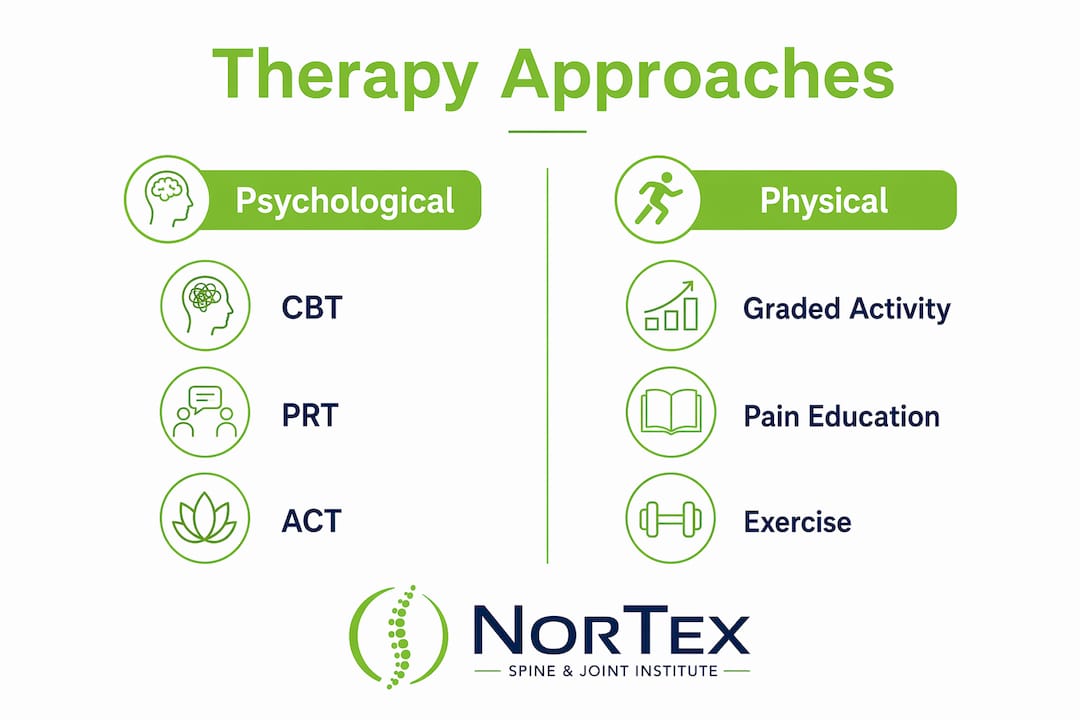
Acceptance and Commitment Therapy (ACT)
ACT takes a different angle. Rather than changing thoughts, it helps you accept that pain exists while committing to actions aligned with your values. Patients who practice ACT report reduced suffering and greater engagement in meaningful activities, even when pain levels remain unchanged.
Key benefits of psychological therapy for chronic pain include:
- Reduced fear of movement and re-injury
- Lower catastrophizing scores, which correlate with less disability
- Improved coping skills for pain flare-ups
- Greater engagement in daily activities despite persistent symptoms
- Reduced emotional suffering layered on physical pain
Pro Tip: If formal therapy sessions are not accessible, structured self-directed CBT programs have shown measurable benefits. Ask your care team about evidence-based digital or workbook formats.
How does physical therapy for chronic pain work?
Physical therapy for chronic pain operates on a fundamentally different model than physical therapy for an acute injury. The focus is not on fixing structural damage. It is on retraining the nervous system through graded, low-intensity exercise and patient education about pain neuroscience.
Graded activity and the nervous system
The nervous system in chronic pain becomes hypersensitive, treating ordinary movement as a threat. Physical therapists address this by introducing movement at levels below the nervous system’s threat threshold. Progress is gradual and deliberate. The goal is to expand what you can do without triggering a flare-up, building tolerance over weeks and months rather than days.
A common trap in chronic pain is the boom-bust cycle. Patients feel better, overdo activity, experience a flare, and then rest completely. That pattern reinforces nervous system sensitization and slows recovery. Consistent, low-dose activity between sessions is more effective for long-term recovery than alternating between overexertion and complete rest.
Pain neuroscience education
One of the most powerful tools in physical therapy is education. Physical therapists help patients understand that pain is not always a sign of tissue damage. This reframing reduces fear-avoidance behavior, which is the tendency to stop moving because you expect pain to mean harm. When patients understand that movement is safe, they engage more fully in rehabilitation.
Physical therapy for chronic pain delivers measurable improvements in:
- Mobility and joint range of motion
- Muscular strength and endurance
- Postural control and body mechanics
- Long-term pain resilience through nervous system adaptation
- Confidence in movement, which reduces psychological distress
Pro Tip: Track your daily activity baseline before starting a graded exercise program. Knowing your starting point helps your physical therapist set realistic progression targets and prevents the boom-bust cycle from derailing your progress. You can learn more about exercise and pain relief in Nortexspineandjoint’s clinical blog.
Why does combining psychological and physical therapy improve outcomes?
Combining CBT with structured exercise produces better results than either treatment alone. A systematic review found that integrated CBT and exercise yields small to moderate improvements in chronic pain intensity and function, with sustained benefits over time. Those gains are clinically meaningful for patients whose pain has resisted single-modality treatment.
The reason combined therapy works better comes down to the biopsychosocial model. Physical exercise addresses nervous system sensitization and physical deconditioning. CBT addresses the fear, avoidance, and catastrophizing that prevent patients from engaging in exercise. Each treatment removes a barrier that the other cannot address alone.
The best chronic pain outcomes come from simultaneous, coordinated treatment by pain-informed psychologists and physical therapists within an interdisciplinary team. Coordination is the operative word. A physical therapist and a psychologist working in parallel but not communicating will not achieve the same results as a team that shares patient goals and adjusts plans together.
| Therapy approach | Primary target | Key benefit |
|---|---|---|
| Cognitive Behavioral Therapy | Thought patterns and fear | Reduces catastrophizing and avoidance |
| Pain Reprocessing Therapy | Brain’s learned pain response | Higher rates of pain-free outcomes |
| Graded physical exercise | Nervous system sensitization | Restores function and movement tolerance |
| Combined CBT and exercise | Biopsychosocial pain factors | Sustained improvements in intensity and disability |
Patient adherence is the variable that determines whether combined therapy succeeds. Personalized plans that account for your specific pain patterns, activity history, and emotional state produce better adherence than generic protocols. For physical therapy techniques that support this approach, Nortexspineandjoint provides detailed clinical guidance.
What are common misconceptions about therapy for chronic pain?
The most damaging misconception is that therapy implies the pain is “all in your head.” This misunderstanding causes patients to disengage from treatment that could genuinely help them. Biopsychosocial pain models clarify that pain is real and can be amplified by neural sensitization. Explaining this to patients prevents misunderstanding and keeps them engaged in care.
A second misconception is that therapy should eliminate pain before you can return to normal life. Therapy’s actual goal is to reduce the suffering and interference that pain causes, not to achieve a pain-free state as a prerequisite for living. Reducing emotional suffering layered on physical pain helps patients reclaim meaningful activities despite ongoing symptoms. That shift in focus is often what allows real progress to begin.
Emotional barriers are real and deserve direct attention. Isolation, hopelessness, and grief over lost function are common in chronic pain. These emotions are not signs of weakness. They are predictable responses to a condition that disrupts every area of life.
“Therapy helps you manage the emotional layers of chronic pain, not deny the physical reality of it. When patients stop waiting to feel better before they start living, that is when we see genuine progress.”
Practical strategies for managing emotional challenges in chronic pain include:
- Setting small, specific activity goals rather than aiming for full recovery at once
- Building a support network that understands chronic pain’s unpredictability
- Communicating openly with your care team about setbacks without treating them as failures
- Avoiding all-or-nothing thinking, which reinforces the boom-bust cycle
Realistic timelines matter. Most patients see meaningful functional improvements over weeks to months, not days. Setbacks are part of the process, not evidence that therapy has failed. For a structured approach to lasting pain relief, a phased plan helps set appropriate expectations.
Key Takeaways
Therapy for chronic pain works by improving function and reducing pain interference across physical, psychological, and social dimensions, not by eliminating pain entirely.
| Point | Details |
|---|---|
| Therapy targets function, not cure | The goal is reducing pain interference and restoring daily activities, not achieving a pain-free state. |
| Psychological therapy changes pain patterns | CBT and PRT reduce fear, catastrophizing, and the brain’s learned pain responses with sustained results. |
| Physical therapy retrains the nervous system | Graded exercise below threat thresholds builds movement tolerance and breaks the boom-bust cycle. |
| Combined therapy outperforms single approaches | Integrated CBT and exercise yields small to moderate improvements in pain intensity and disability. |
| Biopsychosocial education improves engagement | Explaining neural sensitization prevents patients from feeling dismissed and keeps them in treatment. |
What I’ve learned about therapy and chronic pain after years in the clinic
Patients often arrive skeptical of therapy. They have had pain for years, they have tried medications and procedures, and now someone is suggesting they see a psychologist or do gentle exercises. The skepticism is understandable. It is also one of the biggest obstacles to recovery.
What I have seen repeatedly is that patients who engage with both the physical and psychological components of care make progress that surprises them. Not because therapy is a miracle. Because it addresses the parts of chronic pain that nothing else touches: the fear, the avoidance, the nervous system that has learned to amplify every signal. Once patients understand that their pain is real and that the nervous system can be retrained, something shifts. They stop bracing against every movement and start building capacity instead.
The patients who struggle most are those who wait for pain to disappear before engaging in therapy. That approach keeps them stuck. The patients who do best set small goals, track their progress, and accept that some days will be harder than others. They treat setbacks as information, not failure. That mindset, combined with a coordinated care team, is what produces lasting improvement. Therapy is not a soft option. It is often the most demanding and most effective work a chronic pain patient will do.
— Felix
Personalized pain care at Nortexspineandjoint
Nortexspineandjoint offers a multidisciplinary approach to chronic pain that integrates physical rehabilitation with advanced regenerative treatments. For patients whose pain has not responded to conventional care, options like PRP therapy use platelet-rich plasma to support tissue repair and reduce inflammation at the source. These treatments complement structured physical therapy and behavioral health support, creating a coordinated plan that addresses pain from multiple angles. Nortexspineandjoint serves patients across North Dallas with personalized, evidence-based care designed to restore function and improve quality of life without surgery. Schedule a consultation to discuss which combination of therapies fits your specific condition and goals.
FAQ
What is the primary goal of therapy for chronic pain?
The primary goal is to reduce pain interference with daily function and improve quality of life. Therapy does not aim to eliminate pain entirely but to help patients manage it more effectively.
Is psychological therapy effective for physical pain?
Yes. CBT and Pain Reprocessing Therapy produce measurable reductions in pain intensity and disability. PRT led to 24% of participants being pain-free or nearly pain-free post-treatment in a recent clinical trial.
How is physical therapy for chronic pain different from injury rehab?
Chronic pain physical therapy focuses on retraining the nervous system through graded, sub-threshold exercise rather than repairing a specific injury. The emphasis is on building movement tolerance and reducing fear-avoidance behavior.
Can therapy and regenerative treatments be used together?
Yes. Treatments like PRP therapy address tissue-level pain sources, while physical and psychological therapy address nervous system sensitization and functional limitations. Combined approaches often produce better outcomes than either alone.
How long does therapy take to show results for chronic pain?
Most patients see meaningful functional improvements over weeks to months. Progress is gradual and non-linear, with setbacks expected as part of recovery rather than signs of treatment failure.