
Hip pain is a symptom with multiple potential origins, including the joint itself, surrounding soft tissues, and referred sources such as the lumbar spine or sacroiliac joint. Understanding hip pain causes is the first step toward identifying the right diagnosis and avoiding treatments that target the wrong structure. Not all hip pain originates from the hip joint, and that distinction matters enormously when you are deciding whether to rest, seek physical therapy, or pursue further imaging. This guide walks through the most common causes, how to read your symptoms, and what non-surgical treatment options are available in 2026.
What are the most common causes of hip pain?
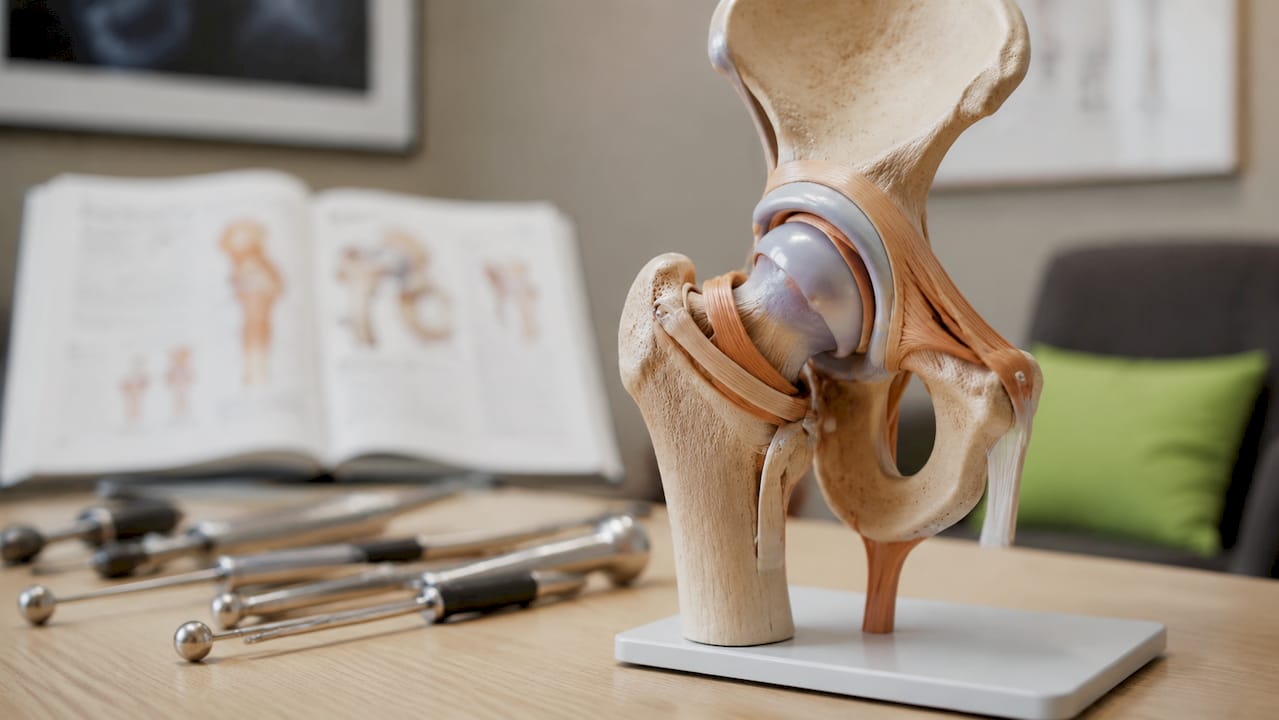
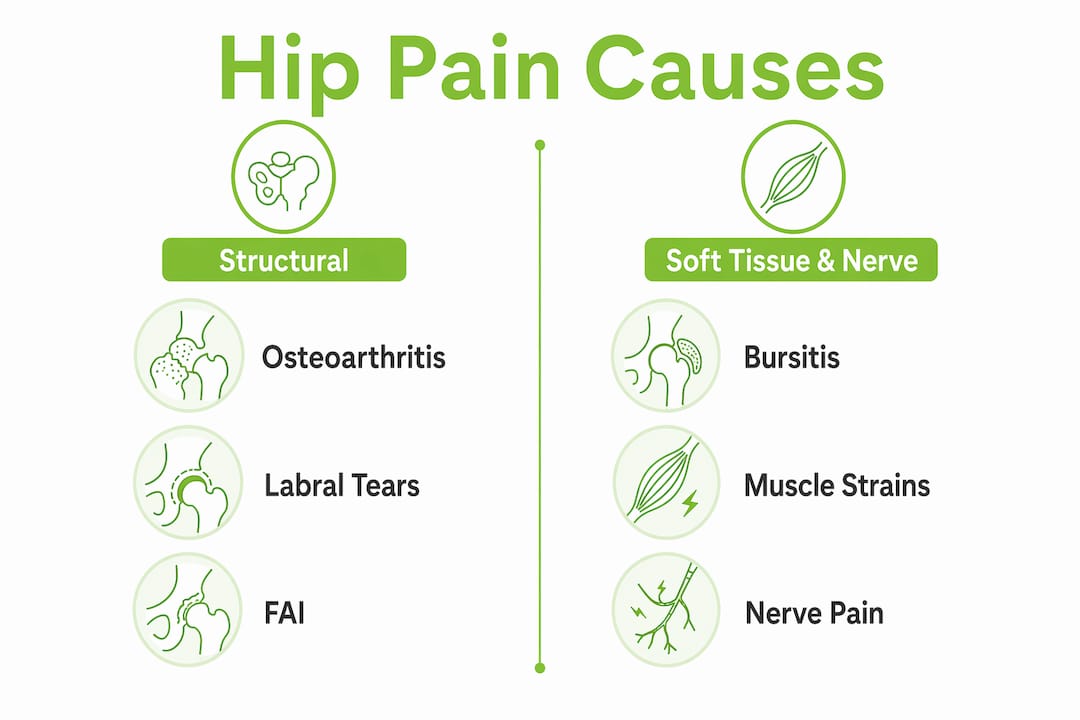
The hip joint is a ball-and-socket structure connecting the femoral head to the acetabulum, and hip pain sources span a wide spectrum. Osteoarthritis, bursitis, labral tears, femoroacetabular impingement (FAI), muscle strains, and referred pain from the lumbar spine are the most frequently encountered conditions in clinical practice. Each of these produces a distinct pattern of discomfort, and recognizing those patterns is what separates an accurate diagnosis from a prolonged guessing process.
Many patients come in after weeks of self-treating what they assume is a muscle problem, only to find the origin is intra-articular or neurological. Clinical diagnosis involves more than imaging. Patient age, activity level, and specific pain triggers are diagnostic clues that guide tailored treatment. A 55-year-old runner with groin pain that worsens after sitting is presenting a very different picture than a 70-year-old with lateral hip pain that disrupts sleep.
How does pain location help identify different causes of hip pain?
Pain location correlates strongly with underlying cause. Groin pain usually indicates joint pathology, lateral hip pain suggests bursitis or tendinopathy, and buttock pain often has lumbar spine origins. This classification is one of the most practical tools available before any imaging is ordered.
Here is how the three primary zones break down:
- Groin or front-of-hip pain points toward intra-articular problems such as osteoarthritis, labral tears, or FAI. This type of pain often deepens with hip flexion, prolonged sitting, or pivoting movements.
- Lateral hip pain (outer hip, over the greater trochanter) is the hallmark of Greater Trochanteric Pain Syndrome, which includes bursitis and gluteal tendinopathy. It often worsens when lying on the affected side at night.
- Buttock or posterior hip pain frequently originates outside the hip joint entirely. Referred pain from the lumbar spine or sacroiliac joint can mimic hip pain and often presents with tingling or burning sensations down the leg.
Referred pain is particularly easy to misread. When the lumbar spine or SI joint is the true source, patients often describe a vague, deep ache that does not localize clearly to one spot. Local hip joint pain, by contrast, tends to be more pinpoint and reproducible with specific movements.
Pro Tip: Try the “C-sign” test at home. Cup your hand in a C-shape and place it over the front of your hip socket. If that is exactly where your pain lives, it is more likely intra-articular. Pain that spreads across the outer thigh or buttock suggests a different origin entirely.
Hip pain that disrupts sleep due to inflammation buildup when joints are still at night is a common symptom in both bursitis and arthritis. This nocturnal pattern is a useful clinical flag that active inflammation is present, not just mechanical wear.
What structural and mechanical conditions cause hip pain?
Structural causes are the most recognized category of hip joint discomfort, and they range from gradual degenerative changes to acute injuries.
-
Osteoarthritis is the most prevalent structural cause, characterized by progressive cartilage loss, joint space narrowing, and bone-on-bone friction. Symptoms include a deep groin ache, morning stiffness lasting under 30 minutes, and reduced range of motion. Hip arthritis typically worsens with activity and improves briefly with rest before stiffening again.
-
Femoroacetabular impingement (FAI) occurs when abnormal contact between the femoral head and acetabular rim causes cartilage damage over time. It is common in younger, active adults and athletes. Pain typically appears at end-range hip flexion, such as during squatting, cycling, or sitting in low chairs.
-
Labral tears are often associated with FAI or hip dysplasia and produce a catching, clicking, or locking sensation in the groin. Labral tears found on scans are often incidental. Treatment focuses on correlating symptoms and function rather than imaging alone, which is why a positive MRI finding does not automatically mean surgery.
-
Hip fractures and stress fractures require prompt attention. Stress fractures in runners or older adults with low bone density present as groin pain that worsens with weight-bearing and does not resolve with rest. A complete fracture after a fall, especially in older adults, is a medical emergency.
-
Hip dysplasia involves a shallow acetabulum that fails to fully cover the femoral head, leading to abnormal load distribution and early labral damage. It is often diagnosed in young women and can progress to osteoarthritis if untreated.
| Condition | Primary symptom | Key diagnostic clue |
|---|---|---|
| Osteoarthritis | Deep groin ache, stiffness | Morning stiffness under 30 minutes |
| FAI | Groin pain with hip flexion | Pain in low chairs or squatting |
| Labral tear | Catching or clicking sensation | Positive FADIR test on exam |
| Stress fracture | Weight-bearing groin pain | Pain worsens with activity, not rest |
| Hip dysplasia | Anterior hip pain, instability | Shallow acetabulum on X-ray |
Pro Tip: X-rays show bone structure well but miss soft tissue pathology. If your X-ray is normal and your pain persists, an MRI arthrogram is the more informative next step for labral and cartilage assessment.
What soft tissue and nerve-related conditions cause hip pain?
Not every source of hip joint discomfort is structural. Soft tissue and nerve-related conditions are frequently overlooked, particularly when imaging returns normal results.
- Greater Trochanteric Pain Syndrome (GTPS) is an umbrella term covering gluteal tendinopathy and trochanteric bursitis. It produces sharp or burning pain over the outer hip that worsens with walking, stair climbing, or lying on the affected side. GTPS responds better to progressive loading and avoidance of compressive positions rather than pure rest. This is a critical distinction: complete rest often delays recovery by allowing the tendon to weaken further.
- Muscle strains and tears of the hip flexors, adductors, or gluteal muscles are common in athletes and active adults. They produce localized tenderness, pain with resisted movement, and sometimes bruising. Groin strains, in particular, are often confused with intra-articular pathology.
- Piriformis syndrome occurs when the piriformis muscle in the buttock compresses the sciatic nerve, producing deep buttock pain that radiates down the leg. It mimics lumbar disc herniation but is reproduced by specific hip rotation tests rather than spinal loading.
- Sciatica originating from lumbar disc herniation at L4-L5 or L5-S1 frequently presents as hip and buttock pain with radiation below the knee. The distinguishing feature is that spinal movements, such as forward bending or coughing, reproduce the pain.
- Iliotibial band syndrome and hip flexor tendinopathy are additional soft tissue sources that produce lateral and anterior hip pain respectively, particularly in runners and cyclists.
Recognizing whether your pain is nerve-driven versus joint-driven changes the entire treatment approach. Nerve-related pain often responds to neural mobilization, activity modification, and targeted stretching, while joint pain requires load management and strength work.
When should you seek medical evaluation for hip pain?
Most new hip pain cases settle within 6 weeks without specialized intervention. Medical evaluation is recommended if symptoms persist beyond that threshold. This 6-week guideline applies to mild to moderate cases. Persistent or worsening symptoms require deeper evaluation regardless of duration.
Certain symptoms require immediate attention and should not wait 6 weeks:
- Inability to bear weight after a fall or injury
- Visible deformity of the hip or leg
- Severe swelling with warmth and fever (possible septic arthritis)
- A popping sound followed by sharp, unrelenting pain
- Groin pain in an older adult with osteoporosis after a minor fall
When you do see a clinician, the quality of your symptom description directly affects diagnostic accuracy. Describing when pain started, what makes it better or worse, whether it wakes you at night, and where exactly it is located gives the clinician far more useful data than an X-ray alone.
Imaging has real limitations. X-rays identify bony changes and fractures but miss soft tissue pathology. MRI provides better soft tissue detail but, as noted, can reveal findings like labral tears that are incidental and not the actual pain source. Effective treatment focuses on clinical symptoms and functional limitations rather than imaging alone. Physical examination, including range of motion testing, provocation tests, and gait assessment, remains the most reliable diagnostic foundation.
What non-surgical hip pain treatment options are most effective?
Conservative care is first-line and can be effective for the majority of hip pain presentations before surgery is considered. The goal is to reduce pain, restore function, and address the mechanical factors driving the condition.
- Physical therapy is the cornerstone of non-surgical management. A structured program targeting hip abductor and external rotator strength, flexibility, and load tolerance addresses the root mechanical cause rather than just the symptom. Strength and mobility work can meaningfully slow functional decline in arthritic joints and improve quality of life.
- NSAIDs and analgesics such as ibuprofen or naproxen reduce acute inflammation and pain, making it easier to participate in rehabilitation. They are most useful as a short-term bridge, not a long-term solution.
- Heat and ice therapy serve different purposes. Ice reduces acute inflammation in the first 48 to 72 hours after injury or flare-up. Heat improves circulation and tissue extensibility for chronic stiffness, particularly before exercise.
- Activity modification means adjusting, not eliminating, movement. For GTPS, this includes avoiding crossing your legs, sitting in low chairs, or lying on the affected side. For FAI, it means limiting deep hip flexion until strength is restored.
- Regenerative medicine, including platelet-rich plasma (PRP) therapy and stem cell treatments, represents an advanced non-surgical option for patients with osteoarthritis, labral pathology, or tendinopathy who have not responded adequately to conventional care. These therapies aim to support tissue repair and reduce inflammation at the cellular level.
Pro Tip: For hip bursitis specifically, avoid the instinct to completely rest. A step-by-step pain management approach that gradually reintroduces load through the tendon produces better long-term outcomes than weeks of inactivity.
Surgery is considered when conservative care over 3 to 6 months fails to produce meaningful improvement, when structural damage is severe, or when a fracture requires fixation. For most patients, it remains a last resort rather than an early option.
Key takeaways
Accurate identification of hip pain origins determines whether treatment succeeds or stalls. Most hip pain responds to conservative care when the correct cause is identified and addressed systematically.
| Point | Details |
|---|---|
| Pain location guides diagnosis | Groin pain suggests joint pathology; lateral pain suggests bursitis; buttock pain often comes from the lumbar spine. |
| Imaging has limits | MRI and X-ray findings must be correlated with clinical symptoms to avoid treating incidental findings. |
| 6-week threshold matters | Most mild to moderate hip pain resolves within 6 weeks; persistent symptoms warrant medical evaluation. |
| Rest alone is insufficient | Conditions like GTPS require progressive loading, not complete rest, for effective recovery. |
| Conservative care comes first | Physical therapy, NSAIDs, and activity modification are first-line treatments before surgery or advanced interventions. |
What I have learned from years of treating hip pain
One pattern I see consistently is that patients arrive frustrated because they have been told their X-ray is “fine” yet they are still in significant pain. That disconnect is real and it deserves a direct explanation. Imaging captures structure, not function. A joint can look reasonable on film and still be the source of debilitating pain because of how it loads, how the surrounding muscles compensate, or how the nervous system has adapted over months of guarding.
The other misconception I encounter regularly is that hip pain always means hip joint disease. A meaningful portion of the patients I see have lumbar spine involvement, SI joint dysfunction, or soft tissue conditions that were never properly differentiated. Treating the wrong structure wastes time and erodes trust in the process.
What I tell patients is this: the diagnosis is a starting point, not a verdict. Most people with osteoarthritis, labral tears, or bursitis improve substantially with the right conservative program. Patience matters here. Tissue responds to load over weeks and months, not days. The patients who do best are the ones who stay engaged, communicate what is changing, and resist the urge to either push through pain recklessly or stop moving entirely.
Surgery has its place, and I do not dismiss it. But in my experience, it is far less frequently necessary than patients fear when they first walk in. The goal is always to find the least invasive path that restores your function and quality of life.
— Felix
Find the right treatment for your hip pain at Nortexspineandjoint
If your hip pain has persisted beyond 6 weeks, is disrupting sleep, or has not responded to rest and over-the-counter medications, a personalized clinical assessment is the logical next step. At Nortexspineandjoint, the approach begins with a thorough evaluation of your symptoms, movement patterns, and history before any treatment is recommended. For patients with osteoarthritis or soft tissue conditions, advanced options like PRP therapy for hip pain offer a non-surgical path to reducing inflammation and supporting tissue repair. The practice serves active adults and athletes across North Dallas who want answers and a clear plan, not just symptom management. Contact Nortexspineandjoint to schedule a consultation and get a treatment plan built around your specific condition.
FAQ
What are the most common causes of hip pain in adults?
The most common causes include osteoarthritis, Greater Trochanteric Pain Syndrome, labral tears, FAI, muscle strains, and referred pain from the lumbar spine or sacroiliac joint. Pain location is one of the most reliable early indicators of which structure is involved.
How do I know if my hip pain is serious?
Immediate medical attention is advised for symptoms such as inability to bear weight, visible deformity, severe swelling with fever, or a popping sound followed by sharp pain. Pain that persists beyond 6 weeks without improvement also warrants evaluation.
Can hip pain come from the lower back?
Yes. Referred pain from the lumbar spine or SI joint frequently mimics hip pain and can present with tingling or burning down the leg. Spinal movements that reproduce the pain, rather than hip movements, are the key distinguishing feature.
Is surgery necessary for hip pain?
Most hip pain treatment plans prioritize conservative management, including physical therapy, medications, and activity modification, before surgery is considered. Surgery becomes relevant when structural damage is severe or when conservative care over 3 to 6 months produces insufficient improvement.
What is PRP therapy and how does it help hip pain?
Platelet-rich plasma (PRP) therapy uses a concentrated preparation of the patient’s own blood platelets to deliver growth factors directly to damaged tissue. For hip arthritis and tendinopathy, PRP injections aim to reduce inflammation and support tissue regeneration without surgery.