
Spinal pain is one of the most common reasons adults seek medical care, yet it remains one of the most misunderstood conditions in clinical practice. Many people assume that a diagnosis of disc disease, stenosis, or nerve compression automatically leads to surgery. That assumption is rarely accurate. What is spinal pain management, then? At its core, it is a structured, multimodal treatment framework that draws on education, self-care, physical therapy, medications, and targeted procedures to reduce pain and restore function without requiring an operating room. This guide walks you through how that framework actually works.
Table of Contents
- Key takeaways
- Understanding spinal pain: causes and types
- Non-surgical strategies: physical therapy and lifestyle
- Medications and interventional treatments
- Multidisciplinary and psychological approaches
- My perspective on spinal pain management
- Advanced spinal pain care at Nortexspineandjoint
- FAQ
Key takeaways
| Point | Details |
|---|---|
| Surgery is rarely the first answer | Most spinal pain responds well to non-surgical strategies when applied consistently and correctly. |
| Non-drug therapies come first | Exercise, physical therapy, and psychological support are recommended before medications in most clinical guidelines. |
| Medications have real limits | Drug benefits for chronic spinal pain are often modest; opioids carry significant risks and are generally discouraged for long-term use. |
| Injections support rehab, not replace it | Epidural steroid injections reduce inflammation temporarily, creating a window for physical therapy to be more effective. |
| A personalized plan outperforms any single treatment | Matching the right combination of physical, psychological, and interventional care to your specific pain type produces the best outcomes. |
Understanding spinal pain: causes and types
Before you can manage spinal pain effectively, you need a working understanding of what kind you have. Not all back pain is the same, and treating them identically is a mistake that many patients and even some clinicians make.
Mechanical pain is the most common type. It originates from the muscles, ligaments, joints, or discs and typically worsens with movement and improves with rest. Think of the classic scenario: you lift something awkwardly on a Monday morning and spend the rest of the week protecting your lower back.
Radicular pain involves nerve root irritation or compression, usually from a herniated disc or spinal stenosis. It travels down the leg (sciatica) or arm in a predictable pattern and may be accompanied by numbness, tingling, or weakness. This type responds differently to treatment than mechanical pain.
Chronic spinal pain is pain lasting beyond three months, often without a single clear structural cause. It involves both physical and neurological components, including central sensitization, where the nervous system becomes amplified in its pain response.
Knowing which type you have matters because it shapes every treatment decision that follows. Red flag symptoms, however, change the calculus entirely. Seek urgent evaluation if you experience any of the following:
- Bowel or bladder dysfunction alongside back pain
- Pain that wakes you from sleep without positional relief
- Progressive leg or arm weakness
- Unexplained weight loss or fever combined with spine pain
- History of cancer or recent infection
For most people without these red flags, maintaining activity and avoiding bed rest are the first and most evidence-supported steps. Imaging, such as MRI or X-ray, is not automatically necessary and does not change initial management for the majority of presentations.
Non-surgical strategies: physical therapy and lifestyle
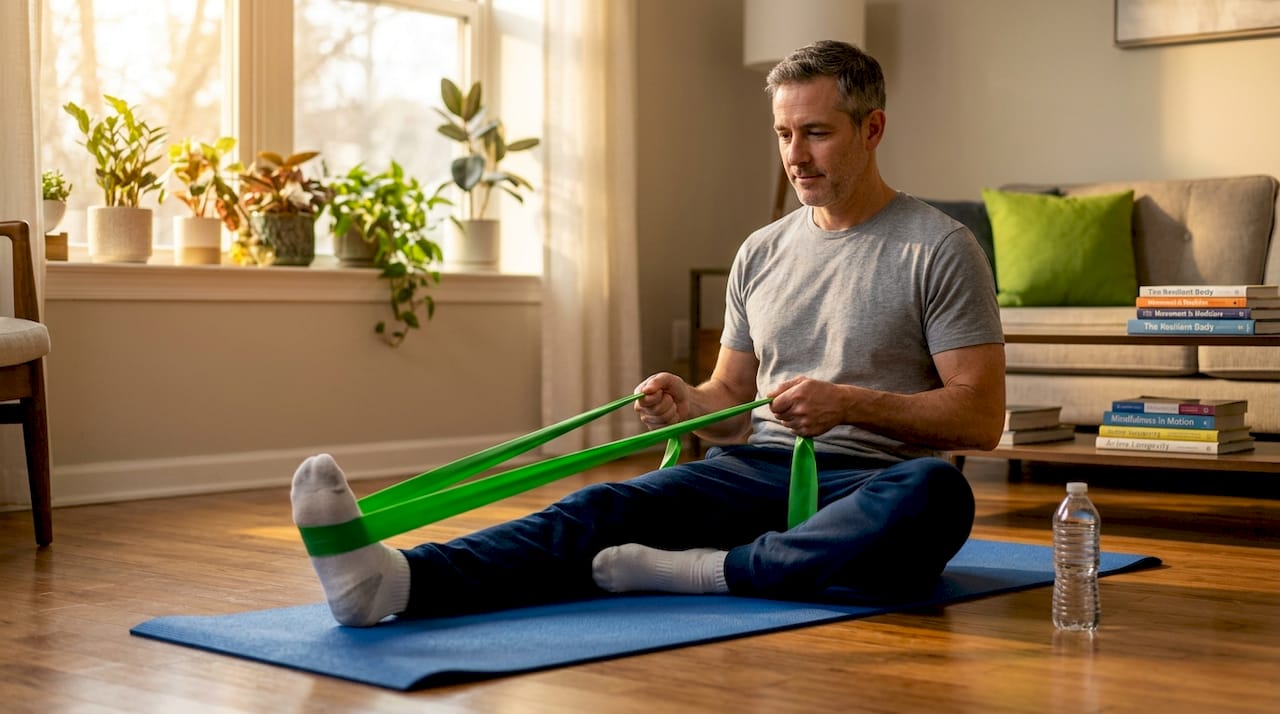
The foundation of chronic back pain management is not a procedure or a pill. It is consistent, structured movement combined with lifestyle habits that support spinal health over time. Exercise and physical therapy focusing on core strengthening and flexibility are central to managing chronic back pain and improving function. Early intervention with physical therapy also reduces healthcare costs, opioid use, and downstream surgery rates.
Here is a practical progression that reflects how non-surgical care typically unfolds:
- Start with graded activity. Begin walking or performing gentle movement within your pain tolerance. The goal is not to be pain-free before moving. It is to move despite some pain and build tolerance gradually.
- Pursue structured physical therapy. A licensed physical therapist will assess your movement patterns and target specific deficits. Core stabilization exercises, hip strengthening, and postural correction are common focal points. You can learn more about what this process looks like in a detailed breakdown of physical therapy for back pain.
- Add complementary therapies. Nonpharmacologic approaches such as acupuncture, yoga, tai chi, and mindfulness-based stress reduction are recommended by multiple guidelines before medications are introduced. These are not fringe options. They have genuine evidence behind them.
- Optimize lifestyle factors. Sleep quality, stress levels, body weight, and social connection all measurably affect chronic pain. Addressing these alongside physical treatment substantially improves outcomes.
- Use self-management tools. Patient education, pain neuroscience training, and flare-up management plans help you stay in control between appointments rather than dependent on the healthcare system for every decision.
Pro Tip: If you have been in physical therapy for four to six weeks without meaningful progress, that is not necessarily a failure of PT itself. It may mean your program needs to be adjusted, or that an additional diagnostic step is warranted before continuing.
The evidence is consistent: staying active, even imperfectly, produces better outcomes than waiting for the pain to resolve before doing anything.
Medications and interventional treatments
Medications play a supporting role in spinal pain management, not a primary one. Understanding their proper place prevents both under-treatment and over-reliance.
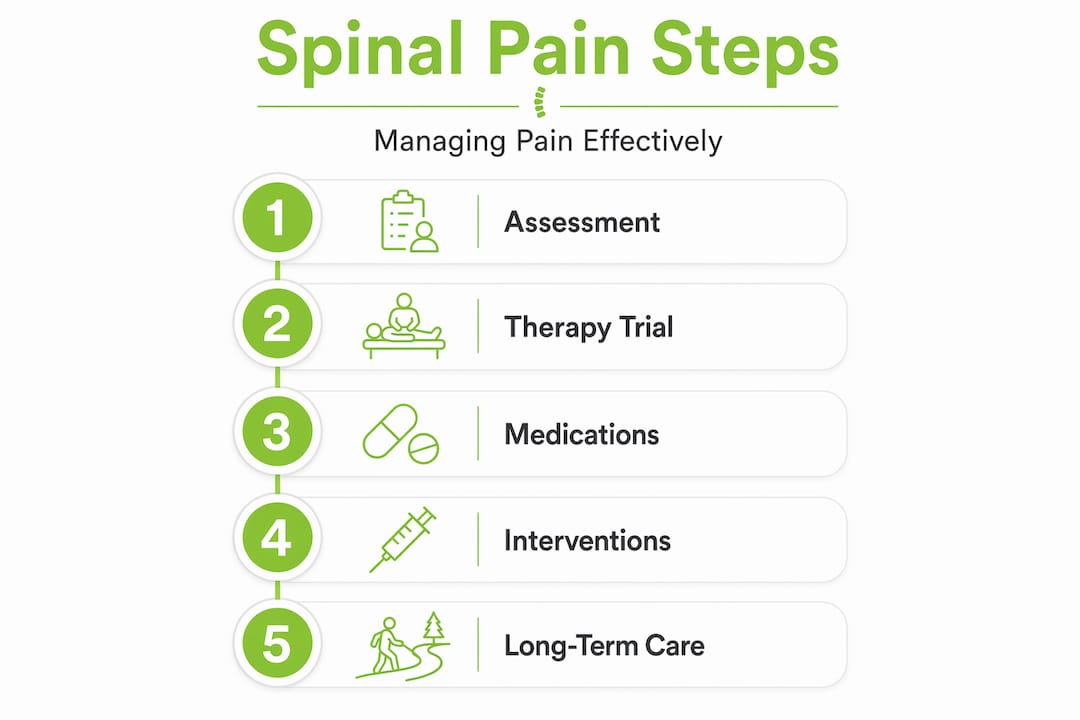
For acute or subacute pain, nonsteroidal anti-inflammatory drugs (NSAIDs) such as ibuprofen or naproxen are typically the first pharmacologic option. For nerve-related pain, certain antidepressants like duloxetine or anticonvulsants like gabapentin may be considered. Medication benefits for chronic spinal pain tend to be modest and temporary, and opioids are broadly discouraged for chronic low back pain given their risk profile and limited long-term efficacy.
| Treatment type | Best suited for | Key limitation |
|---|---|---|
| NSAIDs | Acute mechanical pain, inflammation | GI and cardiovascular risks with prolonged use |
| Muscle relaxants | Acute muscle spasm | Sedation; not for long-term use |
| Duloxetine | Chronic low back pain with mood component | Gradual onset; requires titration |
| Opioids | Short-term acute severe pain only | High risk; not appropriate for chronic use |
| Epidural steroid injections | Radicular pain from disc or stenosis | Short-term relief; not disease-modifying |
When medications alone are insufficient, interventional pain management introduces targeted procedures designed to interrupt or modulate pain signals. These are not replacements for physical rehabilitation. They are tools that create the conditions for rehabilitation to work better.
Epidural steroid injections are among the most commonly used interventional options. They deliver corticosteroid medication directly around inflamed nerve roots using image guidance. They provide short-term relief for radicular symptoms and are not disease-modifying on their own. Their highest value is in reducing enough pain that you can participate more fully in physical therapy.
Other interventional options include medial branch blocks, radiofrequency ablation for facet-mediated pain, and for more refractory cases, neuromodulation therapies such as spinal cord stimulation.
Pro Tip: Before agreeing to any injection, ask your provider what the procedure is expected to tell you diagnostically, not just whether it will relieve pain. Procedures like medial branch blocks serve both a diagnostic and therapeutic purpose, and that distinction matters for your care plan.
Diagnostic evaluation before any interventional procedure is not just bureaucratic. It identifies the actual pain generator so that the right structure is treated rather than approximated.
Multidisciplinary and psychological approaches
For patients living with chronic spinal pain, physical treatments alone rarely provide complete relief. This is not a personal failure. It reflects the neuroscience of chronic pain: once pain persists beyond three months, the nervous system itself undergoes changes that pure structural treatments cannot address.
This is where multidisciplinary and psychological approaches become not optional but central. Mindfulness and psychological therapies like cognitive behavioral therapy (CBT) and acceptance and commitment therapy (ACT) help patients manage chronic pain by improving coping and reducing the psychological amplification of pain signals.
The key approaches in this category include:
- Cognitive behavioral therapy (CBT): Restructures unhelpful thought patterns around pain, such as catastrophizing or avoidance behaviors, that drive disability beyond what the structural problem would predict.
- Acceptance and commitment therapy (ACT): Teaches patients to function and pursue meaningful activities even in the presence of pain, rather than waiting for pain to resolve before living.
- Mindfulness-based stress reduction (MBSR): A structured program that reduces the emotional reactivity to pain signals without suppressing them, lowering the overall suffering associated with chronic pain.
- Group therapy and peer support: Normalizes the experience of chronic pain and reduces the social isolation that frequently worsens long-term outcomes.
These approaches work because they target a dimension of pain that no injection or medication can reach: how the brain processes, interprets, and responds to signals from the body.
The goal of psychological therapies in chronic pain is not to convince patients that their pain is imaginary. It is to give them tools to live fully despite pain that is very real.
Effective spinal pain relief over the long term almost always requires this kind of integration. A personalized, multimodal approach that addresses physical, psychological, and social factors consistently outperforms any single-modality treatment plan.
My perspective on spinal pain management
In my experience working with patients who have often tried multiple treatments before finding what works, the biggest obstacle is rarely the pain itself. It is the expectation that one treatment will eliminate it.
I have seen patients come in after years of relying on medications or repeated injections, frustrated that they are not better. When we take a step back and build a structured, individualized plan that includes physical therapy, addresses psychological contributors, and uses targeted procedures where they are clinically justified, the outcomes shift. Not always dramatically. But meaningfully.
What I tell every patient is this: the goal of spinal pain management is not always to make pain disappear. It is to restore function and quality of life. Many patients achieve that without surgery. Surgery as a last resort is not a cliche. It is the clinical reality for the vast majority of spinal pain presentations.
The patients who do best are not necessarily the ones with the least structural damage on imaging. They are the ones who commit to the process, stay active, communicate honestly about what is and is not working, and allow the care plan to evolve as their condition changes. That adaptability, informed by ongoing clinical assessment, is where real progress happens.
— Felix
Advanced spinal pain care at Nortexspineandjoint
When conservative care has been thorough and symptoms remain functionally limiting, Nortexspineandjoint offers a range of minimally invasive and regenerative treatments designed to address the root cause rather than mask symptoms. These include PRP therapy for chronic back pain, which uses your own platelet-rich plasma to promote tissue repair and reduce inflammation. For patients with radicular pain, options such as caudal epidural injections and spinal cord stimulation are available under a personalized care model. Every plan at Nortexspineandjoint is built around your specific pain type, goals, and history, not a one-size protocol. Explore the full range of treatment options available to find what fits your situation.
FAQ
What is spinal pain management exactly?
Spinal pain management is a structured approach that combines non-surgical treatments including education, physical therapy, medications, and targeted interventional procedures to reduce pain and restore function. The goal is to address the cause of pain rather than suppress symptoms temporarily.
Is surgery usually needed for back pain?
Surgery is typically reserved for cases with progressive neurological deficits or persistent, function-limiting symptoms that have not responded to conservative care. Most spinal pain can be managed without surgery.
How long does spinal pain management take?
Timeline varies depending on the type and duration of pain. Acute mechanical pain often improves within four to six weeks with consistent conservative care. Chronic spinal pain requires longer-term management, often spanning several months with ongoing self-management strategies.
Do I need imaging before starting treatment?
Not always. For most patients without red flag symptoms, imaging does not change initial management and is not required to begin conservative spinal care. A clinical evaluation is typically sufficient to guide early treatment decisions.
Can psychological therapy really help physical back pain?
Yes. CBT, ACT, and mindfulness-based therapies have strong evidence for improving function and reducing the disability associated with chronic spinal pain. They work by addressing how the brain processes persistent pain signals, which physical treatments alone cannot fully modify.