
Spinal stenosis is the narrowing of spaces within your spine that puts pressure on the spinal cord or the nerve roots branching off it. Degenerative changes like this affect up to 95% of people by age 50, though far fewer ever develop symptoms severe enough to need treatment.
It most commonly shows up in the lower back (lumbar) or neck (cervical), usually from age-related arthritis wearing down the joints and discs around your spinal canal. The goal of treatment, whether conservative or surgical, is almost always the same: relieve pressure on the nerves and get you moving comfortably again.
If you’re trying to figure out your next step, here’s where to start:
- See a doctor promptly if you notice new bowel or bladder changes, or sudden leg weakness.
- For most people, conservative care (physical therapy, activity adjustments, sometimes injections) comes first.
- Surgery is reserved for cases where conservative care fails or neurological deficits progress.
Key Takeaways
Spinal stenosis narrows the spinal canal or foramina, and most cases respond to individualized conservative care before surgery ever becomes necessary.
| Point | Details |
|---|---|
| Definition matters | Stenosis narrows the spinal canal or nerve openings, compressing the cord or nerve roots. |
| Location changes symptoms | Lumbar stenosis causes leg pain with walking; cervical stenosis risks arm and hand symptoms. |
| Imaging isn’t the whole story | Symptoms and MRI findings can disagree, so clinical exam findings guide diagnosis. |
| Individualized therapy wins short term | Manual therapy plus tailored exercise outperformed generic care at two months in trial data. |
| Nortexspineandjoint offers a nonsurgical path | The clinic provides individualized rehab and regenerative options like PRP before surgical referral. |
Table of Contents
- How the Spine Is Built and Where Stenosis Happens
- What Symptoms Does Spinal Stenosis Cause?
- What Causes Spinal Stenosis?
- How Is Spinal Stenosis Diagnosed?
- What Are the Treatment Options for Spinal Stenosis?
- What Does the Research Say About Treatment Outcomes?
- When Should You Seek Urgent Care?
- What’s the Outlook With Spinal Stenosis?
- How Can You Manage Symptoms Day to Day?
- What I See in Practice
- Getting Care for Spinal Stenosis in North Dallas
- Sources
- FAQ
How the Spine Is Built and Where Stenosis Happens
Your spine is a stack of vertebrae with a hollow canal running through the center. That canal houses your spinal cord in the neck and upper back, and a bundle of nerve roots (the cauda equina) lower down. Discs cushion each vertebra, and ligaments hold everything in alignment. When any of these structures thicken, bulge, or shift out of place, the available space inside the canal shrinks.
Clinicians describe stenosis by where the narrowing happens:
- Central canal stenosis narrows the main channel housing the spinal cord or cauda equina.
- Foraminal stenosis narrows the small openings where individual nerve roots exit the spine.
- Lateral recess stenosis narrows a specific pocket near the base of the nerve root, just before it reaches the foramen.
Stenosis most commonly develops in the lumbar and cervical regions. Location matters clinically: lumbar stenosis tends to affect walking and leg function, while cervical stenosis carries a higher risk of affecting the spinal cord itself.
What Symptoms Does Spinal Stenosis Cause?
Symptoms depend heavily on where the narrowing occurs, but a few patterns show up across the board: aching or burning pain, numbness, tingling, weakness, and sometimes balance problems and gait dysfunction.
Lumbar stenosis classically produces neurogenic claudication, a term for leg pain, cramping, or heaviness that flares with walking or standing and eases when you sit or lean forward. Many patients describe feeling noticeably better hunched over a shopping cart than walking upright, which is a hallmark of this condition rather than a coincidence. Sciatica-type leg pain often rides along with it.

Cervical stenosis behaves differently. You’ll typically notice neck pain along with arm numbness or tingling. In more advanced cases, pressure on the spinal cord itself (myelopathy) can cause hand clumsiness, dropping objects, or a subtle change in how you walk.
Pro Tip: If you notice your pain eases when you lean forward or sit down but returns almost immediately when you stand or walk, mention that specific pattern to your doctor. It’s one of the most useful clues for diagnosing lumbar neurogenic claudication.
What Causes Spinal Stenosis?
Age-related degeneration is the cause you’ll see most often in practice. Arthritis thickens joints, discs lose height and bulge outward, and ligaments stiffen and encroach on the canal. Put those changes together over decades and the canal simply has less room than it used to.
Other causes include:
- A congenitally narrow spinal canal you were born with, which lowers your margin for later degeneration.
- Disc herniation pressing directly into the canal or foramen.
- Spondylolisthesis, where one vertebra slips forward over another.
- Trauma or prior spine injury that alters alignment.
- Thickened spinal ligaments, and, rarely, tumors.
Risk climbs with age, a history of spine injury, certain congenital spine conditions, and years of heavy or repetitive spinal loading, think manual labor or high-impact sports.
How Is Spinal Stenosis Diagnosed?
Diagnosis starts with a conversation and a physical exam, not a scan. I want to know how your symptoms behave with walking, standing, sitting, and bending, and I’ll check your gait, reflexes, and strength. That clinical picture often tells me more than an image will.
Imaging fills in the anatomy once we have a working suspicion:
| Test | What It Shows | When It’s Used |
|---|---|---|
| X-ray | Bone alignment, disc height, spondylolisthesis | First-line, quick screen for structural issues |
| MRI | Soft tissue detail, nerve compression, canal size | Best for confirming stenosis and its exact location |
| CT scan | Detailed bony anatomy | Useful when MRI isn’t possible or bone detail is unclear |
| EMG | Nerve and muscle electrical activity | Helps distinguish nerve root compression from other neuropathies |
Here’s the catch many patients don’t expect: imaging and symptoms don’t always agree. Some people have striking narrowing on MRI and feel nothing, while others have severe symptoms with only modest changes on imaging. That’s because there’s no single, universally accepted radiologic definition of stenosis. Before your visit, jot down what makes symptoms better or worse, how far you can walk before pain starts, and whether you’ve noticed any weakness or balance changes.
What Are the Treatment Options for Spinal Stenosis?
Most patients start with conservative care, and for good reason. It typically includes patient education, activity modification, and an individualized physical therapy program built around your specific pattern of weakness or pain, not a generic stretching routine off a handout. Anti-inflammatory medications or short courses of other pain relievers can help during flare-ups. Give conservative care a real trial of six to twelve weeks before judging its effectiveness.
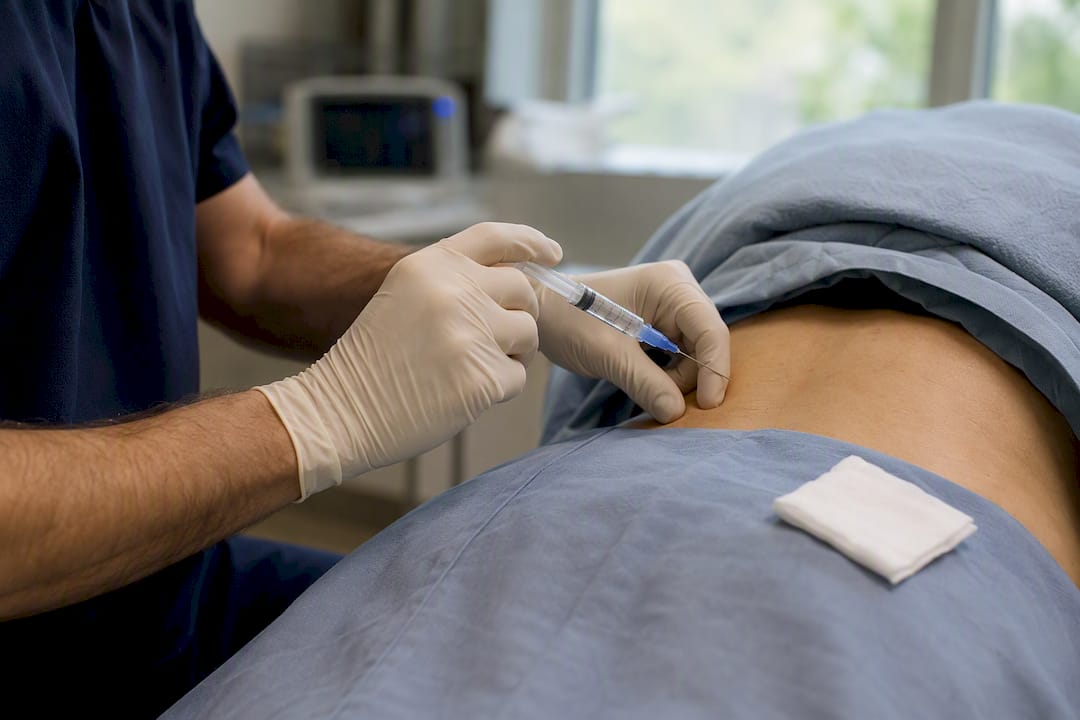
Injections, usually epidural steroid injections or targeted nerve blocks, can reduce inflammation around a compressed nerve enough to make therapy more tolerable. They’re a bridge, not a cure. Relief often lasts weeks to a few months, and the evidence for durable long-term benefit is mixed.
Surgery enters the conversation when conservative care fails, or when there’s meaningful neurological decline, weakness, or intractable pain that limits daily function. Decompression surgery (laminectomy) removes bone or tissue pressing on the nerves. Spinal fusion gets added when there’s instability, like spondylolisthesis, that needs to be stabilized alongside the decompression. Both carry real risks and recovery demands. If you want a deeper look at how nonsurgical spinal pain management typically progresses, that’s worth reading before deciding what’s right for you.
What Does the Research Say About Treatment Outcomes?
Clinical guidelines and trial data both point toward the same conclusion: targeted, individualized therapy beats generic exercise, at least in the short term. A randomized trial of 259 patients found that combining manual therapy with a personalized exercise plan produced meaningfully higher responder rates for symptoms and function, along with better walking capacity at two months, compared to standard nonsurgical care.
The honest takeaway from the evidence is this: treatment is about managing symptoms and restoring function, not reversing the degeneration itself. Long-term data on many nonoperative treatments, including injections, remains limited, and guideline bodies are candid about that gap.
That doesn’t make conservative care a lesser option. It means your expectations should be calibrated to symptom control and mobility gains, not a structural “fix.”
When Should You Seek Urgent Care?
Most spinal stenosis symptoms build gradually, but a few signs demand same-day evaluation:
- New loss of bowel or bladder control.
- Sudden, significant leg weakness.
- Numbness spreading across your inner thighs, groin, or saddle area.
- Severe, unrelenting pain paired with progressively worsening weakness.
These can signal cauda equina syndrome, a surgical emergency. Go to an emergency room immediately rather than waiting for a routine appointment. Timing genuinely affects how much nerve function you recover.
What’s the Outlook With Spinal Stenosis?
For many patients, spinal stenosis progresses slowly, and some people carry significant canal narrowing on imaging for years without ever developing symptoms. When symptoms do appear, conservative care often produces measurable improvement within weeks to a couple of months, with trial data showing meaningful gains by the two-month mark.
Surgical decompression frequently brings quick relief from leg or arm symptoms, though full functional recovery, especially strength and endurance, can take six to twelve months. Older adults undergoing decompression generally do well, though recovery pace varies with overall health and how long symptoms went untreated.
How Can You Manage Symptoms Day to Day?
A few consistent habits make a real difference for most patients I see:
- Keep moving with low-impact activity like walking or swimming rather than staying sedentary.
- Work on core strength and posture through a program built for your specific limitations, not a generic class.
- Manage your weight, since extra load on the spine tends to worsen symptoms over time.
- Pace activities and avoid prolonged standing or heavy lifting that provokes symptoms.
- Use heat, ice, or over-the-counter pain relievers for flare-ups, and stop and reassess if pain sharpens or spreads.
If you want a structured starting point, a guide on improving spine mobility outlines exercises that fit well alongside a supervised PT plan.
What I See in Practice
Many patients come in after trying two or three treatments on their own, and often the missing piece isn’t a new intervention. It’s an individualized plan that actually matches their specific pattern of compression and weakness. If conservative care hasn’t moved the needle after a few months, or you notice new weakness, that’s when a specialist visit earns its keep. The realistic goal is rarely to erase the degeneration. It’s to get you walking farther, sleeping better, and doing what matters to you with less pain.
Getting Care for Spinal Stenosis in North Dallas
If conservative measures at home haven’t given you the relief you need, Nortexspineandjoint offers a path beyond generic exercise sheets or a quick injection referral. Our evaluations start with a thorough assessment of your specific compression pattern, followed by individualized rehabilitation, and, for appropriate candidates, regenerative options like PRP therapy for chronic back pain designed to support healing without jumping straight to surgery. We also offer broader regenerative medicine services for patients managing multiple joint or spine issues at once.
A first visit typically covers a detailed history, a focused neurological exam, and a review of any prior imaging so we can build a plan around your actual symptoms, not just a scan. If you’re ready to move past trial-and-error care, schedule a consultation to discuss your options.
Sources
- Spinal Stenosis: What It Is, Causes, Symptoms & Treatment — Cleveland Clinic
- Multimodal conservative care trial — BMJ Open
- Clinical consensus on diagnostic criteria for spinal stenosis — PubMed
- Spinal Stenosis: Symptoms, Causes, & Risk Factors — NIAMS
Bring questions from these sources to your own doctor for context specific to your case.
This article is general information, not a substitute for advice from a qualified doctor. Consult a qualified healthcare professional about your own circumstances before acting on anything here.
FAQ
What Is the Best Treatment for Spinal Stenosis?
There’s no single best treatment. Most patients start with individualized physical therapy and activity modification, with injections or surgery reserved for cases that don’t improve or involve neurological decline.
What Are the Four Stages of Spinal Stenosis?
There’s no universally recognized four-stage staging system for spinal stenosis; severity is generally described by symptom impact and imaging findings rather than a fixed numbered scale.
How Serious Is Having Spinal Stenosis?
For most people, it’s a manageable, slowly progressive condition rather than an emergency. It becomes serious quickly if you develop bowel or bladder changes, sudden leg weakness, or saddle numbness, which require immediate care.
What Should You Avoid Doing if You Have Spinal Stenosis?
Avoid prolonged standing, heavy lifting, and high-impact activities that worsen leg or arm symptoms, and avoid staying completely sedentary, since inactivity tends to worsen stiffness and function over time.
Can Spinal Stenosis Get Better Without Surgery?
Yes. Many patients see meaningful improvement in symptoms and function with individualized conservative care, particularly manual therapy combined with a tailored exercise program, within a couple of months.