
Most people accept joint stiffness as an unavoidable part of getting older, but that assumption is increasingly challenged by what researchers now understand about musculoskeletal health. Joint mobility loss is not simply a byproduct of time passing. It is a process driven by specific biological, mechanical, and lifestyle factors that can often be identified, slowed, or even reversed with the right interventions. Whether you are dealing with morning stiffness in your knees, a shoulder that no longer reaches overhead, or hips that ache after a walk, understanding why mobility declines gives you a real advantage in addressing it before it limits your daily life.
Table of Contents
- Understanding joint mobility: What goes wrong?
- Major causes behind lost mobility: Injury, aging, and inflammation
- Recognizing early warning signs and risk factors
- Regenerative therapies for restoring joint mobility
- Practical steps to protect and improve joint function
- Our take: Why restoring joint mobility is about more than treatments
- Get expert help for your joint mobility concerns
- Frequently asked questions
Key Takeaways
| Point | Details |
|---|---|
| Mobility loss is preventable | Stiffness is not inevitable; proactive changes can keep joints flexible and functional longer. |
| Chronic inflammation matters | Low-grade inflammation steadily reduces joint function, especially in older adults. |
| Regenerative options are evolving | PRP and stem cell therapies can improve mobility, but results depend on proper evaluation and candidacy. |
| Early action is essential | Recognizing and adressing symptoms quickly helps avoid permanent mobility loss. |
| Lifestyle is key | Daily movement, nutrition, and professional guidance combine to optimize joint health. |
Understanding joint mobility: What goes wrong?
Joint mobility refers to how well a joint can move through its full, intended range of motion. In a healthy joint, cartilage cushions the bones, synovial fluid lubricates the joint space, and surrounding muscles and ligaments provide both stability and flexibility. When any one of these components is compromised, movement becomes restricted and often painful.
Several mechanisms drive mobility loss. Mechanical stress from repetitive loading, poor posture, or previous injury can wear down cartilage over time. Disuse is equally damaging. When a joint is not moved regularly, the surrounding soft tissue tightens, synovial fluid production decreases, and the joint gradually loses its functional range. Research published in Scientific Reports confirms that mechanical stress and disuse both contribute to degeneration and contracture, which is a permanent shortening of muscles or connective tissue that severely limits movement.
The following factors are among the most common contributors to mobility loss:
- Muscle stiffness and weakness around the joint reduce its ability to move freely
- Ligament thickening from chronic inflammation or injury limits the joint’s range
- Cartilage degeneration removes the cushioning that allows smooth, pain-free movement
- Swelling and fluid accumulation create internal pressure that restricts motion
- Scar tissue formation following injury or surgery can permanently alter joint mechanics
| Joint component | Healthy function | What goes wrong |
|---|---|---|
| Cartilage | Cushions and absorbs impact | Degenerates with age and overuse |
| Synovial fluid | Lubricates joint movement | Decreases with inactivity |
| Ligaments | Provide joint stability | Thicken and stiffen from inflammation |
| Surrounding muscles | Support and move the joint | Weaken or tighten from disuse or injury |
Understanding platelet-rich plasma basics is relevant here because PRP therapy works by reintroducing concentrated growth factors into a damaged joint, targeting the very tissue components listed above. Patients exploring hip arthritis PRP therapy or reading about PRP arthritis pain relief often find that regenerative options address the root causes rather than simply masking symptoms.
Pro Tip: Gentle, consistent movement is more protective for joint health than extended rest. Even low-impact activities like walking or swimming keep synovial fluid circulating and prevent soft tissue from tightening.
Major causes behind lost mobility: Injury, aging, and inflammation
With a foundation in what joint mobility means, let’s explore the specific causes contributing to mobility loss.
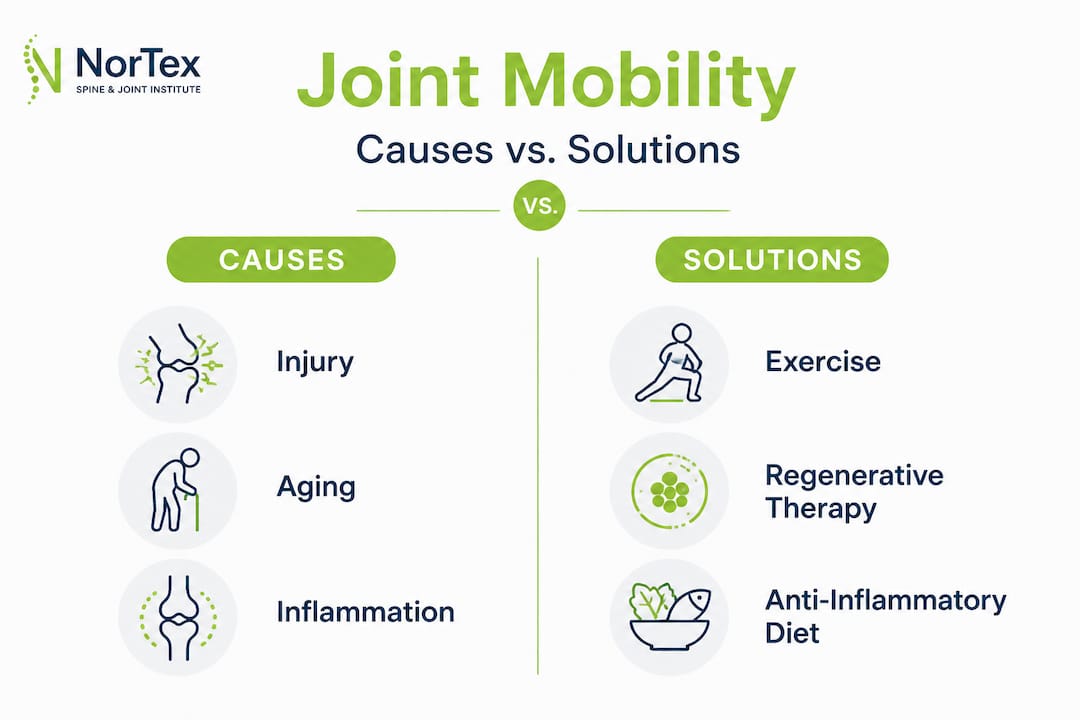
Joint mobility declines for several interconnected reasons, and rarely is there a single culprit. The most common causes fall into three broad categories: mechanical damage from injury, age-related structural changes, and chronic inflammation.
Mechanical damage includes ligament tears, cartilage fractures, bone spurs, and joint misalignment. These injuries alter the mechanics of how a joint moves and, if not properly treated, lead to compensatory movement patterns that stress other joints and tissues. A knee injury, for example, can change how you walk, placing excess load on the hip and lower back over time.
Age-related changes are real, but they are not the whole story. As we age, collagen production slows, cartilage becomes thinner, and the muscles supporting our joints lose mass and strength. However, these changes do not automatically translate into immobility. The degree of functional decline depends heavily on activity level, nutrition, and whether underlying conditions are managed effectively.
Chronic inflammation is perhaps the most underappreciated driver of joint mobility loss. Research published in Aging Clinical and Experimental Research shows that chronic low-grade inflammation in older adults, often called “inflammaging,” impairs musculoskeletal function and accelerates joint degeneration. This type of inflammation is not the acute swelling you feel after a sprained ankle. It is a persistent, low-level immune response that quietly erodes tissue quality over years.
“Chronic low-grade inflammation impairs skeletal muscle strength and mass, bone remodeling, and contributes to joint degeneration.”
Dietary choices can influence this inflammatory state. Certain anti-inflammatory mushroom benefits have been studied for their role in modulating immune response, and they represent one of many nutritional tools worth discussing with your provider.
| Cause type | Examples | Primary effect on joints |
|---|---|---|
| Mechanical | Tears, fractures, bone spurs | Structural damage, altered mechanics |
| Inflammatory | Rheumatoid arthritis, inflammaging | Tissue erosion, stiffness, swelling |
| Age-related | Collagen loss, muscle atrophy | Reduced cushioning and support |
| Inactivity | Sedentary lifestyle, post-injury rest | Contracture, fluid reduction |
For patients dealing with arthritis-related mobility loss, understanding PRP arthritis effectiveness can clarify whether regenerative options are appropriate for their specific condition. Those with shoulder restrictions may also benefit from reviewing shoulder pain treatments that address both the mechanical and inflammatory components. The impact of these causes on North Dallas’s older adult population is explored further in our discussion of aging population arthritis PRP.
Recognizing early warning signs and risk factors
Understanding the causes sets the stage for recognizing how lifestyle and treatment choices impact joint health.
One of the most clinically important things you can do for your joint health is recognize early warning signs before they become chronic problems. Many people dismiss mild joint discomfort as normal soreness, only to find months or years later that their range of motion has significantly declined.
Early warning signs to watch for include:
- Persistent stiffness in the morning or after sitting for extended periods
- Swelling around a joint that does not resolve within a day or two
- Reduced flexibility, such as difficulty bending, reaching, or rotating a limb
- Pain that worsens with activity but does not improve with rest
- Avoidance behaviors, such as skipping stairs, adjusting your gait, or stopping hobbies
Research confirms that loss of motion can occur following damage from conditions such as osteoarthritis or rheumatoid arthritis, making early identification critical to preserving function.
Risk factors that increase your likelihood of experiencing mobility loss include:
- Sedentary lifestyle: Inactivity accelerates soft tissue tightening and muscle weakness
- Obesity: Excess body weight increases mechanical load on weight-bearing joints like the knees and hips
- Previous joint injury: Prior damage creates vulnerability to further degeneration
- Family history: Genetic predisposition to arthritis or connective tissue disorders raises risk
- Repetitive strain: Occupational or athletic overuse patterns wear down specific joints over time
- Smoking: Reduces blood flow and impairs tissue repair mechanisms
Actionable steps you can take right now include:
- Incorporate gentle stretching into your morning routine to reduce stiffness
- Take brief movement breaks every 45 to 60 minutes if you sit for long periods
- Track which activities trigger pain or stiffness and share that pattern with your provider
- Maintain a healthy body weight to reduce mechanical stress on joints
- Stay hydrated, as water is essential for maintaining synovial fluid volume
Reading about long-lasting joint health tips can give you a broader framework for building habits that protect your joints over time.
Pro Tip: Intervening when symptoms first appear, rather than waiting until pain becomes severe, significantly improves the outcomes of both conservative care and regenerative therapies.
Regenerative therapies for restoring joint mobility
Once early signs are recognized, you can adjust your approach before chronic immobility sets in.
When lifestyle modifications and physical therapy are not enough, regenerative medicine offers a class of non-surgical treatments designed to stimulate the body’s own healing processes. These therapies target the underlying tissue damage rather than simply managing symptoms with medication.
The three most relevant options for joint mobility restoration include:
- Platelet-rich plasma (PRP) therapy: A concentration of your own platelets, drawn from a blood sample and injected into the affected joint. PRP delivers growth factors that promote tissue repair, reduce inflammation, and support cartilage health.
- Stem cell therapy: Uses cells with the potential to differentiate into cartilage, bone, or muscle tissue, aiming to regenerate structures that have been damaged or lost.
- Extracorporeal magnetotransduction therapy (EMTT): A newer modality that uses magnetic fields to stimulate cellular repair in musculoskeletal tissue, often used alongside PRP for enhanced effect.
A review published in the Journal of Clinical Medicine found that PRP results vary considerably across studies due to differences in formulation, injection protocols, and patient populations. Long-term structural regeneration is not firmly established, and outcomes depend on the severity of joint damage, the patient’s overall health, and the specificity of the treatment protocol used.
A typical regenerative therapy journey at a specialized clinic looks like this:
- Initial evaluation: A thorough assessment of your joint function, imaging results, and medical history to determine whether you are a candidate for regenerative treatment
- Customized treatment plan: Selection of the appropriate therapy or combination of therapies based on your specific diagnosis and goals
- Procedure day: The chosen therapy is administered, often with ultrasound guidance to ensure precise delivery to the target tissue
- Recovery and monitoring: A structured follow-up period during which your provider tracks your response and adjusts the plan as needed
- Rehabilitation integration: Physical therapy or movement coaching to maximize the functional gains from treatment
Realistic expectations for patients considering these options:
- Pain reduction is often the first noticeable outcome, typically within four to eight weeks
- Functional improvement, including increased range of motion, may follow as tissue heals
- Multiple sessions may be required depending on the severity of joint damage
- Results are not guaranteed, and not every patient responds equally
Patients dealing with knee pain can explore knee PRP injections as a targeted option, while those looking for a broader overview of what the process involves can review personalized PRP therapy to understand how treatment plans are structured.
Practical steps to protect and improve joint function
Ready to take action? Let’s look at concrete steps you can use to safeguard and improve your joint mobility.
Regenerative therapies work best when supported by consistent daily habits. The evidence is clear that mechanical stress, disuse, and swelling all play a role in limiting joint mobility, which means the choices you make every day either protect or erode your joint function.
Practical strategies to support your joints include:
- Prioritize low-impact movement: Swimming, cycling, and walking maintain joint lubrication without excessive mechanical stress
- Manage body weight: Even modest reductions in weight can meaningfully decrease load on the knees and hips
- Optimize your nutrition: Anti-inflammatory foods rich in omega-3 fatty acids, antioxidants, and collagen-supporting nutrients support tissue health
- Stay hydrated: Synovial fluid is water-based, and dehydration directly reduces its volume and effectiveness
- Strengthen the muscles around your joints: Targeted resistance training reduces the burden placed on joint structures during movement
- Use heat and cold strategically: Heat loosens stiff tissue before activity; cold reduces swelling after
- Sleep adequately: Tissue repair occurs primarily during sleep, making rest a non-negotiable component of joint health
Understanding what makes PRP effective can help you see why combining professional treatment with these daily habits produces better outcomes than either approach alone.
Pro Tip: Aim for consistency over intensity. Small, daily habits, such as a 20-minute walk, a few targeted stretches, and one glass of extra water, compound into meaningful protection for your joints over months and years.
Our take: Why restoring joint mobility is about more than treatments
We see a common pattern among patients who arrive at our clinic after years of managing joint pain on their own: they have tried one thing at a time, waited for it to fix the problem, and moved on when it did not. A single supplement, a single injection, or a single exercise program rarely produces lasting change in isolation.
Conventional thinking tends to frame joint mobility as a problem that treatments solve. The reality is more nuanced. Regenerative therapies like PRP can meaningfully accelerate healing and reduce inflammation, but they work best as part of a broader strategy that includes movement, nutrition, weight management, and behavioral change. The biology supports this. Growth factors delivered through PRP need a supportive environment to do their work. A joint that is still being overloaded, under-moved, or chronically inflamed due to poor diet will not respond as well as one supported by consistent daily care.
“True mobility restoration happens when treatment and daily movement work hand-in-hand.”
We have observed this in patients across the North Dallas area, including those whose stories are reflected in our work with PRP for Garland’s aging population. The patients who sustain their gains are those who view their regenerative treatment as a starting point, not a conclusion. They use the reduction in pain as an opportunity to rebuild movement habits that protect the joint going forward.
Pro Tip: Think of regenerative options as a springboard. The therapy creates the biological conditions for healing. What you do in the weeks and months that follow determines how far that healing goes.
Get expert help for your joint mobility concerns
If joint stiffness, pain, or reduced range of motion is affecting your daily life, you do not have to accept it as permanent. At Nortex Spine and Joint, we specialize in non-surgical, evidence-based approaches to restoring function for adults across North Dallas. Our team designs personalized PRP therapy plans that address the root cause of your mobility loss, not just the surface symptoms. Whether you are dealing with knee degeneration, hip arthritis, or shoulder restrictions, options like knee PRP injections and our full range of regenerative medicine solutions are designed to help you regain the freedom to move with confidence. Schedule a consultation to find out which approach is right for your specific condition.
Frequently asked questions
Is joint mobility loss reversible without surgery?
Many cases of joint mobility loss can improve significantly with targeted regenerative therapies and consistent movement, even without surgical intervention, particularly when treatment begins before severe structural damage has occurred. Research confirms that mechanical degeneration and contracture from disuse are among the key drivers, both of which respond to non-surgical approaches.
How does chronic inflammation affect joint flexibility?
Chronic inflammation gradually weakens muscle and bone, erodes cartilage, and produces persistent stiffness that reduces the joint’s functional range over time. Studies show that chronic low-grade inflammation in aging adults accelerates this process, making inflammation management a core component of any mobility restoration strategy.
Are regenerative therapies like PRP proven to restore joint mobility?
PRP and similar therapies show genuine clinical promise for reducing pain and improving function, but outcomes vary because protocols are not yet standardized and long-term structural regeneration is not guaranteed across all patient populations.
What early symptoms should I watch for to prevent mobility loss?
Pain, stiffness, swelling, or difficulty moving a joint through its normal range are warning signs that warrant early evaluation, since loss of motion from conditions like osteoarthritis or rheumatoid arthritis progresses more quickly when left unaddressed.
Which joints are most commonly affected by mobility loss?
Mobility loss most often impacts the knees, hips, shoulders, and hands due to their frequent use, high mechanical load, and elevated risk of injury or arthritis-related degeneration over time.
Recommended
- How Does Physical Therapy Improve Mobility and Function? – Nortex | Pain Management | Allen, Garland, McKinney & Plano Texas
- 5 Conditions That Cause Lasting Shoulder Pain – Nortex
- Hip Osteoarthritis | Hip Pain Specialist in Texas
- Back Pain in Athletes: Specialist Tips for Prevention and Treatment – Nortex | Pain Management | Allen, Garland, McKinney & Plano Texas
- How to enhance joint mobility: steps for active adults – Lunix