
If you’ve been managing chronic musculoskeletal pain and feel like opioids or surgery are your only real choices, the evidence says otherwise. Non-opioid pain relief now plays a central role as first-line treatment for adults with chronic musculoskeletal pain, with modern guidelines emphasizing psychological, physical, and self-management interventions over medication-first approaches. For adults in North Dallas dealing with persistent joint pain, back problems, or soft tissue conditions, this shift in clinical thinking opens the door to strategies that are safer, more sustainable, and often just as effective as pharmaceutical options.
Table of Contents
- Why guidelines now prioritize non-opioid pain relief
- Core pillars of non-opioid pain management
- How effective are non-opioid treatments for musculoskeletal pain?
- Non-opioid approaches vs injections and surgical procedures
- Personalizing your non-opioid pain relief plan
- The uncomfortable truth about non-opioid pain relief: What experts wish more people knew
- Discover advanced non-opioid treatments at Nortex Spine & Joint
- Frequently asked questions
Key Takeaways
| Point | Details |
|---|---|
| Guidelines support non-opioids | Major health organizations recommend non-opioid and non-surgical approaches as first-line treatment for chronic musculoskeletal pain. |
| Multi-faceted care works best | Combining exercise, therapy, and self-management leads to stronger, safer pain relief than a single medication or procedure. |
| Procedures not always helpful | Injections and ablation usually do not outperform non-opioid methods for chronic spine pain and carry additional risks. |
| Active participation is key | Long-term relief depends on your engagement in the pain management process and tailoring strategies to your needs. |
Why guidelines now prioritize non-opioid pain relief
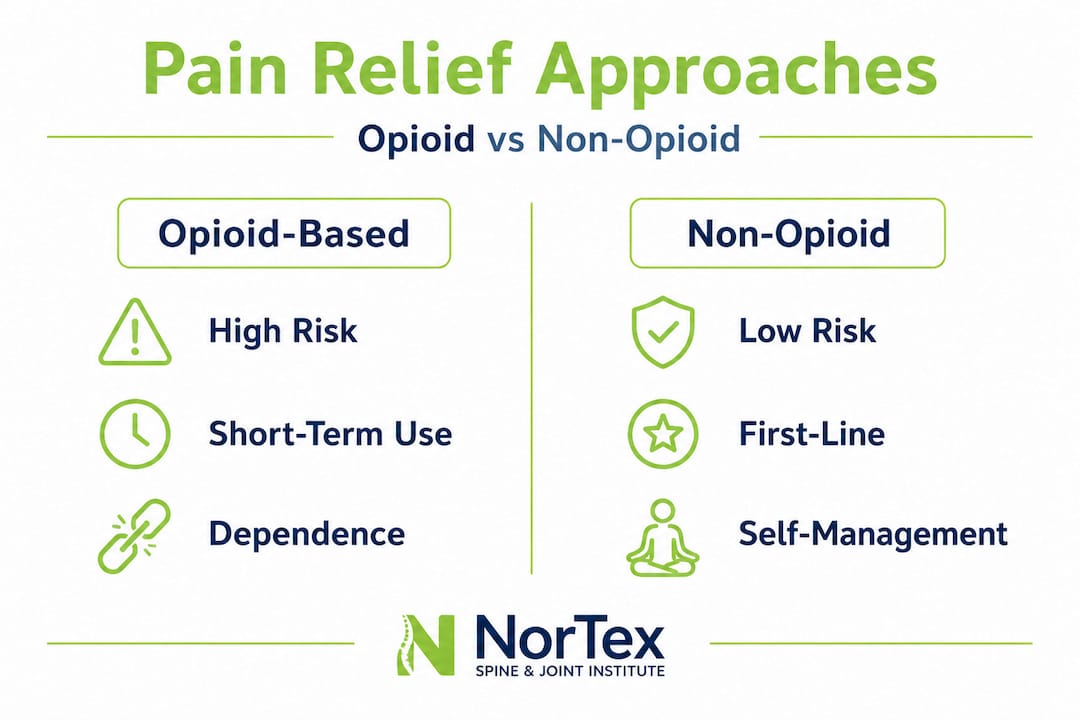
For decades, opioids were routinely prescribed for chronic pain, largely because they offered fast, measurable relief. The problem is that long-term opioid use carries serious risks: physical dependence, tolerance buildup, cognitive impairment, and a substantially higher rate of overdose compared to non-opioid alternatives. As the research base grew, it became clear that opioids were not delivering the long-term quality-of-life improvements that patients and providers had hoped for.
CDC guidelines now recommend maximizing nonpharmacologic and non-opioid pharmacologic therapies before opioids for chronic pain. This is not a minor footnote in clinical practice. It represents a fundamental reorientation of how pain should be approached, particularly for musculoskeletal conditions like osteoarthritis, chronic low back pain, and fibromyalgia.
“Non-opioid pain relief plays a central role as first-line treatments for adults with chronic musculoskeletal pain, emphasizing psychological, physical, and self-management interventions.”
What does this mean for you in practical terms? It means that exercise, cognitive behavioral therapy (CBT), physical therapy, and structured self-management programs are now considered the starting point, not the fallback. These approaches have demonstrated real-world efficacy across a wide range of musculoskeletal conditions, and they carry a risk profile that is dramatically lower than opioid-based treatment.
| Treatment approach | Opioid-based | Non-opioid first-line |
|---|---|---|
| Risk of dependence | High | Very low |
| Long-term function | Often declines | Typically improves |
| Side effect burden | Significant | Minimal |
| Evidence for chronic pain | Moderate, short-term | Strong, sustained |
| Guideline recommendation | Last resort | First-line |
Exploring non-surgical pain relief options is no longer considered a compromise. It is, in fact, the standard of care.
Core pillars of non-opioid pain management
Understanding that non-opioid approaches are recommended is one thing. Knowing exactly what they involve and how they work is another. The four core pillars of non-opioid pain management each address a different dimension of chronic pain, and together they form a more complete treatment framework than any single medication could provide.
Cognitive behavioral therapy (CBT) is strongly recommended as first-line for chronic musculoskeletal pain, offering relief through psychoeducation, relaxation training, and cognitive restructuring. In practical terms, CBT teaches you to identify thought patterns that amplify pain perception, replace avoidance behaviors with gradual engagement, and build coping skills that reduce the emotional burden of living with chronic pain. It does not mean your pain is “in your head.” It means your brain and nervous system are active participants in how pain is experienced, and CBT works directly with that system.
Exercise therapy is arguably the most well-studied non-opioid intervention available. Aerobic exercise, resistance training, yoga, and Tai Chi all produce small-to-moderate improvements in pain and function for chronic low back pain, knee osteoarthritis, and fibromyalgia. Exercise reduces neuroinflammation, strengthens the muscles that support painful joints, and counters the fear-avoidance cycle that often makes chronic pain worse over time. Finding the right exercises for pain relief for your specific condition matters, and working with a physical therapist to design a program is strongly advisable.
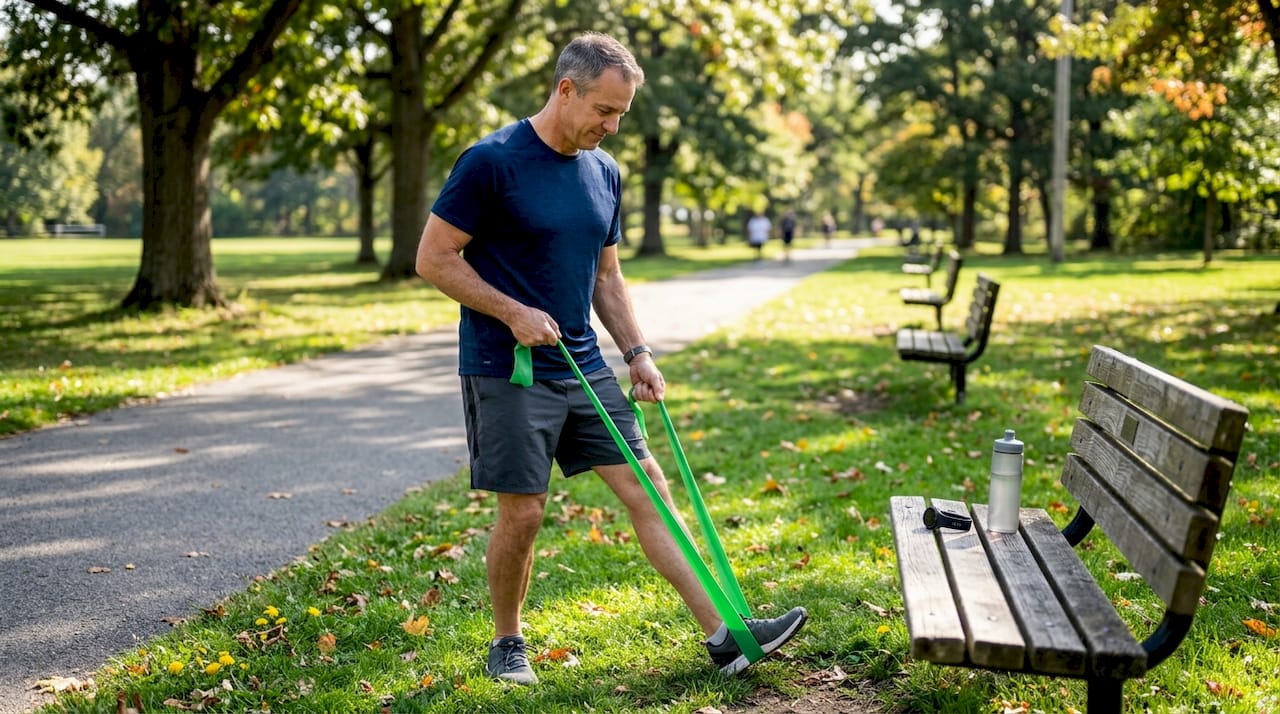
Self-management education focuses on giving you the knowledge and tools to actively participate in your own care. This includes understanding pain science, learning to pace activities, managing flare-ups, and setting realistic goals. These programs are typically tailored to individual conditions and life circumstances, making them particularly effective for people with complex or long-standing pain.
NSAIDs and acetaminophen remain useful as adjuncts (add-ons) within a broader non-opioid plan. They are not meant to be the primary strategy, but they can provide meaningful short-term relief when combined with active therapies. There are also natural pain remedies that complement these approaches effectively.
Here is a quick summary of what each pillar targets:
- CBT: Pain perception, emotional response, and coping behavior
- Exercise: Muscle strength, joint support, neurological pain modulation
- Self-management: Daily function, flare-up control, patient empowerment
- NSAIDs/acetaminophen: Short-term symptom reduction as an adjunct
Pro Tip: If you are new to non-opioid pain management, starting with one pillar at a time rather than overhauling everything at once tends to produce better adherence and more sustainable results. Talk to your provider about which pillar makes the most sense as your entry point.
| Therapy type | Primary mechanism | Conditions with strong evidence |
|---|---|---|
| CBT | Cognitive and behavioral restructuring | Chronic LBP, fibromyalgia, OA |
| Aerobic exercise | Neuroinflammation reduction | Chronic LBP, fibromyalgia |
| Resistance training | Muscle support, joint stability | Knee OA, chronic LBP |
| Yoga/Tai Chi | Flexibility, balance, stress reduction | Fibromyalgia, chronic LBP |
| Self-management education | Behavioral and lifestyle skills | All musculoskeletal conditions |
How effective are non-opioid treatments for musculoskeletal pain?
We’ve seen what non-opioid treatment pillars look like, but how well do they actually work? Let’s break down the research and set realistic expectations for outcomes.
The honest answer is that most patients experience meaningful but not complete improvements. Pain rarely disappears entirely with any treatment approach, and non-opioid therapies are no exception. What the research consistently shows, however, is that these approaches outperform opioids on several key measures over the long term.
- Pain reduction: Exercise probably reduces pain by approximately 15 points on a 100-point scale compared to no treatment in chronic low back pain, with behavioral therapies showing greater short-term effectiveness than usual care.
- Reduced medication use: In orthopedic settings, non-opioid multimodal analgesia resulted in patients using an average of 12 mg of opioid equivalents compared to 46 mg in opioid-based groups, a reduction of more than 70%.
- Fewer adverse effects: Non-opioid approaches carry significantly lower rates of nausea, sedation, cognitive impairment, and dependency compared to opioid regimens.
- Higher patient satisfaction: Studies consistently show that patients managed with non-opioid multimodal strategies report greater overall satisfaction with their care and outcomes.
- Shorter recovery times: In orthopedic contexts, non-opioid approaches were associated with shorter hospital stays and faster return to daily activities.
Key statistic: Non-opioid multimodal pain management reduced opioid consumption by over 70% while achieving lower pain scores at 24 to 48 hours post-procedure compared to opioid-based protocols.
Pro Tip: Track your pain levels, sleep quality, and daily activity on a simple scale each week. This data helps you and your provider identify which elements of your plan are working and where adjustments are needed.
It is worth noting that acupuncture also shows a small but measurable pain reduction compared to sham treatment, making it a reasonable complementary option for some patients. Exploring home remedies for pain alongside structured therapies can also support your overall plan. For a broader view of what doctor-recommended pain relief looks like in clinical practice, speaking with a specialist who takes an integrative approach is a valuable next step.
Non-opioid approaches vs injections and surgical procedures
With non-opioid strategies often outperforming medications, it is important to examine how these compare to other common interventions like injections and ablation, which many patients assume are a logical next step when conservative care seems insufficient.
The evidence here may surprise you. A major BMJ clinical update found that interventional procedures including epidural steroid injections, facet joint injections, and radiofrequency ablation (a procedure that uses heat to disable pain-transmitting nerves) are strongly recommended against for chronic non-cancer spine pain due to lack of efficacy over placebo. This does not mean these procedures are never appropriate, but for the majority of people with chronic spine-related musculoskeletal pain, they offer no meaningful advantage over well-structured non-opioid care.
“Interventional procedures like epidural steroid injections, facet joint injections, and radiofrequency ablation are strongly recommended against for chronic non-cancer spine pain due to lack of efficacy over placebo.”
Here is how non-opioid approaches compare to common interventional procedures:
- Epidural steroid injections: Provide short-term relief in some cases but show no advantage over placebo for chronic pain at 3 months or beyond.
- Facet joint injections: Evidence does not support routine use for chronic low back pain outside of specific diagnostic purposes.
- Radiofrequency ablation: Temporarily disables pain nerves but does not address the underlying structural or behavioral contributors to pain.
- Non-opioid multimodal care: Addresses pain at multiple levels, including physical, psychological, and functional, with sustained improvements over time.
| Intervention | Short-term relief | Long-term benefit | Guideline status |
|---|---|---|---|
| Epidural steroid injection | Moderate | Not supported | Recommended against |
| Radiofrequency ablation | Moderate | Limited evidence | Recommended against |
| Exercise therapy | Moderate | Strong | Strongly recommended |
| CBT | Moderate | Strong | Strongly recommended |
| Self-management education | Moderate | Strong | Recommended |
Understanding interventional knee pain management and when it is genuinely appropriate is an important part of making informed decisions. Reviewing pain management case insights from real clinical scenarios can also help you understand how these decisions play out in practice.
Personalizing your non-opioid pain relief plan
Armed with a clear understanding of treatments and how they compare, it is time to focus on how you can apply these strategies in your everyday routine, particularly within the North Dallas area where access to multidisciplinary care is increasingly available.
Multidisciplinary clinics offering physical therapy, CBT, exercise programs, and self-management education are available throughout the region, and they emphasize self-management as a core driver of quality-of-life gains in chronic musculoskeletal pain. The key is building a plan that fits your specific condition, goals, and daily realities.
Consider these steps when personalizing your approach:
- Identify your primary pain triggers: Is your pain worse after prolonged sitting, certain movements, or during periods of high stress? Knowing your triggers helps you and your provider prioritize the right interventions.
- Set function-based goals, not just pain-based ones: Aiming to walk a mile without stopping or return to a favorite activity is often more motivating and measurable than targeting a specific pain score.
- Choose therapies that match your lifestyle: A structured gym-based resistance program works well for some people, while home-based yoga or Tai Chi may be more sustainable for others.
- Revisit your plan regularly: Chronic pain evolves, and your treatment plan should too. Schedule regular check-ins with your provider to assess progress and adjust as needed.
- Explore the full range of support: Comparing physical therapy and chiropractic options can help you understand which manual therapy approaches complement your active treatment plan.
Pro Tip: Write down three specific functional goals before your next provider appointment. Goals like “I want to be able to garden for 30 minutes without pain” give your care team concrete targets to build your plan around.
The uncomfortable truth about non-opioid pain relief: What experts wish more people knew
Here is something that rarely gets said plainly: non-opioid pain relief works, but it requires you to be an active participant, and that is harder than taking a pill. Passive treatments, where something is done to you rather than by you, consistently underperform active, skill-based therapies in the long-term research. That distinction matters more than most people realize when they first enter the pain management system.
Many patients come in expecting a procedure or a prescription to resolve their pain. When they are instead offered CBT or an exercise program, it can feel like a lesser option. In reality, it is often the more powerful one. The patients who achieve the most meaningful, sustained improvements are typically those who engage consistently with active therapies, even when progress is slow and incremental.
Another truth worth acknowledging: not everyone achieves complete relief. For people with long-standing or complex pain conditions, the goal shifts from elimination to management, and that requires honest conversations with your provider about realistic expectations. Reviewing North Dallas pain case studies illustrates how individualized, adaptive plans produce better outcomes than rigid protocols.
The most effective non-opioid plans are living documents. They change as you change, and they require ongoing communication between you and your care team. That kind of engaged, evolving relationship with your own health is ultimately what produces lasting results.
Discover advanced non-opioid treatments at Nortex Spine & Joint
If you’re ready to move beyond opioids and explore evidence-based, non-surgical solutions tailored to your specific condition, Nortex Spine and Joint in North Dallas offers a full spectrum of advanced options. From personalized PRP therapy that uses your own platelets to accelerate tissue healing, to cutting-edge regenerative pain solutions designed to address the root cause of your discomfort, our team builds treatment plans around your goals, not a one-size-fits-all protocol. We also offer stem cell therapy options for patients seeking the most advanced regenerative interventions available. Schedule a consultation today and take the first step toward lasting, medication-free relief.
Frequently asked questions
What are the most effective non-opioid treatments for chronic musculoskeletal pain?
First-line options include exercise, cognitive behavioral therapy, physical therapy, and self-management education, all of which provide significant improvements in pain and function according to current practice guidelines.
Is non-opioid pain relief safer than using opioid medications?
Yes. Non-opioid pain treatments carry much lower risk of addiction, overdose, and serious side effects, which is why CDC guidelines recommend exhausting these options before considering opioids.
Do injections or ablation work for chronic back pain?
For most people with chronic non-cancer spine pain, recent BMJ research and major clinical guidelines recommend against routine injections and radiofrequency ablation due to insufficient benefit over placebo.
How long does it take to see results from non-opioid pain strategies?
Most people notice early improvements after several weeks of consistent practice, with more meaningful gains accumulating over months, particularly with exercise-based therapies like aerobic training, resistance work, and yoga.
Can I combine non-opioid and medication options?
Yes. NSAIDs and acetaminophen can be used as adjuncts alongside non-opioid therapies, though CDC guidelines recommend treating them as supplementary rather than primary strategies for chronic musculoskeletal pain.
Recommended
- Advanced Treatments for Chronic Back Pain: Insights from Leading Back Doctors – Nortex | Pain Management | Allen, Garland, McKinney & Plano Texas
- Lower Back Pain Relief Tips That Really Work – Nortex | Pain Management | Allen, Garland, McKinney & Plano Texas
- Physical Therapy vs Chiropractic: Which Is Better for Pain Relief? – Nortex | Pain Management | Allen, Garland, McKinney & Plano Texas
- Best Treatments for Lower Back Pain: What Your Doctor Might Recommend – Nortex | Pain Management | Allen, Garland, McKinney & Plano Texas
- Holistic Chronic Pain Management Natural Solutions That Work