
Shoulder pain has a way of making even the simplest tasks feel surprisingly difficult. Reaching for a cabinet, sleeping through the night, lifting a bag — all of it becomes complicated when your shoulder is not cooperating. What makes explaining shoulder pain relief genuinely useful is moving past the “rest and ice” advice most people have already tried and still found insufficient. This guide covers what actually causes shoulder pain, what the evidence says about home care and exercise, when professional treatment becomes necessary, and how to protect your shoulder long term. The goal is to give you enough clinical understanding to make informed decisions about your own care.
Table of Contents
- Key takeaways
- What causes shoulder pain
- Effective home treatment for shoulder pain
- Exercises and physical therapy for shoulder relief
- Advanced shoulder pain treatment options
- Prevention and long-term shoulder health
- My perspective on shoulder pain management
- Shoulder pain care at Nortexspineandjoint
- FAQ
Key takeaways
| Point | Details |
|---|---|
| Rest is not always the answer | Prolonged immobilization can worsen stiffness and extend recovery, especially in frozen shoulder. |
| Exercise timing matters | Beginning guided movement early in conditions like frozen shoulder can cut recovery from years to months. |
| Know when to escalate | If pain and reduced function persist beyond 4 to 6 weeks of conservative care, specialist evaluation is warranted. |
| Injections and PRP fill a gap | Corticosteroid and PRP injections are appropriate when physical therapy alone is not producing sufficient relief. |
| Prevention is manageable | Consistent posture habits, warm-ups, and shoulder-specific strengthening reduce recurrence significantly. |
What causes shoulder pain
The shoulder is the most mobile joint in the human body, which also makes it one of the most vulnerable. Understanding what causes shoulder discomfort is the first step toward finding the right relief strategy.
The most frequently injured structure is the rotator cuff, the group of four muscles and their tendons that stabilize the ball of the upper arm within the shoulder socket. Rotator cuff injuries range from minor irritation and tendonitis to partial or full-thickness tears, and they account for a large proportion of shoulder pain cases seen in clinical practice. Rotator cuff problems are especially common in people who perform repetitive overhead movements, whether through work or sport.
Other frequent diagnoses include:
- Subacromial impingement: The tendons become pinched between the bones during arm elevation, producing a sharp, localized ache.
- Bursitis: Inflammation of the bursa sac that cushions the joint, often occurring alongside impingement.
- Frozen shoulder (adhesive capsulitis): The joint capsule thickens and tightens, progressively limiting motion. 80% of adhesive capsulitis patients improve without surgery, but recovery without intervention can stretch to 18 to 42 months.
- Osteoarthritis: Cartilage breakdown that produces grinding, stiffness, and pain with movement, typically in older adults.
- Labral tears: Damage to the cartilage rim of the socket, often following a dislocation or repetitive stress.
Inflammation from any of these conditions does not stay neatly in one place. Left unmanaged, it can disrupt sleep, limit your ability to dress yourself, and cause secondary stiffness in the neck and upper back. When you notice that your shoulder pain affects your function significantly, or when it does not improve with basic home care within a reasonable window, imaging such as an MRI becomes relevant.
Effective home treatment for shoulder pain
Many patients come to the clinic after weeks of complete rest, only to find their shoulder stiffer and more painful than when they started. This is one of the most common patterns we see. Long-term immobilization is discouraged for most shoulder conditions because the joint capsule and surrounding soft tissue begin to contract when movement stops.
The practical approach to home management follows a clear sequence:
- Modify activity, not eliminate it. Stop doing what provokes sharp pain — heavy lifting, overhead reaching, or sleeping on the affected side — but keep using your arm for everyday, pain-free tasks.
- Apply ice in the first 48 to 72 hours. For acute flare-ups involving clear swelling or warmth, ice applied for 15 to 20 minutes several times daily reduces inflammation. After that acute phase passes, gentle heat can help relax surrounding muscle tension before movement.
- Use over-the-counter anti-inflammatories appropriately. NSAIDs like ibuprofen, taken with food at the recommended dose, can reduce both pain and tissue inflammation. They work best as a short-term tool rather than a long-term crutch.
- Adjust your sleep position. Sleeping more upright or with a pillow supporting the affected arm reduces nighttime joint stress by allowing gravity to help seat the humeral head in the socket.
- Review your workstation setup. If you work at a desk, check that your monitor is at eye level, your keyboard allows relaxed shoulders, and you are not holding your arm in a sustained, unsupported position for hours at a time.
Pro Tip: If you are unsure whether to use ice or heat, a useful rule of thumb is to reach for ice after activity or if the area feels warm to the touch, and use heat before gentle movement to loosen stiff tissue. Applying heat to an actively inflamed shoulder tends to increase swelling.
Exercises and physical therapy for shoulder relief
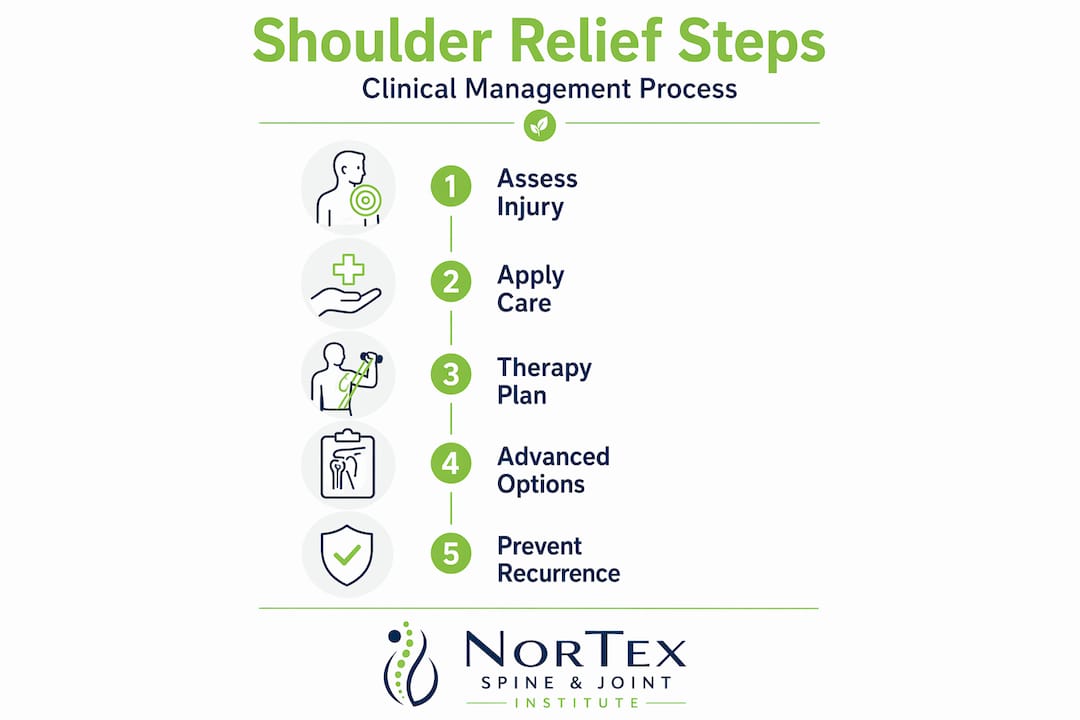
When it comes to exercises for shoulder relief, the most important concept in clinical practice is the “pain-free window.” There is a critical range of movement where you are working the tissue without triggering the defensive muscle guarding that makes pain worse. Pushing through sharp pain during rehab causes guarding and stiffness, while gentle movement within comfortable ranges promotes tissue health and circulation.
For most shoulder conditions, a practical exercise program includes three categories:
- Pendulum exercises: Lean forward, let the arm hang freely, and make small circles using trunk momentum rather than shoulder muscle activation. This gently mobilizes the joint with minimal load. It is often the best starting point for frozen shoulder or post-injury stiffness.
- External rotation stretches: Using a light resistance band anchored to a door, rotating the forearm outward from a bent-elbow position rebuilds strength in the posterior rotator cuff, the most commonly weakened area.
- Scapular setting and strengthening: Exercises that train the shoulder blade muscles — like rows, face pulls, and prone Y and T raises — stabilize the entire shoulder complex and reduce impingement risk.
- Doorway chest stretches: Gently opening the anterior shoulder capsule and pectoral muscles, which tend to tighten with desk work or guarding postures.
Early physiotherapy for frozen shoulder, begun during the initial freezing phase rather than waiting for resolution, has been shown to reduce recovery time from years to months. This is why the timing of professional involvement matters so much.
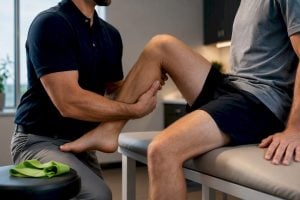
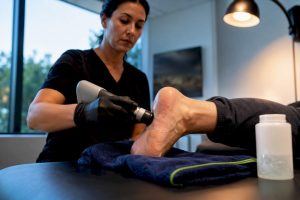
Working with a physical therapist adds dimensions that a self-directed program cannot replicate. Manual therapy techniques such as the Maitland and Mulligan methods apply specific joint mobilizations that restore glenohumeral mechanics safely across different inflammation phases. Dry needling releases trigger points in the rotator cuff and surrounding muscles, producing immediate reduction in muscular tone and pain. Without addressing these secondary compensatory patterns, neck and scapular stiffness can develop and create a second chronic pain problem layered on top of the original injury.

Pro Tip: When starting a home exercise program for shoulder pain, keep a simple log of your pain level before and after each session on a 0 to 10 scale. If your pain consistently rises above a 4 out of 10 during movement and does not settle within 30 minutes afterward, the exercise load is too aggressive and should be reduced.
Advanced shoulder pain treatment options
Conservative care resolves most shoulder conditions when applied consistently. But if pain and functional decline persist beyond 4 to 6 weeks, specialist evaluation — including possible MRI — becomes necessary to rule out structural damage and guide more targeted treatment.
The table below compares the main treatment options available beyond home care:
| Treatment | Best indication | Expected recovery |
|---|---|---|
| Physical therapy | Rotator cuff tendonitis, impingement, mild tears, frozen shoulder | 6 to 12 weeks of consistent sessions |
| Corticosteroid injection | Bursitis, moderate impingement, pain limiting therapy participation | Relief within days; effect lasts weeks to months |
| Subacromial injection | Subacromial bursitis and impingement | 1 to 3 injections; relief in 1 to 2 weeks |
| PRP (platelet-rich plasma) therapy | Partial rotator cuff tears, chronic tendinopathy, early arthritis | 4 to 8 weeks for initial effect; ongoing improvement up to 6 months |
| Arthroscopic surgery | Full-thickness tears, labral damage, impingement refractory to all conservative care | 3 to 6 months rehabilitation post-procedure |
| Shoulder replacement | Severe osteoarthritis or irreparable cuff tear arthropathy | 6 to 12 months full recovery |
Subacromial injections deliver corticosteroid directly into the space where impingement and bursitis occur, reducing inflammation efficiently when oral medications and therapy have not been sufficient. They are typically reserved for situations where pain is severe enough to prevent meaningful participation in rehabilitation.
PRP therapy takes a different approach. A small sample of your own blood is processed to concentrate growth factors and healing proteins, which are then injected into the damaged tissue. This autologous treatment works by stimulating the body’s own repair mechanisms rather than suppressing them, making it a reasonable option for partial tears, chronic tendinopathy, and early joint degeneration where the goal is tissue regeneration rather than symptom suppression.
Surgery is relevant when structural damage is too significant for the tissue to heal on its own. When considering surgical consultation, the decision should always be made after exhausting appropriate non-surgical options, not as an early default.
Prevention and long-term shoulder health
Once your shoulder is moving well again, keeping it that way requires building consistent habits rather than hoping the problem does not return. The following practices have the strongest evidence for reducing recurrence:
- Maintain postural awareness. Forward head posture and rounded shoulders reduce the space available for rotator cuff tendons during arm elevation, which is a direct mechanical risk factor for impingement. Setting reminders to adjust posture during prolonged desk work makes a practical difference.
- Warm up before overhead activity. Five minutes of arm circles, band pull-aparts, and shoulder rotations before lifting, throwing, or swimming prepares the rotator cuff for load and reduces acute injury risk.
- Lift with technique, not just strength. When lifting objects overhead, keep the load close to the body and avoid jerking movements. The shoulder tolerates gradual, controlled loading far better than sudden force.
- Strengthen consistently. A twice-weekly routine targeting the rotator cuff, middle and lower trapezius, and serratus anterior maintains the muscular balance that protects the joint. These are not glamorous exercises, but they are the ones that prevent re-injury.
- Sleep position matters long term. If you have had shoulder problems, sleeping on your back with a pillow supporting the affected arm is preferable to direct side-lying on that shoulder, which compresses the joint for hours at a time.
Holistic chronic pain management, including lifestyle adjustments for joint health, can reinforce the structural work you do in therapy.
My perspective on shoulder pain management
I have worked with many patients who came in after months of self-managing with generic advice, and the pattern is consistent. The common thread is not that they made bad decisions. It is that they were working with incomplete information.
The biggest mistake I see is binary thinking: either push through all the pain or avoid all movement entirely. Neither approach works. Controlled mobility within pain-free ranges is not a compromise position. It is actually the mechanism through which tissue heals. The shoulder needs circulation, mechanical stimulus, and graduated load to repair itself. Sitting still denies it all three.
The second pattern I see regularly is patients who try three or four generic exercise programs downloaded from the internet before seeing a clinician. Some of those programs are reasonable for certain diagnoses and harmful for others. A frozen shoulder requires very different treatment than an acute rotator cuff tear, and applying the wrong approach confidently does not help. Getting a specific diagnosis first and building a plan around that diagnosis is simply more efficient.
What I find genuinely promising about the current treatment environment is the integration of regenerative therapies like PRP into broader rehabilitation programs. PRP is not a replacement for physical therapy. It is a tool that, when used at the right stage and combined with structured movement, can support tissue healing in ways that neither approach achieves alone. The evidence for PRP in shoulder conditions is growing, and the risk profile is favorable since it uses the patient’s own biological material.
Realistic expectations matter here. Most shoulder conditions improve significantly with the right approach. But “right approach” means targeted, consistent, and guided by someone who has examined your specific shoulder. Generic optimism without a plan is not the same as clinical confidence.
— Felix
Shoulder pain care at Nortexspineandjoint
At Nortexspineandjoint, shoulder pain treatment is built around identifying the specific source of your discomfort and matching the appropriate level of care to it. For patients whose pain has not responded to physical therapy or basic interventions, the clinic offers PRP therapy for shoulder pain, a regenerative approach that uses your own platelet-rich plasma to support tissue repair in damaged tendons and joints. This is combined with structured rehabilitation to maximize outcomes.
The clinic’s approach integrates conservative care with advanced options like subacromial injections and stem cell therapy, all within a non-surgical framework. If you have been managing shoulder pain without clear improvement, a personalized shoulder pain evaluation at Nortexspineandjoint gives you a specific diagnosis and a treatment plan built around your condition, your activity level, and your goals. Serving the North Dallas area, the clinic is accessible to patients at multiple locations.
FAQ
What is the fastest way to relieve shoulder pain at home?
Modifying painful activities, applying ice to acutely inflamed areas, taking NSAIDs at recommended doses, and adjusting sleep position to reduce joint compression will provide the most reliable short-term relief. Avoid complete rest, as it tends to increase stiffness over time.
How long does shoulder pain typically last without treatment?
Duration depends heavily on the diagnosis. Rotator cuff tendonitis often resolves in 4 to 8 weeks with activity modification and exercise. Frozen shoulder without active management can persist for 18 to 42 months, though early physiotherapy can reduce that to 6 to 9 months.
When should I see a doctor for shoulder pain?
Seek specialist evaluation if shoulder pain or significant functional limitation persists beyond 4 to 6 weeks despite consistent conservative care, or sooner if you experience sudden severe pain following an injury, significant weakness, or inability to raise your arm.
Is PRP therapy effective for shoulder pain?
PRP therapy is most effective for partial rotator cuff tears, chronic tendinopathy, and early joint degeneration where tissue regeneration is the goal. It works by concentrating growth factors from your own blood and injecting them into damaged tissue, supporting repair rather than masking symptoms.
What exercises should I avoid with shoulder pain?
Avoid heavy overhead pressing, pull-ups, and behind-the-neck exercises during acute phases of shoulder pain. Any movement that reproduces sharp pain or lingers above a 4 out of 10 on a pain scale during or after exercise should be paused until you have a specific diagnosis and a guided rehab plan.
Recommended
- The Top 5 Treatments Offered by Shoulder Pain Doctors – Nortex | Pain Management | Allen, Garland, McKinney & Plano Texas
- Shoulder Pain Relief: How PRP Therapy Can Help You – Nortex | Pain Management | Allen, Garland, McKinney & Plano Texas
- Step by Step Joint Pain Relief for Adults 30-65
- Shoulder Surgery: When to Consult a Shoulder Pain Doctor – Nortex | Pain Management | Allen, Garland, McKinney & Plano Texas