
Avoiding knee surgery is achievable for most adults with knee pain when a structured, multi-modal non-surgical treatment plan is followed consistently. Clinical guidelines in 2026 from the American Academy of Orthopaedic Surgeons (AAOS), the American College of Rheumatology (ACR), and the Osteoarthritis Research Society International (OARSI) all endorse conservative management as the first line of care. Surgery is recommended only after 3–6 months of documented, comprehensive non-surgical therapy has failed. That window is your opportunity, and it is wider than most patients expect.
How to avoid knee surgery: the conservative treatments that work first
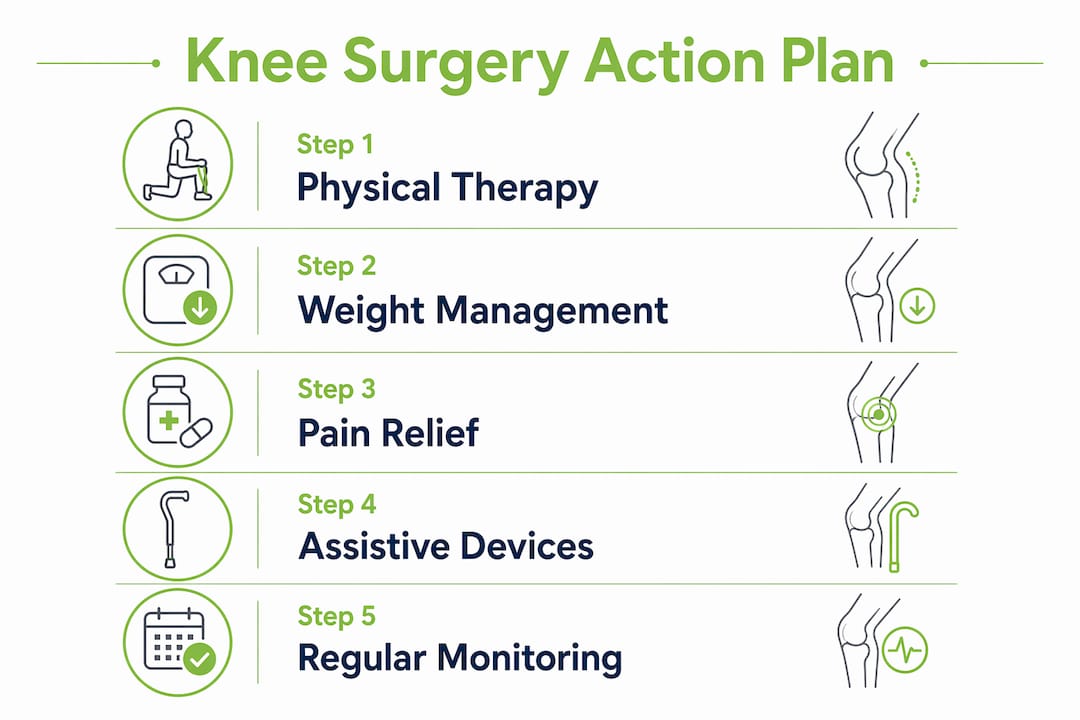
The foundation of any non-surgical knee plan is structured physical therapy combined with weight management and pain control. These three elements work together. Removing any one of them reduces the effectiveness of the others.
Structured physical therapy
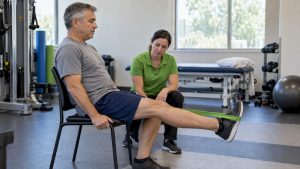
Physical therapy targets the muscles that support and unload the knee joint. Strengthening the quadriceps, hamstrings, and glutes is the single most effective way to reduce mechanical stress on the joint surface. A trained physical therapist will also work on knee mobility and gait mechanics, which directly affects how much force travels through the joint with each step. Many patients come in having done generic gym exercises for months with little relief. The difference is specificity: a program built around your knee’s actual deficits produces results that a general fitness routine does not.

Low-impact exercise is the preferred mode during active treatment. Swimming, cycling, and walking on flat surfaces maintain cardiovascular fitness and joint mobility without the repetitive impact of running or jumping. These activities also support weight management, which carries its own significant mechanical benefit.
Pain management tools
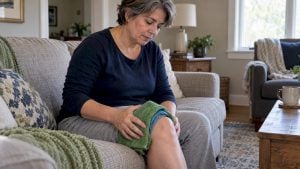
Topical NSAIDs, such as diclofenac gel, require consistent daily application to reach therapeutic tissue concentrations. Patients who apply them only when pain spikes see limited benefit. Consistent use over several weeks produces the anti-inflammatory effect that makes physical therapy more tolerable and productive.
Assistive devices are underused and undervalued. A cane used on the opposite side of the affected knee can reduce joint load by up to 50% per step. That is a meaningful reduction in daily mechanical stress, especially during flare periods.
Pro Tip: Ask your physical therapist to assess your footwear. Worn-out shoes or unsupportive soles alter your gait and increase knee stress in ways that are easy to correct but rarely addressed.
Here is a summary of the core conservative tools:
- Structured physical therapy: Quadriceps, hamstring, and glute strengthening with mobility work
- Low-impact aerobic exercise: Swimming, cycling, and walking to maintain function without joint trauma
- Topical NSAIDs: Consistent daily application for anti-inflammatory effect
- Weight management: Even modest weight loss reduces joint load significantly
- Assistive devices: A cane on the opposite side reduces joint stress substantially during flare periods
When and how are injections used as alternatives to knee surgery?
Injections enter the picture when physical therapy and weight loss produce insufficient relief after a 4–8 week trial. They are not a replacement for the foundational work. They are a tool to reduce pain enough that you can continue and progress with that work.
The clinical approach follows a stepwise sequence:
-
Corticosteroid injections: These provide short-term relief, typically lasting several weeks to a few months. They are most useful during acute flare periods when pain prevents participation in physical therapy. The pros and cons of steroid injections are worth understanding before proceeding, as repeated use carries risks to cartilage integrity over time.
-
Hyaluronic acid injections: These work differently from corticosteroids. Rather than suppressing inflammation, hyaluronic acid supplements the natural lubricating fluid in the joint. Hyaluronic acid injections can improve knee mobility and reduce pain for 6–12 months in appropriate candidates. That duration makes them a meaningful bridge for patients working through a conservative care program.
-
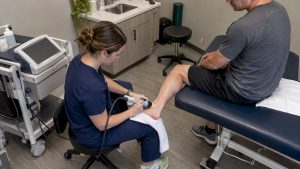
Platelet-rich plasma (PRP) injections: PRP uses growth factors derived from your own blood to support tissue repair and reduce inflammation. It is a regenerative approach, not simply a pain blocker. Nortexspineandjoint offers PRP as part of a broader non-surgical management plan, particularly for patients with moderate osteoarthritis who have not responded fully to physical therapy alone.
-
Patient selection: Injection therapy works best in patients with mild to moderate joint changes. Patients with severe bone-on-bone arthritis see less benefit and may be better served by surgical evaluation.
-
Stepwise escalation: Clinical guidelines recommend trying each level of intervention for an adequate period before escalating. Skipping steps or expecting a single injection to resolve a chronic condition sets unrealistic expectations and often leads to premature surgical referral.
How do lifestyle modifications contribute to avoiding knee surgery?
Lifestyle changes are not supplementary. They are structural to the outcome. The most effective non-surgical treatment for arthritis pain combines medical interventions with sustained daily habits that reduce joint stress and support tissue health.
Weight management carries the largest biomechanical return of any lifestyle change. Losing 10 pounds reduces the force on your knee joint by approximately 50 pounds per step. Over the course of a day involving thousands of steps, that reduction is substantial. For patients who are overweight, weight loss is not optional in a serious non-surgical plan. It is a primary treatment.
Pro Tip: Pair weight management with a practical weight loss approach that fits your schedule. Consistency over months matters far more than intensity over weeks.
Additional lifestyle factors that protect knee health include:
- Dietary choices: Anti-inflammatory foods, including omega-3 rich fish, leafy greens, and berries, support joint health. Processed foods and excess sugar promote systemic inflammation that worsens joint symptoms.
- Consistent movement: Sports medicine expert Dr. Andrew D. Pearle describes the principle as “motion is lotion.” Consistent knee movement circulates synovial fluid, which nourishes cartilage and delays degeneration. Prolonged sitting is as harmful as overloading the joint.
- Activity modification: Avoid high-impact activities like running on hard surfaces, deep squatting under load, or sports involving sudden pivoting until the joint is stabilized. Replace them with swimming or cycling during active treatment phases.
- Footwear and ergonomics: Supportive footwear with adequate cushioning reduces ground reaction forces. At work, ergonomic adjustments to seating height and desk setup reduce cumulative knee strain during long hours.
How to monitor progress and know when surgery might be necessary
Non-surgical treatments require at least 3–6 months to assess true effectiveness. Patients who abandon conservative care after four weeks because they have not seen dramatic improvement are making a clinical error. Gradual, steady improvement over months is the expected trajectory, not rapid resolution.
The table below outlines the key indicators that guide the decision between continuing conservative care and pursuing surgical evaluation.
| Clinical indicator | What it means for your plan |
|---|---|
| Persistent severe pain despite 3–6 months of therapy | Signals need for surgical consultation |
| Significant functional limitation affecting daily tasks | Warrants reassessment of treatment intensity |
| Sleep disturbance from knee pain despite treatment | Indicates inadequate pain control; escalation needed |
| Kellgren-Lawrence grade IV changes on imaging | Bone-on-bone arthritis with limited cartilage; surgery more likely beneficial |
| Steady functional improvement, even if slow | Continue and progress the conservative plan |
Imaging findings matter but do not tell the whole story. Many patients with severe X-ray changes function well with conservative care. Conversely, some patients with moderate imaging findings have debilitating symptoms. The clinical picture, not the image alone, drives the decision.
Maintain open communication with your treating physician throughout the process. Document your pain levels, functional changes, and treatment adherence. That record helps your provider make accurate, timely decisions about escalation or surgical referral.
What common mistakes undermine a non-surgical knee pain plan?
The most common reason conservative treatment fails is not that it does not work. It is that patients do not follow through with the full program consistently. Multi-modal approaches combining muscle strengthening, weight management, and pain control yield the best outcomes. Single-therapy efforts rarely succeed.
Watch for these specific pitfalls:
- Neglecting muscle strengthening: Patients often focus on pain relief and skip the strengthening work. Without adequate quadriceps and glute strength, the joint remains mechanically overloaded regardless of other interventions.
- Expecting quick results: Conservative care is measured in months, not weeks. Patients who expect to feel significantly better after two or three sessions of physical therapy set themselves up for premature dropout.
- Inconsistent exercise: Sporadic participation in physical therapy or home exercise programs produces sporadic results. Frequency and consistency determine outcomes.
- Overreliance on pain medications: Oral pain medications mask symptoms without addressing the underlying joint mechanics. Using them as a primary strategy delays the functional work that actually changes the trajectory of the condition.
- Skipping professional guidance: Self-directed exercise programs based on online videos often miss the specific deficits driving your knee pain. A knee rehabilitation program designed by a clinician who has assessed your movement patterns is categorically different from generic advice.
Key takeaways
Avoiding knee surgery requires a sustained, multi-modal conservative treatment plan combining physical therapy, weight management, and stepwise pain management for at least 3–6 months before surgery is considered.
| Point | Details |
|---|---|
| Surgery is the last resort | Clinical guidelines require 3–6 months of failed conservative therapy before surgery is indicated. |
| Muscle strength is the foundation | Strengthening quadriceps, hamstrings, and glutes reduces mechanical knee stress more than any single intervention. |
| Weight loss multiplies results | Losing 10 pounds removes approximately 50 pounds of force per step from the knee joint. |
| Injections support, not replace, therapy | Corticosteroid and hyaluronic acid injections extend the window for conservative care when used at the right stage. |
| Consistency determines outcomes | Multi-modal plans fail most often due to inconsistent adherence, not because the treatments themselves do not work. |
What I have learned treating knee pain without surgery
After years of working with patients who arrive having already tried multiple treatments, one pattern stands out clearly. The patients who avoid surgery are almost never the ones who found a single magic intervention. They are the ones who committed to the full program, adjusted it when needed, and stayed patient through the slow months.
The hardest conversation to have is with a patient who has done physical therapy for three weeks, taken an injection, and concluded that conservative care has failed. Three weeks is not a trial. It is a start. The biology of tissue adaptation and pain modulation operates on a timeline of months, and that timeline does not compress because a patient is frustrated.
Surgery is a legitimate and sometimes necessary option. I do not discourage it when the clinical picture calls for it. But I have seen patients with Kellgren-Lawrence grade III changes, significant functional limitation, and years of pain make meaningful recoveries through a well-structured non-surgical plan. The key was a trusted clinical relationship, a personalized program, and the willingness to stay with it.
If you are in that window between “I have tried a few things” and “I am ready for surgery,” you likely have more options than you realize.
— Felix
Advanced non-surgical care at Nortexspineandjoint
For patients who have completed foundational conservative care and need the next level of support, Nortexspineandjoint offers evidence-based regenerative therapies in North Dallas. PRP therapy for knee pain uses growth factors from your own blood to reduce inflammation and support tissue repair, making it a strong option for moderate osteoarthritis that has not fully responded to physical therapy or standard injections. The clinical team at Nortexspineandjoint builds individualized treatment plans that address the root cause of your knee pain, not just the symptoms. Contact Nortexspineandjoint to schedule a consultation and find out which non-surgical options fit your specific condition.
FAQ
How long does conservative knee treatment take before considering surgery?
Clinical guidelines recommend a minimum of 3–6 months of comprehensive non-surgical therapy before surgery is considered. This window allows adequate time to assess the true effectiveness of physical therapy, weight management, and injection treatments.
Can weight loss really help me avoid knee surgery?
Losing 10 pounds reduces the force on your knee by approximately 50 pounds per step. That reduction in mechanical load significantly slows joint degeneration and can make other conservative treatments more effective.
What is the difference between corticosteroid and hyaluronic acid injections?
Corticosteroid injections reduce inflammation and provide short-term pain relief, typically lasting weeks to a few months. Hyaluronic acid injections lubricate the joint and can improve mobility and reduce pain for 6–12 months, making them better suited for longer-term management.
What signs indicate that surgery may be necessary despite conservative treatment?
Persistent severe pain, significant functional limitation, sleep disturbance from knee pain, and imaging findings showing Kellgren-Lawrence grade IV bone-on-bone changes all signal that surgical evaluation is appropriate.
Is PRP therapy a proven alternative to knee surgery?
PRP therapy is an evidence-supported regenerative option for moderate knee osteoarthritis. It works best as part of a broader non-surgical plan and is most effective in patients who have not yet reached severe, bone-on-bone joint deterioration.
Recommended
- How to improve joint health: Non-surgical strategies
- Your essential joint pain relief checklist for lasting mobility
- The Evolution of Knee Surgery: Past, Present, and Future – Nortex | Pain Management | Allen, Garland, McKinney & Plano Texas
- Can Physical Therapy Prevent Surgery? When Conservative Care Wins – Nortex | Pain Management | Allen, Garland, McKinney & Plano Texas