
Lumbar spine conditions are disorders affecting the five vertebrae of the lower back, a region that bears most of your body’s mechanical load and is the most common site of musculoskeletal pain in adults. Clinicians use the term “lumbar spine disorders” as the standard classification for this group of conditions, which ranges from herniated discs and spinal stenosis to degenerative changes and structural instability. Up to 84% of adults experience low back pain at some point in their lives. That figure reflects how central lumbar health is to daily function, and why defining lumbar spine conditions clearly is the first step toward managing them well. At Nortexspineandjoint, patients receive individualized evaluations that identify the specific disorder driving their pain, rather than treating all back pain as a single problem.
What are the common types of lumbar spine conditions?
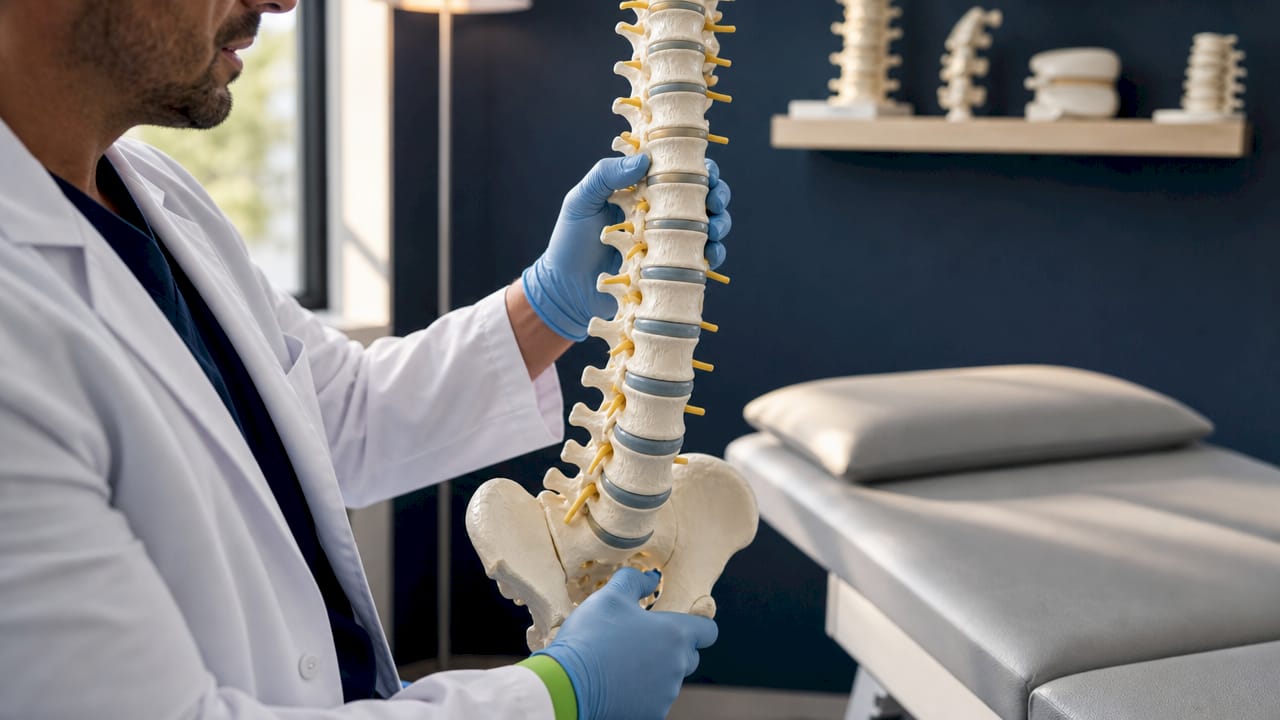
Lumbar spine disorders fall into two broad categories: degenerative conditions that develop gradually with age and use, and structural or congenital conditions present from birth or triggered by injury. Most patients seen in clinical practice have degenerative disorders, though the two categories often overlap.
The five most frequently diagnosed conditions are:
- Herniated disc: The soft inner core of a spinal disc pushes through its outer layer, pressing on nearby nerves. This produces sharp, radiating pain that often travels down one leg.
- Lumbar spinal stenosis: The spinal canal narrows, compressing the spinal cord or nerve roots. Patients typically report leg pain and cramping that worsens with walking and improves when they sit or lean forward.
- Spondylolisthesis: One vertebra slips forward over the one below it. This creates instability, localized low back pain, and sometimes nerve compression symptoms.
- Lumbar spondylosis: A broad term for age-related degenerative changes including bone spurs, disc thinning, and facet joint arthritis. It is extremely common in adults over 50.
- Scoliosis: An abnormal lateral curvature of the spine. Adult degenerative scoliosis develops as disc and joint degeneration causes the spine to curve asymmetrically.
| Condition | Primary cause | Key symptoms | Typical age group |
|---|---|---|---|
| Herniated disc | Disc degeneration or acute injury | Radiating leg pain, numbness | 30–50 |
| Lumbar stenosis | Degenerative narrowing | Leg cramping, walking-related pain | 50+ |
| Spondylolisthesis | Vertebral slippage | Localized back pain, instability | Any age |
| Lumbar spondylosis | Age-related wear | Stiffness, dull aching | 50+ |
| Scoliosis | Structural or degenerative | Visible curve, uneven posture | Any age |
Understanding which condition you have matters because treatment approaches differ significantly. A herniated disc often responds well to targeted physical therapy and nerve-calming interventions, while stenosis may require a different combination of decompression exercises and activity modification.
How do lumbar spine conditions typically present?
Pain is the most common presenting symptom, but its character varies by condition. A herniated disc produces sharp, burning pain that radiates from the lower back into the buttock and down the leg, a pattern called sciatica. Lumbar stenosis tends to cause bilateral leg heaviness or cramping that appears after walking a short distance and resolves with rest. Spondylosis typically produces a dull, aching stiffness that is worst in the morning or after prolonged sitting.
Numbness, tingling, and muscle weakness in the legs signal nerve involvement and require prompt evaluation. These symptoms suggest that a nerve root or the spinal cord itself is under pressure, which changes both the urgency and the treatment approach.
Certain symptoms require medical attention within one day. Patients with severe night pain or new pain in adults over 55 fall into this urgent category. That timeline exists because these presentations can indicate fracture, infection, or malignancy rather than routine mechanical pain.
Red flag symptoms that require urgent evaluation:
- New bowel or bladder dysfunction (incontinence or retention)
- Fever combined with back pain
- Unexplained weight loss
- Progressive leg weakness that worsens over days
- Severe pain that is constant, unrelenting, and not relieved by any position
- History of cancer with new onset back pain
Red flag symptoms such as bowel or bladder changes and progressive neurological deficits require same-day or emergency evaluation. For more detail on distinguishing urgent from routine symptoms, the Nortexspineandjoint guide on identifying serious lower back pain walks through each warning sign clearly.
How are lumbar spine conditions diagnosed?
Clinical diagnosis begins with a thorough patient history and physical examination, not with imaging. Your clinician will ask about the onset, location, and character of your pain, what makes it better or worse, and whether you have any of the red flag symptoms listed above. A neurological exam assesses reflexes, muscle strength, and sensation in the legs to identify nerve involvement.
Serious spinal pathology occurs in fewer than 1% of low back pain cases seen in primary care. That low rate is why clinicians do not order MRI or CT scans for every patient with back pain. Imaging exposes patients to cost and, in the case of CT, radiation, without changing the initial treatment plan for most people.
Most clinicians reserve diagnostic imaging for cases where red flags are present or symptoms persist beyond six weeks despite conservative care. This approach reflects the reality that imaging findings, such as disc bulges or bone spurs, are common in pain-free adults and do not always explain a patient’s specific symptoms. Non-specific low back pain often lacks a single anatomical cause, with biopsychosocial factors including stress, sleep, and fear of movement influencing how pain is perceived and reported.
Pro Tip: Before your first appointment, write down when your pain started, what activities make it worse or better, any leg symptoms, and a list of all treatments you have already tried. This information dramatically shortens the diagnostic process and helps your clinician reach an accurate assessment faster.
What are effective non-surgical treatments for lumbar spine conditions?
The most effective first-line approach to treating lumbar spine disorders is active, guided movement. Physical activity is superior to bed rest for recovery in low back pain, with guided movement consistently improving outcomes across clinical trials. Many patients arrive having rested for days or weeks, believing that movement will worsen their condition. The evidence says the opposite.
Multidisciplinary therapies, exercise, and acupuncture are the first-line non-surgical interventions recommended by 2026 clinical guidelines. These approaches address not only the physical dimension of pain but also the psychological and social factors that influence recovery. That broader view produces better long-term outcomes than any single treatment applied in isolation.
Recommended non-surgical interventions, in order of typical application:
- Structured exercise therapy: Targeted programs focusing on lumbar stabilization, core strengthening, and flexibility. A physical therapist designs the program based on your specific condition and functional limitations.
- Manual therapy: Hands-on techniques including spinal mobilization and soft tissue work to reduce stiffness and improve range of motion.
- Acupuncture: Supported by 2026 guidelines as an effective adjunct for reducing pain intensity and improving function in chronic low back pain.
- Multidisciplinary pain rehabilitation: Combines physical therapy, psychological support, and education. This approach is particularly effective for patients whose pain has persisted beyond three months.
- Regenerative injections: Platelet-rich plasma (PRP) therapy delivers concentrated growth factors directly to damaged tissue, supporting repair without surgery. Nortexspineandjoint offers PRP as part of individualized treatment plans for chronic lumbar pain.
For a detailed comparison of conservative therapy options, the Nortexspineandjoint resource on non-surgical lower back treatments covers each approach and its evidence base.
Pro Tip: Set a functional goal rather than a pain goal. Aiming to walk 20 minutes without stopping, or return to a specific activity, gives your rehabilitation program a measurable target and keeps motivation steady even on difficult days.
How do lifestyle factors affect lumbar spine health?
Poor posture, bad ergonomics, and unusual movement patterns are among the most common contributors to lumbar pain. These are modifiable factors, which means addressing them directly reduces both pain intensity and the risk of recurrence. Many patients underestimate how much their daily habits contribute to their symptoms.
Prolonged sitting compresses lumbar discs and weakens the deep stabilizing muscles of the spine, particularly the lumbar multifidus. Prolonged pain leads to reflex inhibition of the multifidus, causing muscle atrophy that worsens long-term spinal stability. Rebuilding this muscle through targeted exercise is one of the most durable interventions available for chronic lumbar pain.
Practical lifestyle changes that support lumbar spine health:
- Adjust your workstation: Position your monitor at eye level, keep your hips at 90 degrees, and use lumbar support to maintain the natural curve of your lower back.
- Break up sitting every 30–45 minutes: Stand, walk briefly, or perform a simple hip flexor stretch to reduce disc pressure and maintain circulation.
- Strengthen your core consistently: Exercises like dead bugs, bird dogs, and planks build the deep stabilizers that protect lumbar vertebrae during daily movement.
- Address tight hip flexors: Prolonged sitting shortens the hip flexors, which pulls the pelvis forward and increases lumbar lordosis. Regular stretching corrects this imbalance.
- Maintain a healthy body weight: Excess abdominal weight shifts the center of gravity forward, increasing compressive load on lumbar discs and facet joints.
The Nortexspineandjoint article on posture and spine health provides a practical framework for correcting the most common postural contributors to lumbar pain.
Key Takeaways
Effective management of lumbar spine conditions depends on accurate diagnosis, early movement, and a treatment plan that addresses both physical and lifestyle factors rather than relying on imaging or rest alone.
| Point | Details |
|---|---|
| Prevalence is high | Up to 84% of adults experience low back pain, making lumbar health a near-universal concern. |
| Conditions vary significantly | Herniated discs, stenosis, spondylolisthesis, and spondylosis each have distinct causes and require different treatment approaches. |
| Red flags require urgent care | Bowel or bladder changes, fever, and progressive leg weakness need same-day medical evaluation. |
| Imaging is not the first step | Clinicians rely on history and physical exam first; imaging is reserved for red flags or symptoms lasting beyond six weeks. |
| Movement outperforms rest | Guided exercise and multidisciplinary care produce better outcomes than bed rest for most lumbar spine disorders. |
What I’ve learned from years of treating lumbar spine patients
The single most common misconception I encounter is that an MRI will explain everything. Patients often arrive convinced that once they have a scan, the answer will be clear and the path forward obvious. The reality is more nuanced. Many people with significant findings on imaging have no pain at all, while others with severe pain show minimal structural changes. The scan is one piece of information, not the diagnosis itself.
What I find more telling is how a patient moves, where their pain concentrates during specific tests, and whether their symptoms follow a recognizable nerve pattern. That clinical picture guides treatment far more reliably than imaging alone. When I see a patient who has been resting for three weeks because they were told to “take it easy,” I know we have lost valuable recovery time. Early, graded movement is almost always the right call, even when it feels counterintuitive.
The patients who recover most consistently are those who commit to understanding their condition and actively participating in their rehabilitation. They ask good questions, they show up for their exercise sessions, and they make the ergonomic adjustments at work and home that reduce daily mechanical stress on the spine. That combination of clinical care and patient engagement produces outcomes that no single injection or procedure can match on its own.
— Felix
Personalized lumbar spine care at Nortexspineandjoint
Chronic lumbar pain rarely resolves with a single treatment. At Nortexspineandjoint, the approach begins with a thorough clinical evaluation to identify the specific condition driving your symptoms, then builds a treatment plan around your goals and activity level. For patients with persistent pain that has not responded to standard physical therapy, PRP therapy for chronic back pain offers a regenerative option that targets damaged tissue directly, using your body’s own growth factors to support repair. Nortexspineandjoint also provides regenerative medicine programs that combine PRP, stem cell therapy, and structured rehabilitation for patients seeking a non-surgical path to lasting relief.
FAQ
What is the most common lumbar spine condition?
Lumbar spondylosis, the age-related degeneration of discs and facet joints, is the most prevalent lumbar condition in adults over 50. Herniated discs are the most common cause of acute radiating leg pain in younger adults.
Can lumbar spine conditions heal without surgery?
Most lumbar spine disorders respond well to non-surgical care, including exercise therapy, manual therapy, and regenerative treatments like PRP. Surgery is typically considered only when conservative treatment fails after an adequate trial or when neurological deficits are progressive.
How long does it take to recover from a lumbar spine condition?
Recovery timelines vary by condition and severity. Acute herniated disc pain often improves within six to twelve weeks with guided exercise. Chronic conditions like stenosis or spondylosis require ongoing management rather than a defined endpoint.
When should I see a doctor for lower back pain?
Seek evaluation within one day if you experience severe night pain, new onset pain over age 55, or any red flag symptoms such as bowel or bladder changes, fever, or progressive leg weakness. Routine back pain that does not improve within two to four weeks also warrants a clinical assessment.
Does imaging always show what is causing lumbar pain?
No. Non-specific low back pain frequently has no single identifiable anatomical cause on imaging, and many structural findings on MRI are present in pain-free individuals. Clinical evaluation remains the most reliable diagnostic tool for most patients.