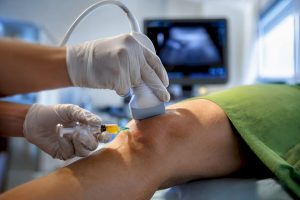

Corticosteroid injections most commonly cause short-lived local effects — site pain, a brief flare, and occasional skin changes — but they carry rarer systemic and serious risks that every patient should understand before consenting to the procedure.
Common local side effects:
- Injection-site pain and tenderness (usually resolves within a few days)
- Post-injection flare: temporary worsening of swelling and pain for up to 48 hours
- Bruising at the injection site
- Skin thinning or lightening (depigmentation) near the injection site
- Transient warmth or redness
Key systemic and serious risks:
- Temporary rise in blood glucose (particularly significant for people with diabetes)
- Facial flushing, mood changes, or sleep disturbance
- Rare but serious: joint infection, tendon rupture, cartilage damage, osteonecrosis, nerve injury
Pro Tip: The two biggest modifiable risk factors are poorly controlled diabetes and excessive injection frequency. Before any corticosteroid injection, ask your clinician about your cumulative steroid exposure — including any oral steroids you are already taking.
Table of Contents
- What corticosteroid injections are and why clinicians use them
- How the injection is performed and what to expect at your visit
- Common local side effects and how long they typically last
- Systemic effects you may notice after a steroid injection
- Rare but serious complications you should know about
- Who should think carefully before getting a steroid injection
- How often can you safely receive steroid injections?
- Aftercare: what to do and avoid in the first 48 hours
- How long steroid effects and side effects last
- How clinicians integrate steroid injections into a treatment plan
- Red flags after an injection: when to call your doctor
- Key Takeaways
- A clinician’s perspective on realistic expectations
- Nortexspineandjoint’s approach to injection safety and alternatives
- Useful sources for further reading
- FAQ
What corticosteroid injections are and why clinicians use them
Corticosteroid injections — often called cortisone shots or steroid injections — deliver a synthetic anti-inflammatory drug directly into or around a painful structure. The goal is to reduce local inflammation quickly, which can relieve pain and restore function in ways that oral medications sometimes cannot match at the same dose.
Clinicians use them across a range of musculoskeletal and inflammatory conditions:
- Epidural steroid injections — for radicular pain from a herniated disc or spinal stenosis
The injection is a temporizing measure, not a cure. It calms acute inflammation so you can engage more effectively with physical therapy or other treatments that address the mechanical cause of your pain. Many patients come in after trying NSAIDs and rest for weeks without adequate relief; an injection can break that cycle and create a window for rehabilitation to take hold.
How the injection is performed and what to expect at your visit
Understanding the procedure itself helps you distinguish between side effects caused by the drug and those caused by the needle placement.
Typical clinic flow:
- Consent and review — Your clinician reviews your medication list (especially blood thinners and diabetes medications), discusses risks and benefits, and obtains written consent.
- Positioning — You are positioned to expose the target joint or soft tissue comfortably and safely.
- Skin preparation — The skin is cleaned with an antiseptic solution to reduce infection risk.
- Local anesthetic — A small amount of local anesthetic (commonly lidocaine) is injected first. This provides immediate, temporary relief that typically wears off within a few hours.
- Steroid injection — The corticosteroid is injected into the joint, bursa, tendon sheath, or epidural space. The steroid’s anti-inflammatory effect begins around days 5–7 after the shot.
- Brief observation — You remain in the clinic for a short period to confirm there is no immediate allergic reaction.
When imaging guidance is used:
- Ultrasound guidance improves needle placement accuracy for deeper joints (hip, shoulder) and small structures like tendon sheaths.
- Fluoroscopy (real-time X-ray) is standard for epidural and facet joint injections, where precise depth and position are critical for both efficacy and safety.
- Imaging guidance reduces the risk of inadvertent tendon or nerve injury and is worth asking about if your clinician does not routinely use it.
What to bring:
- A complete medication list, including over-the-counter NSAIDs and any blood thinners
- Glucose monitoring supplies if you have diabetes
- A driver, if you are having a joint sedated or receiving a procedure that may temporarily limit mobility
Common local side effects and how long they typically last
According to Mayo Clinic, the most frequently reported steroid injection side effects are local and resolve on their own within days to a week.
- Injection-site pain: Expected and normal. It usually peaks in the first 24 hours and fades within 2–3 days.
- Post-injection flare: A short-term worsening of pain and swelling that can last up to 48 hours. This is caused by the crystalline steroid irritating the joint lining before it dissolves and takes effect.
- Bruising: Common, especially in patients on blood thinners or with fragile skin. Typically resolves within a week.
- Skin thinning or lightening: Depigmentation and subcutaneous fat atrophy can occur near the injection site, particularly with superficial injections. This is more likely with repeated injections in the same location.
- Transient warmth or redness: Usually resolves within hours and is distinct from the redness associated with infection (which worsens rather than improves).
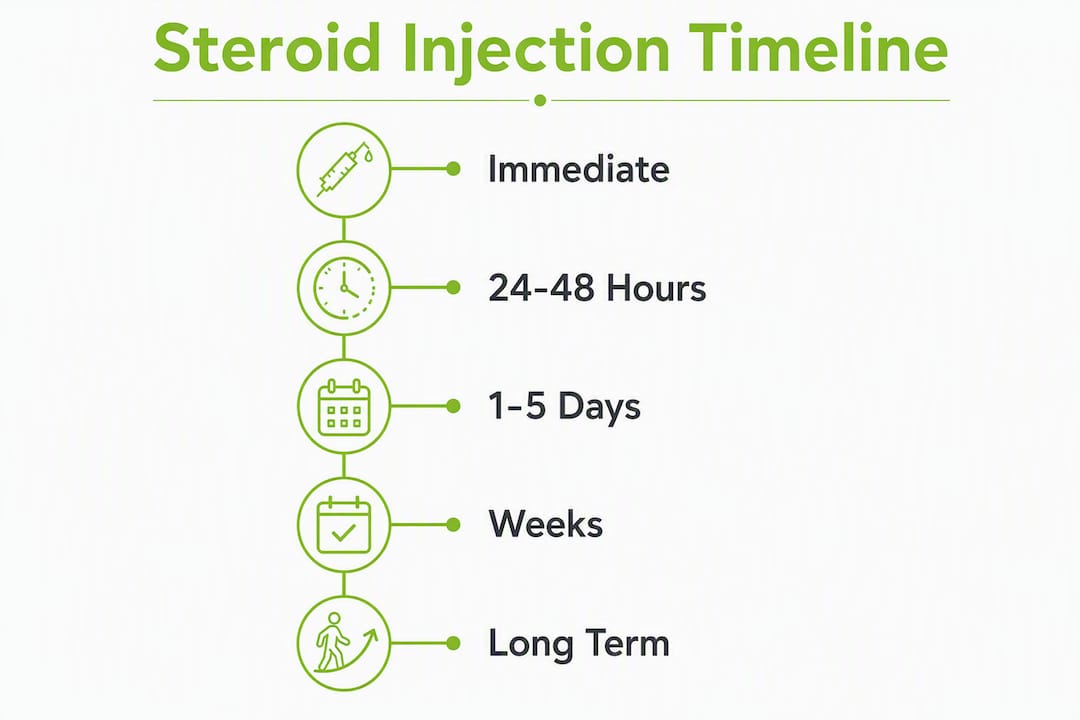
Timeline at a glance: The local anesthetic numbs the area for a few hours. Expect a possible flare in the first 24–48 hours. The steroid’s anti-inflammatory effect typically begins around days 5–7, with relief lasting anywhere from a few weeks to several months depending on the condition, the joint, and the individual.
Self-care after the injection: Apply ice to the site for 15–20 minutes several times on the first day. Avoid strenuous activity for at least 24 hours, and avoid hot tubs or whirlpools for 48 hours to lower infection risk and protect the injection site.

Systemic effects you may notice after a steroid injection
Even though the steroid is injected locally, a portion enters the bloodstream. Systemic absorption of locally injected glucocorticoids is variable, influenced by the dose, steroid type, injection site, and whether you are already taking oral corticosteroids.
Common systemic effects include:
- Transient hyperglycemia: Blood glucose can rise for several days after the injection. People with diabetes should monitor glucose more frequently for several days following the procedure.
- Facial flushing: A warm, red flush in the face and neck, typically lasting hours to a day or two.
- Sleep disturbance or mood changes: Some patients report feeling more alert, anxious, or emotionally reactive for a day or two. This is a recognized short-term effect of systemic steroid exposure.
- Temporary menstrual irregularities: Occasional cycle changes have been reported in women, usually resolving within one cycle.
Clinical note: Systemic effects are generally mild and self-limiting for most patients. The risk profile shifts meaningfully for people with diabetes, postmenopausal women at risk for bone density loss, and immunosuppressed patients. Individualized follow-up for these groups improves safety.
Cumulative exposure matters. If you are receiving multiple injections across different sites or are also taking oral steroids, your total steroid load is higher than any single injection suggests. This is a conversation worth having with your clinician before each procedure.

Rare but serious complications you should know about
Serious complications from corticosteroid injections are uncommon, but they are clinically important because some require urgent intervention. Mayo Clinic identifies cartilage damage, osteonecrosis, joint infection, and nerve damage among the serious risks.
- Joint infection (septic arthritis): Rare, but the most urgent complication. Signs include rapidly worsening pain, swelling, warmth, redness, and fever. This requires same-day evaluation.
- Tendon rupture: Steroids injected directly into a tendon (rather than the surrounding sheath) can weaken tendon fibers and predispose to rupture. This is why experienced clinicians avoid intra-tendinous injection.
- Cartilage damage: Repeated intra-articular corticosteroid injections may contribute to cartilage deterioration over time. This is a primary reason frequency limits exist.
- Osteonecrosis (avascular necrosis): Death of bone tissue due to impaired blood supply. Rare, but more likely with high cumulative steroid doses.
- Nerve injury: Possible if the needle contacts a nerve. Imaging guidance substantially reduces this risk.
- Systemic complications with cumulative exposure: Prolonged or repeated systemic absorption can, in rare cases, cause Cushing syndrome, bone density loss, or immune suppression.
When to seek urgent care: Fever, rapidly increasing pain, spreading redness or warmth, drainage from the injection site, or new neurological symptoms (numbness, weakness) after an injection warrant same-day contact with your provider or an emergency room visit.
For patients considering epidural steroid injections, the serious risk profile includes additional considerations such as dural puncture and spinal headache, which are specific to the spinal delivery route.
Who should think carefully before getting a steroid injection
Certain conditions change the risk-benefit calculation enough that your clinician needs to know about them before proceeding. Informed consent must account for pre-existing conditions like diabetes and blood thinner use, because these materially alter the risk profile.
Relative or absolute contraindications:
- Active local or systemic infection (absolute contraindication — steroids suppress immune response)
- Poorly controlled diabetes (relative — requires glucose monitoring plan and may require deferral)
- Use of anticoagulants or blood thinners (increased bleeding risk; may require temporary hold)
- Recent live vaccine within 2–4 weeks (steroids can blunt immune response)
- Pregnancy (risk-benefit discussion required; generally avoided in the first trimester)
- Allergy to the steroid or anesthetic agent being used
- Severe osteoporosis (increased fracture risk with repeated systemic exposure)
- Immunosuppression from medication or disease
Questions your clinician should ask you:
- Do you have any active infections, skin breakdown, or recent illness?
- Are you taking blood thinners, anticoagulants, or immunosuppressive medications?
- Do you have diabetes, and what is your recent glucose control?
- Are you pregnant or planning to become pregnant?
- Do you have any upcoming elective surgery? (Injections within a few weeks of surgery may increase infection risk.)
- Have you had a live vaccine recently?
Poorly controlled diabetes, immunosuppression, and severe osteoporosis do not necessarily prevent an injection, but they require a more careful risk-benefit discussion and closer follow-up.
How often can you safely receive steroid injections?
Frequency limits exist because the risks of corticosteroid injections are dose- and exposure-dependent. Many clinicians limit injections to 3–4 times per year for a given joint and typically wait at least six weeks between injections.
Why these limits matter:
- Repeated intra-articular injections are associated with progressive cartilage loss, which can accelerate the very joint degeneration you are trying to manage.
- Cumulative systemic absorption increases with each injection, raising the risk of bone density loss and adrenal suppression over time.
- Diminishing returns are common: the second or third injection in the same joint often provides shorter relief than the first.
Factors that influence frequency decisions:
- The joint involved (weight-bearing joints like the knee carry higher cartilage risk)
- The underlying diagnosis and its natural history
- How long the previous injection’s benefit lasted
- Whether surgery, PRP, or another intervention is being planned as a next step
- Total steroid exposure from all sources (oral, inhaled, topical, injected)
Surgical timing: If you are planning elective joint surgery, most orthopedic and pain specialists recommend waiting at least 3 months after a corticosteroid injection to reduce the risk of perioperative infection.
Pro Tip: When a patient’s relief from each successive injection is getting shorter, that is a signal to reassess the treatment plan rather than simply repeat the injection; exploring safe non-invasive treatments and holistic options for lasting relief can provide valuable alternatives. At that point, we typically discuss PRP or other regenerative options as alternatives that may address the underlying tissue pathology more directly.
Aftercare: what to do and avoid in the first 48 hours
The 24–48 hours after a corticosteroid injection are when you are most vulnerable to infection and when the injection site is most sensitive. Following these instructions reduces complications and gives the steroid the best chance to work.
Do:
- Apply ice wrapped in a cloth to the injection site for 15–20 minutes, several times on the first day
- Keep the injection site clean and dry
- Rest the injected joint for at least 24 hours; avoid activities that load or stress it
- Take over-the-counter pain relievers (acetaminophen or ibuprofen) if needed for the post-injection flare
- Resume physical therapy or prescribed exercises as directed by your clinician, usually after 24–48 hours
Avoid:
- Hot tubs, whirlpools, or soaking baths for 48 hours (showers are fine)
- Heavy lifting or high-impact activity for at least 24 hours
- Rubbing or pressing on the injection site
- Strenuous exercise until the post-injection flare has resolved
When to call the clinic: If pain is worsening beyond 48 hours rather than improving, or if you develop fever, spreading redness, drainage, or new neurological symptoms, contact your provider the same day. These are not normal parts of the post-injection course.
How long steroid effects and side effects last
| Phase | What happens | Typical duration |
|---|---|---|
| Local anesthetic effect | Immediate pain relief from lidocaine or similar agent | A few hours |
| Post-injection flare | Temporary worsening of pain and swelling | Up to 48 hours |
| Steroid anti-inflammatory onset | Reduction in inflammation and pain begins | Days 5–7 |
| Duration of symptom relief | Variable; depends on condition, joint, and individual | Weeks to several months |
| Systemic effects (blood sugar, flushing) | Transient whole-body effects from absorbed steroid | Days to about 1–2 weeks |
| Cumulative systemic exposure effects | Bone density, immune function, adrenal axis | Weeks; longer with repeated injections |
For patients with diabetes, blood glucose monitoring for 1–5 days after the injection is advisable. If you drive commercially or operate heavy machinery, be aware that the local anesthetic may temporarily affect the injected limb’s strength or sensation for a few hours. Scheduling other procedures — particularly those requiring anesthesia or involving immune function — should account for the systemic activity window of several weeks.
How clinicians integrate steroid injections into a treatment plan
Many patients arrive at a pain clinic after trying physical therapy, NSAIDs, and activity modification without adequate relief. A corticosteroid injection, used at the right moment, can reduce inflammation enough to make rehabilitation productive again. The injection is not the endpoint; it is a bridge.
A typical decision flow: a patient with knee osteoarthritis has completed a course of physical therapy but continues to have significant pain that limits their ability to exercise. An intra-articular corticosteroid injection reduces the inflammatory burden, and within 5–7 days the patient can participate in therapy with far less pain. The goal is to use that window to build strength and improve mechanics, not simply to repeat the injection when it wears off.
How we weigh the decision at Nortexspineandjoint:
- If a patient has already had 2–3 injections in the same joint with progressively shorter relief, we discuss PRP therapy or other regenerative options rather than continuing on the same path.
- We use ultrasound guidance for shoulder, hip, and soft-tissue injections as a standard practice, and fluoroscopy for all spinal procedures.
- We schedule a follow-up at 4–6 weeks to assess response, adjust the rehabilitation plan, and decide whether the injection achieved its intended purpose.
- For patients with diabetes, we coordinate with their primary care provider when glucose management is a concern.
Pro Tip: Ask your clinician: “If this injection works, what is the plan to keep the benefit?” A good answer involves rehabilitation, activity modification, or a regenerative option — not simply another injection in three months.
Patients considering spinal injections for lower back pain should understand that the same frequency limits and cumulative-exposure principles apply to epidural and facet joint procedures.
Red flags after an injection: when to call your doctor
Most post-injection symptoms are predictable and self-limiting. These are the signs that are not.
Call your provider the same day or go to the emergency room if you experience:
- Fever above 101°F (38.3°C) within the first week after the injection
- Rapidly worsening pain that is significantly worse than before the injection and not improving after 48 hours
- Spreading redness, warmth, or swelling around the injection site
- Any drainage or discharge from the injection site
- New numbness, weakness, or tingling in the limb near the injection site
- Difficulty bearing weight on an injected joint that was previously stable
What to tell your provider when you call:
- The date and time of the injection
- The joint or site that was injected
- Your current symptoms and when they started
- Your temperature if you have measured it
- Any medications you have taken since the injection
During business hours vs. emergency care: Mild worsening of pain in the first 48 hours, minor bruising, or flushing is appropriate to report at your next scheduled visit or by phone during business hours. Fever, spreading redness, drainage, or neurological changes require same-day evaluation and should not wait.
Key Takeaways
Corticosteroid injections are generally safe when used selectively and at appropriate frequency, but their risk profile is meaningfully shaped by patient health factors and cumulative exposure.
| Point | Details |
|---|---|
| Most side effects are local and brief | Injection-site pain, post-injection flare, and bruising typically resolve within a few days. |
| Diabetes requires extra monitoring | Blood glucose can rise for several days; monitor for 1–5 days after the injection. |
| Frequency limits protect the joint | Most clinicians limit injections to 3–4 per joint per year, with at least 6 weeks between shots. |
| Serious signs need same-day care | Fever, spreading redness, drainage, or new neurological symptoms require urgent evaluation. |
| Nortexspineandjoint pairs injections with rehab | When repeated injections show diminishing returns, PRP or regenerative options are discussed as next steps. |
A clinician’s perspective on realistic expectations
Steroid injections are one of the most frequently used tools in pain management, and they are genuinely useful — but they are also one of the most frequently misunderstood. Patients often expect either a permanent fix or a dangerous procedure. The reality sits between those poles.
What I find most important to communicate before any injection is this: the steroid does not repair tissue. It reduces inflammation, which can be enough to restore function and make other treatments work better. When that is the goal, and when the patient understands the timeline and the limits, the injection usually delivers real value. When the expectation is that pain will be gone permanently, the outcome feels like a failure even when the injection worked exactly as intended.
Shared decision-making matters here more than in many other procedures. Your diabetes control, your other medications, how many injections you have already had, and what your long-term treatment plan looks like all change the calculus. At Nortexspineandjoint, we do not treat injections as a standalone solution. We pair them with rehabilitation and, when appropriate, with regenerative options that may address the underlying tissue pathology rather than just the inflammatory response.
Nortexspineandjoint’s approach to injection safety and alternatives
When an injection is the right tool, precision and planning make the difference between a procedure that opens a window for recovery and one that simply delays the next flare. At Nortexspineandjoint in North Dallas, every corticosteroid injection is performed with imaging guidance where indicated, a documented review of cumulative steroid exposure, and a follow-up plan built around rehabilitation rather than repeat procedures.
For patients who have reached the limit of what repeated injections can offer, PRP therapy uses your own concentrated platelets to support tissue repair in joints, tendons, and soft tissue. For knee pain specifically, PRP knee injection is an option we discuss when cartilage preservation is a priority. The full range of treatments at Nortexspineandjoint includes regenerative medicine, physical rehabilitation, radiofrequency ablation, and spinal procedures, all coordinated under one roof.
To discuss whether a corticosteroid injection, a regenerative alternative, or a combined approach fits your situation, schedule an evaluation with our team.
Useful sources for further reading
This article draws on the following clinically reviewed resources. Dates reflect the most recently available publication or review period noted by each source.
- Cortisone shots — Mayo Clinic — Comprehensive patient-level overview of indications, side effects, frequency limits, and aftercare. Medically reviewed by Mayo Clinic staff.
- Steroid injections — MedlinePlus Medical Encyclopedia — U.S. National Library of Medicine patient guide covering procedure, aftercare, and monitoring for diabetes.
- Adverse effects of extra-articular corticosteroid injections: a systematic review — PMC: Systematic review of major and minor adverse events from extra-articular injections.
This article provides general health information and is not a substitute for professional medical advice. Confirm current guidelines and your individual risk profile with a qualified clinician before proceeding with any injection procedure.
FAQ
What are the most common negative effects of steroid injections?
The most common side effects are local: injection-site pain, a post-injection flare of swelling and discomfort lasting up to 48 hours, bruising, and temporary skin changes such as thinning or lightening near the injection site. Systemic effects like facial flushing and a brief rise in blood glucose are also reported, particularly in people with diabetes.
How long does a steroid shot stay in your system?
The local anesthetic wears off within hours, while the steroid’s anti-inflammatory effect typically begins around days 5–7 and can last weeks to several months. Systemic effects such as elevated blood glucose may persist for several days to about 1–2 weeks, and cumulative effects on bone density or immune function can extend longer with repeated injections.
What should you avoid after a steroid injection?
Avoid hot tubs, whirlpools, and soaking baths for 48 hours, and rest the injected joint for at least 24 hours. Heavy lifting and high-impact activity should be avoided until the post-injection flare resolves. Contact your provider if pain worsens beyond 48 hours or if you develop fever, spreading redness, or drainage.
Are steroid injections safe for people with diabetes?
They can be used in people with diabetes, but require extra planning. Blood glucose typically rises for several days after the injection, so more frequent glucose monitoring for 1–5 days is advisable. Poorly controlled diabetes is a relative contraindication, and your clinician should coordinate with your primary care provider when glucose management is a concern.
How many steroid injections can you have in one joint per year?
Most clinicians limit corticosteroid injections to 3–4 per joint per year and recommend waiting at least six weeks between injections. These limits exist because repeated injections are associated with cartilage deterioration and increasing cumulative systemic exposure.
Recommended
- What You Should Know About Epidural Steroid Injections?
- What Every Back Pain Sufferer Needs to Know About Epidural Steroid Injections – Nortex | Pain Management | Allen, Garland, McKinney & Plano Texas
- Are Steroid Injections Good for Arthritis? The Pros and Cons Explained – Nortex | Pain Management | Allen, Garland, McKinney & Plano Texas
- Cervical Epidural Steroid Injection for Neck Pain Relief, TX