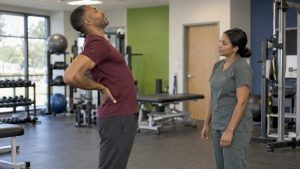

If you live in Dallas or North Dallas and your back or knee pain has outlasted the usual fixes, you do not have to choose between putting up with it and surgery. Most chronic back and knee pain is managed without an operation, and the best results usually come from a plan built around your diagnosis rather than a single treatment. At Nortex Spine and Joint, our physicians combine physical rehabilitation, targeted injections, nerve procedures and regenerative options such as PRP (platelet-rich plasma, a concentrate made from your own blood) in one coordinated plan.
This guide explains what the published guidelines support, how treatments are usually sequenced, and how to decide what fits your pain.
TL;DR
- Chronic back and knee pain rarely has one cause, so the right non-surgical plan starts with a precise diagnosis, not a standard protocol.
- Exercise-based rehabilitation is the foundation in the major guidelines. Injections, nerve procedures and regenerative therapies are added when the diagnosis points to them.
- PRP and stem cell therapy use your own biology to target joint and disc problems. We offer them for the back, knee, hip and shoulder.
- Certain symptoms, such as loss of bladder control or numbness in the saddle area, need urgent care rather than an appointment for chronic pain.
- Coverage varies by plan and by treatment, so ask for a benefits check before you commit.
Table of Contents
- Why a diagnosis comes before a treatment
- Where non-surgical care starts: rehabilitation and movement
- Non-surgical options for back pain, by pain source
- Non-surgical options for knee pain
- Where regenerative medicine fits
- What the first visit looks like
- Cost and insurance in Dallas
- Perspective
- Talk with a physician about your back or knee
- FAQ
- Sources
Why a diagnosis comes before a treatment
Many patients come to us after trying several things in sequence: a few weeks of anti-inflammatories, a round of physical therapy, perhaps a steroid injection. Each of those can help, but when they are applied without a clear picture of where the pain originates, relief tends to be short-lived.
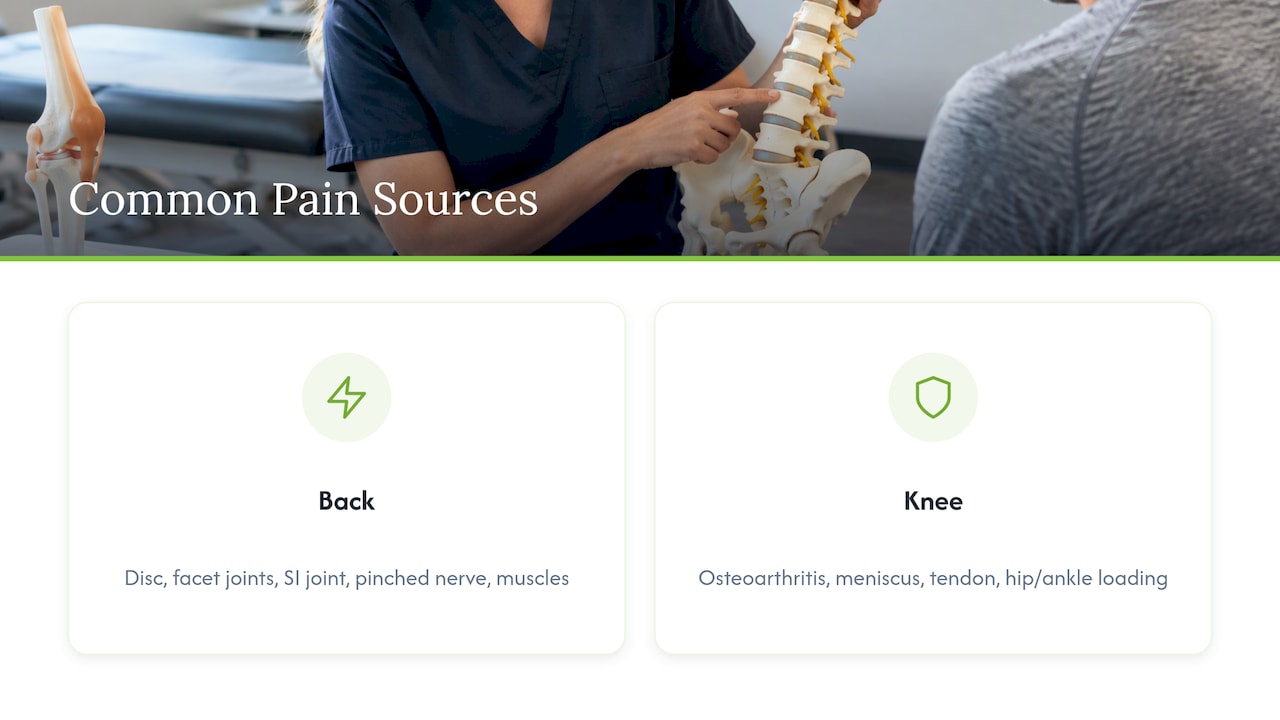
Back pain can come from a disc, the small facet joints between vertebrae, the sacroiliac joint, a pinched nerve or the muscles around the spine. Knee pain is often osteoarthritis, but it can also come from a meniscus, a tendon or the way the hip and ankle load the joint. The treatments differ for each, which is why a physical exam and a careful history matter more than any single procedure.
Imaging has a role, but not an automatic one. The VA/DoD low back pain guideline recommends against routine imaging for acute low back pain without red flags, partly because scans often reveal anatomical changes that are not causing symptoms. For chronic pain, a Utah state summary of the ACR Appropriateness Criteria notes that imaging is usually appropriate when symptoms persist beyond 12 weeks, or when someone with constant or progressive symptoms after 6 weeks of optimal care is being considered for an intervention. When imaging is ordered, a level-by-level spine MRI read helps match a finding to the symptom it may explain.
Symptoms that need urgent care first
The same VA/DoD guideline lists red flags that call for a prompt workup rather than a conservative plan:
- Urinary retention or incontinence, numbness in the saddle area, or severe and worsening leg weakness (possible cauda equina syndrome, a compression of the nerve bundle at the base of the spine).
- Fever, a weakened immune system or a history of IV drug use alongside new back pain (possible infection).
- Osteoporosis, long-term corticosteroid use, age 75 or older, or recent trauma (possible fracture).
- A history of cancer with new back pain, unexplained weight loss, or pain that has not improved after a month in someone over 50.
If you have any of these, go to an emergency department or see your physician right away.
Where non-surgical care starts: rehabilitation and movement
Exercise is the most consistently supported starting point. A March 2025 Cochrane review of non-medicine, non-surgical treatments found that for chronic low back pain exercise probably gives a small-to-medium reduction in pain (an average of 15 points on a 100-point scale across 35 trials) along with a small improvement in function. The same review found acupuncture probably reduces pain compared with no treatment.
The American Academy of Family Physicians reaches a similar conclusion in its review of chronic musculoskeletal pain. It recommends regular low-impact exercise that the patient prefers, plus yoga, cognitive behavioral therapy and mindfulness-based stress reduction for chronic low back pain, and suggests spinal manipulation, acupuncture and massage. Its central point is that no single therapy works consistently for everyone, which is the case for a plan tailored to you.
For knees, the VA/DoD’s June 2026 guideline on non-surgical hip and knee osteoarthritis states that physical therapy’s benefits on pain, function and quality of life outweigh potential harms, with the main costs being time, effort and consistency.
This is where supervised rehabilitation earns its place. A therapist can pick exercises for your specific diagnosis, progress them as you tolerate them, and adjust when a movement provokes pain. Our physical therapy program works alongside our physicians, so rehabilitation and procedures are planned together. If you want more detail on how therapy fits chronic back pain, we cover it in our guide to physical therapy for back pain.
Non-surgical options for back pain, by pain source
Once the likely source is identified, treatment can be more specific. The table below summarizes how we think about common back pain generators. It is a map for the conversation with your physician, not a prescription.
| Likely source | Typical approach | What it aims to do |
|---|---|---|
| Irritated nerve root (radiating leg pain) | Transforaminal, caudal or cervical epidural steroid injection, with rehabilitation | Calm inflammation around the nerve so you can move and rehabilitate |
| Facet joints (pain with extension or twisting) | Facet joint injections, radiofrequency neurotomy of the lumbar facets | Interrupt pain signals from the joint |
| Sacroiliac joint (pain low on one side) | Sacroiliac joint injection | Confirm and treat the joint as a pain source |
| Degenerating disc or arthritic spine | PRP or stem cell therapy for spinal discs | Use your own cells and growth factors to support the damaged tissue |
| Persistent nerve pain after other care | Spinal cord stimulator trial | Test whether mild electrical stimulation reduces pain before any implant |
Steroid injections and nerve procedures are often most useful as a window of relief that lets rehabilitation proceed. Regenerative treatments are chosen when the goal is to address the tissue itself. Our overview of non-surgical lower back pain treatments walks through more of these options, and our lower back pain specialist page explains how an evaluation works.
Non-surgical options for knee pain
The 2019 American College of Rheumatology and Arthritis Foundation guideline for knee osteoarthritis strongly recommends exercise, weight loss for people who are overweight, self-management programs, tai chi, a cane, bracing, topical and oral NSAIDs, and intra-articular glucocorticoid injections. It conditionally recommends yoga, acupuncture, thermal modalities and radiofrequency ablation, a procedure that uses heat to quiet a pain-carrying nerve.
A 2024 review adds practical detail. It notes that unloader braces work by diverting weight-bearing load from the diseased part of the joint to a healthier part, and that topical NSAIDs are advisable first-line for older adults because of their safety profile. A June 2025 network meta-analysis of 139 randomized trials in 9,644 patients ranked knee bracing as the most likely best intervention overall, followed by hydrotherapy and exercise.
In our practice, that foundation is combined with procedures matched to the stage of the joint:
- Hyaluronic acid injection (HYALGAN®) to supplement the joint fluid in knee osteoarthritis.
- Genicular nerve ablation for knee pain carried by the small nerves around the joint.
- PRP for the knee, which uses concentrated platelets from your own blood, injected into the joint under guidance.
We also treat the hip and shoulder, with PRP for hip arthritis and PRP for shoulder pain, because knee and back pain often involve the joints above and below them.
Where regenerative medicine fits
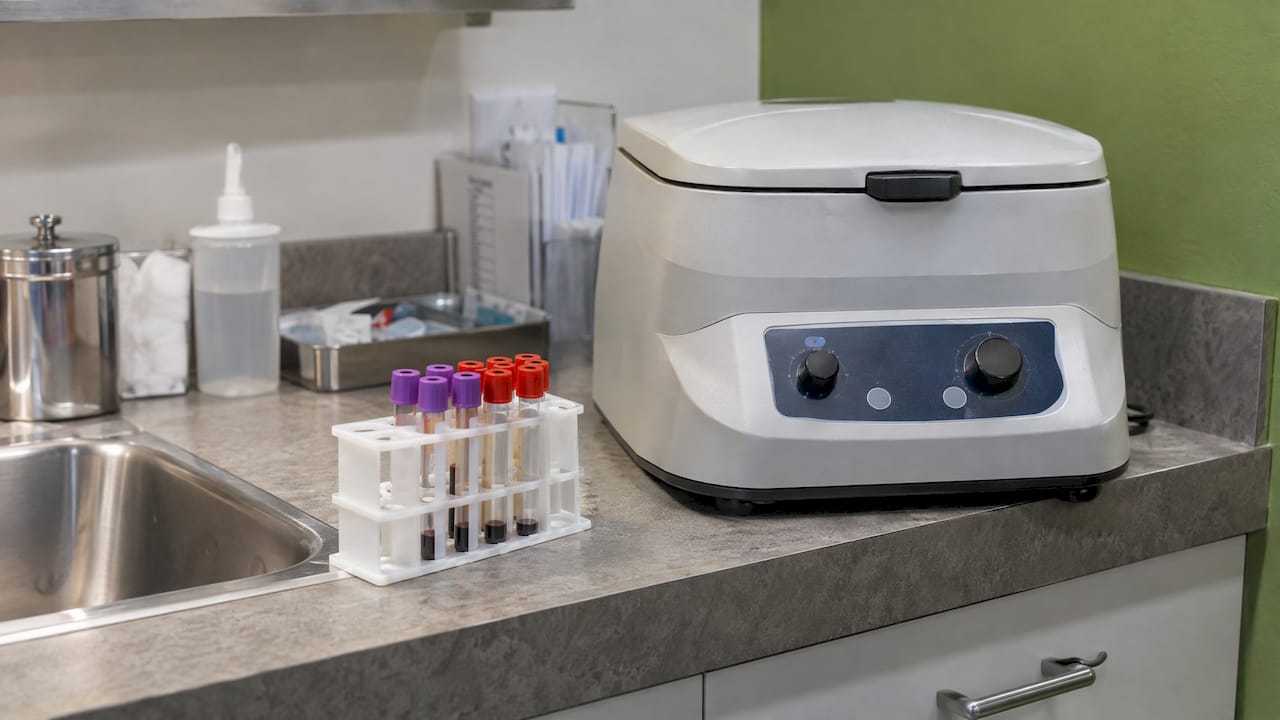
PRP is made from a small sample of your own blood. The sample is spun in a centrifuge to concentrate platelets, which carry growth factors involved in tissue repair, and the concentrate is injected at the site we are treating. Because it is autologous, meaning it comes from you, the preparation does not rely on a donor. Stem cell therapy follows a similar principle for conditions such as degenerating spinal discs. You can read about our approach on the regenerative medicine, PRP therapy and stem cell pages.
Regenerative treatment tends to suit a specific kind of patient: someone with a defined joint or disc problem, who wants more than temporary symptom control, and who is willing to pair the injection with rehabilitation. Realistic expectations matter here. Regenerative treatments work on tissue over weeks and months, not days, and a series of visits or a combined plan is common. Response varies from person to person, and we do not promise a particular outcome.
Safe use also matters. Because these treatments are injections, they should be done by a physician using image guidance where appropriate. Tell your physician about blood thinners, a history of bleeding problems, active infection, or any medication you take regularly before any injection.
What the first visit looks like
A good consultation moves in a clear order. We ask what the pain is like, when it started, what you have already tried and what you need to get back to, whether that is lifting a toddler, golf, a long drive or a full workday. We examine movement, strength and nerve function. We then discuss whether imaging is needed and which treatments make sense in what sequence.
Bring your previous imaging reports, a list of medications, and notes on prior treatments and how long each helped. That history often tells us as much as a new scan.
Cost and insurance in Dallas
Costs depend on the treatment, the number of visits and your plan, and we do not publish prices for these services. In general, coverage differs sharply by treatment type. Physical therapy, many diagnostic evaluations and common injections are often covered in some form under commercial plans, while regenerative treatments are frequently self-pay. Our clinic accepts cash, insurance and motor vehicle accident claims for care, so the practical step is to call and ask for a benefits review before you plan treatment. If your pain followed a car accident, tell the team at the start.
Perspective
Chronic pain is rarely a one-treatment problem, and we try to be honest about that with every patient. The guidelines are clear that movement-based care is the base, and that no single therapy works for everyone. That is why we do not start with a procedure. We start by finding what is generating the pain.
What patients tell us again and again is that they have been treated for a symptom. They have had a pill, then an injection, then a break, and the pain returns. Our approach is built on the opposite order: a precise diagnosis, rehabilitation to rebuild the way the joint or spine is loaded, and targeted procedures, including PRP and stem cell therapy, to address tissue that is worn or damaged.
Our physicians are Harvard fellowship-trained and board-certified, and we offer therapies that are not widely available at other local clinics. We think the measure of good care is a plan you understand, realistic timelines, and a clear next step if something is not working.
Felix
Talk with a physician about your back or knee
If you want a plan built around your diagnosis, our team in North Dallas can review your history and imaging and explain which non-surgical options fit. Start with our treatments overview to see the procedures we perform, or visit nortexspineandjoint.com to request a consultation. For a broader read on how doctors weigh the choices, see what your doctor might recommend for lower back pain.
FAQ
Can back pain really be treated without surgery?
In most cases, yes. The major guidelines center on exercise, supervised rehabilitation and, when indicated, targeted injections or nerve procedures. Surgery is generally reserved for specific findings such as progressive nerve damage, and the red flags listed above call for urgent evaluation.
How long does it take to feel better?
It depends on the source of the pain and the treatment. Rehabilitation usually builds over weeks, steroid injections are used to create a window of relief, and regenerative treatments act on tissue gradually over weeks to months. Your physician can give you a realistic timeline after examining you.
Is PRP an option for knee and back pain?
We offer PRP for chronic knee pain, back pain, hip arthritis and shoulder pain. Whether it suits you depends on your diagnosis, the condition of the joint or disc, and your goals, which we sort out at the consultation.
Do I need an MRI before I come in?
Not necessarily. Guidelines advise against routine imaging for acute back pain without red flags, and imaging is more commonly used when pain persists beyond 12 weeks or an intervention is being considered. If you already have a scan, bring the report and images.
Will insurance cover my treatment?
It varies by plan and by treatment. Our clinic works with cash, insurance and motor vehicle accident claims, so ask the team to review your benefits before you schedule.
Sources
- Cochrane review: non-medicine and non-surgical treatments for chronic low back pain
- AAFP: Chronic musculoskeletal pain, nonpharmacologic and noninvasive treatments
- VA/DoD Clinical Practice Guideline for Low Back Pain
- Utah guideline summary for nonspecific low back pain
- VA/DoD Clinical Practice Guideline for non-surgical management of hip and knee osteoarthritis
- 2019 ACR/Arthritis Foundation knee osteoarthritis guideline
- Evidence-based review of nonsurgical treatments for knee osteoarthritis
- PLOS One network meta-analysis of knee osteoarthritis treatments