
Chronic joint pain has a way of reshaping daily life, turning routine activities like climbing stairs, walking the dog, or staying active in the North Dallas heat into genuine challenges. If you’ve been told surgery is your only option, or if you’re simply not ready to go that route, you’re not alone in searching for evidence-based alternatives that actually work. The good news is that a growing body of research supports several non-surgical approaches that can meaningfully reduce pain, restore function, and help you stay active. This article walks you through how to evaluate and select the right combination for your needs.
Table of Contents
- How to evaluate alternative treatments for joint pain
- Exercise and physical therapy: The foundation of joint pain relief
- Acupuncture: Small benefits and placebo effects
- Tai chi: Gentle movement for lasting function
- Nutritional supplements: Calibrate expectations
- Summary comparison: Choosing your ideal alternative
- A fresh perspective: What most listicles miss about joint pain relief
- Explore advanced options and get personalized care in North Dallas
- Frequently asked questions
Key Takeaways
| Point | Details |
|---|---|
| Prioritize exercise | Structured physical activity consistently brings the biggest improvement for chronic joint pain relief. |
| Results vary by therapy | Small benefits from acupuncture and supplements may help some, but expectations should be realistic. |
| Blend approaches | Combining movement, physical therapy, and lifestyle changes yields the best outcomes for most adults. |
| Personalized care works | Expert evaluation ensures you select treatments tailored to your condition and goals. |
| Advanced options available | Innovative therapies like PRP and stem cells can complement traditional approaches when needed. |
How to evaluate alternative treatments for joint pain
Before committing to any specific therapy, it’s worth understanding what separates a genuinely effective treatment from one that simply sounds convincing. The most important criteria are functional improvement and pain reduction, because ultimately, a treatment needs to let you do more while hurting less. Evidence quality matters enormously here. A treatment backed by multiple randomized controlled trials carries far more weight than one supported only by testimonials or small observational studies.
Side-effect profiles are equally critical. Some interventions are low-risk by nature, while others carry drug interactions or contraindications that require a clinician’s input. Comprehensive arthritis care typically accounts for all these variables together.
Here’s a practical framework for evaluating any treatment you’re considering:
- Ask about the evidence base. Is there randomized controlled trial data, or only anecdotal reports?
- Assess functional outcomes. Does the treatment improve your ability to walk, climb stairs, or exercise?
- Evaluate pain reduction specifics. Is the relief short-term, or does it persist beyond the treatment period?
- Consider lifestyle integration. Can you realistically maintain this approach alongside your current routine?
- Review safety and interactions. Does this treatment work safely with any medications or conditions you already have?
A widely recognized framework comes from the Arthritis Foundation’s treatment plan, which emphasizes physical activity, weight and lifestyle changes, and medications when needed, along with bracing and splinting to reduce mechanical load on damaged joints. Weight management, in particular, is frequently underestimated. Reducing excess body weight significantly decreases compressive forces on knees and hips, and the weight loss benefits for joint health are well-documented.
“Personalizing your plan increases your chances of success. There’s no single protocol that works for everyone with joint pain, and matching interventions to your specific condition, activity level, and goals is what moves the needle.”
Exercise and physical therapy: The foundation of joint pain relief
Once lifestyle and foundational evaluation criteria are clear, exercise and physical therapy become the essential starting points for any non-surgical joint pain strategy. The evidence here is among the strongest available. According to Cochrane review data on knee osteoarthritis, exercise and physical therapy including strengthening and aerobic and aquatic options consistently improve function and reduce pain in adults with osteoarthritis, which is one of the most prevalent drivers of chronic joint pain.
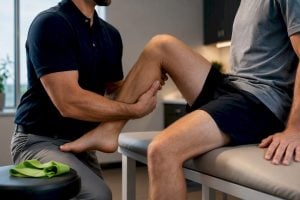
The physical therapy benefits extend beyond simple strengthening. A qualified physical therapist assesses your movement patterns, identifies compensatory mechanics that increase joint stress, and designs a progression that challenges you without causing flare-ups. That individualized structure is what separates formal physical therapy from a generic gym routine.
Effective exercise options for chronic joint pain include:
- Aquatic exercise: Water buoyancy reduces joint loading by up to 90 percent when submerged to neck level, making movement accessible even during painful flare-ups.
- Strengthening exercises: Quadriceps and hip strengthening are especially relevant for knee osteoarthritis, directly reducing compressive forces during walking and stair climbing.
- Aerobic exercise: Low-impact cardiovascular activity such as cycling or walking improves cardiovascular health while maintaining joint mobility without excessive impact.
- Flexibility and range-of-motion work: Targeted stretching reduces stiffness and improves the mechanical efficiency of the joint over time.
- Neuromuscular training: Balance and proprioception exercises reduce fall risk and improve joint stability, particularly important after injury or in older adults.
Understanding the truth about movement for joint pain is critical. Movement, done correctly, heals. Avoidance of activity, by contrast, typically accelerates deconditioning and worsens pain over time.
Pro Tip: If land-based exercise consistently causes flare-ups, aquatic therapy is a clinically validated alternative that allows you to build strength and mobility in a nearly unloaded environment before transitioning back to land-based activity.
Acupuncture: Small benefits and placebo effects
Acupuncture offers another avenue for pain relief, though the evidence comes with important nuance that is worth understanding before you book your first appointment. Clinical trials do show statistically significant effects for acupuncture in joint pain populations, but the effect sizes for osteoarthritis are small and are at least partly influenced by placebo and expectation mechanisms, as demonstrated in sham-controlled trials where patients receiving non-penetrating needles also improved.
This doesn’t mean acupuncture has no value. Small improvements in pain intensity or function can still be clinically meaningful, especially when other interventions have only partially resolved symptoms. For individuals who are open to complementary therapies and have already established a foundation of exercise and lifestyle modification, acupuncture may provide an additional layer of non-opioid pain relief without significant risk.
Key points to understand about acupuncture for joint pain:
- Effect sizes in rigorous trials are generally small, typically in the range of 10 to 15 points on a 100-point pain scale.
- Sham acupuncture, which uses retractable needles that don’t penetrate the skin, also produces improvements, suggesting expectation plays a meaningful role.
- Acupuncture is generally low-risk, with the most common adverse events being minor bruising or temporary soreness at needle sites.
- It is most likely to benefit individuals who are already engaged in a broader treatment plan rather than using it as a standalone intervention.
“Even modest improvements may matter when other interventions fall short. For a patient managing a pain score of 7 out of 10 who drops to a 5 after acupuncture, that shift is clinically significant in terms of daily function.”
Tai chi: Gentle movement for lasting function
Gentle movement options like tai chi have gained meaningful clinical support over the past decade, and the research profile is stronger than many people realize. Evidence from both systematic reviews and randomized trials demonstrates that tai chi improves pain and function in knee osteoarthritis, with outcomes that exceed those of osteoarthritis education programs alone. That last comparison matters, because it means tai chi outperforms a credible control condition, not just no treatment at all.

Tai chi works through several mechanisms simultaneously. The slow, rhythmic movements improve joint range of motion and flexibility. The weight-shifting sequences build lower extremity strength and neuromuscular control. The mindfulness component may also reduce pain catastrophizing, which is a cognitive pattern that amplifies perceived pain intensity.
Practical benefits that make tai chi particularly well-suited for active adults in North Dallas:
- Classes are widely available at community centers, fitness studios, and online platforms, requiring no special equipment.
- Movements can be modified for individuals with limited mobility or balance difficulties.
- Group classes provide social engagement and accountability, which research consistently links to better exercise adherence.
- Sessions typically last 45 to 60 minutes and are low enough in intensity to be practiced on days when higher-impact activity is not feasible.
- Progress tends to be gradual but cumulative, with functional improvements becoming apparent after 8 to 12 weeks of consistent practice.
Understanding advanced knee care strategies often includes tai chi as a complement to formal rehabilitation, particularly for individuals who have completed an acute phase of physical therapy and want to maintain gains long-term.
Pro Tip: Group tai chi classes offer an accountability benefit that solo home practice often lacks. For North Dallas adults managing chronic joint pain, a consistent weekly class with a familiar group creates a social structure that makes it far easier to maintain the habit through fluctuating pain levels.
Nutritional supplements: Calibrate expectations
Supplements are among the most heavily marketed products in the joint health space, which makes objective evaluation especially important. The honest clinical picture is that most supplements show inconsistent results across trials, and the benefits, when present, are modest rather than transformative.
Glucosamine and chondroitin sulfate are the most studied supplements for osteoarthritis. Cochrane review findings on glucosamine indicate mixed and modest benefit, with some trials showing meaningful pain reduction in a subset of patients while others show no significant effect over placebo. Omega-3 fatty acids have demonstrated anti-inflammatory properties in laboratory settings, but clinical translation to joint pain reduction remains limited and variable. Vitamins D and K have been studied in relation to bone and cartilage health, but evidence for direct pain relief is similarly inconclusive.
The most appropriate approach to supplements for at-home arthritis management includes the following practical principles:
- Never use supplements as a substitute for exercise, physical therapy, or weight management, all of which have stronger and more consistent evidence.
- Consult a clinician before starting any supplement regimen, because some products interact with anticoagulants, diabetes medications, or other common prescriptions.
- If you try a supplement, evaluate its effect objectively after 8 to 12 weeks rather than continuing indefinitely without reassessment.
- Prioritize products that list clinical-grade formulations and avoid unregulated blends that combine multiple active ingredients at subtherapeutic doses.
Reviewing an arthritis medication guide alongside any supplement decision helps ensure your overall plan remains coherent and clinician-approved.
Summary comparison: Choosing your ideal alternative
After reviewing each option’s evidence base and practical application, a side-by-side comparison makes the decision process more straightforward.
| Treatment | Evidence strength | Effort required | Best suited for | Key limitation |
|---|---|---|---|---|
| Exercise/physical therapy | High | Moderate to high | Most adults with joint pain | Requires consistency and correct form |
| Tai chi | Moderate to high | Low to moderate | Knee OA, balance issues, long-term maintenance | Slow onset of benefit (8-12 weeks) |
| Acupuncture | Low to moderate | Low | Adjunct to other therapies, partial non-responders | Small effect size, placebo contribution |
| Glucosamine/chondroitin | Low to moderate | Very low | Mild OA, patients who prefer oral supplementation | Inconsistent evidence, minor benefit |
| Omega-3 supplements | Low | Very low | Inflammatory joint conditions, general health | Limited clinical translation |
| Weight management | High | High | Overweight adults with hip/knee pain | Requires sustained lifestyle change |
Combining therapies is typically more effective than selecting a single intervention. For example, a plan that pairs regular physical therapy with tai chi classes, conservative weight management, and a clinician-reviewed supplement protocol is likely to produce better sustained outcomes than any one of those elements alone.
A fresh perspective: What most listicles miss about joint pain relief
Here’s what rarely appears in generic lists of joint pain treatments: effect sizes matter as much as statistical significance. A treatment can achieve a statistically significant result in a large trial and still produce a real-world improvement that is barely perceptible to the patient. This is precisely the challenge with acupuncture, where sham-controlled study findings confirm that both real and fake needles improve outcomes, and the difference between them is small. Knowing this doesn’t mean you should dismiss acupuncture, but it does mean you should weight it appropriately within a broader plan.
The deeper issue is that chronic joint pain is rarely a single-variable problem. Deconditioning, excess weight, movement avoidance, sleep disruption, and psychological factors like pain catastrophizing all interact to sustain and amplify symptoms. A treatment that addresses only one of these variables, even effectively, is unlikely to produce lasting relief.
What genuinely works, based on both the research literature and clinical experience, is a personalized, multi-modal approach. Exercise is non-negotiable. Lifestyle factors including weight and activity habits are foundational. Complementary options like tai chi and acupuncture add value at the margins. And advanced therapies like regenerative medicine become relevant when conservative care reaches its ceiling. Strategies for lasting relief without surgery consistently reflect this layered, individualized structure.
The most important shift you can make is to stop searching for the single intervention that resolves everything and start building a plan that addresses your specific combination of contributing factors.
Explore advanced options and get personalized care in North Dallas
If you’ve been working through conservative treatments and are looking for what comes next, Nortex Spine and Joint offers advanced non-surgical options that go beyond what standard protocols include. PRP therapy, which uses concentrated platelets derived from your own blood to support tissue repair, and stem cell therapy represent two of the most promising frontiers in non-surgical joint care. These treatments, offered as part of a broader regenerative medicine approach, are personalized to your specific anatomy and pain profile rather than applied generically. If you’re an active adult in North Dallas who wants a thorough evaluation and a plan built around your actual biology and goals, Nortex is equipped to provide exactly that kind of specialized, evidence-informed care.
Frequently asked questions
What are the most effective non-surgical treatments for joint pain?
Exercise and physical therapy have the strongest and most consistent evidence, with structured physical activity reliably improving function and reducing pain in osteoarthritis. Tai chi and acupuncture contribute modest additional benefits, while supplements show variable results across individuals.
Does acupuncture really work for joint pain?
Acupuncture can produce small but real reductions in joint pain, though a significant portion of the benefit in clinical trials appears to be driven by patient expectations and placebo mechanisms rather than needle-specific effects.
Are nutritional supplements like glucosamine worth trying?
Evidence for glucosamine and chondroitin is inconsistent, with benefits appearing in some patients but not reliably across populations; they may be worth a supervised trial but should not replace higher-priority interventions like exercise and weight management.
Can I combine multiple alternative treatments for better results?
Yes, and combination approaches are typically more effective than single-intervention strategies. The Arthritis Foundation’s treatment framework explicitly supports integrating physical activity, weight management, and other interventions into a unified plan for better outcomes.
What should I do if conventional treatments don’t work?
When standard conservative therapies have been exhausted or only partially effective, a specialist evaluation for advanced options such as PRP injections or regenerative medicine can identify whether your anatomy and condition profile make you a strong candidate for these more targeted therapies.
Recommended
- Joint mobility: Causes, prevention, and solutions
- Can Yoga Help with Arthritis Pain? The Science of Gentle Movement – Nortex | Pain Management | Allen, Garland, McKinney & Plano Texas
- Can Physical Therapy Help Arthritis? Staying Mobile Without Surgery – Nortex | Pain Management | Allen, Garland, McKinney & Plano Texas
- Advanced Pain Management Strategies in Knee Care – Nortex | Pain Management | Allen, Garland, McKinney & Plano Texas