
Yes, many hip labral tears respond well to non-surgical care. A structured, multidisciplinary conservative plan, built around physical therapy, activity modification, and sometimes an image-guided injection, often restores function even when some pain lingers. The tools that matter most are staged rehab, smarter movement patterns, targeted medication, and occasional biologic support. If you’re not gaining ground after a real trial of this approach, or you have mechanical symptoms that keep locking up your hip, that’s your signal to talk about surgical evaluation sooner rather than later.
TL;DR:
- Patients with milder tears and good adherence to rehab are more likely to improve without surgery, especially within the first few months.
- Mechanical symptoms like locking or catching, along with progressive functional decline, suggest the need for earlier surgical evaluation regardless of conservative efforts.
- Injections serve primarily for diagnosis or to facilitate therapy, with corticosteroids providing short-term inflammation relief and PRP supporting tissue healing when paired with rehab.
- A staged rehabilitation program emphasizing pain control, control of movement, and strength building is essential, with progress tracked through pain diaries and functional milestones.
- Surgery becomes a consideration after 8-12 weeks of failed conservative therapy, particularly if imaging shows reparable tears or impingement, but ongoing mechanical symptoms heighten urgency.
Table of Contents
- What Are the Non-Surgical Treatment Options for a Hip Labral Tear?
- Who Responds Best to Conservative Hip Labrum Treatment?
- How Do You Rehab a Hip Labral Tear in Stages?
- Do Injections and PRP Actually Help a Hip Labral Tear?
- When Should You Consider Surgery Instead?
- What I See in Clinic: Realistic Patterns and Practical Advice
- How Nortexspineandjoint Approaches Non-Surgical Hip Labrum Care
- Sources
- FAQ
What Are the Non-Surgical Treatment Options for a Hip Labral Tear?
Most patients who come through our door have already tried something on their own, usually rest, maybe an over-the-counter anti-inflammatory, before they ever see a specialist. That’s not a wasted effort. It just means the plan needs more structure than trial and error can provide.
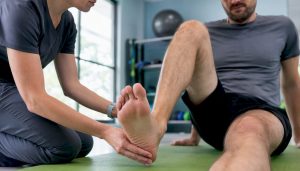
Physical therapy is the backbone of non-surgical hip labral tear treatment. Good rehab isn’t just “strengthening exercises.” It moves through stages: calming irritated tissue first, then restoring pain-free range of motion, then rebuilding strength around the hip, and finally retraining the movement patterns that likely contributed to the tear in the first place. Skipping stages is the most common mistake I see, both from patients and from generic exercise handouts.
Activity modification means pacing, not stopping. We look at what specifically provokes symptoms, deep hip flexion, pivoting, prolonged sitting, and adjust technique or temporarily limit that motion rather than eliminating activity altogether. Athletes especially resist this step, but partial restriction now usually shortens the overall timeline.
Medications play a supporting role, not a leading one. Short courses of NSAIDs can quiet inflammation enough to let rehab progress, but long-term daily use carries gastrointestinal and cardiovascular risks that outweigh the benefit for most people. I rarely recommend more than a few weeks at a stretch without reassessing.
Injections vary by purpose:
- Corticosteroid injections calm inflammation and can create a window for productive PT.
- Anesthetic injections are primarily diagnostic, confirming the labrum is the actual pain source.
- Hyaluronic acid injections aim to improve joint lubrication, with more modest and variable evidence.
- PRP (platelet-rich plasma) is used as an adjunct to encourage tissue healing alongside rehab, not as a standalone fix.
Adjunct modalities, manual therapy, shockwave, and laser therapy, can help manage pain and stiffness while the core rehab work does the heavier lifting.
Pro Tip: Track your symptoms by activity, not just by day. “Pain during pivoting drills” tells your therapist far more than “hip hurt at a 6/10 today.”
Who Responds Best to Conservative Hip Labrum Treatment?
Not every hip labral tear behaves the same way, and predicting who improves without surgery comes down to a few consistent patterns we see in clinic.
Patients with better odds of success on non-surgical hip therapy tend to share these traits:
- Lower-grade tears (Czerny stage I–II) rather than more severe stage III lesions
- Bony anatomy that isn’t severely abnormal, since correctable impingement shapes respond better to movement retraining
- High adherence to the rehab program, showing up consistently and doing the home exercises, not just the clinic visits
On the other side, certain findings should push you toward an earlier specialist conversation rather than a longer conservative trial:
- Mechanical catching or locking that doesn’t ease with rest
- Progressive loss of function despite consistent rehab effort
- Imaging showing early osteoarthritis changes
- Signs of hip microinstability on exam
A physiotherapy outcomes study found that patients with milder Czerny stage I–II tears often see more meaningful improvements, while stage III tears tend to respond less well and may more frequently require surgery. Typically, an initial response can be expected within a few weeks, with more meaningful recovery occurring over several months. Severe mechanical symptoms don’t get that long a runway.
How Do You Rehab a Hip Labral Tear in Stages?
Rehabilitation for hip labrum injuries works best when it follows tissue irritability, not a fixed calendar. A hip that flares with light activity needs a gentler load than one that tolerates daily walking without complaint, and the CHOP non-operative protocol is built around exactly that principle.
- Phase I, pain control and protection. Gentle isometric holds (hip flexor and glute sets, 5 to 10 seconds, 10 reps) plus pain-free range-of-motion work. The goal here is calming the joint, not building strength yet.
- Phase II, neuromuscular control. Glute bridges, clamshells, and standing hip abduction target the muscles that stabilize the joint. Add gentle mobility drills for the hip capsule once isometrics feel easy.
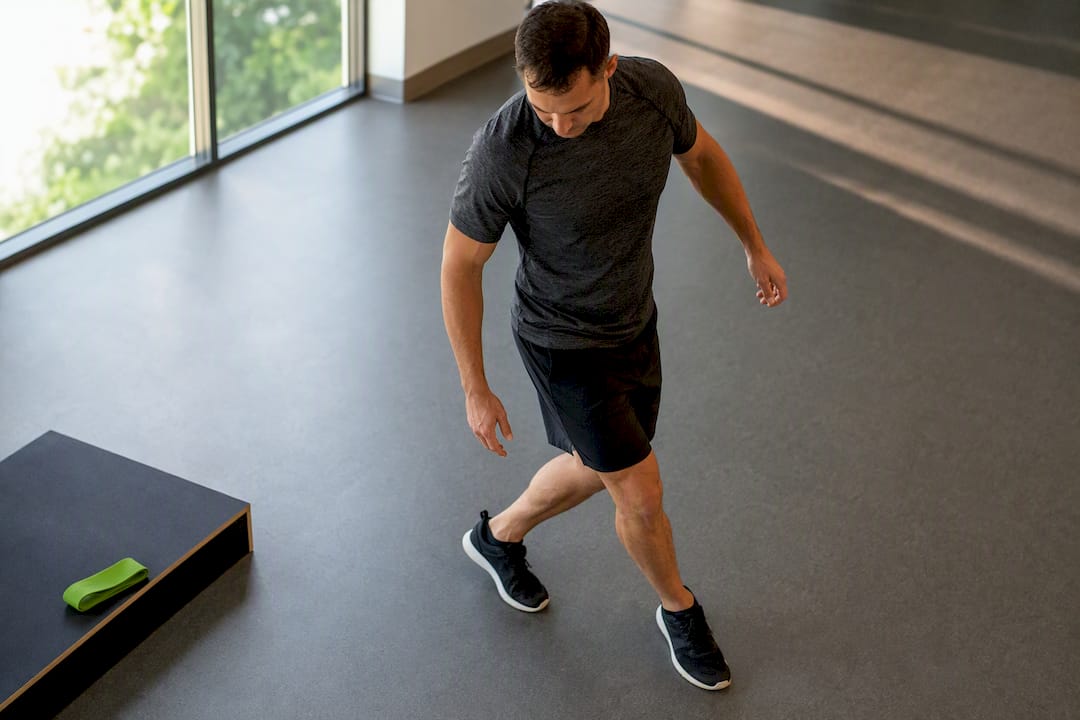
- Phase III, progressive strengthening and function. Single-leg squats, step-ups, and light plyometric work build toward whatever your daily life or sport demands. Return-to-activity criteria typically include pain-free single-leg stance for 30 seconds or more and symmetrical strength on both sides.
Track progress with a simple pain diary, a validated tool like the iHOT12 if your therapist uses one, and timed single-leg stance. If an exercise consistently increases pain the next day, that indicates a need to reduce intensity or modify the exercise rather than pushing through pain.
Pro Tip: Bring your pain diary to every PT visit. A therapist adjusting your program blind, without knowing which specific movements provoke symptoms, is guessing instead of treating.
For structured examples beyond these, a practical rehab exercise guide walks through progressions you can review alongside your therapist’s plan.
Do Injections and PRP Actually Help a Hip Labral Tear?
Injections serve two different purposes, and mixing them up leads to confusion. A diagnostic injection, usually an anesthetic, confirms the labrum is generating your symptoms. A therapeutic injection, like corticosteroid, aims to reduce inflammation long enough for rehab to gain traction.
The evidence for PRP and other biologics is still emerging. It’s a reasonable adjunct in select cases, but it works best paired with active rehab rather than as a substitute for it. I tell patients considering PRP for hip labral tear issues that it’s a tool to enable better movement and strength work, not a cure on its own.
- Image guidance (ultrasound or fluoroscopy) matters for accuracy and safety, particularly given the hip’s deep anatomy.
- Corticosteroid benefit typically runs weeks to a few months, long enough to jump-start stalled therapy.
- HA and PRP responses are more variable and less predictable in duration.
In our experience, if a patient stalls for roughly four weeks in PT despite good effort, that’s often the point to consider an image-guided injection rather than waiting longer. One AJSM cohort study found that after a year of consistent conservative management, many patients reported satisfaction, though a substantial portion still had some persistent pain, and some remained interested in a surgical consult. That’s the honest picture: real improvement, but not always complete resolution.
When Should You Consider Surgery Instead?
Reassessment isn’t a one-time checkpoint. It’s ongoing. Expect an initial response within 8 to 12 weeks and a clearer functional picture by 3 to 6 months of consistent conservative care.
Objective triggers that should move surgical evaluation up the priority list:
- Pain that stays high despite a genuine rehab effort
- Failure to hit functional milestones your therapist set at the start
- Imaging showing a reparable labral tear tied to a correctable bony impingement
A review of hip labral repair outcomes found that repair combined with correcting the underlying bony shape produces better patient-reported outcomes than debridement alone, when surgery becomes necessary. A surgical consult at that point typically includes a fresh exam, updated imaging, and a candid conversation about recovery timelines, which usually run longer and require more structured rehab than the conservative path you already tried.
What I See in Clinic: Realistic Patterns and Practical Advice
Patients who do best tend to treat rehab like a job, not a suggestion. They show up, they track symptoms honestly, and they tell their therapist when something isn’t working instead of quietly pushing through pain. The ones who struggle most usually expected a quick fix and got frustrated when week six looked like week two.
Talk openly with your care team. If progress stalls, say so specifically, don’t wait for the next scheduled visit to mention it.
— Felix
How Nortexspineandjoint Approaches Non-Surgical Hip Labrum Care
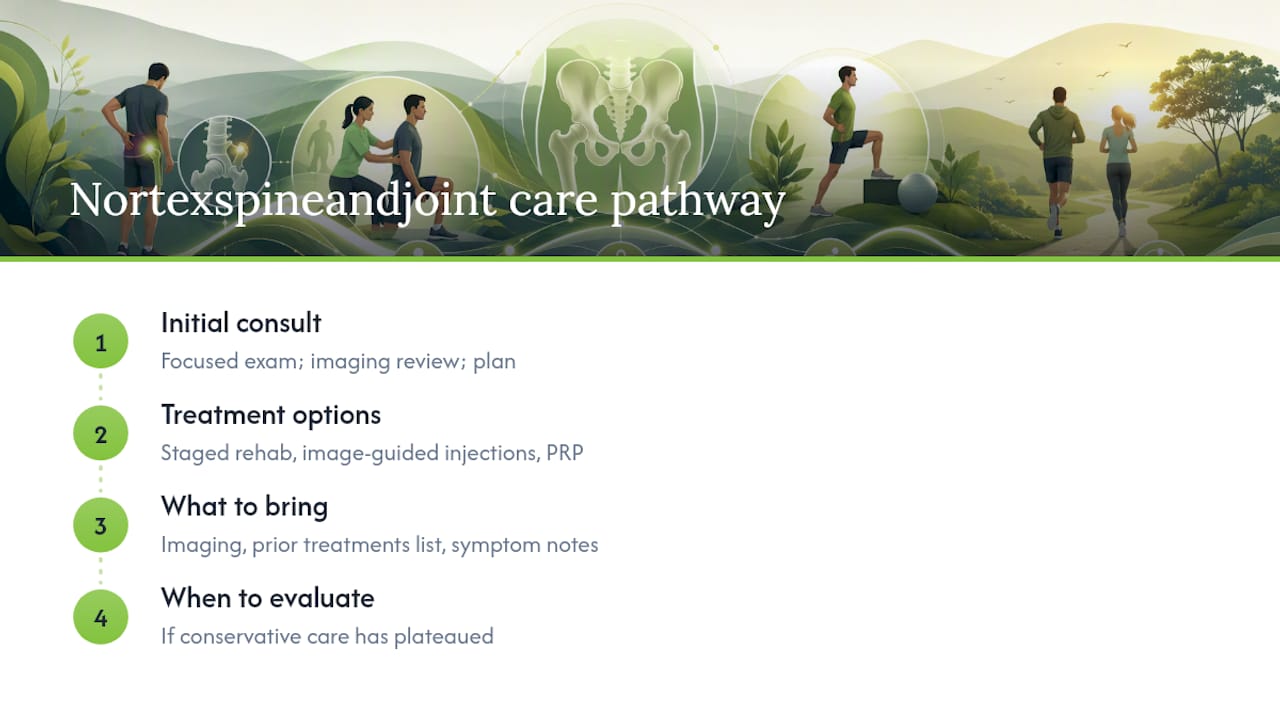
A coordinated alternative to piecing together PT, medication, and injections on your own through separate providers is available. At your initial consult, expect a focused exam, a review of prior imaging if you have it, and a conversation about which combination of staged rehab, image-guided injections, or regenerative options like PRP therapy fits your specific tear and activity goals. Bring your imaging reports, a list of what you’ve already tried, and notes on which movements provoke symptoms.
The clinic’s regenerative medicine offerings are designed to support rehab, not replace it, and for many patients that’s the missing piece between a stalled PT program and a real functional improvement. If your conservative care plan has plateaued or you’re not sure whether it’s structured well enough to give you a fair shot, consider scheduling an evaluation before assuming surgery is the only remaining option.
This article is general information, not a substitute for advice from a qualified doctor. Consult a qualified healthcare professional about your own circumstances before acting on anything here.
Sources
- Nonsurgical Treatment of Hip Labral Tears Improves Function, but Pain Can Persist — The American Journal of Sports Medicine (reported on Mass General Advances in Motion)
- Hip labral repair: options and outcomes — PMC (2016)
- The short-term outcomes of physiotherapy for patients with acetabular labral tears — PubMed
FAQ
What conditions get mistaken for a hip labral tear?
Hip flexor strains, femoroacetabular impingement without a labral tear, early osteoarthritis, and even referred low back pain can mimic labral tear symptoms, which is why a careful exam matched to imaging findings matters more than the MRI alone.
What happens if a hip labral tear goes untreated?
Some patients adapt and manage symptoms long term, but untreated tears with ongoing mechanical irritation can contribute to altered movement patterns and, in some cases, progression toward early joint changes over time.
What percentage of hip labral tears require surgery?
Estimates vary by tear severity, but one physiotherapy outcomes study found about 22.9% of patients in a conservative-care cohort eventually proceeded to surgery after treatment didn’t resolve their symptoms.
Is it okay to walk with a torn hip labrum?
Walking is generally fine and often encouraged as part of activity modification, though you may need to adjust pace, stride, or terrain if specific movements provoke sharp or catching pain.
How long should you try non-surgical treatment before considering surgery?
Most guidance points to an initial response check around 8 to 12 weeks, with a fuller functional assessment at 3 to 6 months, though mechanical red flags like locking or catching warrant earlier evaluation.