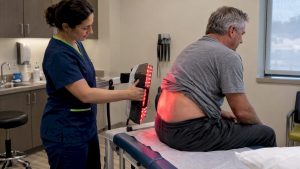

Rehab exercises actively promote tissue repair, reduce movement-evoked pain, and restore the function you had before injury or surgery. A systematic review in JOSPT found exercise therapy produces a moderate, clinically meaningful reduction in pain during movement (SMD −0.65), and surgical patients who mobilize early under Enhanced Recovery After Surgery (ERAS) protocols tend to have fewer complications and shorter hospital stays. At Nortexspineandjoint, we see this play out daily: patients who start a guided, progressive program early recover more predictably than those who wait. The practical takeaway is simple. Start sooner rather than later, work with a clinician who adjusts your plan as you improve, and track specific functional goals instead of just counting days.
Key Takeaways
Rehab exercises heal tissue and reduce pain through measurable biological mechanisms, and starting early under clinician guidance produces better outcomes than waiting.
| Point | Details |
|---|---|
| Movement drives healing | Controlled loading triggers mechanotransduction, prompting tendon, muscle, and cartilage repair. |
| Evidence supports early action | Exercise therapy reduces movement-evoked pain with an SMD of −0.65 across 38 trials. |
| Timing changes outcomes | ERAS protocols show early mobilization is linked to lower postoperative pain and complications. |
| Mild soreness is normal | Sharp or worsening pain is not; scale range, then load, then reps if symptoms flare. |
| Nortexspineandjoint coordinates care | The clinic pairs individualized rehab with regenerative options like PRP when appropriate. |
Table of Contents
- How Rehab Exercises Aid Recovery: The Mechanisms and Evidence
- Key Benefits of Rehab Exercises for Injury Recovery
- Types of Rehabilitation Exercises and 7 Moves You Should Know
- When to Start Rehab Exercises and How Often to Do Them
- Rehab Safety: Pain Guidance and When to Stop
- Why Rehab Works Best Alongside Other Treatments
- Working with a Clinician: What a Good Rehab Plan Looks Like
- A Clinician’s Perspective on Rehab and Realistic Recovery
- How Nortexspineandjoint Supports Your Rehab Plan
- Sources
- FAQ
How Rehab Exercises Aid Recovery: The Mechanisms and Evidence
Movement is not just about staying active while your body heals on its own. It is one of the mechanisms that drives the healing itself. When you load a tendon, muscle, or joint under controlled conditions, you trigger a process called mechanotransduction, where cells sense that mechanical stress and respond by remodeling the tissue around it. That is the biological rationale behind graded loading protocols that physical therapists use instead of simply resting an injured area until it “feels better.”
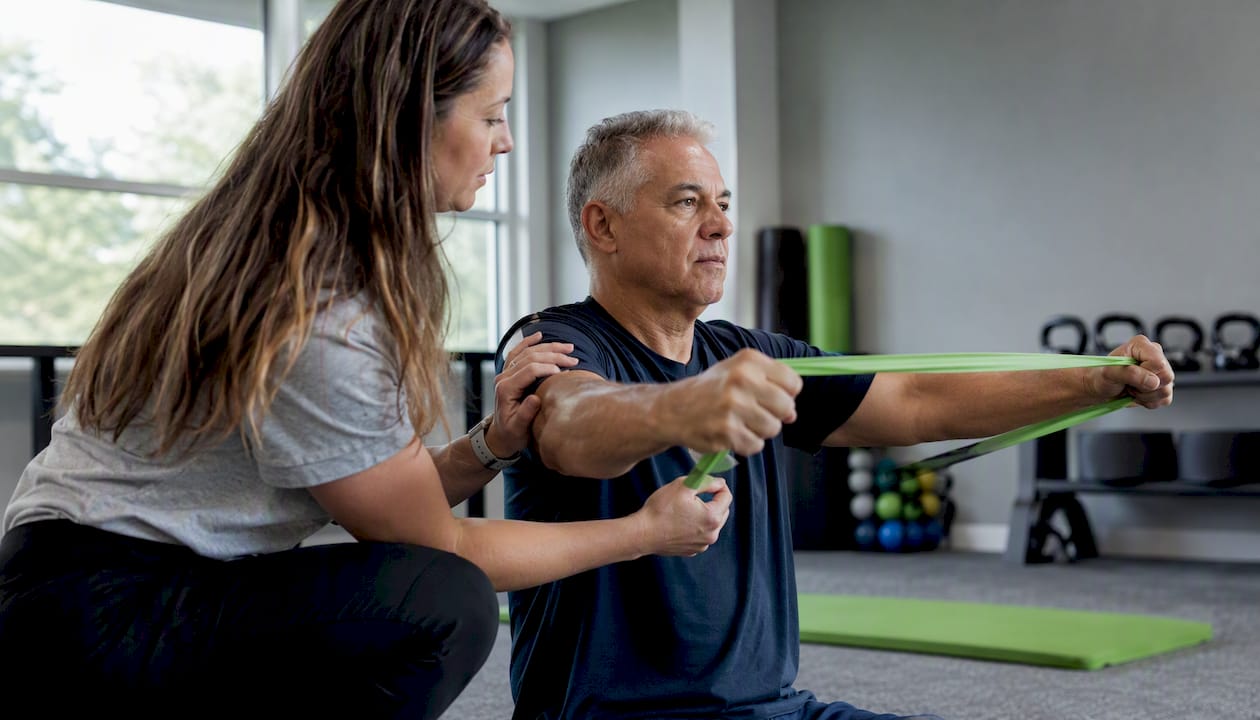
Exercise also changes how your nervous system processes pain. Movement activates endogenous opioid and serotonergic pathways, and it prompts your muscles to release myokines, signaling proteins that shift the inflammatory environment around an injury toward repair rather than prolonged swelling, according to research on exercise as a biological intervention for pain.
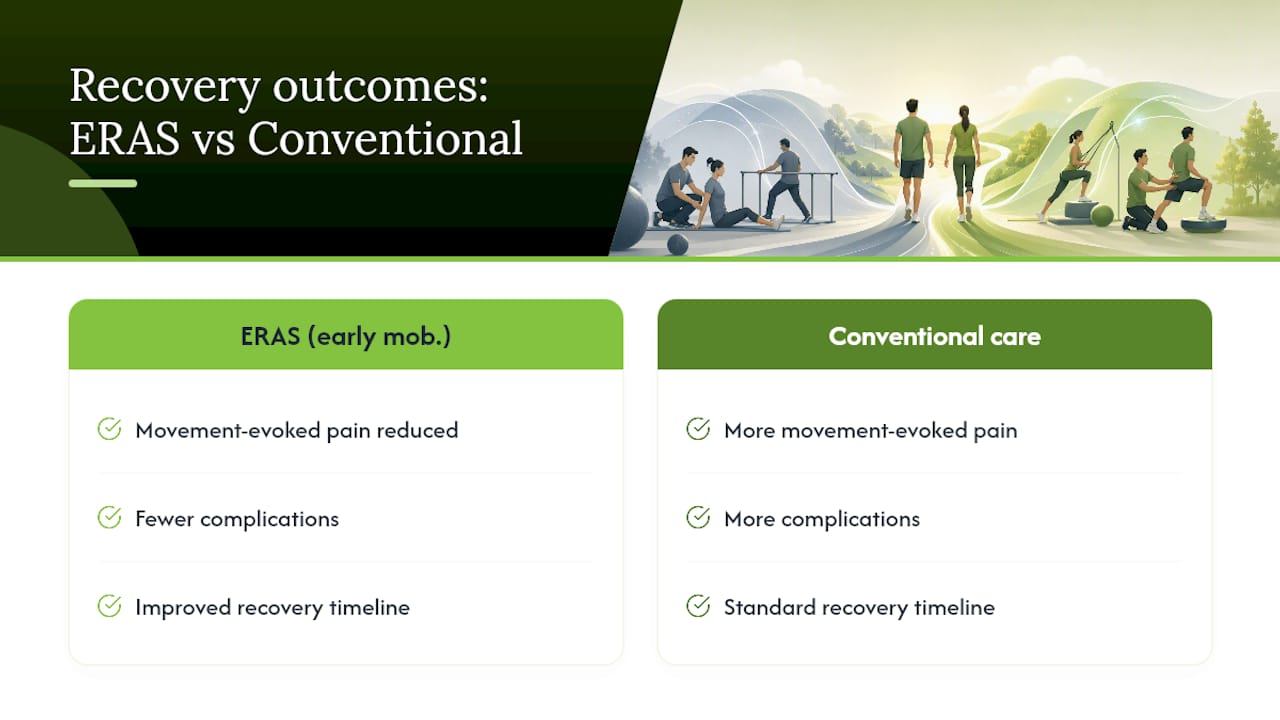
The clinical evidence backs this up at scale. The JOSPT meta-analysis pooling 38 trials found that exercise therapy reduces movement-evoked pain with moderate-certainty evidence, an effect size that outperforms simply waiting for pain to subside. Separately, ERAS protocols emphasizing early mobilization after orthopedic surgery are linked to less postoperative pain and fewer complications than conventional recovery timelines. Together, these findings explain why we favor progressive loading over prolonged immobilization in almost every case we treat.
Key Benefits of Rehab Exercises for Injury Recovery
The physiology explains why rehab exercises work. The benefits are what you actually feel week to week.
- Reduced movement-evoked pain, the discomfort you feel when bending, lifting, or walking, not just at rest.
- Restored range of motion in the affected joint or limb.
- Rebuilt functional strength in muscles that weaken quickly after injury or surgery.
- Improved balance and gait, particularly important after lower-extremity injuries.
- Faster return to daily activities, from climbing stairs to returning to work.
- Lower complication risk after surgery when rehab follows ERAS-style early mobilization principles.
Consider a typical post-op knee patient. In the first week, the goal might be gaining 10 to 20 degrees more flexion through gentle range-of-motion work. By week three or four, that shifts to walking a specific distance without a cane. By week eight, the target might be managing stairs independently. Small, measurable goals like these keep recovery concrete instead of abstract.
Types of Rehabilitation Exercises and 7 Moves You Should Know
Rehab exercises fall into distinct categories, each serving a different purpose at a different stage of healing. Range-of-motion work, passive at first, then active-assisted, then fully active, comes first. Progressive resistance training builds strength once tissue can tolerate load. Balance and proprioception drills retrain your body’s sense of position in space. Aerobic conditioning maintains cardiovascular fitness without stressing the healing area. Functional and transfer training practices real movements like sitting to standing. Stretching and mobility work preserves flexibility, and neuromuscular re-education retrains the coordination between your brain and muscles after injury.
Here are seven exercises you will commonly encounter across these categories:
- Ankle pumps — flex and point the foot; usually cleared within days of most lower-limb surgeries.
- Heel slides — slide the heel toward the buttock to regain knee flexion; start light, add repetitions before adding resistance.
- Quadriceps sets — tighten the thigh muscle without bending the knee; often the earliest strengthening exercise after knee surgery.
- Straight-leg raises — lift the leg with the knee locked to build hip flexor and quad strength without joint stress.
- Seated hip marches — alternate lifting each knee while seated to rebuild hip strength safely.
- Single-leg balance — introduced once weight-bearing is approved, to restore proprioception and prevent falls.
- Wall push-ups — a low-load way to rebuild shoulder and upper-body strength after injury or surgery.
Progression generally follows a pattern: increase repetitions before adding resistance, and add resistance before advancing to weight-bearing or functional tasks. For anything post-surgical or involving a complex injury, that progression should happen under clinician supervision, not guesswork.
When to Start Rehab Exercises and How Often to Do Them
Timing matters more than most patients expect. The acute phase, typically days zero through seven, calls for gentle mobility and passive range-of-motion work, even before you feel “ready.” Waiting too long to start is one of the more common mistakes we see, since idle tissue deconditions fast and makes the eventual restart harder.
- Acute phase (days 0–7): Gentle, passive or active-assisted range of motion. For post-surgical patients, this often mirrors ERAS guidance on early mobilization to reduce complications.
- Subacute phase (weeks 1–6): Progressive active movement and light strengthening, typically one to three sets of 10 to 20 repetitions, performed most days or every other day.
- Remodeling phase (6+ weeks): Heavier resistance and functional, sport- or work-specific training as tolerated.
Cardiovascular work usually fits in throughout, at 10 to 30 minutes of low-intensity activity most days once cleared. The exact dose matters less than how you respond to it. Pain and function, not a fixed calendar, should guide when your clinician adjusts the plan.
Rehab Safety: Pain Guidance and When to Stop
Some discomfort during rehab exercises is expected and even useful. Mild, short-lived soreness that fades within a day is generally fine. Sharp pain, or soreness that worsens with each session, is not.
- Avoid specific movements after certain surgeries until your surgeon or therapist clears them.
- Use caution with unstable fractures or uncontrolled medical conditions before starting a new exercise.
- Stop and call your clinician for new numbness or weakness, progressive swelling or warmth, fever with wound drainage, loss of limb function, or severe uncontrolled pain.
Pro Tip: If an exercise starts to hurt more than expected, scale back in this order: reduce the range of motion first, then lower the resistance, and cut repetitions last. Keeping a simple pain-and-function diary makes it much easier to spot a harmful trend before it becomes a setback.
Why Rehab Works Best Alongside Other Treatments
Rehab exercises rarely work in isolation, and we do not treat them that way. A patient recovering from a complex ankle fracture, for example, might need short-term analgesics to tolerate early motion, a brace to protect the joint during gait retraining, and a home exercise program running in parallel, not in sequence.
- Short-term pain medication to enable participation in therapy
- Orthoses or bracing during progressive loading
- Targeted injections, such as PRP therapy, for tendon or joint conditions that are slow to respond
- Nutrition support, particularly after significant trauma
- Psychological support to sustain adherence through a long recovery
A structured multidisciplinary rehabilitation program combining these elements has been linked to significantly better 12-month functional recovery and work participation than non-structured care.
Working with a Clinician: What a Good Rehab Plan Looks Like
A well-built rehab plan starts with a baseline assessment: what you can and cannot do today, in measurable terms. From there, your therapist builds an individualized home exercise program, sets a progressive loading strategy, and schedules periodic outcome measures to confirm the plan is actually working, not just assumed to be.
- Bring a list of your current symptoms, medications, and any prior imaging or surgical notes.
- Ask what your short-term goal is for the next two to four weeks, and your long-term goal for three to six months.
- Ask what would signal you need to slow down or return sooner than scheduled.
A short-term goal might be walking without a limp by week three. A long-term goal might be returning to a specific sport or job task by month four. Concrete goals like these are also what our team at Nortexspineandjoint discusses with patients recovering from surgery during their first visit.
A Clinician’s Perspective on Rehab and Realistic Recovery
In our experience, many patients come in after trying rest alone, or a passive treatment that never quite resolved their pain, and improve meaningfully once they start a guided, progressive rehab program. Recovery is rarely linear, and no two patients heal on the same timeline. What consistently helps is starting early, under supervision, rather than waiting for pain to disappear before moving at all.
How Nortexspineandjoint Supports Your Rehab Plan
Rehab exercises work best when they are built around your specific injury, not a generic printout. Nortexspineandjoint coordinates individualized rehabilitation with regenerative options like PRP therapy and stem cell treatments when imaging and exam findings support them, so your exercise program and any injections are working toward the same recovery timeline instead of being managed separately. For knee-specific concerns, our PRP knee injection program is often paired directly with staged strengthening work. If you are recovering from an injury or surgery and want a plan built around your actual function, not a generic timeline, schedule an evaluation with our team to get a personalized assessment and rehab strategy.
Sources
- It Hurts to Move! Intervention Effects and Assessment Methods for Movement-Evoked Pain in Patients With Musculoskeletal Pain | Journal of Orthopaedic & Sports Physical Therapy
- Exercise as a targeted biological intervention for chronic pain: myokines and central mechanisms | MDPI (Biology)
- Role of Structured Multidisciplinary Rehabilitation in Optimizing Functional Recovery and Long-Term Outcomes in Musculoskeletal Disorders: An Analytical and Evidence-Based Evaluation
This article is general information, not a substitute for advice from a qualified doctor. Consult a qualified healthcare professional about your own circumstances before acting on anything here.
FAQ
What are the 7 essential rehab exercises?
Commonly used foundational exercises include ankle pumps, heel slides, quadriceps sets, straight-leg raises, seated hip marches, single-leg balance, and wall push-ups, though your specific set depends on your injury.

What are the three R’s of rehabilitation?
Rehabilitation is often summarized as restore, rebuild, and return: restoring range of motion, rebuilding strength and function, and returning to daily activity, work, or sport.
How often should you do rehab exercises?
Most home exercise programs are performed daily or every other day, with one to three sets of 10 to 20 repetitions during early strengthening, though frequency should adjust based on your pain and functional response.
What are the core principles of rehabilitation?
Effective rehab programs generally rely on early initiation, progressive loading, individualization to the patient’s condition, and pain-guided rather than calendar-guided progression.
When should I start rehab exercises after surgery?
Guidance and clinical practice support starting individualized rehab as soon as safely possible, often within days, since early mobilization under ERAS-style protocols is linked to fewer complications than delayed rehab.