
Safe joint strengthening is defined as a structured approach to building the muscles, ligaments, and tendons that surround and protect your joints, reducing pain and improving mobility without causing further damage. Learning how to strengthen joints safely matters whether you are an active athlete managing wear and tear or an adult dealing with early arthritis. The Arthritis Foundation and Harvard Health both confirm that movement protects joints more effectively than rest. The right combination of low-impact aerobic exercise, targeted strength training, and consistent flexibility work builds a protective structure around each joint, reducing your injury risk and, in many cases, delaying or avoiding surgical intervention entirely.
How to strengthen joints safely: the right exercises to start with
The safest and most effective exercises for joint health fall into three categories: low-impact aerobic activity, resistance training, and flexibility work. Each category serves a distinct purpose, and combining all three produces results that no single approach can match on its own.

Low-impact aerobic options
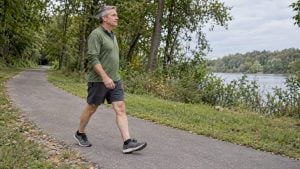
Low-impact aerobic exercise increases blood flow to cartilage, which has no direct blood supply and relies on movement for nutrient delivery. Harvard Health recommends swimming, cycling, and walking as the most joint-friendly aerobic options, with yoga, Pilates, and tai chi rounding out a well-balanced program. These activities build cardiovascular endurance and strengthen the muscles surrounding your joints without the repetitive impact forces that running or jumping generate.
Resistance training for joint stability
Resistance training is the most direct way to build the muscular support structure that protects your joints. You can use resistance bands, free weights, or bodyweight exercises targeting the major muscle groups around the knees, hips, shoulders, and spine. Strengthening muscles and tendons acts like a natural brace, absorbing load that would otherwise transfer directly to joint surfaces. Proper form matters more than the amount of weight you lift, especially in the early weeks.
Isometric exercises for flare days
On days when joint pain spikes, isometric exercises allow you to maintain muscle activation without moving the joint at all. Isometric contractions such as wall squats held for 30 seconds or sustained planks keep supporting muscles engaged without aggravating inflamed tissue. This approach preserves your training continuity during symptom flares rather than forcing a complete stop.
Key exercise categories for safe joint strengthening:
- Swimming and water aerobics: Buoyancy reduces joint load while resistance builds muscle.
- Cycling (stationary or outdoor): Strengthens quadriceps and hamstrings with minimal knee impact.
- Resistance band exercises: Allow controlled, progressive loading with low injury risk.
- Bodyweight movements (squats, bridges, clamshells): Build joint-stabilizing muscles using natural movement patterns.
- Yoga and tai chi: Improve balance, coordination, and range of motion simultaneously.
- Isometric holds: Maintain muscle engagement on high-pain days without joint motion.
Pro Tip: Always warm up for at least 5–10 minutes before any strengthening session. Gentle arm circles, ankle rotations, and neck rolls prepare your connective tissue for load and significantly reduce your injury risk.
How do you progress a joint strengthening routine without getting hurt?
Progression is where most people go wrong. Starting too aggressively or increasing intensity too quickly are the two most common reasons patients at Nortexspineandjoint come in with setbacks after beginning a new exercise program. The principle is straightforward: start low, go slow, and let your body’s response guide each step forward.
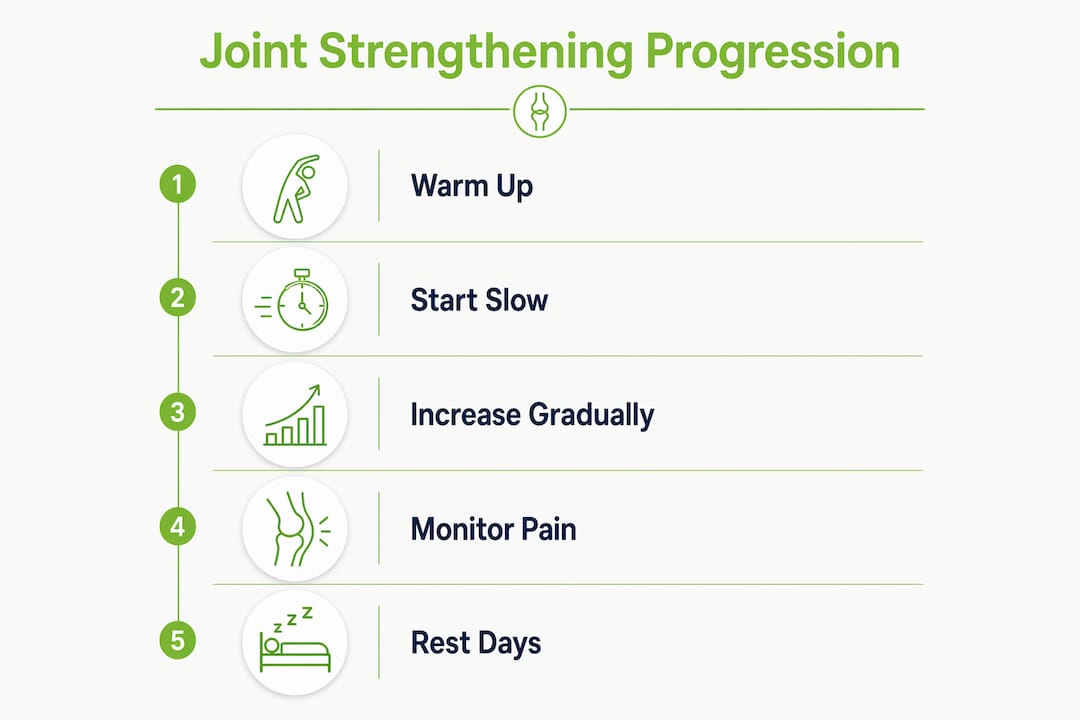
The American College of Sports Medicine specifies that strength training for osteoarthritis requires a minimum of 2 sessions per week, with 2–3 sets of 8–12 repetitions at 50–60% of maximum strength. That structure matters because it provides enough stimulus for adaptation without overwhelming recovering tissue. Equally important: 12 or more consistent sessions are typically needed before meaningful pain reduction appears. Stopping early, before that threshold, often means missing the benefit entirely.
Here is a practical progression framework:
- Weeks 1–2: Begin with 2 strength sessions per week using light resistance or bodyweight only. Keep aerobic sessions to 15–20 minutes of low-impact activity such as walking or cycling.
- Weeks 3–4: Add a third aerobic session and increase resistance slightly if the previous sessions produced no pain lasting more than two hours afterward.
- Weeks 5–8: Work toward 150 minutes of moderate aerobic exercise per week, distributed across 3–4 sessions, plus two structured strength training days.
- Ongoing: Increase resistance or duration by no more than 10% per week. Monitor for joint swelling, sharp pain, or prolonged soreness as warning signs to reduce load.
Pain is a signal, not a barrier to ignore. A mild ache during exercise that resolves within two hours is generally acceptable. Sharp, sudden pain or swelling that persists into the next day means you have exceeded your current tolerance and need to scale back.
Pro Tip: Aquatic exercise is an excellent option when progressing feels difficult on land. Water provides resistance for muscle building while buoyancy reduces joint stress, making it one of the most forgiving environments for joint-friendly training.
Does stretching actually help strengthen and protect your joints?
Stretching does not build strength directly, but it plays a critical supporting role in joint health. Avoiding painful movements weakens the muscles around joints and accelerates deterioration. Stretching maintains the range of motion that makes strengthening exercises safe and effective in the first place. Think of flexibility work as the foundation that allows your strength training to function correctly.
Harvard Health recommends stretching major muscle groups 2–3 times per week, with a total of 60 seconds per muscle group per session, divided into repeated holds. That frequency is enough to maintain functional flexibility without overtaxing recovering tissue. Stretching cold muscles increases injury risk, so always complete your aerobic warm-up before moving into static holds.
The muscle groups most critical to joint mechanics are:
- Calves and Achilles tendon: Tight calves increase stress on the knee and ankle joints.
- Hamstrings: Limited hamstring flexibility alters hip and lumbar spine mechanics.
- Hip flexors: Shortened hip flexors tilt the pelvis forward, loading the lower back and hip joints.
- Quadriceps: Quad flexibility directly affects knee tracking and patellofemoral joint health.
- Shoulders and neck: Restricted shoulder mobility compensates through the cervical spine.
Yoga and tai chi are particularly effective because they combine mobility and flexibility work with balance training, addressing multiple components of joint stability in a single session. For athletes, targeted mobility work on calves, hamstrings, hip flexors, and quadriceps is especially important because biomechanical joint support from these muscle groups directly reduces reinjury risk.
| Muscle Group | Recommended Stretch | Frequency |
|---|---|---|
| Hamstrings | Seated forward fold or supine leg raise | 2–3 times per week |
| Hip flexors | Kneeling lunge stretch | 2–3 times per week |
| Calves | Standing wall calf stretch | 2–3 times per week |
| Quadriceps | Standing quad pull or prone stretch | 2–3 times per week |
| Shoulders | Cross-body arm stretch or doorway stretch | 2–3 times per week |
For those looking to build a more structured flexibility practice, improving joint flexibility naturally through progressive yoga protocols offers a well-organized starting point.
What lifestyle habits best support long-term joint health?
Exercise is the most powerful tool for joint protection, but several lifestyle factors either amplify or undermine your results. Addressing these alongside your training program produces more consistent outcomes than exercise alone.
Body weight and joint load: Every pound of excess body weight adds approximately four pounds of force across the knee joint during walking. Maintaining a healthy weight is one of the most direct ways to reduce joint stress without any specialized equipment or clinical intervention. Even modest weight reduction produces measurable decreases in knee and hip joint load.
Nutrition and anti-inflammatory eating: Protein intake supports muscle repair and growth, which directly benefits joint stability. Anti-inflammatory foods including fatty fish, leafy greens, berries, and olive oil reduce the systemic inflammation that accelerates cartilage breakdown. Adequate hydration also supports synovial fluid production, the joint’s natural lubricant.
Footwear and posture: Worn-out footwear alters your gait mechanics and increases stress on the knees, hips, and lower back. Supportive, well-fitted shoes are a simple and underappreciated component of joint protection. Posture during exercise matters equally. Rounded shoulders during pressing movements and collapsed knees during squats both redirect load onto joint surfaces rather than the surrounding musculature.
Rest and recovery: Rest days are not optional. Overtraining produces fatigue that degrades movement quality, which in turn increases joint stress. Two rest or active recovery days per week allow connective tissue to adapt to training loads. On high-pain days, isometric exercises maintain conditioning without aggravating the joint.
For a broader look at protecting your joints without surgery, the non-surgical joint strategies outlined by Nortexspineandjoint cover additional conservative care options worth reviewing. When symptoms persist despite consistent effort, consulting a healthcare provider for a personalized assessment is the appropriate next step rather than continuing to adjust on your own.
Key takeaways
Safe joint strengthening requires consistent, progressive exercise combining aerobic activity, resistance training, and flexibility work, supported by weight management and anti-inflammatory nutrition.
| Point | Details |
|---|---|
| Warm up before every session | Five to ten minutes of gentle movement prepares connective tissue and reduces injury risk. |
| Follow the 150-minute aerobic target | Aim for 150 minutes of moderate aerobic exercise weekly plus two strength sessions. |
| Allow 12+ sessions before judging results | Meaningful pain reduction from strength training typically requires at least 12 consistent sessions. |
| Stretch key muscle groups 2–3 times weekly | Focus on hamstrings, hip flexors, calves, and quadriceps to maintain joint mechanics. |
| Use isometric exercises on flare days | Wall squats and planks maintain muscle activation without moving inflamed joints. |
What i’ve learned watching patients rebuild joint strength over time
Many patients arrive at Nortexspineandjoint after months of avoiding movement, convinced that rest is protecting them. The clinical reality is the opposite. Avoiding movement weakens the muscles that stabilize joints, which increases pain and accelerates deterioration. The patients who make the most consistent progress are not the ones who push hardest. They are the ones who show up regularly, respect their current limits, and adjust without quitting.
One pattern I see repeatedly: people expect results within two or three weeks and stop when they do not feel a difference. The research is clear that 12 or more sessions are typically needed before pain reduction becomes noticeable. That gap between starting and feeling better is where most people give up, and it is exactly where consistency matters most.
The balance between conservative care and advanced treatment is not always obvious. Exercise and lifestyle changes resolve a significant portion of joint pain when applied correctly and given enough time. When they do not, regenerative options like PRP therapy can address the underlying tissue damage that exercise alone cannot reverse. The two approaches are not competing. They work best together, with exercise forming the foundation that makes any clinical intervention more effective and longer lasting.
You do not need to fear movement. You need to respect your current capacity and build from there.
— Felix
When exercise is not enough: advanced joint care at Nortexspineandjoint
When a structured exercise program and lifestyle changes have not resolved your joint pain, Nortexspineandjoint offers evidence-based regenerative treatments designed to address the underlying tissue damage driving your symptoms. The clinic specializes in PRP therapy for joint pain, using platelet-rich plasma injections to stimulate tissue repair in knees, hips, shoulders, and the spine. These treatments are non-surgical, performed in-office, and designed to complement the strengthening work you are already doing. If you are an active adult or athlete in the North Dallas area looking for personalized, non-surgical joint care, Nortexspineandjoint provides individualized treatment plans built around your specific condition and goals. Explore your options and take the next step toward lasting relief.
FAQ
What is the safest exercise to start with for joint pain?
Swimming and water-based exercise are the safest starting points because buoyancy reduces joint load while water resistance builds supporting muscle. Walking on flat surfaces is also appropriate for most people with mild to moderate joint pain.
How often should i do joint strengthening exercises?
The Arthritis Foundation and Harvard Health both recommend at least two strength training sessions per week combined with 150 minutes of moderate aerobic activity, distributed across 3–4 sessions.
How long before i notice improvement in joint pain from exercise?
Research from the American College of Sports Medicine shows that meaningful pain reduction from strength training typically requires a minimum of 12 consistent sessions. Most people begin noticing improvement between weeks 6 and 10.
Should i stretch before or after strengthening exercises?
Stretch after your aerobic warm-up and after your strengthening session, not on cold muscles. Static stretching before exercise on unwarmed tissue increases injury risk rather than reducing it.
When should i see a doctor about joint pain during exercise?
Consult a healthcare provider if you experience sharp pain during exercise, joint swelling that persists beyond 24 hours, or pain that consistently worsens despite reducing your training load. These signs suggest a condition that requires clinical evaluation rather than self-managed progression.