
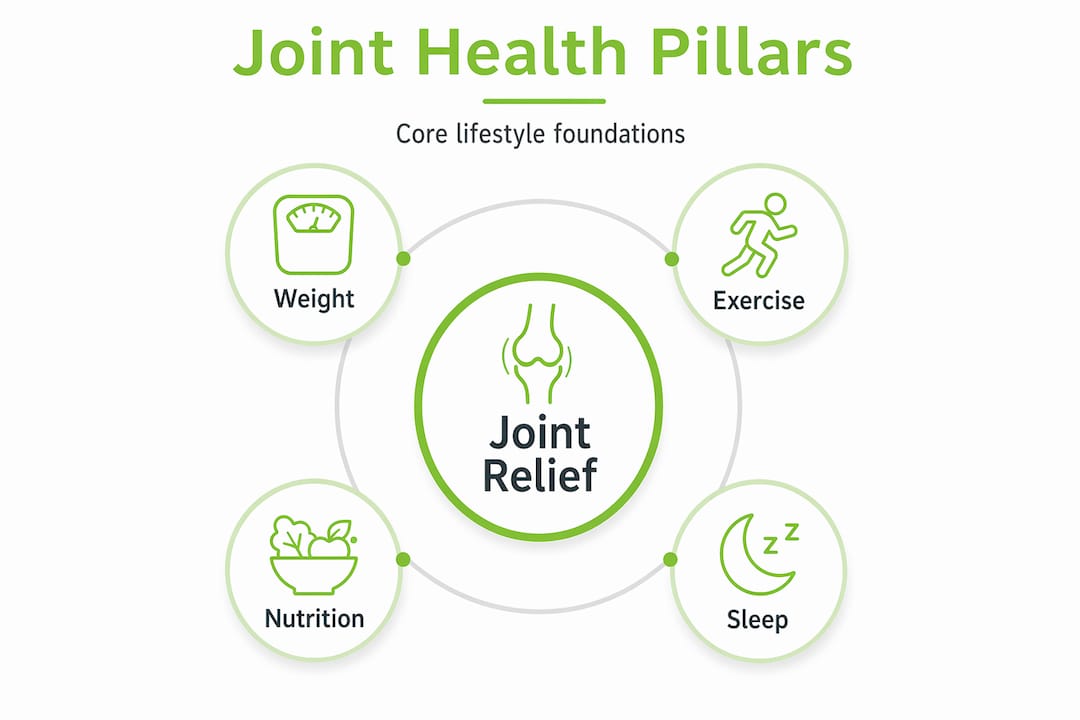
Joint pain does not have to be a permanent sentence, and surgery is rarely the only path forward. The role of lifestyle in joint health is far more significant than most people realize, yet it remains underused as a treatment strategy. If you are living in North Dallas and managing daily stiffness, aching knees, or limited mobility, understanding how weight, movement, nutrition, and sleep shape your joint condition gives you real tools to act on today. This guide covers each of those pillars with specific, evidence-based guidance so you can make changes that matter.
Table of Contents
- How weight management supports your joints
- The importance of physical activity and movement
- Nutrition’s role in joint health and inflammation
- Sleep and joint health: an often overlooked factor
- Putting it all together: a holistic lifestyle plan for your joints
- Why lifestyle changes are your strongest tool and why they often fail without this mindset
- Enhance your joint health with Nortex regenerative therapies
- Frequently asked questions
Key Takeaways
| Point | Details |
|---|---|
| Weight affects joints mechanically and biologically | Each pound lost reduces pressure and inflammation, easing joint pain. |
| Regular, tailored exercise is essential | Movement strengthens muscles and preserves joint mobility without surgery. |
| Diet influences joint inflammation | Anti-inflammatory eating patterns support healthier joints and reduce symptoms. |
| Sleep quality impacts arthritis risk | Poor sleep and late sleep timing increase joint inflammation and pain. |
| Comprehensive lifestyle plans improve outcomes | Combining weight management, activity, diet, and sleep is the best approach. |
How weight management supports your joints
Excess body weight places a measurable mechanical burden on the joints, particularly the knees and hips. Research consistently shows that each pound of body weight translates to roughly three to six pounds of force across the knee joint during walking. Over time, that compounded load accelerates cartilage breakdown, the tissue cushioning your joints.
What many patients do not realize is that fat tissue is not inert. It actively releases inflammatory proteins called cytokines, which travel through the bloodstream and amplify joint damage even in joints that bear less mechanical load. This is why people with obesity often experience shoulder or hand joint pain alongside knee pain. Losing even a few pounds reduces joint stress and inflammation by lowering both mechanical load and these inflammatory proteins.
Key benefits of reaching a healthier weight:
- Reduced daily stress on the knees, hips, and lower back
- Lower circulating inflammatory markers linked to cartilage breakdown
- Improved response to physical therapy and exercise programs
- Slower progression of osteoarthritis (OA), the most common form of joint degeneration
A practical weight loss target is at least 5% of your current body weight. For someone weighing 200 pounds, that is just 10 pounds. That modest loss produces measurable reductions in knee pain. Combining weight loss with structured exercise yields the best results, as detailed in our deep review of the impact of weight loss on arthritis.
Pro Tip: Tracking your food intake for even two weeks without changing your diet builds meaningful awareness of calorie patterns, which is often the first step toward sustainable, gradual weight reduction.
Having established how mechanical and inflammatory load affects joint health, physical activity is the natural complement to weight management in protecting your joints.

The importance of physical activity and movement
The idea that people with joint pain should rest more is one of the most persistent and damaging misconceptions in joint care. Inactivity weakens the muscles surrounding your joints, reduces the lubricating fluid inside them, and accelerates the stiffness that makes movement more painful over time. Physical activity is recommended as standard care to keep joints limber and reduce pain, including aerobic, strengthening, neuromuscular, aquatic, and mind-body exercises.
Here is a practical framework for building an exercise routine that supports rather than strains your joints:
- Start with low-impact aerobic activity. Walking, cycling, or swimming for 20 to 30 minutes, three to five days a week, improves cardiovascular health and joint lubrication without jarring impact.
- Add resistance or strengthening exercises. Strengthening the quadriceps, for example, significantly reduces the load transferred to the knee joint itself. Two sessions per week is a reasonable start.
- Include neuromuscular exercises. Balance and coordination work, such as single-leg stands or stability exercises, reduces the risk of falls and abnormal joint loading.
- Try aquatic exercise if land-based movement is too painful. Water buoyancy reduces the effective weight on your joints by up to 90%, making movement accessible even during flare-ups.
- Incorporate mind-body practices. Yoga and tai chi have documented benefits for joint pain and mobility, as explored in detail in our post on gentle movement benefits.
“Pain during exercise that resolves within two hours afterward is generally considered acceptable. Pain that persists longer, or that is significantly worse the next day, signals you need to reduce intensity or duration.”
Equally important is reducing sedentary time. Sitting for long, unbroken periods stiffens joints and reduces circulation to cartilage, which has no direct blood supply and relies on movement for nutrient delivery. Standing up and moving for two to three minutes every 30 to 45 minutes makes a real difference, especially if you work at a desk.
Pro Tip: A simple way to break sedentary patterns is setting a phone timer every 40 minutes as a movement cue. Even brief walking around the room counts.
Alongside exercise and weight management, nutrition is another cornerstone of maintaining joint health, impacting inflammation and cartilage integrity.
Nutrition’s role in joint health and inflammation
No single diet has been proven to cure arthritis, but dietary patterns have a well-documented impact on joint inflammation and function. Anti-inflammatory diets, especially the Mediterranean diet, and supplements like curcumin, glucosamine, and Boswellia are associated with reduced joint pain and improved function.
Foods that support joint health:
- Fatty fish (salmon, sardines, mackerel) rich in omega-3 fatty acids
- Colorful vegetables and fruits packed with antioxidants
- Olive oil, which contains oleocanthal with properties similar to ibuprofen at the cellular level
- Nuts and legumes for anti-inflammatory fats and plant-based protein
Foods that worsen joint inflammation:
- Processed foods high in refined sugars and trans fats
- Red and processed meats associated with elevated inflammatory markers
- Excess alcohol, which raises uric acid and contributes to gout
- Refined grains that spike blood sugar and promote systemic inflammation
The diet impact on arthritis pain is real but works gradually over weeks and months. It is not a quick fix, but it provides a sustainable foundation.
| Dietary approach | Anti-inflammatory effect | Joint pain benefit | Evidence quality |
|---|---|---|---|
| Mediterranean diet | High | Moderate to strong | Strong |
| Curcumin supplementation | Moderate | Moderate | Moderate |
| Glucosamine/chondroitin | Low to moderate | Modest | Mixed |
| Standard Western diet | Worsens inflammation | Negative | Strong |
For patients interested in supplementation, our review of natural supplements for arthritis covers the evidence behind the most commonly used options. Paying attention to footwear also matters; arthritis-supportive footwear can reduce abnormal joint loading during daily activity, complementing dietary efforts.
While diet and exercise are well-known lifestyle factors, sleep patterns also significantly affect joint health and pain perception and deserve close attention.
Sleep and joint health: an often overlooked factor
Most people understand that poor sleep leaves them feeling worse overall, but the specific connection between sleep and joint health is rarely discussed. Sleep disorders increase the odds of rheumatoid arthritis substantially, and this association holds even after adjusting for other health factors. The mechanism involves immune dysregulation: disrupted sleep impairs the body’s ability to regulate the immune response, which in turn permits elevated joint inflammation.
Sleep timing matters as much as duration. Research shows that a delayed sleep midpoint beyond 2:30 AM is associated with an 8% increase in osteoarthritis prevalence per 30-minute delay. This points to circadian rhythm disruption as an independent risk factor for joint disease, separate from sleep duration alone.
Signs that sleep may be contributing to your joint symptoms:
- Pain feels significantly worse in the morning compared to evenings
- You frequently wake during the night due to discomfort
- Fatigue amplifies your pain perception throughout the day
- You have been diagnosed with sleep apnea, which is common in people with inflammatory arthritis
Steps to improve sleep quality for joint health:
- Maintain a consistent sleep and wake time, even on weekends, to stabilize your circadian rhythm.
- Limit screen exposure in the hour before bed to support natural melatonin production.
- Keep the bedroom cool and dark, as both promote deeper, more restorative sleep stages.
- Address pain before bed with guidance from your physician, whether through approved medications, topical treatments, or positioning aids.
- Explore comfortable sleeping positions using guidance from our article on sleeping positions and arthritis pain.
Pro Tip: Cognitive behavioral therapy for insomnia (CBT-I) is the most effective non-drug treatment for chronic sleep problems and is now widely available through telehealth platforms.
Understanding these lifestyle pillars helps, but managing joint health often requires combining approaches and knowing how to apply them safely and effectively.
Putting it all together: a holistic lifestyle plan for your joints
Making isolated changes rarely produces lasting results. A multilayered, patient-tailored non-pharmacologic approach combining exercise, weight loss, education, and self-management is key to successful OA care. The goal is to build layered habits that reinforce each other.
- Set a realistic starting point. Commit to one change per week rather than overhauling your routine at once.
- Use a pain threshold as your activity guide. If pain persists for more than two hours after exercise, reduce intensity the next session.
- Build a weekly structure. Three days of aerobic activity, two days of strengthening, and daily attention to nutrition and sleep hygiene form a solid base.
- Track progress at four-week intervals. Note changes in morning stiffness, walking distance, and sleep quality rather than only pain scores.
- Adjust based on feedback. Plateaus are normal. Varying exercise type or intensity, revisiting diet, or consulting a specialist are all valid responses.
| Lifestyle pillar | Minimum effective dose | Expected timeline for improvement |
|---|---|---|
| Weight loss | 5% of body weight | 8 to 12 weeks |
| Aerobic exercise | 150 min/week | 4 to 8 weeks |
| Anti-inflammatory diet | Daily adherence | 6 to 12 weeks |
| Sleep improvement | 7 to 9 hours consistently | 2 to 4 weeks |
For patients managing knee pain specifically, our detailed review of pain management strategies for knee care provides additional tools. You can also explore a broader range of alternative joint pain treatments that complement lifestyle work.
Pro Tip: The most effective lifestyle plans are the ones you can maintain on your worst days, not just your best ones. Design for consistency at 70% effort, not perfection at 100%.
Having a clear lifestyle plan is essential, but let me offer a perspective on why many patients struggle with these changes and what genuinely makes them sustainable.
Why lifestyle changes are your strongest tool and why they often fail without this mindset
Here is something we see regularly in clinical practice: patients who know exactly what they should be doing, who have read every guideline and understand the value of exercise and diet, and still cannot make progress. The problem is rarely lack of information. It is expectation mismatch.
Most adults approaching joint pain management expect a linear improvement curve: start exercising, feel better within weeks, keep improving. Real recovery does not work that way. Joint health responds to lifestyle changes slowly, unevenly, and with occasional regression. The patients who see lasting results are those who stay consistent through the frustrating plateaus, not those who push hardest in the first month.
The second failure point is the misguided belief that rest is protective. Extended rest following a flare-up feels intuitive, but prolonged inactivity causes muscle atrophy around the joint, reduced cartilage nutrition, and increased stiffness that makes the next movement session significantly harder. Gentle, consistent movement during low-grade discomfort is almost always preferable to rest, as the weight loss and arthritis insights framework illustrates well.
What actually drives success is not any single change. It is the compounding effect of small, well-timed adjustments across weight, movement, nutrition, and sleep, pursued with patience and calibrated to how your body responds week by week. Surgery may eventually be appropriate for some patients, but for the majority of adults with moderate joint pain, consistent lifestyle modification produces outcomes that rival many medical interventions.
Enhance your joint health with Nortex regenerative therapies
Lifestyle changes build a strong foundation, but some patients need additional support to reduce pain enough to exercise consistently or recover from joint damage already present. At Nortex Spine and Joint, we offer regenerative treatments designed to work alongside your lifestyle efforts, not replace them. PRP therapy uses concentrated growth factors from your own blood to reduce joint inflammation and support tissue repair, with outcomes that improve further when paired with structured rehabilitation. For patients with more advanced joint damage, stem cell treatment options offer a pathway to regenerate damaged tissue rather than simply manage symptoms. Every plan at Nortex is built around your specific condition, activity goals, and timeline.
Frequently asked questions
How much weight do I need to lose to feel relief in my joints?
Losing as little as 5% of body weight can reduce joint stress and measurably improve pain, with greater benefits seen as weight loss continues beyond 10% of your starting weight.
What types of exercises are safest for joint pain?
Low-impact aerobic, strengthening, and aquatic exercises are the most consistently recommended for joint pain, but starting at a tolerable intensity and progressing gradually is what makes them safe in practice.
Can diet alone control arthritis pain?
Diet can reduce inflammation meaningfully, but combined lifestyle approaches that include exercise and weight management consistently outperform dietary changes alone when it comes to pain reduction and function improvement.
Does improving sleep really impact joint pain?
Yes. Sleep disorders significantly increase the risk of rheumatoid arthritis and worsen symptom severity, making consistent, quality sleep an important and often underprioritized part of joint care.
Are regenerative treatments like PRP suitable for everyone with joint pain?
PRP and stem cell therapies are effective for many patients but work best when combined with active lifestyle changes. Suitability depends on the type and severity of joint damage, your overall health, and other individual factors that a specialist should evaluate before starting treatment.