
Platelet-rich plasma (PRP) is a reasonable option to discuss for gluteal tendinopathy, the tendon problem behind much lateral hip pain, particularly when months of exercise-based care have not settled it or when a cortisone shot is not a good fit. The research is encouraging but uneven: some trials show lasting benefit, while others show little difference from comparison treatments. PRP works best as one part of a plan that includes progressive strengthening, not as a stand-alone fix.
This guide explains what gluteal tendinopathy is, what the trials actually found, who tends to be considered for PRP, what the procedure and recovery look like, and how PRP compares with cortisone and physical therapy.
TL;DR
- Gluteal tendinopathy is a degenerative problem of the gluteus medius and minimus tendons, not simply “bursitis,” and it usually causes pain on the outside of the hip, especially when lying on that side.
- Exercise-based physical therapy with gluteal strengthening is the first-line treatment. PRP is generally considered for persistent cases or when a corticosteroid injection is not appropriate.
- A 2021 systematic review found good evidence for PRP in grade 1 and 2 tendinopathy, and a 2026 review found PRP outcomes comparable or better than controls, though the studies varied widely.
- Side effects are usually temporary soreness, swelling or bruising. Infection and active cancer are reasons to avoid PRP.
- Results build slowly, often over 8 to 12 weeks, so rehabilitation matters as much as the injection.
Table of Contents
- What gluteal tendinopathy is
- What the research shows about PRP
- Who may be considered for PRP
- What the procedure involves
- Risks and side effects
- Recovery and rehabilitation
- PRP, cortisone and exercise compared
- Perspective
- How Nortex can help
- FAQ
- Sources
What gluteal tendinopathy is
The gluteus medius and gluteus minimus are the muscles on the side of your hip that keep your pelvis level when you walk, climb stairs or stand on one leg. Their tendons attach at the greater trochanter, the bony point you feel on the outside of the hip. When those tendons become overloaded and degenerate, the result is gluteal tendinopathy, one of the main causes of greater trochanteric pain syndrome (GTPS).
It typically affects women in their fourth to sixth decades and presents as chronic lateral hip pain with tenderness over the area. Many patients describe the same pattern: pain that wakes them when they roll onto the affected side, pain after a long walk or run, and a feeling that the hip is weak on stairs.
How it is diagnosed
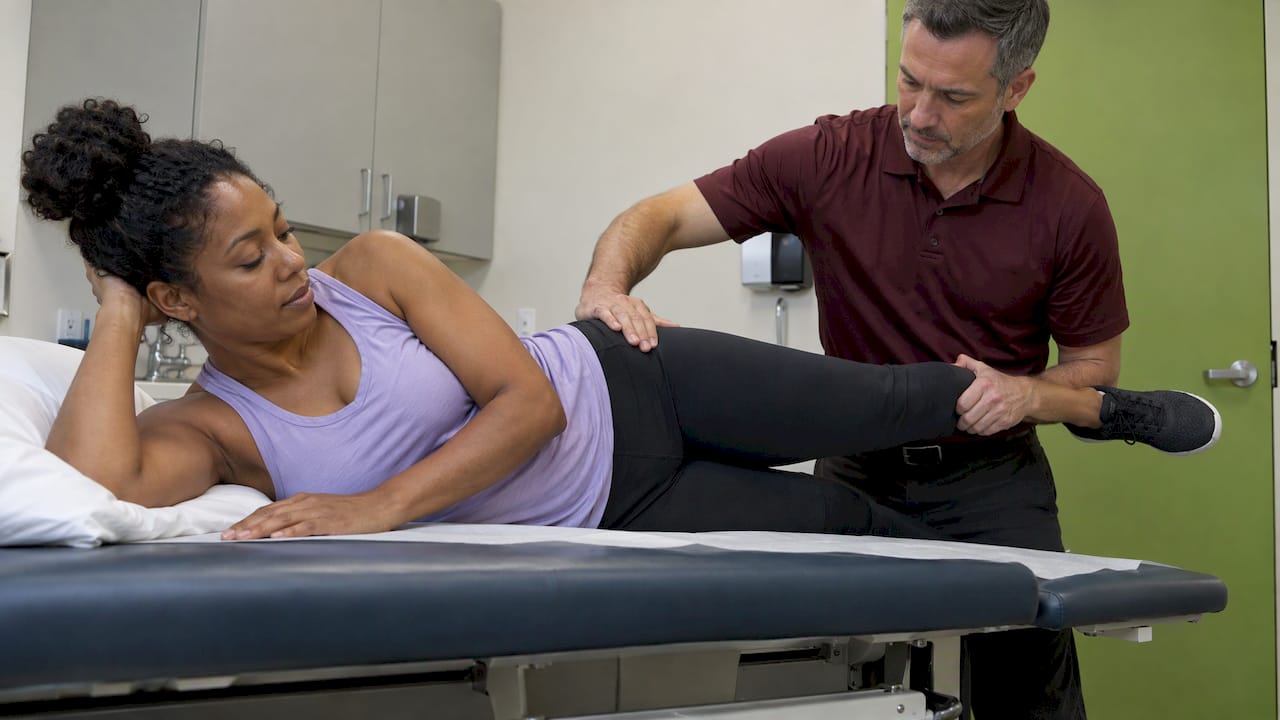
Diagnosis starts with a clinical examination. According to a 2025 review of common tendinopathies, the typical findings are pain worsened by lying on the affected side and by weight-bearing, tenderness over the greater trochanter, pain with resisted hip abduction, and often a positive Trendelenburg sign, which points to weak hip stabilizers.
Imaging, commonly MRI or ultrasound, helps confirm the diagnosis and rule out other causes. The same hip pain can come from the hip joint itself, the lower spine or the sacroiliac joint, which is why a careful exam matters before any injection. If arthritis in the joint is part of the picture, our page on PRP for hip arthritis covers that separate condition.
The four grades
The 2021 systematic review describes four imaging grades:
| Grade | MRI finding |
|---|---|
| 1 | Bursitis, with no or minimal tendon changes |
| 2 | Increased tendon signal on T1-weighted MRI |
| 3 | Increased signal on T2-weighted MRI |
| 4 | Discontinuity of one or both gluteal tendons |
Grade matters because the evidence for PRP differs by severity, as covered below.
Why “bursitis” is often the wrong label
For years, lateral hip pain was called trochanteric bursitis and treated with cortisone to calm inflammation. A 2024 review in the British Journal of Sports Medicine notes that histological studies have shown an absence of typical cellular inflammation in these tendons. That helps explain why anti-inflammatory approaches can give short relief without changing the underlying tendon problem.
What the research shows about PRP
PRP is made from your own blood (it is autologous). A sample is drawn, spun in a centrifuge to concentrate the platelets, and the concentrate is injected into the problem area. Platelets carry growth factors, and the theory is that delivering them to a degenerated tendon supports repair. That is a theory worth stating carefully: the 2024 review above says PRP is believed to act through platelet-derived growth factors, but evidence of tendon healing in humans is still lacking.
Trials against cortisone
The most cited trial is by Fitzpatrick and colleagues in Australia, which compared a single PRP injection with a single corticosteroid injection. A 2026 narrative review in Frontiers in Medicine reports that about 80% of patients maintained clinically meaningful improvement at two years, with the effect typically emerging at 8 to 12 weeks and lasting up to 24 months. The 2024 review adds that, from one trial, PRP may be more effective than corticosteroid in the medium to long term when provided together with a home exercise programme.
A 2025 review in the Georgetown Medical Review reports that in the Fitzpatrick studies, structural improvements were seen in the PRP group but not the steroid group, which suggests PRP may help reverse some degenerative tendon changes.
Trials against other procedures
In a study of 21 patients with recalcitrant gluteal tendinopathy, a single leukocyte-rich PRP injection was followed by improved functional measures at a mean of 19.7 months. The same review notes that a comparison of PRP with tendon fenestration in 30 patients found no significant difference at about 92 days, meaning both approaches helped.
The wider picture
The 2026 systematic review by Kuhns and colleagues included 11 randomized trials covering 581 hips. In the trials on gluteal tendinopathy, three of five (60%) showed superior PRP outcomes at at least one time point, and the meta-analysis found a significant modified Harris Hip Score benefit favoring PRP. The authors also noted substantial differences between studies in design, PRP formulation, control groups, outcome measures and follow-up.
Not every source is as positive. A 2025 systematic review of GTPS management concluded that the evidence for PRP remains inconclusive and that targeted physiotherapy offers better long-term outcomes than shockwave or corticosteroid injection. A 2023 review noted that two small randomized studies found no significant difference between one PRP injection and placebo, though PRP gave a greater improvement in the modified Harris Hip Score at three months than corticosteroid.
The fair reading: PRP has a credible and growing evidence base for gluteal tendinopathy, and it is not a guaranteed result. Patient selection, technique and rehabilitation all influence the outcome.
Who may be considered for PRP
Most patients should not start with PRP. The 2025 review proposes physical therapy and home exercise as first-line management of GTPS. Gluteal strengthening is described as the mainstay of treatment, with ESWT (shockwave), corticosteroid or PRP injection as options for persistent cases.
PRP tends to enter the conversation in situations like these:
- You have completed a structured strengthening program and still have pain that limits walking, sleep or work.
- Cortisone has helped only briefly, or you want to avoid it. The 2023 review recommends PRP as an option when a corticosteroid injection is contraindicated or the tendinopathy is refractory.
- Imaging shows grade 1 or 2 changes. The 2021 review found good evidence for PRP in grades 1 and 2 but insufficient evidence to offer treatment guidelines for partial-thickness tears.
Grade 4 tears, where the tendon is discontinuous, are a different conversation and may involve surgical opinion.
When PRP is not appropriate
Per the 2026 Frontiers review, PRP is contraindicated with local or systemic infection and should generally be avoided with active or recently diagnosed malignant disease. Some clinicians also defer it after recent systemic corticosteroids or NSAIDs, though the evidence for specific waiting periods is limited and mostly consensus-based. Tell your physician about every medication, including over-the-counter anti-inflammatories, so timing can be planned.
If you also use or are considering other energy-based therapies such as magnetic field treatments, review the PEMF contraindications and precautions with your physician before combining them.
What the procedure involves
A PRP visit for the hip is usually done in the office:
- Evaluation and imaging. Your physician confirms the diagnosis, checks that the pain is truly tendon-related, and reviews MRI or ultrasound.
- Blood draw. A small sample is taken from your arm.
- Preparation. The sample is spun to concentrate platelets. The trials in the 2021 review used a single ultrasound-guided application of nonactivated leukocyte-rich PRP, prepared at 1050 to 1250 g for 14 to 17 minutes. Protocols vary between clinics.
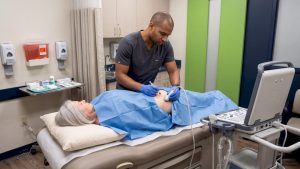
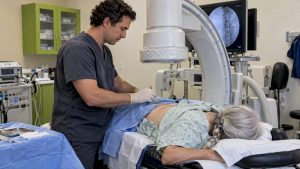
- Guided injection. Ultrasound guidance helps place the PRP in the tendon rather than in the surrounding tissue. Our overview of ultrasound-guided hip injections explains what to expect.
- Home instructions. You go home the same day with a rehabilitation plan.
One detail patients ask about is numbing. The Frontiers review notes that mixing local anesthetic directly into the PRP is often avoided because of largely preclinical concerns about platelet and tendon cell viability. That is separate from numbing the skin, which is routine.
Risks and side effects
PRP uses your own blood, which lowers the risk of rejection. The usual side effects are temporary pain at the injection site, swelling, bruising, redness and skin irritation, resolving within hours or days. Rare risks include infection, allergic reaction, nerve damage and tissue damage.
The broader review literature describes PRP as having a favorable safety profile compared with corticosteroid injections, provided pre-, peri- and post-injection protocols are followed. The Georgetown review reported minimal adverse events across the included studies. Safety data specific to hip tendons are more limited than for other sites, as the Frontiers review points out for PRP generally, so expect your physician to discuss your individual risk. For a broader balanced look, see our post on the pros and cons of PRP injections.
Recovery and rehabilitation
Tendons heal slowly. The Arthritis Foundation notes that tendon injuries can take three to six months to heal and recommends eccentric exercise with a physical therapist for gluteal tendinopathy. This matches the trial timelines: benefit often appears around 8 to 12 weeks, not in the first days.
A realistic outline looks like this:
- First days: soreness is common. Avoid heavy loading of the hip and ask your physician about pain relief choices, since some clinicians prefer to limit NSAIDs around the injection.
- Weeks 2 to 6: gentle, progressive gluteal activation begins under guidance. Our article on post-PRP rehabilitation explains the consensus behind starting strengthening at about two weeks.
- Weeks 6 to 12: loading increases, with attention to hip-stabilizer strength and walking mechanics.
- Months 3 to 6: return to running, long walks or sport, adjusted to symptoms.
Also reduce the habits that compress the tendon: crossing your legs, standing with your weight shifted onto one hip, and sleeping on the painful side without a pillow between your knees.
PRP, cortisone and exercise compared
| Approach | What the evidence suggests | Typical role |
|---|---|---|
| Exercise-based physical therapy | High-quality evidence for education and exercise as first-line care | First step for nearly everyone |
| Corticosteroid injection | Short-term benefit only; repeated injections may lead to tendon damage or rupture | Short-term relief, ideally alongside rehabilitation |
| Shockwave (ESWT) | Option for persistent cases | Adjunct or alternative |
| PRP | Promising medium to long-term results in several trials; heterogeneous evidence | Persistent or refractory cases, or when steroid is not suitable |
The corticosteroid question deserves a closer look. The 2024 review states that corticosteroids can reduce tendon cell viability, collagen synthesis and mechanical properties, which may work against the rehabilitation you are doing. The 2025 review suggests that if pain persists despite one corticosteroid injection, further injections are not recommended and further investigation is needed. Many patients arrive after two or three cortisone shots, and that history is useful information for choosing the next step.
Perspective
Many patients come to us after trying rest, anti-inflammatories, a cortisone injection and sometimes a course of therapy that was never progressed beyond basic stretches. They are rarely looking for a quick fix. They want to walk, sleep and train without the hip dictating the day.
Our approach to gluteal tendinopathy starts with confirming the diagnosis, because lateral hip pain can come from the tendon, the hip joint, the spine or the sacroiliac joint, and each calls for a different plan. When the tendon is the source and a patient has not improved with conservative care, we consider PRP as a way to support the tendon with the patient’s own biology, always paired with a structured strengthening program.
We set expectations plainly: PRP is not a guarantee, improvement is gradual, and the quality of the rehabilitation strongly shapes the result. Our physicians are Harvard fellowship-trained and board-certified, and we build non-surgical plans around the individual patient, using ultrasound guidance and evidence-based protocols.
If we think PRP is not the right choice for you, we will say so and discuss other options.
Felix
How Nortex can help
At Nortex Spine and Joint in North Dallas, we evaluate hip and buttock pain and build non-surgical plans that can include PRP therapy, supervised physical therapy and other regenerative options. If you want to understand whether your hip pain is tendon-related and whether PRP fits your situation, you can schedule a consultation through our regenerative medicine page. Coverage and costs depend on your plan and the treatment, so our team can walk through them with you at your visit.
FAQ
Is PRP better than cortisone shots for gluteal tendinopathy?
In the best-known randomized trial, PRP produced better medium- to long-term results than a single corticosteroid injection, while cortisone gives only short-term relief. Evidence across studies is mixed, so the choice depends on your history, imaging and goals. Either is best combined with strengthening exercises.
Does PRP work for hip bursitis?
Much of what is called bursitis is actually tendinopathy. Grade 1 on the imaging scale is bursitis with minimal tendon change, and the 2021 review found good evidence for PRP in grades 1 and 2. An exam and imaging can show which structure is causing your pain.
Can PRP injections treat hip arthritis too?
PRP is also studied for hip osteoarthritis, but that is a different condition from tendinopathy, with its own evidence. See our summary of PRP for hip osteoarthritis. Your physician can tell whether tendon, joint or both are contributing.
Is there a cure for gluteal tendinopathy?
Most people improve with progressive loading and time, but tendons heal slowly, over roughly three to six months. Symptoms can return if the hip is overloaded again, so ongoing strengthening matters. PRP aims to support tendon recovery rather than promise a permanent cure.
Sources
- Treatment of Gluteal Tendinopathy: A Systematic Review (2021)
- Diagnosis and Management of Common Tendinopathies (2025)
- Current and future advances in practice: tendinopathies of the hip (2024)
- Platelet-rich plasma in the management of musculoskeletal conditions, Frontiers in Medicine (2026)
- Improved Outcomes With Platelet-Rich Plasma for Treating Hip Conditions (2026)
- Orthobiologics for the Hip Region: A Narrative Review (2020)
- Evaluating Efficacy of Platelet-Rich Plasma versus Corticosteroids, Georgetown Medical Review (2025)
- The Greater Trochanteric Pain Syndrome: Clinical Review (2023)
- Management of Greater Trochanteric Pain Syndrome: A Systematic Review (2025)
- Mechanisms, Efficacy, and Clinical Applications of PRP (2024)
- 4 Causes of Hip Pain at Night, Arthritis Foundation