
Shockwave therapy carries a favorable safety profile overall, with most patients experiencing only short-lived, minor reactions rather than serious complications. Expect some pain during the pulses, along with redness, bruising, or swelling in the treated area for a few days afterward. Rare but real risks, including hematoma, tendon rupture, nerve irritation, infection, or a brief fainting spell, do happen, which is why disclosing anticoagulant use, implanted devices, pregnancy, and recent steroid injections to your provider matters more than almost anything else on your intake form.
TL;DR:
- Serious complications from shockwave therapy are extremely rare and mostly occur when high energy levels are used without proper patient screening.
- Absolute contraindications include pregnancy, active infections, or nearby tumors, while conditions like anticoagulation and implanted devices require cautious, individualized assessment.
- Common side effects such as skin redness, bruising, or mild swelling typically resolve within a few days, with most soreness fading within a week.
- Proper device targeting, energy titration, and clinician experience are crucial for minimizing risks during treatment sessions.
- Full recovery and symptom improvement usually require multiple sessions over weeks, with patient expectation management and personalized treatment plans key to success.
Table of Contents
- Common Side Effects and Minor Risks During and After Treatment
- Who Should Avoid Shockwave Therapy? Contraindications To Know
- What To Tell Your Clinician Before Your First Session
- How Clinicians Minimize Risk During a Session
- Recovery: Managing Side Effects After Your Session
- What the Research Says About Safety and Adverse Events
- How We Approach Safety and Patient Selection at Nortex Spine and Joint
- If You’re Considering Supervised Shockwave Therapy
- Sources
- FAQ
- The Real Question Isn’t Whether Shockwave Therapy Is Safe
Common Side Effects and Minor Risks During and After Treatment
You will likely feel something during the session. Shockwave therapy works by delivering mechanical pulses into damaged tissue to stimulate a healing response, and that process is inherently a little uncomfortable. Patients often describe it as a sharp, tapping sensation that intensifies as the clinician increases the energy setting. That discomfort is not a sign something has gone wrong. It is the treatment doing its job.
What you can expect afterward tends to follow a predictable pattern. Local skin reactions are the most reported issue, and they show up in the hours immediately following a session.
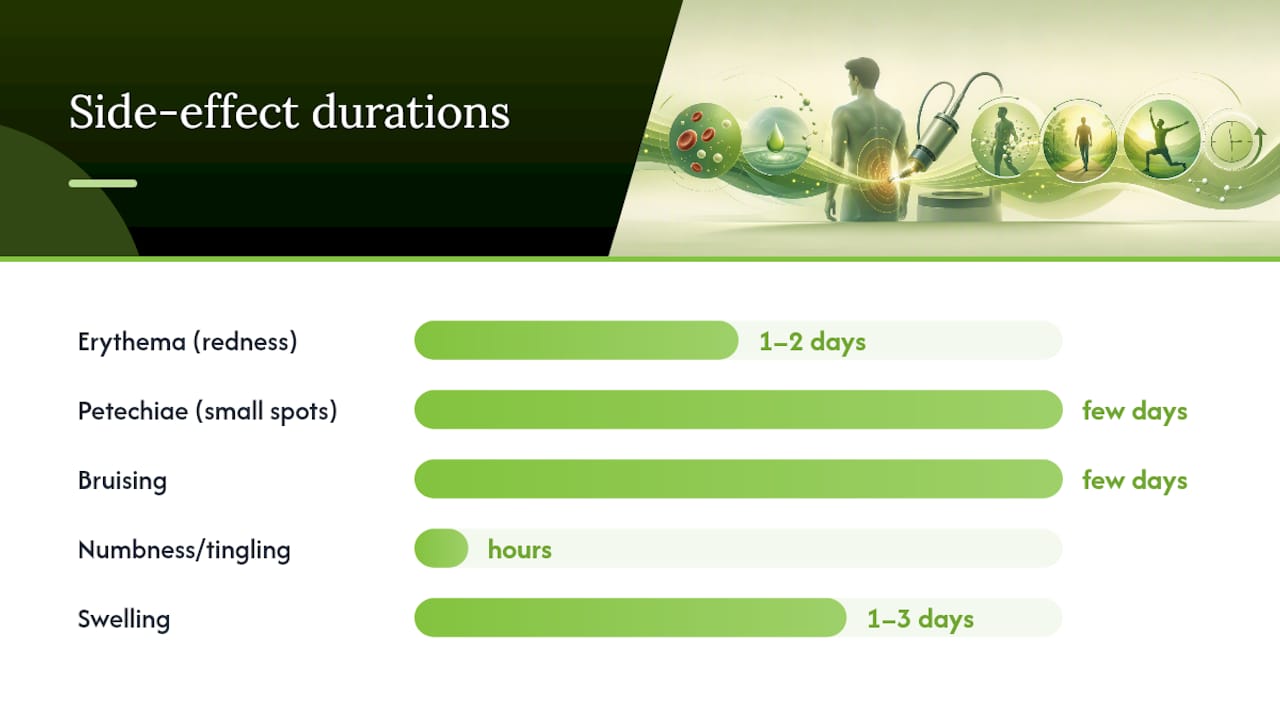
- Erythema (skin redness) at the application site, usually resolving within a day or two.
- Petechiae or small bruise-like spots from the pressure waves disrupting tiny capillaries.
- Bruising that can range from faint discoloration to a more visible mark, especially over bony areas like the heel or elbow.
- Transient numbness or tingling in the treated region, which typically fades within hours.
- Mild swelling that peaks the day after treatment and settles within a few days for most patients.
Clinical guidance from Mayo Clinic frames these reactions as expected, not alarming, noting that serious complications are rare when the procedure is administered by trained clinicians. We see the same pattern in our own patients: the people who tolerate treatment best are the ones who go in expecting a few uncomfortable days, not a pain-free experience.
Pro Tip: Ice the area for 15 to 20 minutes a few times a day for the first 48 hours, and reach for acetaminophen instead of ibuprofen or naproxen if you need something for discomfort. NSAIDs can blunt the inflammatory signaling that shockwave therapy is trying to trigger, so we generally ask patients to hold off on them for at least a few days post-treatment.
Most soreness resolves within a few days without intervention. Call your clinic if you notice worsening pain instead of gradual improvement, spreading redness that suggests infection, a lump that keeps growing rather than shrinking, or any numbness that persists beyond a day or two. Those are the signals that separate a normal recovery from something that needs a second look.
Who Should Avoid Shockwave Therapy? Contraindications To Know
Not everyone is a candidate, and a careful clinician screens for this before ever picking up the device. The International Society for Medical Shockwave Treatment (ISMST) publishes clear guidance on who should be excluded from treatment entirely and who needs extra caution.
Absolute contraindications mean the treatment should not proceed under any circumstances:
- Pregnancy, when the fetus is anywhere in or near the shockwave field.
- Active infection in the treatment area, since mechanical energy can spread bacteria into surrounding tissue.
- A malignant tumor located in or near the treatment field.
Relative contraindications require a more individualized risk conversation between you and your provider:
- Treatment near the lungs, brain, or spinal cord, where high-energy focused waves pose theoretical risk to sensitive structures.
- Open growth plates in children and adolescents (epiphyseal plates), since these areas are still developing.
- Significant coagulation disorders or heavy anticoagulant use, which raise bleeding and hematoma risk.
- Implanted cardiac devices, including pacemakers and defibrillators. Clinicians typically avoid direct field exposure over the device and monitor patients closely if treatment is near the chest.
Older adults and people with osteoporosis need a slightly different conversation. Bone density affects how energy is absorbed, and we adjust settings accordingly rather than using a one-size-fits-all protocol. The same goes for partial tendon tears: shockwave can help some partial tears heal, but a clinician needs imaging to confirm the tear isn’t at risk of progressing to a full rupture under mechanical stress.
What To Tell Your Clinician Before Your First Session
The consultation before your first treatment matters as much as the treatment itself. Many patients come in after trying multiple treatments elsewhere and assume the intake process is a formality. It isn’t. Here’s what a thorough pre-treatment conversation should cover:
- Disclose every medication and recent procedure. Blood thinners, regular NSAID use, and corticosteroid injections within the past few weeks all change your risk profile and may change the plan.
- Ask what imaging or testing is needed. Ultrasound or X-ray helps confirm the diagnosis and locate the target precisely; a bone density scan may be relevant for older patients or those with a history of fractures.
- Ask which device will be used and why. Focused and radial shockwave devices differ in how deep the energy penetrates and how it is delivered, which directly affects both effectiveness and risk at depth.
- Coordinate with your prescribing physician if you’re on anticoagulation therapy, so decisions about timing or bridging aren’t made in isolation.
- Expect a real consent conversation, not just a signature. Your clinician should walk through rare risks, alternative treatment options, and what happens if the first round of sessions doesn’t produce the improvement you’re hoping for.
Pro Tip: Bring a current medication list to your first visit, even supplements. Fish oil, turmeric, and other over-the-counter blood thinners rarely make it onto a verbal medication history, but they matter when your clinician is assessing bleeding risk.
How Clinicians Minimize Risk During a Session
The device choice sets the tone for the entire session. Focused shockwave devices concentrate energy at a specific depth, which makes them effective for deeper structures like the plantar fascia or a calcified rotator cuff tendon, but that concentration also means accurate targeting matters more, and some clinicians use ultrasound guidance to confirm placement before firing. Radial devices spread energy more superficially and are generally easier to tolerate without any numbing.
A well-run session follows a consistent rhythm:
- The clinician marks the treatment target based on your symptoms and any imaging findings.
- A coupling gel is applied to transmit the shockwaves efficiently into tissue.
- Energy is titrated gradually, starting low and increasing based on your tolerance rather than jumping straight to a preset maximum.
- Your response is monitored throughout. If pain becomes disproportionate or you show signs of a vasovagal response like lightheadedness or nausea, a competent clinician pauses or stops.
- Sessions are typically spaced a week or more apart, which gives tissue time to respond before the next round of mechanical stimulation.
ISMST guidance is explicit that there is no single fixed protocol for energy, pulse count, or frequency. That’s not a gap in the science. It reflects that clinician training and judgment are the real safeguard, more than any specific machine setting.
Recovery: Managing Side Effects After Your Session
Recovery is usually straightforward if you follow a few basic rules. Ice the area, rest it for the first day, and use acetaminophen rather than anti-inflammatory medication if you need pain relief, since NSAIDs can interfere with the healing cascade the treatment is designed to trigger.
Watch the skin over the next several days. Ordinary bruising fades on its own, but a hematoma that keeps expanding, feels increasingly firm, or is accompanied by warmth and fever needs a call to your clinic. The same goes for any sign of infection, redness that spreads rather than fades, or a fever that develops after treatment.
- Resume light activity within a day or two for most conditions; your clinician will tell you when to reintroduce loading exercises.
- Progress back into physical therapy or strength work gradually rather than jumping back into full training loads.
- Report any progressive numbness, weakness, or tendon pain that worsens instead of improving. Those are signs of nerve irritation or, rarely, a tendon injury that needs evaluation.
- Keep a simple log of symptoms after each session so your clinician can track patterns across your full treatment course.
Pro Tip: If you’re combining shockwave therapy with a rehab program for something like patellar tendon pain, don’t ramp your loading exercises back up on the same schedule you’d use without treatment. Give the tissue an extra day or two before resuming your usual training volume.
What the Research Says About Safety and Adverse Events
The evidence base for shockwave therapy is substantial, but it’s also uneven. A peer-reviewed review on best practices for extracorporeal shockwave therapy in musculoskeletal medicine documents pain at the application site, erythema, bruising, hematoma, and nerve irritation as the most commonly reported adverse effects, while noting that rare serious events, including tendon rupture, have appeared in case reports rather than large trials.
Some of those rupture cases share a common thread: older patients who had received corticosteroid injections shortly before high-energy focused treatment. Corticosteroids can weaken tendon structure temporarily, and layering mechanical shockwave energy on top of that window may raise risk, which is exactly why disclosing recent injections matters so much during intake.
A separate systematic review comparing radial and focused shockwave therapy for tendinopathy found no clear safety advantage of one modality over the other, though the certainty of that evidence is described as low given how much protocols vary from study to study. Energy levels, pulse counts, and session frequency differ across trials, which makes it difficult to state a precise numerical risk for any single adverse event. What the literature does support consistently: risk climbs when protocols push energy higher without matching patient selection to that intensity. That’s the core argument for individualized, clinician-guided dosing rather than a standardized template applied to everyone.
How We Approach Safety and Patient Selection at Nortex Spine and Joint
Every patient we evaluate for shockwave therapy goes through a structured screening process first: medical history, a medication review, and imaging when the diagnosis or tissue quality isn’t already clear. We build the treatment plan around what we find, not around a default protocol.
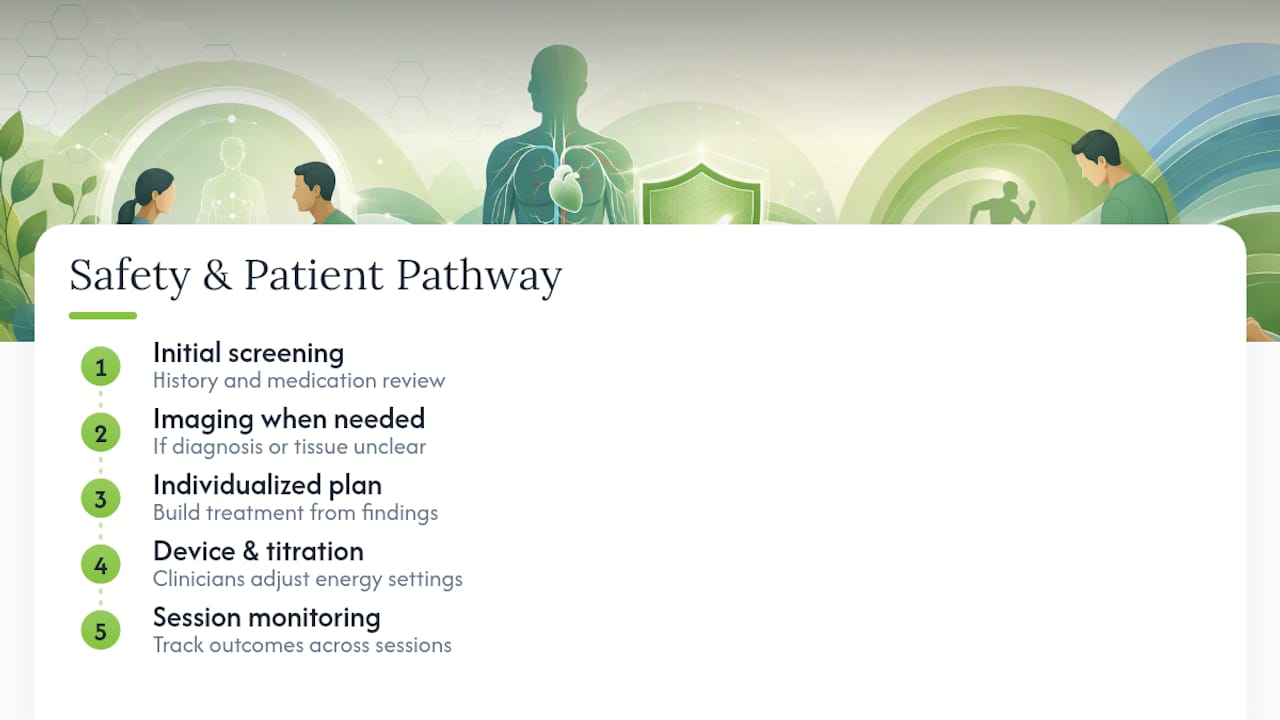
Device selection, energy titration, and monitoring during the session are handled by clinicians trained specifically in shockwave protocols, and outcomes are tracked across sessions rather than treating each visit in isolation. Session costs typically run in the $100 to $500 range per visit, depending on the area treated and how many sessions your condition requires. We don’t promise a fixed number of sessions upfront. Your response guides that.
If You’re Considering Supervised Shockwave Therapy
Shockwave therapy works best as one part of a broader, individualized pain management plan, not as an isolated fix. Shockwave treatment can be part of a broader pain management plan that includes options such as PRP, stem cell therapy, and structured rehabilitation programs, aimed at matching your treatment plan to specific tissue findings and risk factors rather than a generic protocol.
If you’re weighing whether shockwave therapy is right for your condition, the next step is a real evaluation, not a guess based on what worked for someone else. Our team reviews your imaging, medication history, and prior treatments to determine candidacy and the right device approach before anything is scheduled. You can review our regenerative medicine program or explore shockwave therapy specifics to see how it fits alongside other options like PRP therapy. Schedule an evaluation and we’ll walk through your case directly.
This article is general information, not a substitute for advice from a qualified doctor. Consult a qualified healthcare professional about your own circumstances before acting on anything here.
Sources
- ISMST Recommendations | ISMST
- Best practices for extracorporeal shockwave therapy in musculoskeletal medicine: Clinical application and training consideration – PMC
- Shockwave treatment: A new wave for musculoskeletal care – Mayo Clinic
FAQ
Can shockwave therapy go wrong?
Complications are uncommon, but they happen. Most problems are minor, like prolonged soreness or bruising, while rare serious events, including tendon rupture, nerve irritation, or infection, are typically tied to high energy levels, poor targeting, or undisclosed risk factors like recent steroid injections.
Who should avoid shockwave therapy?
People who are pregnant, have an active infection or malignant tumor in the treatment field, or have significant coagulation disorders should avoid it, according to ISMST guidance. Those with pacemakers, open growth plates, or recent corticosteroid injections need an individualized risk discussion before proceeding.
How safe is shockwave therapy?
It’s generally safe when performed by a trained clinician, with serious complications considered rare. Most patients experience only temporary soreness, redness, or bruising rather than lasting harm.
How long does shockwave therapy recovery last?
Most local side effects, including soreness, bruising, and swelling, resolve within three to five days. Full symptom improvement from the underlying condition often takes several weeks and multiple sessions, since the treatment relies on a gradual biological healing response rather than an immediate fix.
The Real Question Isn’t Whether Shockwave Therapy Is Safe
The safety debate around shockwave therapy gets framed wrong more often than it should. People search for a simple yes or no answer, and the honest answer is neither. The technology itself has a strong safety record across decades of clinical use. What actually determines your individual risk is far less discussed: who is holding the device, how carefully they screened you beforehand, and whether they’re willing to adjust the plan when your body responds differently than expected.
I’d push back on the framing that treats shockwave therapy as a commodity procedure you can shop for on price alone. The energy settings, the device type, and the clinician’s willingness to titrate based on your tolerance rather than a fixed script are the variables that separate a routine recovery from a rare complication. A clinic that rushes you through intake without reviewing your medication history or recent injections is taking on risk it hasn’t bothered to measure.
The other overlooked piece is patient expectation management. Shockwave therapy isn’t a one-and-done fix, and anyone promising instant relief after a single session is oversimplifying how tissue actually heals. Realistic timelines, honest conversations about what the evidence does and doesn’t show, and a willingness to adjust the plan when something isn’t working are what separate good care from a sales pitch dressed up as medicine.
— Felix