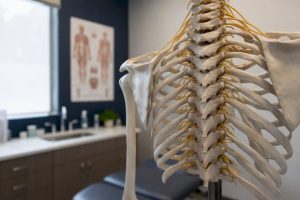

Signs of spine problems are specific clinical indicators that signal potential spinal pathology requiring medical evaluation, ranging from persistent back pain to neurological deficits that demand urgent attention. 80% of adults experience back pain at some point in their lives, yet most people struggle to distinguish routine muscle soreness from symptoms that point to serious spinal conditions. Recognizing the difference matters because delayed care for certain indicators, particularly neurological ones, can result in permanent nerve damage or loss of function. The American College of Physicians and clinical guidelines from NICE both define specific “red flag” symptoms that require prompt evaluation rather than a wait-and-see approach. Nortexspineandjoint sees patients regularly who have been managing symptoms for months before realizing the pattern they were experiencing was not ordinary back pain.
1. Signs of spine problems: persistent or worsening back pain
Persistent back or neck pain lasting beyond four to six weeks without improvement is one of the most reliable indicators of an underlying spinal condition. Most uncomplicated muscle strains resolve within that window with rest and basic care. When pain continues, intensifies, or returns repeatedly, the spine itself is likely involved.
The key distinction is between mechanical back pain and pain that suggests a more serious cause. Mechanical pain changes with position and activity. It typically improves when you lie down or shift your posture. Pain that stays constant regardless of what you do, or that wakes you from sleep, follows a different pattern entirely.
- Pain that is constant and does not ease with rest
- Pain that progressively worsens over days or weeks
- Pain that began after a specific injury but has not followed a normal recovery curve
- Neck or mid-back pain that is new and unexplained
Pro Tip: Keep a simple pain log for one week. Note when pain is worst, what makes it better or worse, and whether it wakes you at night. This pattern tells a clinician far more than a single office visit can.
2. Radiating pain and sciatica
Radiating pain that travels from the spine into the arms or legs signals nerve involvement, not just muscle tension. Sciatica is the most recognized form, producing sharp, burning, or electric pain that runs from the lower back through the buttock and down one leg. Cervical radiculopathy produces a similar pattern in the neck and arm.
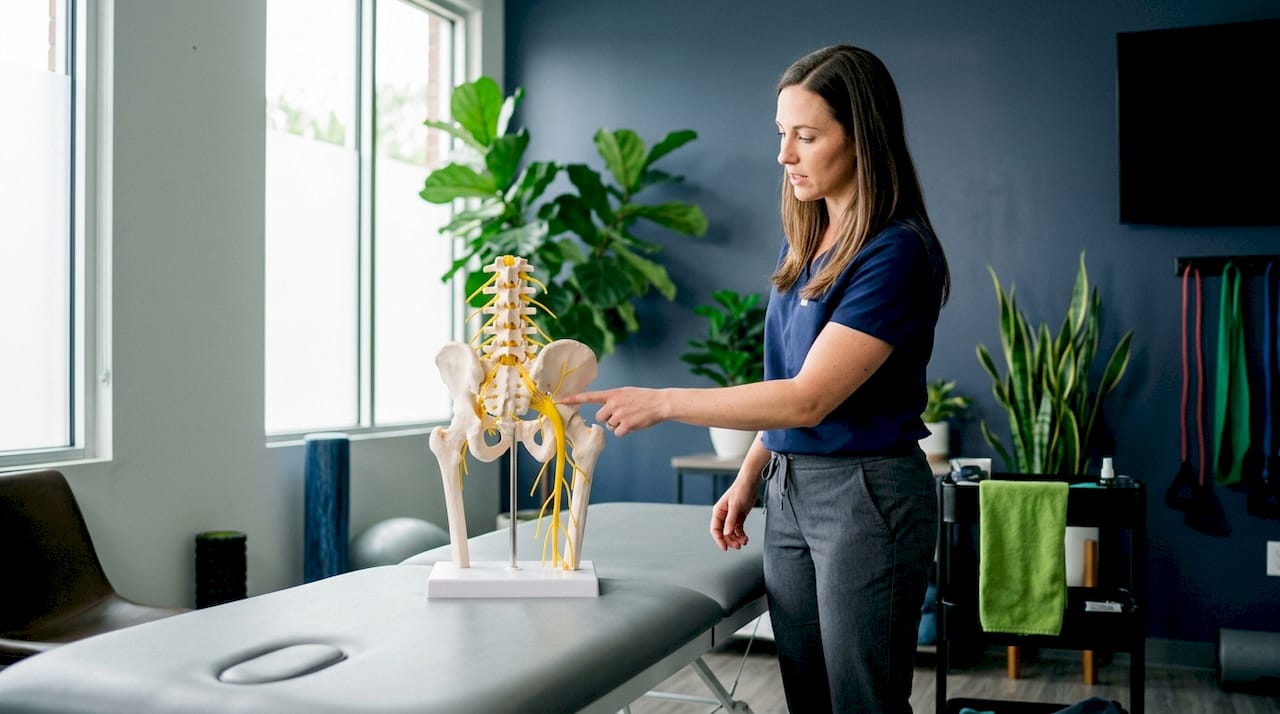
Nerve pain has a distinct quality. Patients often describe it as shooting, stabbing, or like a current running down the limb. That sensation differs clearly from the dull ache of a pulled muscle. Radiating pain with neurological deficits signals worsening nerve compression that requires prompt evaluation to prevent irreversible damage.
Assuming sciatica will resolve on its own is a common and sometimes costly mistake. Some cases do improve with conservative care. Others indicate disc herniation or spinal stenosis that needs clinical management before the nerve compression becomes permanent.
3. Tingling, numbness, or weakness in the limbs
Tingling or numbness in the hands, fingers, feet, or toes is a direct indicator of nerve compression along the spine. These sensations follow dermatomal patterns, meaning they correspond to specific spinal levels. A clinician can often identify which disc or vertebra is involved based on where exactly the numbness appears.
Weakness is a more serious finding. When you notice that gripping objects, climbing stairs, or lifting your foot feels harder than it used to, that points to motor nerve involvement. Neurological deficits progressing over time require prompt specialist assessment to prevent permanent nerve damage. Progressive weakness is not something to monitor at home for weeks.
Foot drop, the inability to lift the front of the foot properly when walking, is a specific and urgent sign. It indicates significant compression of the nerve roots controlling that movement and warrants same-week evaluation at minimum.
4. Neurological red flags: Cauda Equina Syndrome
Cauda Equina Syndrome is a medical emergency. It occurs when the bundle of nerve roots at the base of the spinal cord becomes severely compressed, disrupting function to the bladder, bowel, and lower limbs. Emergency evaluation is required for its hallmark signs, which include saddle anesthesia, bilateral leg symptoms, and loss of bladder or bowel control.
Saddle anesthesia refers to numbness in the inner thighs, perineum, and buttocks, the areas that would contact a saddle. This symptom, combined with any change in bladder or bowel function, means you need an emergency room, not a scheduled appointment.
Delaying treatment beyond 48 hours significantly increases the risk of permanent neurological deficit. Surgical decompression within that window produces the best outcomes. Many patients who present late do so because they waited to see if symptoms would pass. They rarely do.
Cauda Equina Syndrome is the one spinal condition where hours matter as much as the diagnosis itself. If you develop saddle numbness or sudden loss of bladder or bowel control alongside back pain, go to the emergency room immediately. This is not a condition to call your doctor about in the morning.
5. Pain that worsens at night or does not respond to rest
Night pain that intensifies when you lie down, rather than easing, is a clinically significant warning sign. Pain from tumors or infections often intensifies at night or remains constant regardless of position, unlike mechanical pain. This pattern helps clinicians differentiate serious pathology from benign musculoskeletal strain.
Mechanical back pain almost always has a positional component. You find a position that helps. Inflammatory or infectious pain does not follow that rule. If lying flat makes your back worse, or if you wake repeatedly from pain that forces you to get up and move, that symptom pattern warrants evaluation.
This distinction matters because standard physical therapy can be detrimental if serious red flags are present, delaying diagnosis and worsening outcomes. Physical therapy should follow medical evaluation and imaging in serious cases, not precede it.
6. Fever combined with back pain
Fever paired with back pain is a high-priority red flag for spinal infection, including discitis or spinal epidural abscess. 67% of spinal infection cases present with fever, compared to only 5% of mechanical back pain cases. That gap makes fever a reliable differentiating sign.
Spinal infections are uncommon but serious. They occur more often in patients who have had recent spinal procedures, intravenous drug use, or compromised immune systems. If you have back pain and a temperature above 100.4°F that has no obvious cause, a spinal infection needs to be ruled out.
Delayed diagnosis of spinal infection can lead to abscess formation, vertebral collapse, or sepsis. This is not a combination of symptoms to treat with over-the-counter medication and rest.
7. History of cancer, unexplained weight loss, or trauma
New back pain in a patient with a known history of cancer requires urgent evaluation to rule out spinal metastasis. Cancer most commonly spreads to the spine from the breast, lung, prostate, kidney, and thyroid. The pain is often constant, progressive, and not relieved by rest.
Unexplained weight loss alongside back pain raises similar concern. Losing weight without trying, combined with persistent back pain, points toward a systemic cause rather than a mechanical one. This combination should prompt imaging and blood work, not watchful waiting.
Trauma is equally important. A fall, motor vehicle accident, or any significant impact followed by new back pain, especially in a patient over 50 or with known osteoporosis, requires imaging to rule out fracture. Vertebral compression fractures can occur with relatively minor trauma in patients with reduced bone density.
8. Reduced mobility, stiffness, and visible deformity
Significant loss of spinal range of motion, beyond what you would expect from normal aging or a recent strain, points toward structural spine involvement. Stiffness that is worst in the morning and lasts more than 30 minutes suggests inflammatory arthritis, such as ankylosing spondylitis, rather than mechanical pain.
Visible changes in spinal alignment also carry diagnostic weight. Scoliosis, an abnormal lateral curve, and kyphosis, an exaggerated forward rounding of the upper back, are both detectable on physical examination. New or worsening deformity in an adult warrants investigation.
Muscle spasm along the spine, tenderness on direct palpation of the vertebrae rather than the surrounding muscles, and an antalgic lean (where you stand tilted to one side to offload a nerve) are all physical exam findings that support a spinal diagnosis. A clinician will also test reflexes and perform the straight leg raise test, which reproduces sciatic pain when positive, to assess nerve root involvement.
Pro Tip: If your stiffness is worst first thing in the morning and improves with movement rather than rest, mention that specifically to your doctor. That pattern points toward inflammatory spine disease, which requires a different treatment path than mechanical back pain.
9. How to distinguish spine problems from other causes of back pain
Not all back pain originates in the spine. Kidney infections and kidney stones produce flank pain that can radiate to the lower back, but it typically sits higher and to one side, and comes with urinary symptoms like burning, frequency, or blood in the urine. Telling the difference between back and kidney pain requires attention to location, associated symptoms, and whether the pain responds to movement.
Inflammatory conditions like rheumatoid arthritis or psoriatic arthritis can also produce back pain, but they usually affect multiple joints and come with systemic symptoms like fatigue, skin changes, or joint swelling elsewhere in the body. Recognizing these patterns helps avoid misdiagnosis and misdirected treatment.
The key differentiators are:
- Spine pain is usually midline or paravertebral and changes with spinal movement
- Kidney pain sits in the flank, above the waist, and does not change with spinal flexion or extension
- Inflammatory arthritis pain improves with movement and worsens with prolonged rest
- Muscular strain pain is localized, tender to touch, and follows a predictable recovery curve
A thorough clinical history and physical examination remain the most reliable tools for sorting these causes. Imaging findings, as Harvard Health notes, often do not correlate with symptoms and must be interpreted alongside clinical examination to avoid over-treatment.
10. When imaging is and is not appropriate
Routine imaging is unnecessary for uncomplicated back pain that resolves within 4–6 weeks, unless red flags are present. Most acute nonspecific low back pain improves within that window without any imaging at all. Ordering an MRI or X-ray too early often leads to findings that are incidental, age-related, and unrelated to the current pain, which can lead to unnecessary procedures.
MRI is the gold standard when serious pathology is suspected. It provides the clearest view of disc herniation, nerve compression, spinal cord involvement, infection, and tumor. X-ray is appropriate for suspected fracture or significant deformity. CT scanning is used when MRI is not available or when bony detail is the priority.
The clinical decision to image should be driven by red flags, neurological findings, or failure to improve after six weeks of appropriate conservative care. Patients who understand this framework are less likely to push for imaging that will not change their management, and more likely to recognize when imaging is genuinely warranted.
Key Takeaways
Recognizing the specific pattern of your symptoms, particularly whether they include neurological signs or red flags, is the most reliable way to determine whether your back pain requires urgent evaluation or conservative management.
| Point | Details |
|---|---|
| Red flags require urgent care | Symptoms like fever, night pain, saddle numbness, or bladder changes need same-day or emergency evaluation. |
| Neurological signs are time-sensitive | Tingling, weakness, or foot drop that progresses over days signals nerve compression requiring prompt specialist review. |
| Cauda Equina is an emergency | Loss of bladder or bowel control with back pain warrants an emergency room visit within hours, not days. |
| Imaging follows red flags | MRI is appropriate when red flags or neurological deficits are present; routine imaging for uncomplicated pain adds little value. |
| Pain pattern guides diagnosis | Constant night pain suggests infection or tumor; morning stiffness improving with movement suggests inflammatory arthritis. |
What I’ve learned from patients who waited too long
One pattern I see consistently at Nortexspineandjoint is patients who arrive after months of managing symptoms that, in retrospect, were telling a clear story. A patient will describe waking at night from back pain for six weeks, or noticing that one foot had been dragging slightly when they walked. They assumed it would pass. Sometimes it does. But when it does not, that delay has a cost.
The most important thing I can tell you is this: the absence of severe pain does not mean the absence of a serious problem. Cauda Equina Syndrome, spinal infection, and early spinal metastasis can all present with pain levels that feel manageable. What distinguishes them is the pattern, not the intensity.
I also want to push back on the assumption that imaging is always the answer. Many patients come in expecting an MRI to explain everything. Imaging findings often do not correlate with symptoms, and a disc bulge on MRI may be completely unrelated to your current pain. The clinical examination, your symptom history, and how your pain behaves over time give us more usable information than a scan taken in isolation.
My practical advice: track your symptoms honestly, note what makes them better or worse, and do not dismiss neurological symptoms as minor. If you have any of the red flags described here, do not wait for your next scheduled appointment. Call the same day.
— Felix
Nortexspineandjoint: non-surgical care for persistent spine pain
When your symptoms point to a genuine spine condition, getting the right evaluation is the first step. Nortexspineandjoint specializes in evidence-based, non-surgical treatment for chronic spine and joint pain in North Dallas. For patients whose pain has a structural or inflammatory component, PRP therapy for back pain offers a targeted, regenerative option that addresses the underlying tissue rather than masking symptoms. The team at Nortexspineandjoint builds individualized treatment plans based on clinical findings, not a one-size approach. If you have been managing back pain without a clear diagnosis or lasting relief, a specialist consultation is a reasonable and productive next step.
FAQ
What are the most serious signs of spine problems?
Loss of bladder or bowel control, saddle anesthesia, bilateral leg weakness, fever with back pain, and pain associated with a cancer history are the most serious indicators. These require emergency or same-day evaluation, not watchful waiting.
When should back pain send you to the emergency room?
Go to the emergency room immediately if you develop saddle numbness, sudden loss of bladder or bowel control, or severe bilateral leg weakness alongside back pain. These are signs of Cauda Equina Syndrome, which requires surgical decompression within 48 hours for the best outcome.
Can spine problems cause symptoms in the legs or feet?
Yes. Nerve compression in the lumbar spine commonly produces pain, tingling, numbness, or weakness that travels into the legs and feet. Foot drop, the inability to lift the front of the foot normally, is a specific sign of significant nerve root compression.
How do I know if my back pain needs an MRI?
MRI is appropriate when red flags are present, when neurological symptoms accompany the pain, or when pain has not improved after six weeks of conservative care. Routine imaging for uncomplicated back pain without these features rarely changes clinical management.
Is back pain that wakes me at night a warning sign?
Yes. Pain that intensifies at night or does not ease with any position change is a recognized warning sign for spinal infection, tumor, or inflammatory pathology. Mechanical back pain almost always has a position that provides some relief.
Recommended
- What Causes Spine Pain: A Clear Guide for Adults
- Signs of Joint Inflammation: 8 Warning Signs to Know
- How to Tell If Your Lower Back Pain Is Serious: Warning Signs & Next Steps – Nortex | Pain Management | Allen, Garland, McKinney & Plano Texas
- When to See a Back Doctor: Recognizing the Signs – Nortex | Pain Management | Allen, Garland, McKinney & Plano Texas