
You are likely a candidate for regenerative therapy if you have persistent musculoskeletal pain or a non-healing injury that has not responded adequately to conservative care, your daily function is meaningfully limited, you want to avoid or delay surgery, and you are in generally good health with a realistic commitment to rehabilitation. These are the core signs you need regenerative therapy, and recognizing them early can help you have a more productive conversation with your clinician.
Quick-scan checklist:
- Pain in a joint, tendon, or spinal structure lasting more than three months despite physical therapy, anti-inflammatory medications, or steroid injections
- A soft-tissue injury (partial tendon tear, ligament sprain) that has not healed after an adequate recovery period
- Measurable loss of mobility or strength that limits work, exercise, or daily activities
- A confirmed diagnosis (osteoarthritis, tendinopathy, disc-related pain) where surgery is not yet indicated or is something you want to defer
- Generally stable health with no active infection, uncontrolled bleeding disorder, or active malignancy
- Willingness to follow a structured rehabilitation plan after treatment
Before your evaluation: gather prior imaging (X-ray, MRI, or ultrasound), a list of treatments you have already tried, and any operative or injection records. That preparation alone makes your first visit significantly more efficient.
Key Takeaways
The clearest signs you need regenerative therapy are persistent musculoskeletal pain after conservative care, a non-healing soft-tissue injury, meaningful functional limitation, and a desire to avoid surgery, combined with generally stable health and a commitment to rehabilitation.
| Point | Details |
|---|---|
| Core candidate profile | Persistent pain after PT, NSAIDs, and steroid injections, with functional limits and no surgical indication yet. |
| Strongest evidence conditions | Chronic tendinopathy and early-to-moderate knee OA have the most consistent clinical support for PRP. |
| Insurance reality | Most outpatient regenerative orthopedic injections are not covered; Medicare’s 2025 Part B deductible was $257 but applies only to covered services. |
| Key exclusions | Active infection, active malignancy, uncontrolled coagulopathy, and bone-on-bone joint disease are contraindications. |
| Nortexspineandjoint next step | Book a diagnostic evaluation at Nortexspineandjoint in North Dallas to confirm your diagnosis and discuss whether a regenerative approach fits your specific condition. |
Table of Contents
- Signs you need regenerative therapy: what each one means clinically
- Which conditions are most commonly treated with regenerative therapy?
- What realistic outcomes and timelines look like
- What regenerative therapy costs and what insurance typically covers
- How clinicians evaluate whether you are a candidate
- When regenerative therapy is not appropriate
- How to prepare if several signs apply to you
- How Nortexspineandjoint clinicians assess candidacy
- A note on realistic expectations
- Nortexspineandjoint offers a structured path from evaluation to treatment
- Sources
- FAQ
Signs you need regenerative therapy: what each one means clinically
Each item on the checklist above maps to a specific clinical pattern. Understanding the reasoning behind each sign helps you self-assess more accurately before you sit down with a clinician.
Persistent joint, tendon, or spine pain. Most patients who come in for a regenerative medicine evaluation describe pain that has been present for at least three months, often much longer. The clinical threshold matters because acute inflammation can resolve on its own; chronic, low-grade tissue damage is a different biological problem. Pain that fluctuates with activity but improves with rest is a particularly meaningful pattern. It suggests the tissue is still responsive to load, which tends to predict a better response to biologic therapies than constant, progressive night pain, which can signal a more systemic or structural problem requiring different workup.
A non-healing soft-tissue injury. Partial tendon tears and ligament injuries that stall in recovery are among the most common reasons patients explore regenerative options. The key distinction is between a partial tear, where residual tissue can potentially be stimulated to heal, and a complete tear, where surgical repair is usually the more appropriate path. Your MRI or diagnostic ultrasound findings will clarify this.
Failed conservative care. “Failed” does not mean you tried one round of physical therapy. Clinically, it means you have completed an adequate course of physical therapy with a qualified therapist, tried anti-inflammatory medications at appropriate doses, and possibly received one or more corticosteroid injections without lasting benefit. Many patients arrive after years of cycling through these options. That history is not a failure on your part; it is actually useful clinical information that helps narrow the treatment decision.
Functional limitation affecting daily life. Pain scores alone are less informative than function. If you cannot climb stairs, return to sport, perform your job, or sleep through the night because of a musculoskeletal condition, that functional gap is a clearer indicator of clinical need than a numeric pain rating.
Desire to avoid or delay surgery. Regenerative therapy is often used as a bridge between conservative care and surgery, particularly for active patients who want to preserve function while deferring an invasive procedure. This is a legitimate and clinically recognized rationale, not simply a preference. The goal is to reduce pain and improve function enough to maintain quality of life, not to guarantee that surgery will never be needed.
Realistic health status. Age alone is not a disqualifier, but metabolic health, smoking status, and the severity of tissue damage all influence outcomes. Younger patients with earlier-stage disease and no significant comorbidities tend to respond more consistently, though well-selected older patients can also benefit.
Pro Tip: Pain that worsens predictably with specific activities and eases with rest is a stronger positive predictor for regenerative therapy response than diffuse, constant pain. If you can point to a specific movement or load that reliably provokes your symptoms, that specificity is clinically useful.
Which conditions are most commonly treated with regenerative therapy?
Regenerative medicine, broadly defined as the use of biologic agents to stimulate tissue repair, covers a range of conditions with varying levels of evidence. The table below maps common diagnoses to typical candidate features and a brief evidence note.
| Condition | Typical candidate features | Evidence snapshot |
|---|---|---|
| Knee osteoarthritis | Mild to moderate OA (Kellgren-Lawrence grade 1–3), prior PT and NSAIDs tried | Viscosupplementation is FDA-cleared for knee OA; PRP shows supportive evidence in earlier-stage disease |
| Hip osteoarthritis | Confirmed OA on imaging, not bone-on-bone, failed conservative care | PRP used off-label; emerging clinical support for well-selected patients |
| Chronic tendinopathy (Achilles, patellar, lateral elbow) | Chronic pain >3 months, failed eccentric loading and PT | PRP has stronger, more consistent evidence here than in OA; preparation variability affects outcomes |
| Partial rotator cuff tears | Partial thickness tear on MRI/ultrasound, no full-thickness rupture, functional deficit | Off-label PRP use; evidence supports consideration in non-surgical candidates |
| Lumbar spine conditions | Discogenic or facet-related pain, failed conservative care, no surgical indication | ASIPP 2025 consensus supports PRP and BMAC in select patients; intradiscal/epidural PRP graded Level III (Fair) |
| Lateral epicondylosis | Chronic lateral elbow pain, failed PT and bracing | Among the better-studied tendinopathy indications for PRP |
A multispecialty consensus guideline found that, in well-selected patients with certain chronic pain indications, injectable biologics may provide superior analgesia and function compared with conventional management, while calling for higher-quality trials and standardization. That framing, cautious optimism for the right patient, is how we approach every case at Nortexspineandjoint.
For a broader overview of local regenerative injection options and what distinguishes them, that patient-focused primer covers the basics well.
What realistic outcomes and timelines look like
The goal of regenerative therapy is functional improvement, not a cure. Reducing pain enough to participate in rehabilitation, delaying or avoiding surgery, and reducing dependence on anti-inflammatory medications are the primary targets. Understanding the typical timeline helps you plan accordingly.
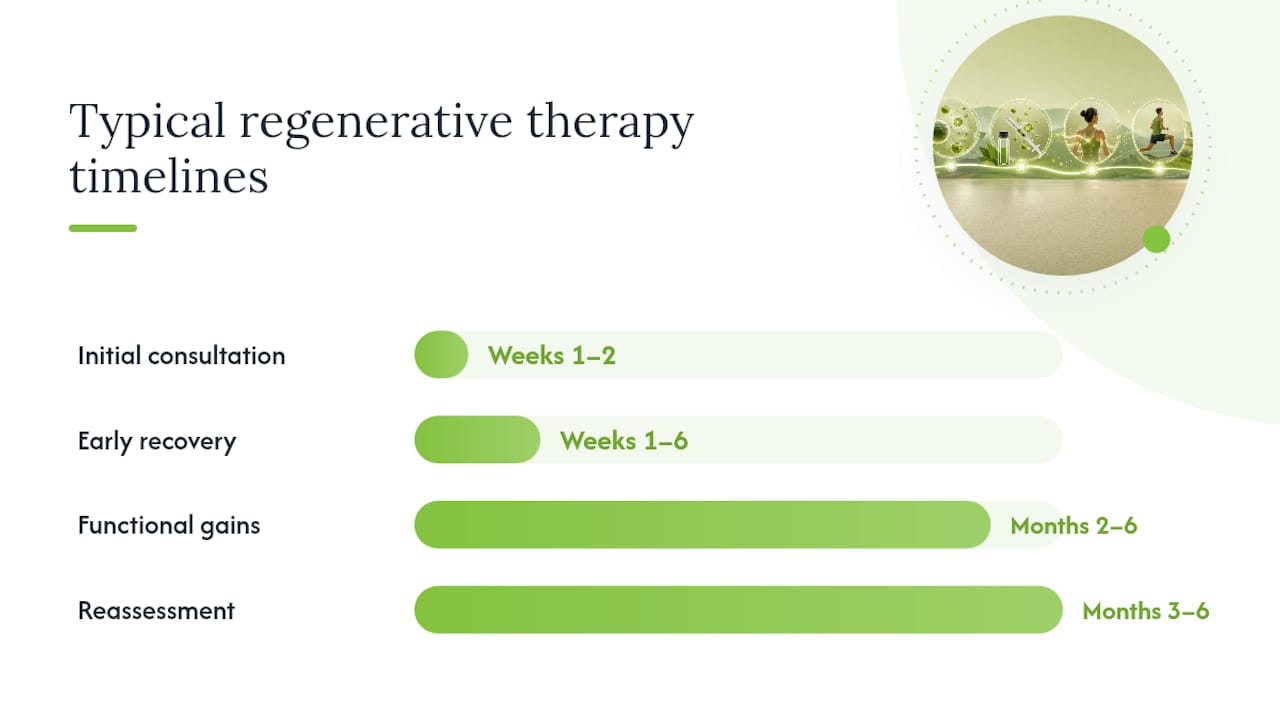
- Initial consultation and imaging review (Week 1–2). Your clinician reviews your history, examines the affected area, and confirms or updates your diagnosis with imaging. Diagnostic ultrasound is increasingly used for dynamic soft-tissue assessment and to guide injection accuracy.
- Procedure day. Most regenerative injections are outpatient and take under an hour. PRP is prepared from your own blood draw; bone marrow aspirate concentrate (BMAC) involves a marrow harvest, typically from the iliac crest. You go home the same day.
- Early recovery, weeks 1–6. Expect a temporary increase in soreness for several days after injection. Activity is modified but not eliminated. Physical therapy typically begins within one to two weeks.
- Functional gains, months 2–6. Most patients who respond notice meaningful improvement in this window. Pain reduction and improved range of motion tend to precede strength recovery.
- Reassessment at 3–6 months. A follow-up evaluation determines whether a second treatment is warranted. Some conditions, particularly tendinopathy, respond well to a series of two to three injections spaced several weeks apart.
Factors that reduce the likelihood of a strong response include active smoking, poorly controlled diabetes, obesity, and advanced tissue destruction (bone-on-bone arthritis). Age is a modifier, not a hard cutoff. You can read more about how regenerative therapy helps relieve chronic pain and what the evidence says about long-term function.
What regenerative therapy costs and what insurance typically covers
Most outpatient regenerative orthopedic injections are classified as investigational or experimental by major commercial payers and are not routinely covered. Medicare covers only specific stem cell transplants (hematopoietic, for conditions such as leukemia or lymphoma) for defined indications; the 2025 Medicare Part B deductible was $257, but that deductible applies to covered services, not to procedures Medicare excludes. For most PRP and cell-based orthopedic injections, you are paying out of pocket regardless of your plan.
This classification is worth understanding clearly. Insurers labeling a therapy “experimental” is a reimbursement construct, not always a definitive clinical judgment about individual appropriateness. The GAO has identified standardization, complex regulation, and manufacturing scale-up as systemic challenges that contribute to why the evidence base for many regenerative products remains uneven, which in turn supports payer caution.
Practical questions to ask any clinic before you book:
- What is the itemized cost of the procedure, including the consultation, imaging, and any follow-up visits?
- Do you offer bundled pricing or financing options?
- Can my diagnostic evaluation visit be billed to my insurance even if the procedure itself is cash-pay?
- What is your cancellation or refund policy if I cannot proceed?
Viscosupplementation (hyaluronic acid injection) for knee OA holds FDA clearance and is covered by some payers, making it worth asking about separately if knee OA is your primary diagnosis.
How clinicians evaluate whether you are a candidate
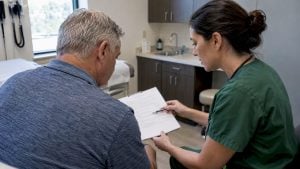
A thorough candidacy evaluation rests on three pillars: a focused clinical history, a targeted physical examination (often including diagnostic ultrasound), and a review of your imaging.
What to bring to your appointment:
- All prior imaging studies (X-ray, MRI, ultrasound) with reports
- Operative reports if you have had prior surgery on the affected area
- A complete medication list, including supplements and blood thinners
- Records of prior injections (corticosteroid, hyaluronic acid) with approximate dates and your response
- A brief written summary of your functional limitations and treatment history
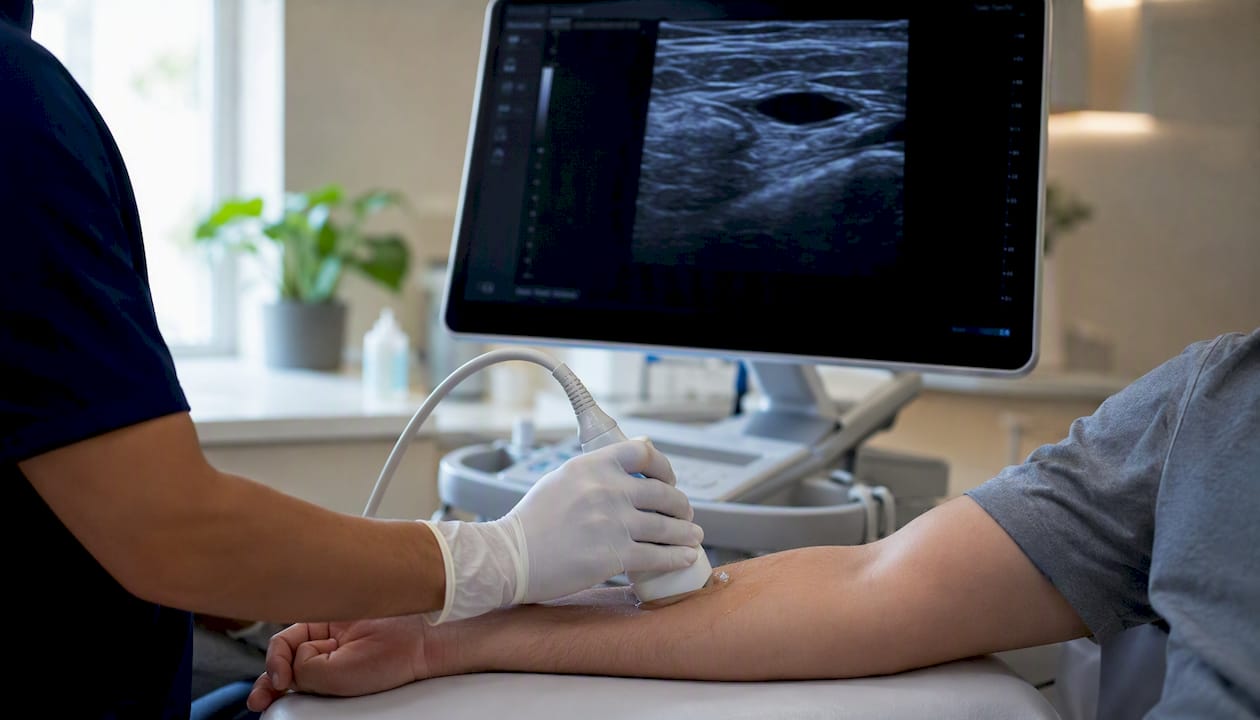
Diagnostic ultrasound has become a standard tool in regenerative medicine evaluations because it allows real-time, dynamic assessment of tendons, ligaments, and bursae that static MRI cannot capture. It also enables ultrasound-guided injection delivery, which improves accuracy and reduces the risk of misplacement.
Your clinician will use this information to assess tissue status, confirm the diagnosis, identify contraindications, and discuss whether the evidence supports a regenerative approach for your specific condition.
When regenerative therapy is not appropriate
Some situations make regenerative injections unsafe or unlikely to help. Knowing these exclusions protects you from pursuing a treatment that is not right for your situation.
Absolute contraindications:
- Active infection at or near the injection site, or a systemic infection. Introducing a biologic agent into an infected area carries serious risk of spreading infection.
- Active cancer or hematologic malignancy. Growth factors in PRP and other biologics could theoretically stimulate tumor proliferation; oncology clearance is required before any regenerative procedure.
- Uncontrolled coagulopathy or bleeding disorder. Injection into vascular tissue without adequate clotting function poses hemorrhage risk.
- End-stage, bone-on-bone joint disease. When cartilage is entirely gone and bone is grinding on bone, there is no tissue substrate for regeneration. Joint replacement is the indicated treatment.
Relative cautions include uncontrolled diabetes, active autoimmune flares, recent corticosteroid use (which can suppress the biologic response), and thrombocytopenia.
International academic bodies have also urged caution about unregulated clinics offering unproven regenerative interventions without adequate evidence or ethical oversight. Choosing a clinic that follows evidence-based protocols and discloses the regulatory status of its treatments is not optional; it is a patient safety issue.
How to prepare if several signs apply to you
Come to your first consultation ready to confirm your diagnosis before discussing treatment options. A good regenerative medicine evaluation starts with diagnostic clarity, not a predetermined injection plan.
Pre-visit checklist:
- Collect all imaging from the past two to three years and request copies of the radiology reports.
- List every treatment you have tried, including duration, provider, and your response.
- Note any medications that affect bleeding (aspirin, NSAIDs, warfarin, newer anticoagulants) and ask your prescribing physician whether a brief hold is appropriate before a procedure.
- Confirm whether updated imaging is needed before your visit.
Questions to ask the clinic:
- How many patients with my specific diagnosis have you treated, and what outcomes do you typically see?
- What type of PRP or biologic will you use, and how is it prepared? (Leukocyte-rich vs. leukocyte-poor formulations have different indications.)
- What are the known risks and complications for this procedure?
- What rehabilitation protocol do you recommend after the injection?
- How many treatments should I expect, and at what intervals?
- What is the total out-of-pocket cost, including follow-up visits?
- What is your policy if I need to reschedule or if the treatment does not produce the expected result?
For a deeper look at what to ask a regenerative clinic and how different injectate options compare, that resource walks through the decision in practical terms.
How Nortexspineandjoint clinicians assess candidacy
At Nortexspineandjoint, the candidacy evaluation follows a structured clinical framework rather than a one-size-fits-all protocol. The assessment covers five areas:
- Tissue status on imaging. We confirm the degree of structural damage and whether residual tissue is present to respond to a biologic stimulus. A partial tear with intact surrounding tissue is a very different clinical picture from a complete rupture or end-stage joint.
- Prior treatment history. We review what you have already tried and why it did or did not work. This informs both the diagnosis and the likelihood that a regenerative approach will add meaningful benefit.
- Comorbidities. Metabolic conditions, smoking, and immune status all influence healing biology. We discuss these openly so you can make an informed decision.
- Functional goals. Are you trying to return to competitive sport, maintain the ability to walk without pain, or avoid surgery for another two to three years? The goal shapes the treatment plan.
- Commitment to rehabilitation. A regenerative injection without structured rehabilitation is a missed opportunity. We build the rehab plan before the procedure, not after.
On PRP formulation: leukocyte-poor PRP tends to perform better in osteoarthritis, where excess inflammation is counterproductive, while leukocyte-rich formulations may be preferable for some tendinopathies where a controlled inflammatory signal supports tissue remodeling. This distinction matters clinically, and we tailor the preparation accordingly. You can read more about how to select regenerative treatments and what the evidence says about matching modality to condition.
Pro Tip: Patients who tend to benefit most from a trial of regenerative therapy are those with a clear structural diagnosis, documented failure of conservative care, and a specific functional goal. Patients for whom surgery is the clearly indicated treatment, such as a complete rotator cuff rupture or severe bone-on-bone arthritis, are better served by prompt surgical referral than by a regenerative trial that delays definitive care.
A note on realistic expectations
Many patients come in having tried multiple treatments over months or years, and they want to know whether regenerative therapy is finally the answer. My honest response is always the same: it may be a meaningful part of the answer for the right patient, but it is not a guarantee, and it works best as part of a broader restorative plan.
What we are aiming for is a reduction in pain sufficient to allow you to engage in rehabilitation, improve your function, and reduce your dependence on medications. For some patients, that means returning to activities they had given up. For others, it means buying time before a surgery they are not ready for. Both are legitimate goals, and both require an individualized plan built on an accurate diagnosis, not a treatment selected before the evaluation is complete.
Nortexspineandjoint offers a structured path from evaluation to treatment
Nortexspineandjoint, located in North Dallas, provides a full range of non-surgical regenerative and pain management options, including PRP therapy, stem cell treatments, diagnostic ultrasound-guided injections, shockwave therapy, Class IV laser, and customized physical rehabilitation. At your first visit, you receive a comprehensive evaluation that includes a focused history, physical examination, and imaging review, followed by a transparent discussion of treatment options, realistic outcomes, and out-of-pocket costs.
To schedule your evaluation, contact Nortexspineandjoint directly and bring your prior imaging, injection records, and medication list. The first visit is a diagnostic conversation, not a commitment to any procedure.
Sources
- PubMed – 41481869
- Centers for Medicare & Medicaid Services (CMS)
- Evidence-Based Clinical Practice Guidelines on Regenerative Medicine Treatment for Chronic Pain: A Consensus Report
- GAO report on regenerative medicine (gao-23-105430.pdf)
This article is general information, not a substitute for advice from a qualified doctor. Consult a qualified healthcare professional about your own circumstances before acting on anything here.
FAQ
What is the biggest problem with regenerative medicine?
The field’s primary challenge is inconsistency: preparation methods vary between clinics, the regulatory status of many products remains investigational, and manufacturing standardization is limited, as the GAO has documented. This variability makes it difficult to compare outcomes across studies and contributes to mixed results in clinical practice.
Does regenerative therapy really work?
For well-selected patients with chronic tendinopathy or early-to-moderate osteoarthritis, multispecialty guidelines indicate that injectable biologics may provide superior pain relief and function compared with conventional management. Results vary by condition, tissue severity, and preparation technique, so candidacy evaluation matters as much as the treatment itself.
Will insurance pay for regenerative medicine?
Most commercial insurers and Medicare do not routinely cover outpatient regenerative orthopedic injections, classifying them as investigational. Viscosupplementation for knee OA is an exception and is covered by some plans. Ask your clinic whether your diagnostic evaluation visit can be billed to insurance separately from the procedure.
What signs suggest I should see a clinician about regenerative therapy?
Persistent joint, tendon, or spine pain lasting more than three months after conservative care, a non-healing soft-tissue injury, and meaningful functional limitation are the primary indicators. If those signs apply to you, a structured evaluation at a clinic like Nortexspineandjoint is the appropriate next step.