
Back pain is one of the most common reasons adults seek medical care, yet the actual causes are frequently misunderstood. Many people assume spine pain signals a serious injury or advanced disease, when in reality 65 million Americans experience it at some point, often from surprisingly ordinary factors like muscle strain, posture habits, or sleep position. Understanding what causes spine pain is not just reassuring. It is the first step toward doing something about it. This guide walks through the most common mechanical and medical origins, identifies warning signs that require prompt evaluation, and outlines practical management options.
Table of Contents
- Key takeaways
- Mechanical causes of spine pain
- Spinal conditions that cause ongoing pain
- Red flags that need immediate evaluation
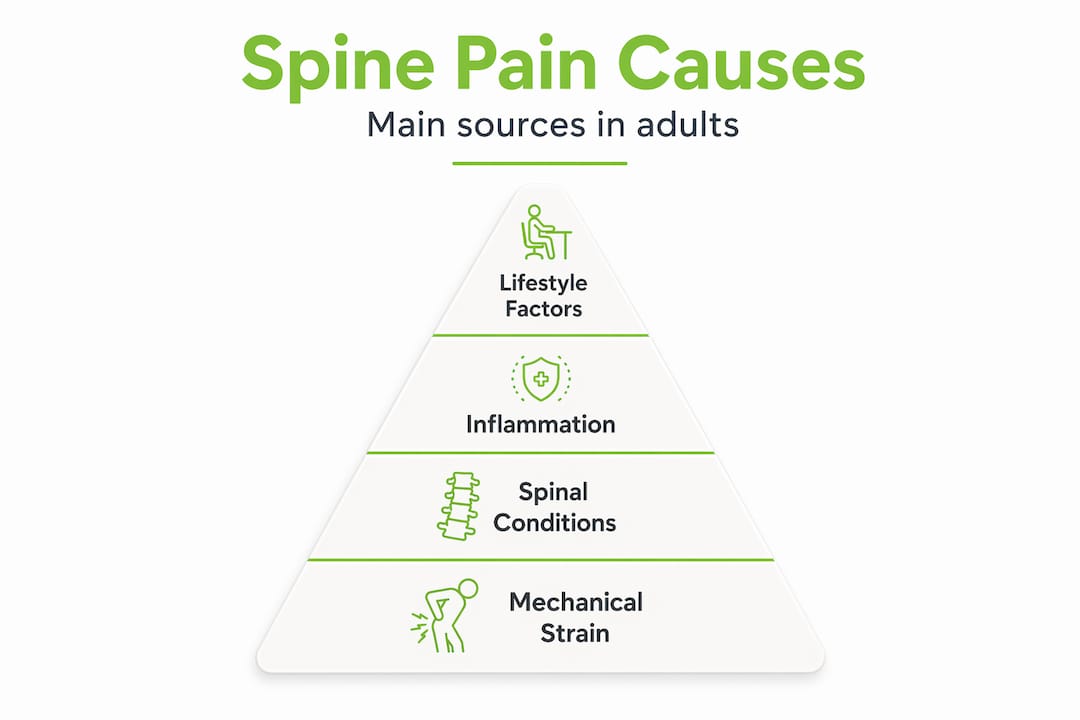
- How inflammation and lifestyle affect spine pain
- Managing spine pain and when to see a specialist
- My clinical perspective on spine pain evaluation
- Personalized spine pain treatment at Nortexspineandjoint
- FAQ
Key takeaways
| Point | Details |
|---|---|
| Mechanical strain is the top cause | Muscle and ligament strain accounts for the majority of spine pain and often resolves with conservative care. |
| Posture habits matter more than most realize | Forward head posture, rounded shoulders, and a weak core place chronic load on spinal structures over time. |
| Red flags require immediate attention | Fever, bowel or bladder changes, and severe radiating pain are signals that need same-day evaluation, not a wait-and-see approach. |
| Inflammation follows a daily rhythm | Inflammatory cytokine levels peak in the early morning hours, which explains why many people feel stiffest right after waking. |
| Treatment options extend beyond rest | Physical therapy, ergonomic changes, and regenerative medicine like PRP therapy can address the root source of pain rather than masking symptoms. |
Mechanical causes of spine pain
The most frequent answer to “why does my back hurt” is simpler than most people expect. Mechanical strain is the leading cause of back pain and typically resolves within days to weeks with appropriate conservative care. That said, understanding exactly how it develops helps you avoid repeating the pattern.
Muscle and ligament strain
Muscle strain occurs when the fibers of a muscle or the connective tissue attaching it to bone are overstretched or partially torn. Ligament sprains involve the bands connecting bone to bone within spinal joints. Both can result from a single awkward movement, but up to 33% of patients with mechanical strain cannot identify a specific injury event. The cause is often subtle, accumulated microtrauma from repetitive loading in poor positions.
Posture and daily habits
Poor posture increases pressure on spinal discs and creates muscle imbalances that pull the spine out of its natural alignment. The most common patterns seen clinically include:
- Forward head posture: For every inch the head shifts forward relative to the shoulders, the effective load on the cervical spine roughly doubles.
- Rounded shoulders: Prolonged computer or phone use encourages thoracic kyphosis, which transfers strain to the lower back.
- Weak core muscles: The deep abdominal and paraspinal muscles function as a natural brace for the lumbar spine. When they are deconditioned, the passive structures, including discs and facet joints, absorb more load.
- Anterior pelvic tilt: Tight hip flexors combined with weak glutes tip the pelvis forward, exaggerating lumbar lordosis and compressing posterior spinal elements.
Prolonged sitting without lumbar support, sleeping on the stomach, and extended inactivity all contribute to the same mechanical cycle. Stomach sleeping in particular rotates the cervical spine and flattens the lumbar curve during 6 to 9 hours of rest, loading muscles and discs in a fixed, suboptimal position throughout the night.
Pro Tip: If you wake up with lower back stiffness, try sleeping on your side with a pillow between your knees. This maintains neutral spinal alignment and reduces overnight muscle loading more effectively than any other common sleep position adjustment.
Spinal conditions that cause ongoing pain
While mechanical strain is the most common spine pain reason, several structural and degenerative conditions produce pain that does not resolve on its own and often requires targeted intervention.
| Condition | Typical symptom pattern | Key distinction |
|---|---|---|
| Herniated disc | Sharp, radiating pain into the arm or leg | Pain follows a nerve root distribution |
| Degenerative disc disease | Dull, aching chronic back pain with activity-related flares | Gradual onset, often bilateral |
| Spinal arthritis (osteoarthritis) | Morning stiffness, joint tenderness, reduced range of motion | Stiffness resolves within minutes |
| Ankylosing spondylitis | Morning stiffness lasting over 30 minutes that improves with movement | Stiffness worsens with rest, not activity |
| Spinal stenosis | Pain, numbness, or weakness with walking that resolves with sitting | Neurogenic claudication pattern |
| Sciatica | Electric or burning pain radiating from the lower back into one leg | Single leg distribution following sciatic nerve |
Herniated discs produce pain when the soft inner nucleus pushes through the outer disc wall and contacts a nearby nerve root. The resulting nerve irritation, or radiculopathy, creates a shooting, burning, or electric sensation that follows a predictable path down the arm or leg. This is distinct from the localized ache of a muscle strain.
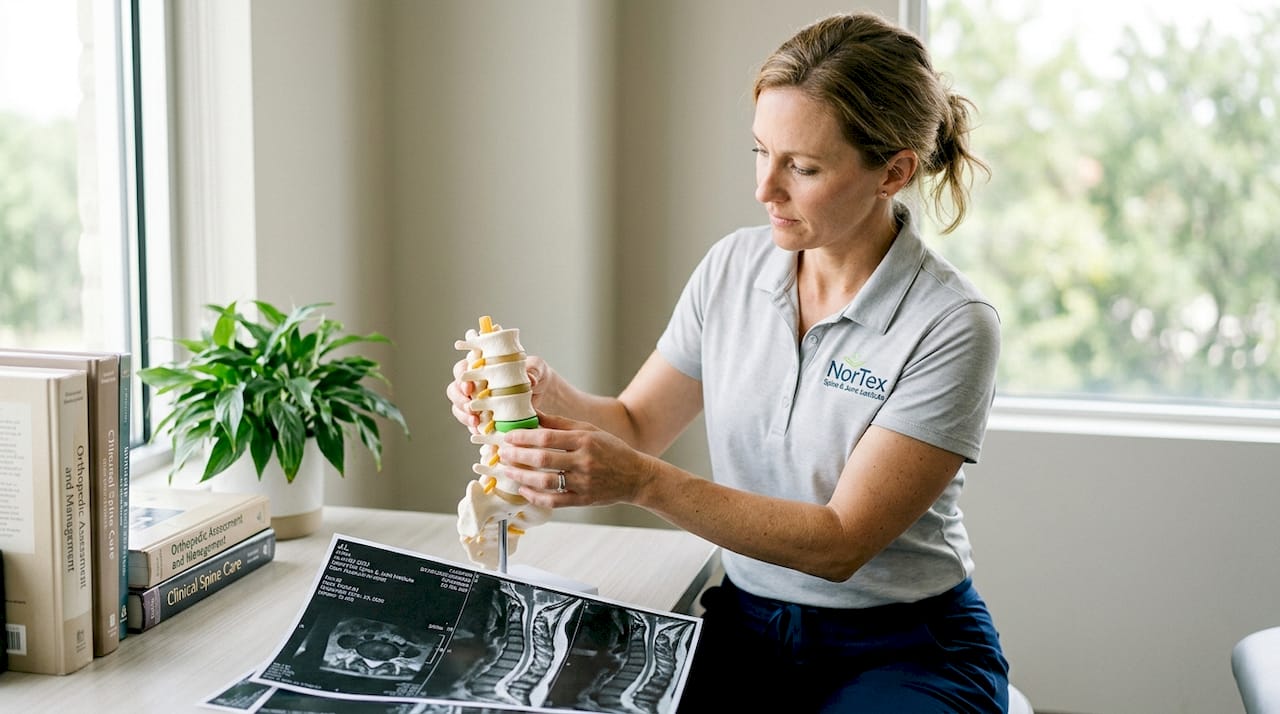
Degenerative disc disease reflects the gradual drying and thinning of intervertebral discs over time. Discs lose hydration naturally with age, reducing their ability to absorb compressive force. This is one of the most common chronic back pain causes seen in adults over 40 and often coexists with facet joint arthritis.
Nerve issues and spine pain tend to present together in conditions like spinal stenosis, where the spinal canal narrows and compresses neural structures. The classic symptom, pain or leg heaviness that worsens with walking and eases when you sit or lean forward, is reliably different from purely muscular discomfort.
Red flags that need immediate evaluation
Most spine pain is not dangerous. However, certain symptoms indicate conditions that require prompt medical attention rather than self-treatment or watchful waiting.
- Fever accompanying back pain may signal a spinal infection such as discitis or epidural abscess, especially if you have recently had a procedure, urinary tract infection, or intravenous drug use history.
- Bowel or bladder dysfunction alongside low back pain, including incontinence, retention, or loss of sensation in the perineal area, raises concern for cauda equina syndrome, a surgical emergency.
- Severe pain radiating to the groin or abdomen can indicate an aortic aneurysm rather than a spinal source and warrants immediate emergency evaluation.
- Unexplained weight loss with spine pain in someone over 50 is a recognized red flag for spinal malignancy, either primary or metastatic.
- History of significant trauma such as a fall from height or motor vehicle collision with new spine pain requires imaging to rule out fracture before any physical treatment.
- Spine pain in patients on corticosteroids or with known osteoporosis raises the risk of a fragility fracture, which can occur without any traumatic event.
“Back pain with red flag symptoms requires same-day evaluation, not a scheduled appointment for next week. The window for treating conditions like cauda equina syndrome is narrow, and delays change outcomes significantly.”
Pro Tip: Keep a brief symptom log if your spine pain is new or changing. Note when it started, what makes it better or worse, and whether you have any associated symptoms like leg weakness or bladder changes. This information accelerates clinical evaluation considerably.
The warning signs you should not ignore are distinct from the typical ache of mechanical strain, but it takes awareness to recognize the difference.
How inflammation and lifestyle affect spine pain
Not all spinal discomfort factors trace back to a structural problem. Inflammation, hydration, movement patterns, and daily habits play a measurable role in how much pain you feel and when you feel it most.
Inflammatory cytokine levels peak between 3 and 6 AM, which is why people with inflammatory conditions like ankylosing spondylitis or rheumatoid arthritis often report their worst pain in the early morning hours. Even without a diagnosed inflammatory disease, reduced movement during sleep allows inflammatory mediators to accumulate in joint tissues overnight.
Disc hydration follows a similar daily cycle. Spinal discs rehydrate during rest as they absorb fluid from surrounding tissue. This is why you are technically a few millimeters taller in the morning than at night. When discs are well hydrated, they absorb compressive force more effectively. Dehydration and inadequate sleep quality reduce this capacity.
Several lifestyle factors significantly influence spine pain frequency and severity:
- Physical inactivity reduces blood flow to spinal muscles and discs, which are avascular structures dependent on diffusion for nutrient exchange. Regular low-impact movement, even walking, supports disc health at a biological level.
- Excess body weight, particularly abdominal adiposity, shifts the center of gravity forward and increases lumbar compressive load continuously throughout the day.
- Smoking impairs microvascular circulation and has been independently associated with accelerated disc degeneration.
- Psychological stress increases baseline muscle tension through sustained sympathetic nervous system activation, particularly in the trapezius, paraspinal, and neck muscles.
- Poor sleep quality compounds all of the above by reducing the body’s tissue repair processes that normally occur during deeper sleep stages.
Addressing these modifiable factors does not replace targeted spine care, but it does create a physiological environment that responds better to treatment.
Managing spine pain and when to see a specialist
Understanding back pain origins is only useful if it translates into better decisions about care. The good news is that most spine pain responds well to a structured, progressive approach when started appropriately.
For mechanical pain without red flags, conservative care is the appropriate starting point:
- Stretching and mobility work: Focus on hip flexor stretches, thoracic mobility exercises, and gentle lumbar flexion and extension movements to restore normal range of motion.
- Ergonomic modifications: Adjust your workstation so the screen is at eye level, your hips are at or slightly above knee height, and your lumbar spine maintains its natural curve with supported seating.
- Core stabilization exercises: Movements like the dead bug, bird dog, and modified plank build the deep stabilizer muscles that reduce load on passive spinal structures.
- Activity modification: Short walks and position changes every 30 to 45 minutes reduce the cumulative load from prolonged static postures.
Physical therapy is recommended when pain persists beyond two to three weeks despite self-care, when functional deficits are present, or when a specific structural diagnosis requires guided exercise prescription.
Pro Tip: Avoid complete bed rest for spine pain. Current evidence consistently shows that staying gently active within a tolerable range accelerates recovery more than immobilization, even in the first days after an acute strain.
When conservative care has not produced adequate improvement after six to eight weeks, or when imaging confirms a structural cause, a specialist evaluation becomes appropriate. For guidance on whether to see a chiropractor or doctor for your specific situation, the type and pattern of your pain provides important direction. For those with chronic spine pain unresponsive to standard measures, advanced treatment approaches including regenerative medicine have expanded the options available before considering surgery.
My clinical perspective on spine pain evaluation
I’ve seen hundreds of patients who spent months, sometimes years, treating the wrong problem. They were focused on a disc finding on an MRI that turned out to be incidental, or they assumed their pain was “just aging” when it was fully addressable with the right intervention.
What I’ve learned is that the most valuable thing you can do early is get an accurate diagnosis. Not a guess. Not a search result. A real, clinical evaluation that distinguishes mechanical pain from inflammatory disease, nerve compression from referred pain, and a stable degenerative finding from something that requires urgent attention.
In my experience, patients who understand what is actually causing their pain make better decisions about care. They don’t over-treat. They don’t under-treat. They engage with physical therapy because they know why it matters, and they are more receptive to regenerative options when appropriate because they have realistic expectations.
I also think the soft tissue injury patterns we see after trauma, particularly motor vehicle accidents, are consistently underestimated by patients. The pain can be delayed by days and the recovery timeline is longer than most expect. Patience combined with appropriate treatment produces far better outcomes than waiting without care.
The most important thing I can tell you is this. Spine pain is usually understandable, often treatable, and rarely as permanent as it feels in the acute phase.
— Felix
Personalized spine pain treatment at Nortexspineandjoint
If your spine pain has persisted beyond a few weeks, worsened over time, or failed to respond to rest and standard care, a personalized evaluation is the most direct next step. At Nortexspineandjoint, our approach goes beyond symptom management. We identify the specific structural, inflammatory, or mechanical source driving your pain and build a treatment plan around that finding.
For patients with chronic back pain related to disc degeneration, facet joint arthritis, or soft tissue injury, PRP therapy for back pain uses your body’s own platelet-derived growth factors to promote tissue repair and reduce inflammation at the site of injury. Regenerative medicine options at our North Dallas clinic also include stem cell therapies and targeted injection procedures designed to restore function without surgery. Schedule a consultation to discuss which approach aligns with your diagnosis, your goals, and your timeline for recovery.
FAQ
What are the most common causes of spine pain?
Mechanical strain from muscle overuse, poor posture, or repetitive microtrauma accounts for the majority of spine pain cases. Structural conditions like herniated discs, degenerative disc disease, and spinal arthritis are also frequent causes, particularly in adults over 40.
How do I know if my spine pain is serious?
Spine pain accompanied by fever, bowel or bladder changes, severe radiating pain, unexplained weight loss, or a history of trauma requires immediate medical evaluation. These symptoms may indicate infection, a fracture, or neurological compromise rather than routine mechanical pain.
Why does my back hurt more in the morning?
Morning stiffness that resolves within 10 minutes typically reflects mechanical causes like overnight muscle tension or disc fluid dynamics. Stiffness lasting more than 30 minutes that improves with movement may indicate an inflammatory spinal condition such as ankylosing spondylitis and warrants clinical assessment.
Can posture alone cause chronic spine pain?
Yes. Forward head posture, rounded shoulders, and anterior pelvic tilt place sustained abnormal load on spinal discs, facet joints, and supporting muscles. Over months and years, these postural patterns are a well-documented source of chronic back pain causes that often respond well to targeted correction.
When should I see a spine specialist instead of my primary care doctor?
See a spine specialist when pain persists beyond six to eight weeks despite conservative care, when imaging shows a structural finding, when you have neurological symptoms like leg weakness or numbness, or when your quality of life is significantly affected by persistent spinal discomfort.
Recommended
- Spine Secrets Unveiled: Top Tips for a Healthy Back – Nortex | Pain Management | Allen, Garland, McKinney & Plano Texas
- Lower Back Pain in Older Adults: Common Causes and Treatment Options – Nortex | Pain Management | Allen, Garland, McKinney & Plano Texas
- Back Pain Uncovered: An In-Depth Look at the Causes, Symptoms, and Treatment Strategies
- Lower Back Pain from Sitting? Best Tips to Reduce Pain at Work – Nortex | Pain Management | Allen, Garland, McKinney & Plano Texas