
Interventional pain medicine is defined as a subspecialty of pain management that uses minimally invasive, image-guided procedures to diagnose and treat chronic pain directly at its anatomical source. Rather than relying on systemic medications that affect the entire body, this approach targets the specific structure generating pain, whether that is a compressed nerve root, an inflamed facet joint, or a damaged disc. The American Society of Interventional Pain Physicians (ASIPP) recognizes this field as a distinct clinical discipline requiring specialized training in anatomy, nervous system function, and procedural technique. At Nortexspineandjoint, this same philosophy guides every treatment decision: identify the source, treat it precisely, and support recovery through rehabilitation.
What is interventional pain medicine and how does it work?
Interventional pain medicine works by combining diagnostic precision with targeted procedural treatment. The first step is identifying exactly which anatomical structure is causing your pain. This is not always obvious from symptoms alone, which is why diagnostic blocks play a central role. A physician injects a small amount of local anesthetic near a suspected pain generator. If you experience immediate, temporary relief, that confirms the structure is the source. This data-driven confirmation replaces guesswork with clinical evidence before any longer-term treatment begins.
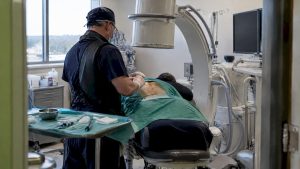
Once the pain source is confirmed, treatment procedures modulate pain signaling and reduce inflammation at that specific site. Imaging guidance is non-negotiable in this process. Fluoroscopy (real-time X-ray) and ultrasound allow the physician to visualize needle placement in real time, ensuring the medication or energy reaches exactly the right location. This level of precision is what separates interventional pain treatment from a general office injection or an oral prescription.
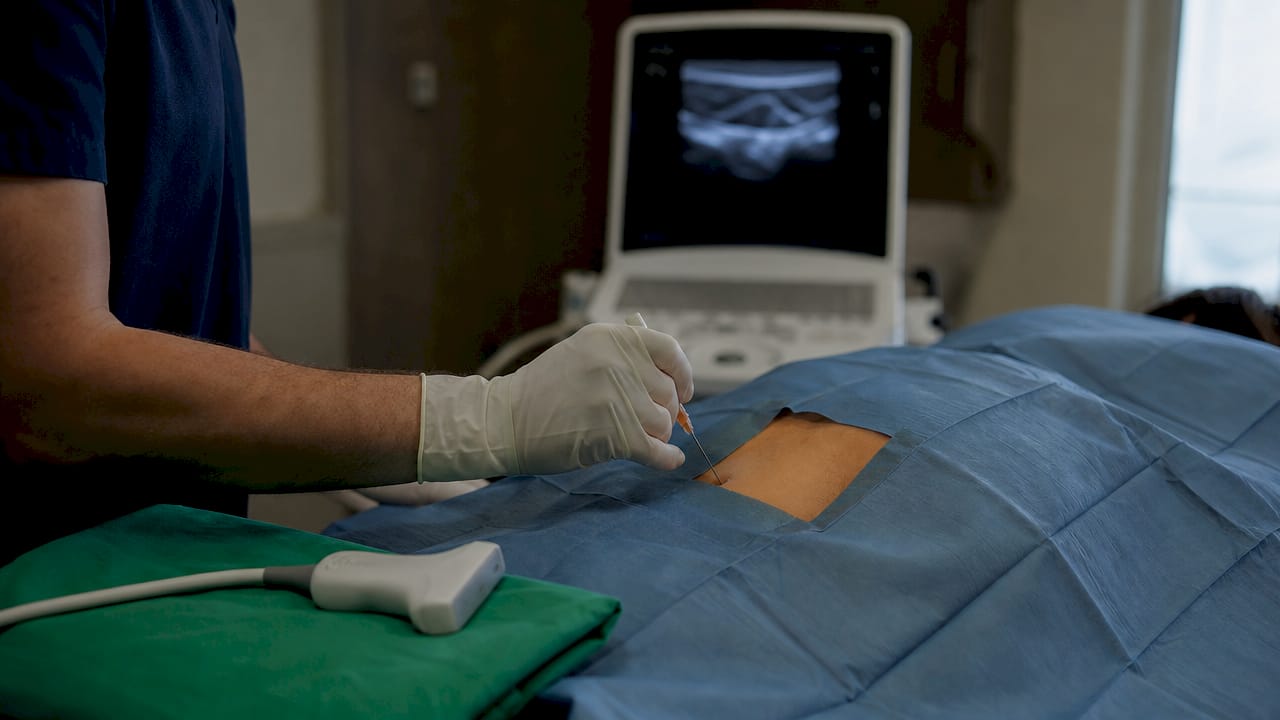
Common interventional pain procedures
The three most widely used techniques are epidural steroid injections, nerve blocks, and radiofrequency ablation (RFA).
- Epidural steroid injections deliver corticosteroid medication directly into the epidural space surrounding the spinal cord, reducing inflammation around compressed nerve roots. Over 9 million epidural steroid injections are performed annually in the United States, making it the most common interventional pain procedure in the country.
- Nerve blocks use anesthetic agents injected near specific nerves to interrupt pain signal transmission. They serve both diagnostic and therapeutic purposes depending on the clinical goal.
- Radiofrequency ablation uses heat generated by radio waves to disrupt nerve transmission along a targeted pathway. RFA can provide relief lasting many months to years by modulating nociceptive pathways rather than simply numbing them temporarily.
This distinction matters. Regional anesthesia, used in surgical settings, blocks nerve conduction for hours. Interventional pain procedures aim for longer-term modulation of inflammation and pain signaling, which is a fundamentally different clinical objective.
Pro Tip: Ask your physician whether your planned procedure is diagnostic, therapeutic, or both. Understanding the purpose helps you set realistic expectations for how quickly you should feel relief and for how long.
Who is a candidate for interventional pain management?
Most patients who arrive at Nortexspineandjoint for an interventional consultation share a common pattern: they have been dealing with pain for months, they have tried physical therapy or oral medications, and they are not getting adequate relief. That pattern aligns closely with the clinical criteria for candidacy.
The standard threshold for considering interventional pain management is chronic pain lasting more than three months that has not responded sufficiently to conservative treatments. Conservative treatments include physical therapy, anti-inflammatory medications, activity modification, and chiropractic care. When those approaches provide incomplete or short-lived relief, early intervention with targeted procedures becomes a clinically sound next step rather than a last resort.
Conditions commonly treated through interventional approaches include:
- Lumbar and cervical radiculopathy (nerve root compression causing radiating arm or leg pain)
- Facet joint arthritis in the spine, a frequent source of axial back and neck pain
- Sacroiliac joint dysfunction, which often mimics low back pain
- Peripheral nerve injuries and complex regional pain syndrome
- Osteoarthritis of the knee, hip, or shoulder causing chronic joint pain
- Discogenic pain from degenerative disc disease
The evaluation process at Nortexspineandjoint includes a thorough physical examination, review of imaging studies such as MRI or X-ray, and often diagnostic nerve blocks to confirm the pain generator before committing to a therapeutic procedure. This sequence protects you from receiving a treatment that targets the wrong structure. Physical therapy is typically coordinated alongside or immediately following interventional procedures, because the two approaches work better together than either does alone.
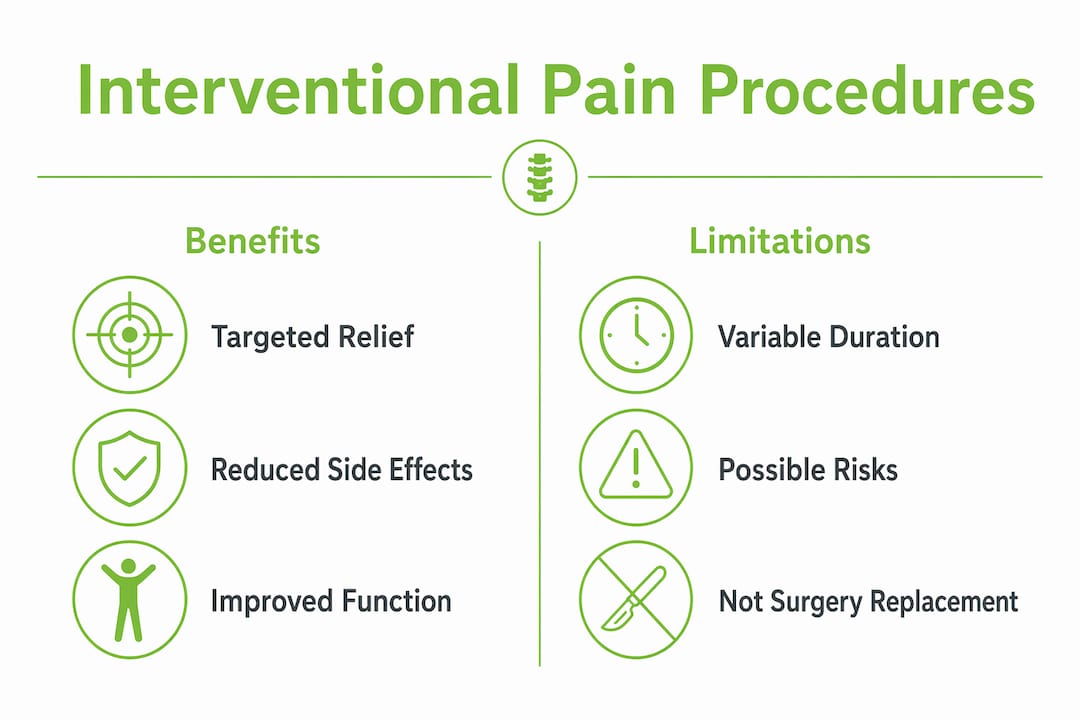
What are the benefits and limitations of interventional pain therapies?
Interventional pain therapy offers meaningful advantages over prolonged oral medication use, but it also has real limitations that every patient deserves to understand clearly.
Benefits
Targeted treatment at the pain source reduces systemic side effects that come with oral medications, particularly opioids and long-term corticosteroids. Many patients experience improved mobility and reduced medication dependence after a well-executed interventional procedure. Because most procedures are outpatient and completed in under an hour, recovery time is minimal compared to surgical alternatives. Patients typically return home the same day. This also means less disruption to work, family, and daily activity.
One of the most clinically significant benefits is the window of opportunity that procedures create. When pain is reduced enough to allow movement, you can engage meaningfully in physical therapy. Procedures are not stand-alone fixes but part of a multimodal recovery plan. That window, used well, is often what produces lasting functional improvement rather than temporary symptom relief.
Limitations
| Factor | What to expect |
|---|---|
| Duration of relief | Varies by procedure; RFA may last months to years, steroid injections typically weeks to months |
| Repeat treatments | Some procedures require repeat sessions to maintain benefit |
| Not a cure | Interventional care treats pain generators but does not reverse underlying structural degeneration |
| Rehabilitation required | Procedures work best when combined with active physical therapy |
| Surgical candidacy | Some patients with severe structural damage will still require surgery despite interventional care |
Interventional care is best understood as a tool that helps patients avoid or delay surgery, not a guarantee against it. For many patients, that delay is long enough to allow natural healing or rehabilitation to resolve the underlying problem. For others, it provides meaningful quality-of-life improvement while they weigh surgical options.
Pro Tip: Track your pain levels and functional ability before and after each procedure using a simple 0–10 scale. This data helps your physician determine whether a procedure is working and whether it should be repeated or modified.
What should you expect during and after interventional pain procedures?
Most interventional pain procedures follow a predictable and well-tolerated process. Knowing what to expect reduces anxiety and helps you prepare practically.
- Setting: Procedures are performed in an outpatient clinic or ambulatory surgery center, not a hospital operating room. You arrive, are prepared, and go home the same day.
- Anesthesia: Local anesthesia or light sedation is standard. You remain conscious or lightly sedated, not under general anesthesia.
- Duration: Most procedures take under an hour from start to finish, including preparation and recovery observation.
- Immediate recovery: You will rest briefly in a recovery area before discharge. A driver is required for most procedures involving sedation.
- Post-procedure soreness: Mild soreness at the injection site is common for 24–48 hours. This is normal and does not indicate the procedure failed.
- Onset of relief: Some patients feel improvement within days. Others notice gradual improvement over one to two weeks as inflammation subsides.
- Physical therapy timing: Your physician will typically recommend starting or resuming physical therapy within days to weeks of the procedure, while pain is reduced.
- Follow-up: A follow-up appointment is scheduled to assess your response and plan next steps.
Risks are low but real. Possible complications include temporary increased pain, infection at the injection site, bleeding, or, rarely, nerve irritation. Your physician will review these with you during the consent process. The non-surgical nature of these procedures is one reason complication rates remain low compared to open surgery.
Key Takeaways
Interventional pain medicine is most effective when it combines precise diagnostic confirmation, targeted procedural treatment, and active rehabilitation into a single coordinated care plan.
| Point | Details |
|---|---|
| Diagnosis first | Diagnostic blocks confirm the exact pain source before any therapeutic procedure begins. |
| Imaging guidance is required | Fluoroscopy or ultrasound ensures needle placement accuracy and separates interventional care from general injections. |
| Procedures create a rehab window | Pain relief from interventional treatment enables physical therapy engagement, which drives lasting recovery. |
| Not a standalone cure | Interventional procedures work best as part of a multimodal plan, not as isolated treatments. |
| Surgery avoidance is realistic | Many patients use interventional care to delay or avoid surgery while achieving meaningful functional improvement. |
Why diagnostic precision changes everything in pain care
Many patients I see have already been through the standard sequence: rest, anti-inflammatories, a course of physical therapy, maybe a round of oral steroids. They arrive frustrated, not because those treatments are wrong, but because they were applied without confirming what was actually causing the pain. That distinction is the core of what makes interventional pain medicine different.
The most common misconception I encounter is that these procedures are a last resort, something you try when nothing else works. The clinical evidence does not support that framing. Interventional care is a logical, evidence-based step that can be introduced earlier in the treatment sequence, particularly when a specific anatomical pain generator has been identified. Waiting too long often means more deconditioning, more medication exposure, and a harder rehabilitation process.
The second misconception is that a successful injection means the problem is solved. Procedures reduce pain. They do not rebuild muscle, correct posture, or address the movement patterns that contributed to the injury. That work belongs to rehabilitation. When patients understand that the procedure is the starting point for active recovery rather than the finish line, outcomes improve substantially. At Nortexspineandjoint, we build that expectation into every consultation from the beginning.
— Felix
Interventional pain treatment options at Nortexspineandjoint
Nortexspineandjoint offers a full range of interventional and regenerative pain treatments for patients in North Dallas dealing with chronic spine, joint, and musculoskeletal conditions. Procedures include nerve blocks, epidural steroid injections, and genicular radiofrequency ablation for knee pain. These are paired with regenerative options such as PRP therapy and stem cell treatments that address the biological environment of the injured tissue, not just the pain signal. Every treatment plan is built around a thorough diagnostic evaluation and coordinated with rehabilitation to support lasting recovery. If you are living with chronic pain and want to understand which interventional options apply to your specific condition, a consultation at Nortexspineandjoint is the right starting point.
FAQ
What is interventional pain medicine in simple terms?
Interventional pain medicine uses minimally invasive, image-guided procedures to find and treat the specific structure causing your chronic pain, rather than relying on oral medications that affect your whole body.
How long does relief from interventional pain procedures last?
Relief duration varies by procedure. Epidural steroid injections typically provide weeks to months of relief, while radiofrequency ablation can provide relief lasting many months to years by disrupting nerve pain transmission.
Is interventional pain management the same as pain management?
Interventional pain management is a subspecialty within the broader field of pain management. It focuses specifically on procedural, image-guided treatments rather than medication management or general conservative care.
How do I know if I am a candidate for interventional pain treatment?
Candidates typically have chronic pain lasting more than three months that has not responded adequately to conservative treatments such as physical therapy or oral medications. A diagnostic evaluation, including imaging and possibly diagnostic nerve blocks, confirms candidacy.
Does interventional pain medicine replace surgery?
Interventional pain medicine can delay or help avoid surgery for many patients by reducing pain and enabling rehabilitation. It does not replace surgery in cases where significant structural damage requires surgical correction, but it is a clinically sound first step before considering an operation.