
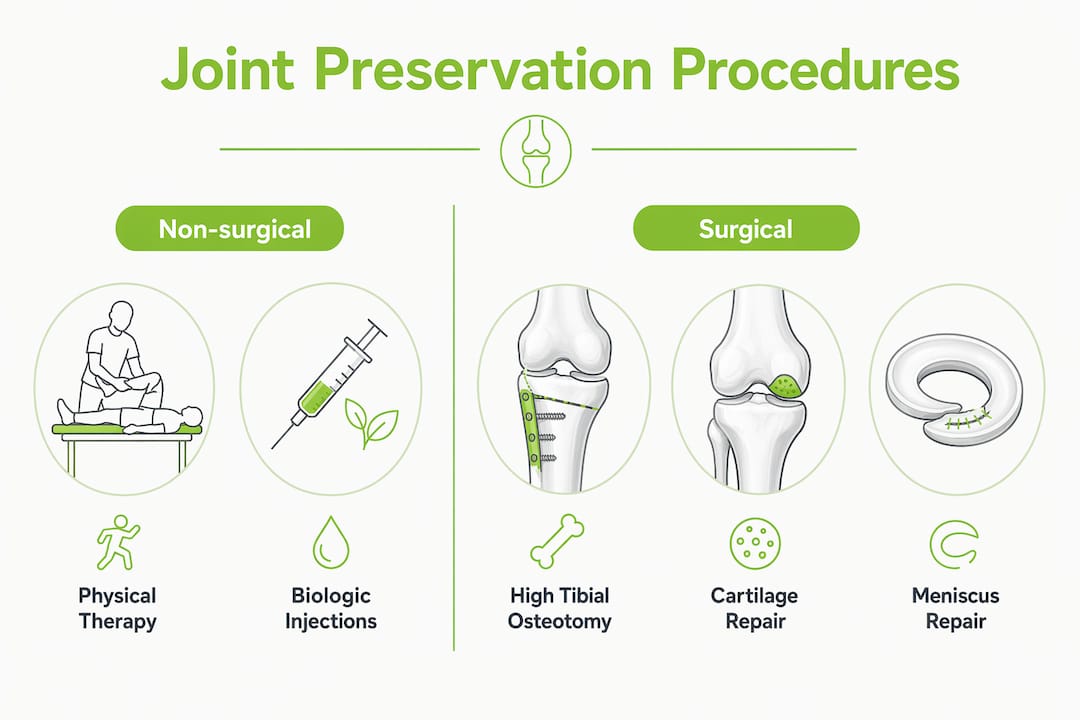
Joint preservation is defined as a category of treatments designed to maintain your natural joint’s structure and function, with the goal of delaying or avoiding total joint replacement surgery. Candidates typically fall between ages 15 and 60, with minimal to moderate arthritis and enough healthy cartilage remaining to make preservation worthwhile. The field spans both non-surgical approaches, such as platelet-rich plasma (PRP) injections and physical therapy, and surgical procedures, including osteotomy and cartilage repair. The underlying principle is straightforward: keep your original joint working as long as possible, because no implant fully replicates what you were born with.
What is joint preservation and how does it work?
Joint preservation is an active, diagnostic-driven intervention, not simply a delay tactic. Mechanical imbalances like varus or valgus malalignment cause uneven loading across joint surfaces, accelerating cartilage breakdown in specific compartments. Preservation treatments correct those imbalances, reduce inflammation, and support tissue regeneration before damage becomes irreversible. The approach works best when healthy cartilage and bone are still present, giving the body something to build on.
The earlier you intervene, the more options you have. Severe arthritis patients are generally not candidates for preservation techniques, because the cartilage and bone loss is too extensive to reverse or stabilize. This is why the timing of your first evaluation matters as much as the treatment itself.
What non-surgical joint preservation techniques are available?
Non-surgical joint preservation relies on two main pillars: physical rehabilitation and biologic injections. Both aim to reduce pain and slow joint deterioration without cutting or implanting anything.
Physical therapy and joint stabilization
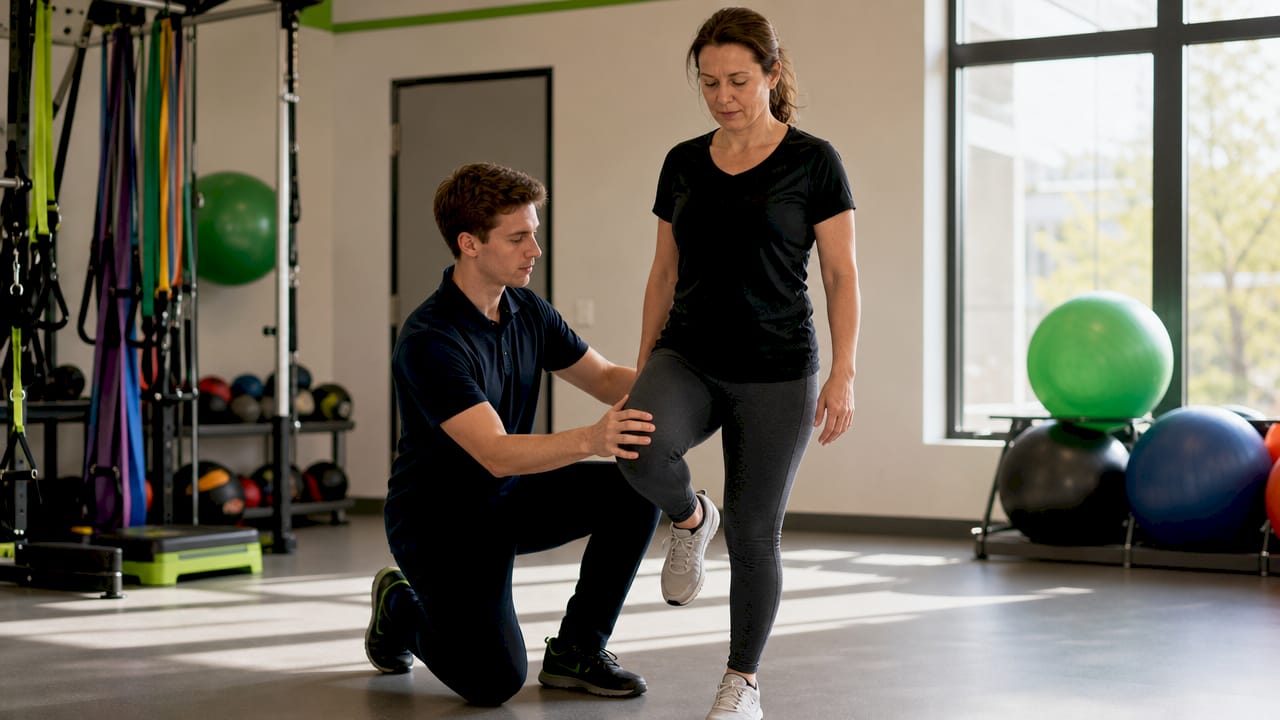
Physical therapy addresses the muscular and structural support around a damaged joint. Strengthening the muscles that cross a joint reduces the mechanical load on cartilage during daily movement. A well-designed program also corrects movement patterns that place excess stress on worn areas. Patients who commit to structured physical therapy often report meaningful reductions in pain and improved stability, even without injections or surgery.
Regenerative injections: PRP and biologic treatments
Platelet-rich plasma therapy concentrates growth factors from your own blood and injects them directly into the affected joint. These growth factors reduce inflammation and stimulate tissue repair at the cellular level. Results from regenerative injections vary by patient and joint condition, but benefits can last several months to a year. Patients with knee arthritis, for example, often use PRP knee injections as a first-line regenerative option before considering surgery.
Biologic treatments, including stem cell therapy, follow a similar rationale. They introduce regenerative cells or signaling proteins to reduce inflammation and support cartilage health. These treatments work best in joints with moderate damage, not end-stage arthritis. Reviewing the pros and cons of PRP injections with your physician helps set realistic expectations before starting a protocol.
- Physical therapy: Builds muscular support, corrects movement patterns, and reduces joint load without medication.
- PRP injections: Use autologous growth factors to reduce inflammation and promote tissue repair; effects typically last several months to one year.
- Stem cell therapy: Introduces regenerative cells to support cartilage health in joints with moderate, not severe, damage.
- Activity modification: Reducing high-impact activities protects cartilage while other treatments take effect.
- Bracing and orthotics: Offload specific joint compartments and correct minor alignment issues without surgery.
Pro Tip: If you are considering PRP therapy, ask your physician about the concentration protocol used. Higher platelet concentrations are not always better; the preparation method and injection technique matter as much as the dose.
What surgical joint preservation procedures exist?
Surgical joint preservation is appropriate when non-surgical methods no longer control symptoms or when a structural problem requires correction that injections cannot address. These procedures repair or realign the joint rather than replace it.
-
Osteotomy: A surgeon cuts and repositions bone to shift load away from a damaged compartment. High tibial osteotomy (HTO) corrects varus deformity in the knee, while distal femoral osteotomy (DFO) addresses valgus malalignment. Medial closing-wedge DFO shows stable arthritis grades and improved patient-reported outcomes over a mean follow-up of 9.4 years, which is a strong result for a procedure that preserves the natural joint.
-
Cartilage repair and resurfacing: Techniques such as microfracture, autologous chondrocyte implantation (ACI), and osteochondral autograft transfer (OATS) restore damaged cartilage surfaces. Each method suits a different defect size and depth. ACI, for instance, grows your own cartilage cells in a lab before reimplanting them, making it suitable for larger defects in younger patients.
-
Ligament reconstruction: Correcting ligament instability prevents abnormal joint motion that accelerates cartilage wear. This is often performed alongside cartilage repair for best results.
-
Joint distraction: Used primarily in the ankle, this technique temporarily unloads the joint to allow cartilage recovery. It is less common but effective in select cases.
Pro Tip: Choosing between HTO and DFO requires precise pre-operative imaging and measurement of alignment angles. Incorrect surgical selection leads to instability and poor outcomes, so seek a surgeon who performs detailed mechanical axis analysis before recommending a procedure.
| Procedure | Goal | Typical candidate |
|---|---|---|
| High tibial osteotomy (HTO) | Shift load from medial to lateral compartment | Younger patient with varus knee and medial arthritis |
| Distal femoral osteotomy (DFO) | Correct valgus deformity | Patient with lateral compartment overload |
| Autologous chondrocyte implantation (ACI) | Regenerate cartilage in larger defects | Active adult under 50 with focal cartilage loss |
| Microfracture | Stimulate fibrocartilage growth in small defects | Patient with small, contained cartilage defect |
How does joint preservation compare with joint replacement surgery?
The core difference between preservation and replacement is what remains in your body afterward. Joint preservation keeps your original anatomy intact. Joint replacement removes damaged bone and cartilage and substitutes metal and plastic components. Natural joints maintain proprioception, the body’s ability to sense joint position and movement, which artificial implants cannot replicate. That difference affects balance, coordination, and the feel of movement during daily activities and sport.
Joint replacement implants carry a finite lifespan. Revision surgery becomes a real consideration for patients who receive a replacement in their 40s or 50s. Preservation, when successful, delays that timeline and keeps revision options open.
| Factor | Joint preservation | Joint replacement |
|---|---|---|
| Proprioception | Retained | Lost |
| Activity restrictions | Fewer long-term restrictions | Permanent restrictions on high-impact activity |
| Implant lifespan | Not applicable | Finite; revision may be needed |
| Best candidate | Ages 15–60, moderate or less arthritis | Older patients, severe arthritis, failed conservative care |
| Recovery commitment | High; rehabilitation is intensive | Moderate; structured but more predictable |
Younger, active patients benefit most from preservation, while older patients with advanced arthritis often achieve more predictable outcomes with replacement. The decision is not one-size-fits-all. It depends on your age, the degree of cartilage damage, your activity goals, and how much rehabilitation you can commit to.
- Preservation patients typically face a more demanding rehabilitation period, especially after osteotomy or cartilage repair.
- Replacement patients often return to daily function faster, but with permanent restrictions on running, jumping, and heavy loading.
- Patients who undergo preservation and later need replacement still have that option available, which is not always true in reverse.
How to determine if joint preservation is right for you
The most important factor in candidacy is timing. Joint preservation works best before significant cartilage or bone loss occurs. Waiting until pain becomes severe often means the window for preservation has closed.
A thorough evaluation includes several steps:
- Diagnostic imaging: Weight-bearing X-rays and MRI scans reveal cartilage thickness, bone quality, and alignment angles. These images guide the choice of treatment.
- Alignment assessment: Measuring the mechanical axis of the limb determines whether a structural correction is needed and which procedure fits.
- Activity and lifestyle review: Your daily demands, sport participation, and long-term goals all influence which approach is appropriate.
- Specialist consultation: An orthopedic specialist with experience in joint preservation evaluates all findings together before recommending a path.
Setting realistic expectations matters as much as choosing the right procedure. Preservation does not eliminate arthritis. It slows progression, reduces pain, and extends the life of your natural joint. Some patients achieve excellent long-term function. Others eventually progress to replacement despite successful preservation. Understanding that range of outcomes before you start helps you commit to the rehabilitation process with clear goals.
Pro Tip: Bring weight-bearing X-rays to your first consultation, not just MRI images. Alignment problems that drive arthritis progression are best seen under load, and many clinics do not automatically order them.
You can also review nonsurgical options for tendon and ligament injuries to understand how conservative care fits into a broader joint health plan before committing to any procedure.
Key takeaways
Joint preservation is most effective when started early, guided by precise imaging, and supported by consistent rehabilitation.
| Point | Details |
|---|---|
| Early intervention is critical | Preservation techniques require healthy cartilage; waiting until severe arthritis sets in eliminates most options. |
| Non-surgical options come first | PRP injections and physical therapy are first-line treatments, with effects lasting several months to one year. |
| Surgical options correct structure | Osteotomy and cartilage repair address mechanical causes; long-term data supports their efficacy over nearly a decade. |
| Preservation retains proprioception | Natural joints maintain movement sensation that no implant can replicate, affecting balance and activity quality. |
| Rehabilitation determines outcomes | Adherence to post-treatment therapy is the single most controllable factor in whether preservation succeeds. |
What I have seen in practice
After working with patients across a wide range of joint conditions, one pattern stands out clearly: the patients who do best with preservation are the ones who come in before they are desperate. By the time someone has been managing severe pain for two or three years, the cartilage loss is often too advanced for the most effective preservation options. The window is real, and it closes.
The second pattern is equally consistent: rehabilitation adherence separates good outcomes from poor ones more reliably than the procedure itself. I have seen technically well-executed osteotomies underperform because the patient stopped attending physical therapy at six weeks. And I have seen patients with moderate cartilage damage achieve years of excellent function because they committed fully to the recovery process.
What I tell patients is this: joint preservation is not a passive treatment. It asks something of you. The injections, the surgery, the imaging, all of that is the clinician’s part. The rehabilitation is yours. If you are willing to do that work, preservation gives most patients a genuinely meaningful extension of natural joint life, with better movement quality than any replacement can provide.
The patients who struggle most are those who expect preservation to feel like replacement, fast and predictable. It is not. It is a longer, more variable process. But for the right patient at the right time, it is worth every week of that process.
— Felix
Personalized joint preservation care at Nortexspineandjoint
Nortexspineandjoint offers a full range of regenerative and non-surgical joint preservation treatments at its North Dallas clinics in Allen, Garland, McKinney, and Plano. The practice specializes in personalized PRP therapy for joint pain, including targeted protocols for the knee, hip, and shoulder. Patients also have access to stem cell therapy and customized rehabilitation programs designed around their specific joint condition and activity goals. If you are experiencing joint pain and want to understand which preservation approach fits your situation, a consultation with the Nortexspineandjoint team is a practical first step toward a plan grounded in your imaging, your history, and your goals.
FAQ
What is joint preservation in simple terms?
Joint preservation is a set of treatments designed to keep your natural joint healthy and functional, delaying or avoiding the need for joint replacement surgery. It includes both non-surgical options like PRP injections and surgical procedures like osteotomy.
Who is a good candidate for joint preservation?
Patients between ages 15 and 60 with minimal to moderate arthritis and sufficient remaining cartilage are the best candidates. Older patients with severe joint damage typically achieve more predictable results with joint replacement.
How long do the results of joint preservation last?
Results vary by treatment and patient. Regenerative injections like PRP may provide relief lasting several months to one year, while surgical procedures such as osteotomy show stable outcomes over long-term follow-ups approaching a decade in clinical studies.
Is joint preservation surgery painful to recover from?
Recovery from preservation surgery, particularly osteotomy or cartilage repair, is demanding and requires consistent physical therapy. Missing rehabilitation sessions significantly increases the risk of a poor outcome, so patient commitment is a key factor in success.
Can joint preservation prevent arthritis from getting worse?
Joint preservation slows arthritis progression and corrects mechanical causes of joint damage, but it does not cure arthritis. The goal is to extend the life of your natural joint and maintain function, not to eliminate the underlying condition entirely.