

Evidence-based pain care is defined as the use of treatments validated by rigorous clinical research to manage chronic pain safely, effectively, and with lasting results. For adults living with persistent joint, spine, or musculoskeletal pain, this approach offers something that symptom-masking treatments cannot: a structured path toward improved daily function and quality of life. Organizations including the World Health Organization and the VA health system have established clinical guidelines that place personalized, multimodal care at the center of chronic pain management. Nortexspineandjoint applies these same standards in North Dallas, combining regenerative medicine with evidence-informed therapy to address the root causes of pain rather than its surface symptoms.
Why choose evidence-based pain care over standard treatment?
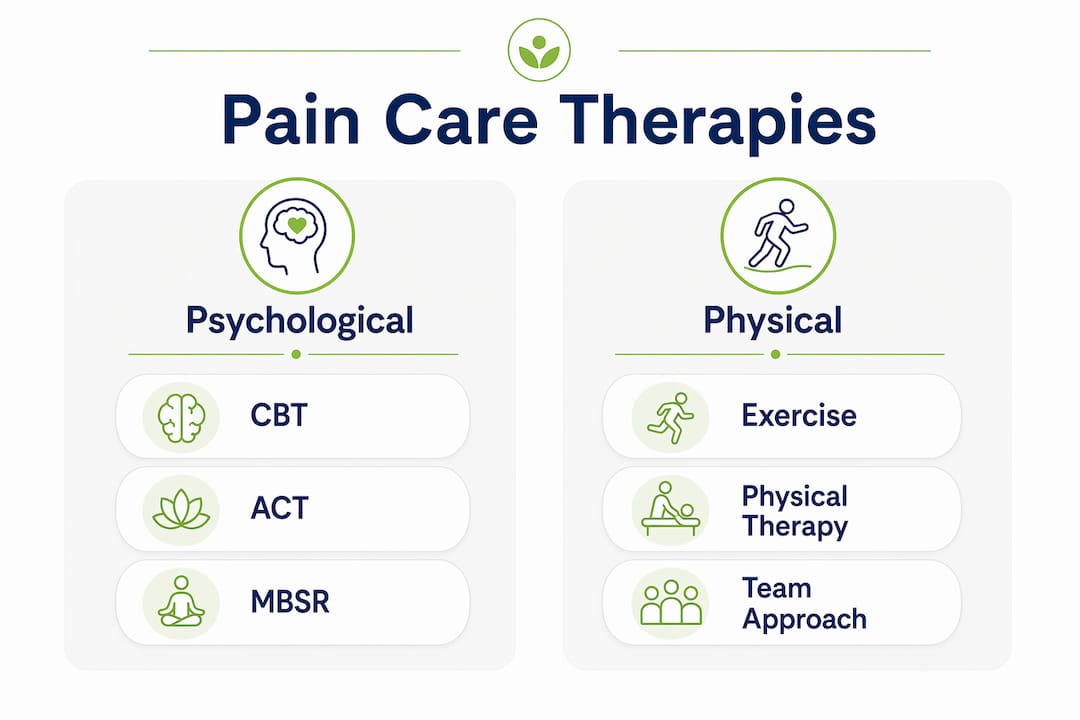
Evidence-based pain management works because it matches treatment to the individual, not to a diagnosis category. Pain responses vary widely from person to person, which means a single therapy rarely produces consistent results across a patient population. The VA’s clinical research confirms that personalized multimodal care combining cognitive behavioral therapy (CBT), physical therapy, and mindfulness is recommended over any single-modality approach. That recommendation reflects years of clinical trial data, not preference.
The core of this approach is multimodal care, which combines therapies targeting the biological, psychological, and social dimensions of pain simultaneously. A patient with chronic low back pain, for example, may benefit from physical therapy to restore movement, CBT to address pain-related fear and avoidance, and pain neuroscience education to change how the brain interprets pain signals. Each layer reinforces the others.

Structured decision support and proactive monitoring are equally important. Rather than waiting for a patient to report worsening symptoms, evidence-based programs schedule regular progress assessments and adjust treatment when results plateau. Models using this approach show consistent pain and function improvements with Number Needed to Treat (NNT) ranges from 4.1 to 12.7 over 9–12 months. An NNT of 4.1 means roughly four patients treated will produce one clinically meaningful improvement, which is a strong result for chronic pain.
Key components of effective multimodal care include:
- Physical therapy: Restores mobility, builds supporting musculature, and reduces mechanical load on painful joints
- Cognitive behavioral therapy (CBT): Addresses thought patterns that amplify pain perception and limit activity
- Pain neuroscience education: Changes how the brain processes pain signals, reducing perceived intensity
- Mindfulness-based stress reduction (MBSR): Lowers psychological distress that commonly worsens chronic pain
- Ongoing monitoring: Scheduled follow-ups allow timely treatment adjustments before progress stalls
Pro Tip: Patients who actively track their own pain levels, sleep quality, and activity between appointments give their care team the data needed to make faster, more accurate adjustments to their treatment plan.
What therapies have the strongest evidence for chronic pain?
The strongest evidence supports combining psychological and physical therapies rather than relying on either alone. CBT combined with exercise produces small-to-moderate improvements in pain intensity and disability that are maintained at both short and mid-term follow-ups. That durability matters because chronic pain is a long-term condition, and treatments that fade within weeks offer limited real-world value.
Acceptance and commitment therapy (ACT) and mindfulness-based stress reduction (MBSR) extend these benefits by targeting the psychological distress that accompanies chronic pain. ACT, MBSR, and CBT each show efficacy for improving chronic pain outcomes and co-occurring mental health conditions such as depression and anxiety. Integrating mental health support is not optional in evidence-based care. Psychological distress directly influences pain perception and recovery speed.
The 2026 wHOPE randomized clinical trial provided some of the clearest data yet on whole-team care. In that trial, 764 patients with a mean age of 60.5 received either a Whole Health team intervention, CBT, or usual care. The results were direct: pain interference scores dropped from 6.6 to 4.9 over 12 months in the Whole Health group, outperforming both CBT alone and usual care. A drop of 1.7 points on a standardized pain interference scale represents a meaningful change in a patient’s ability to work, sleep, and engage in daily activities.
The table below summarizes how these therapies compare on key outcome dimensions:
| Therapy | Primary target | Evidence strength | Duration of benefit |
|---|---|---|---|
| CBT + exercise | Pain intensity and disability | Small to moderate | Short and mid-term |
| Whole Health team | Pain interference and function | Significant | 12 months confirmed |
| ACT | Psychological flexibility and pain | Moderate | Mid-term |
| MBSR | Stress, anxiety, and pain perception | Moderate | Mid-term |
| Physical therapy alone | Mobility and mechanical pain | Moderate | Variable |
What should you realistically expect from evidence-based pain care?
The most common misconception patients bring to a first appointment is that the goal of treatment is complete pain elimination. Evidence-based care sets a different and more achievable goal: functional restoration, meaning the recovery of your ability to perform daily activities, work, and move without being limited by pain. This distinction matters because it shifts the measure of success from a pain score to a life score.
A stepped care model guides how treatments are introduced. Lower-intensity interventions such as pain education, exercise, and self-management strategies come first. If those produce insufficient improvement, higher-intensity options like CBT, interventional procedures, or regenerative therapies are added. This sequence reduces unnecessary treatment exposure and keeps care proportionate to need. You can read more about how this works in practice through step-by-step pain management approaches used in clinical settings.
Pain neuroscience education deserves specific attention. Understanding how pain works at the neurological level changes how the brain processes pain signals and reduces perceived intensity. Patients who complete pain education programs consistently show better engagement with physical and psychological therapies. Knowledge is not a soft add-on. It is a clinical tool.
What realistic evidence-based care looks like in practice:
- Weeks 1–4: Assessment, pain education, and introduction of low-intensity therapies
- Weeks 4–12: Active physical therapy and psychological therapy, with progress monitoring
- Months 3–6: Reassessment, adjustment of therapies, and introduction of advanced options if needed
- Months 6–12: Consolidation of gains, self-management reinforcement, and long-term planning
Pro Tip: Ask your care team to define your functional goals in specific terms at the start of treatment, such as walking a certain distance or returning to a specific activity. Concrete targets make progress measurable and keep treatment focused.
How does evidence-based care improve long-term quality of life?
Sustained improvement in daily function is the clearest long-term benefit of evidence-based pain management. The wHOPE trial data showed that pain interference reductions held at 12 months in the Whole Health group, which is a longer sustained benefit than most single-modality treatments produce. That sustained relief translates directly into better sleep, improved mood, and greater participation in work and social life.
Chronic pain also carries a significant economic burden. Missed workdays, repeated specialist visits, and ongoing medication costs accumulate quickly. Evidence-based management reduces pain interference and the associated economic burden over time by addressing the condition systematically rather than reactively. Patients who achieve functional restoration tend to use fewer healthcare resources in the years that follow.
Continuous monitoring is what keeps these gains from eroding. Scheduled follow-ups allow care teams to catch early signs of regression and adjust treatment before a patient loses significant ground. This proactive model contrasts sharply with reactive care, where patients return only when symptoms worsen. The difference in outcomes between these two models is not subtle.
“The goal of evidence-based pain care is not to make pain disappear. It is to make pain less relevant to how you live. When patients shift their focus from eliminating pain to reclaiming function, they consistently report higher satisfaction with their care and better long-term results.”
For patients who want to understand how pain management affects quality of life over the long term, the research is consistent: structured, monitored, multimodal care produces better outcomes than any single treatment applied in isolation. The evidence also supports non-opioid pain relief as a viable and often preferable path for most chronic pain conditions.
Remote care delivery is expanding access to these programs. Telehealth models in 2026 are making it easier for patients in underserved areas to access evidence-based therapies including CBT and pain education without requiring in-person visits for every session.
Key Takeaways
Evidence-based pain care produces better long-term outcomes than single-modality treatment because it combines personalized, monitored, multimodal therapies targeting the biological, psychological, and social dimensions of chronic pain.
| Point | Details |
|---|---|
| Multimodal care outperforms single therapies | Combining CBT, physical therapy, and education produces more durable relief than any one treatment alone. |
| Whole Health team care leads outcomes | The wHOPE trial showed pain interference dropped from 6.6 to 4.9 over 12 months with a team-based approach. |
| Functional restoration is the real goal | Evidence-based programs prioritize regaining daily function over achieving complete pain elimination. |
| Proactive monitoring sustains gains | Scheduled progress reviews allow timely adjustments before improvement stalls or reverses. |
| Economic burden decreases over time | Systematic evidence-based management reduces long-term healthcare costs alongside pain interference. |
What I’ve learned from patients who finally got the right care
Most patients who come to see us have already tried something. A cortisone injection that worked for three months. A course of physical therapy that helped their back but not their sleep. A medication that dulled the pain but left them foggy. What they haven’t tried, in most cases, is a coordinated plan where all of those pieces work together and someone is actually tracking whether the combination is working.
The hardest conversation I have with patients is about expectations. People arrive hoping to hear that a single treatment will resolve their pain. That is rarely how chronic pain works, and telling someone otherwise does them a disservice. What I can tell them honestly is that a well-designed, evidence-based plan gives them the best realistic chance of getting their life back, even if some level of pain remains.
The patients who do best are the ones who engage actively. They complete their home exercises. They attend their CBT sessions. They report changes honestly at follow-up appointments. That participation is not a soft factor. It is a clinical variable that directly influences outcomes. Patients who treat their own engagement as optional tend to plateau earlier and recover less function.
One thing I would tell anyone researching their options: ask your provider how they will know if the treatment is working. If the answer is vague, that is a signal. Evidence-based care has defined outcome measures, scheduled reassessments, and a clear plan for what happens if progress stalls. That structure is not bureaucratic. It is what separates a treatment plan from a guess.
— Felix
Personalized evidence-based pain care at Nortexspineandjoint
Nortexspineandjoint brings evidence-based pain management together with regenerative medicine in North Dallas, offering patients a non-surgical path to lasting relief. The clinic’s approach begins with a thorough assessment of each patient’s pain profile, functional limitations, and treatment history. From there, the team builds a personalized plan that may include PRP therapy, physical rehabilitation, and integrative pain strategies, all monitored through scheduled follow-ups to track progress and adjust care as needed. For patients who have tried isolated treatments without lasting results, Nortexspineandjoint’s coordinated, evidence-informed model offers a more structured and accountable alternative. You can also explore personalizing your pain management plan to understand how individualized care is built around your specific condition and goals.
FAQ
What is evidence-based pain care?
Evidence-based pain care is the use of treatments validated by clinical research to manage chronic pain. It combines therapies such as CBT, physical therapy, and pain education into a personalized, monitored plan.
How does multimodal care differ from standard pain treatment?
Multimodal care addresses the biological, psychological, and social factors of pain simultaneously, rather than targeting only physical symptoms. This combination produces more durable relief than single-modality approaches.
How long does it take to see results from evidence-based pain management?
The wHOPE trial showed meaningful pain interference reductions at 12 months with a Whole Health team approach. Most patients begin to see functional improvements within the first 4–12 weeks of structured multimodal care.
Is complete pain elimination a realistic goal?
Complete elimination is rarely the outcome, even with the best evidence-based care. The realistic and clinically supported goal is functional restoration, meaning the ability to perform daily activities with less interference from pain.
What role does mental health support play in pain care?
Psychological distress directly worsens chronic pain and slows recovery. Therapies including ACT and MBSR are integrated into evidence-based programs because they improve both pain outcomes and co-occurring conditions like anxiety and depression.