
Platelet-rich plasma (PRP) therapy is defined as an autologous injection of concentrated platelets derived from your own blood, delivered directly into the knee joint to promote tissue healing and reduce inflammation. Adults dealing with chronic knee pain, particularly from osteoarthritis or soft tissue injury, increasingly ask about PRP as a non-surgical option when physical therapy and anti-inflammatory medications have stopped providing adequate relief. Clinical evidence supports this interest: a meta-analysis of 21 randomized controlled trials involving 2,254 patients found PRP superior to hyaluronic acid and placebo at six months for pain and function. That finding matters because it positions PRP not as an experimental treatment, but as a biologically grounded option with measurable clinical support.
Why consider PRP for knees as a treatment option?
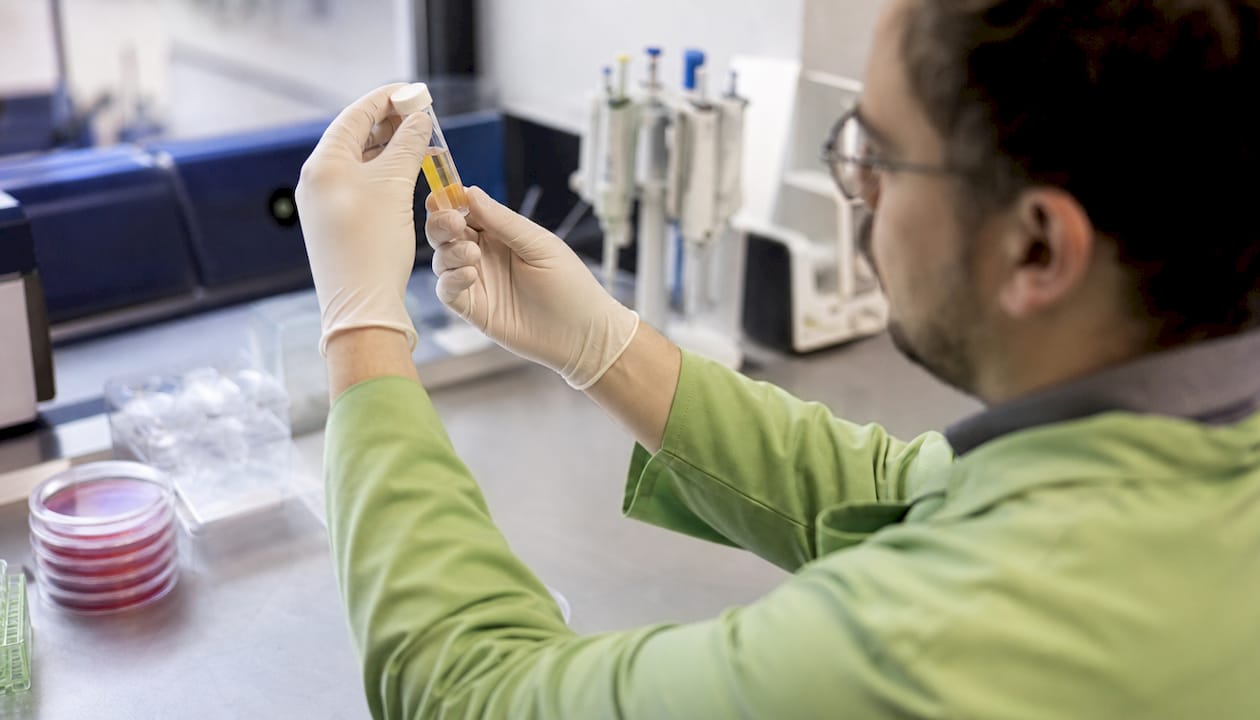
PRP therapy works because your blood already contains the raw materials your knee needs to heal. The preparation process involves drawing a sample of your blood, spinning it in a centrifuge to concentrate the platelets, and injecting that concentrated plasma directly into the affected joint. The result is a platelet concentration several times higher than what circulates in normal blood, delivered precisely where tissue damage and inflammation are occurring.
The biological rationale is well established. Activated platelets release growth factors including TGF-β (transforming growth factor beta), PDGF (platelet-derived growth factor), and VEGF (vascular endothelial growth factor). These proteins stimulate cartilage cell proliferation, support extracellular matrix synthesis, and suppress inflammatory mediators like IL-1β and TNF-α that drive joint degradation. In plain terms, PRP signals the knee to repair rather than continue breaking down.
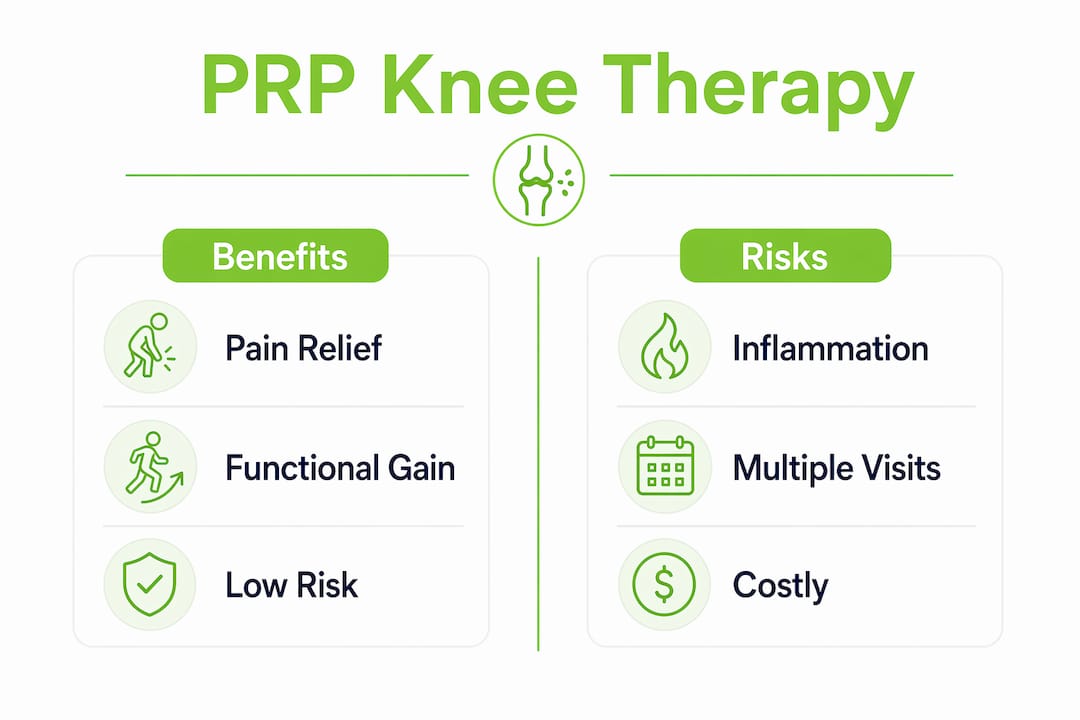
The benefits of PRP therapy extend beyond simple pain relief. PRP modulates the synovial environment, the fluid-filled lining of the joint, reducing the chronic low-grade inflammation that accelerates cartilage loss in osteoarthritis. This is why many patients report improvements in stiffness and mobility alongside pain reduction, not just one or the other.
Key biological effects of PRP on the knee joint include:
- Cartilage cell stimulation: Growth factors promote chondrocyte (cartilage cell) proliferation and slow degenerative breakdown.
- Inflammation control: PRP suppresses pro-inflammatory cytokines, reducing the chemical environment that causes ongoing joint damage.
- Synovial fluid improvement: PRP may improve the quality of synovial fluid, supporting smoother joint movement.
- Extracellular matrix support: Growth factors encourage production of collagen and proteoglycans, the structural proteins that give cartilage its resilience.
Pro Tip: Because PRP is autologous, meaning it comes from your own blood, the risk of immune rejection or allergic reaction is significantly lower than with synthetic injections. This makes it a well-tolerated option for most patients.
What does clinical evidence say about PRP effectiveness?
The clinical picture for PRP in knee osteoarthritis is encouraging, particularly within the first six months after treatment. Research consistently shows that PRP outperforms both hyaluronic acid injections and placebo on standardized outcome measures including the WOMAC (Western Ontario and McMaster Universities Osteoarthritis Index) and VAS (Visual Analog Scale) pain scores. A meta-analysis of functional outcomes found significant improvement in composite WOMAC Total scores, reflecting gains across pain, stiffness, and physical function together.
Patient age influences outcomes in a meaningful way. Subgroup analysis shows that patients under 60 experience more pronounced symptomatic improvements than older age groups. This likely reflects the greater regenerative capacity of younger tissue and less advanced cartilage degeneration at the time of treatment.
| Injection therapy | Pain relief at 6 months | Functional improvement | Long-term durability |
|---|---|---|---|
| PRP | Significant vs. placebo and HA | Significant WOMAC improvement | Diminishes without maintenance |
| Hyaluronic acid | Moderate | Moderate | Similar decline at 12 months |
| Placebo (saline) | Minimal | Minimal | Not sustained |
Long-term results require realistic expectations. Clinical studies note that differences between PRP and placebo or hyaluronic acid tend to narrow at 12 months without follow-up therapy. A single injection is not a permanent solution. Patients who see the best sustained outcomes typically incorporate maintenance injections and complementary therapies into their long-term plan.
How does PRP preparation affect outcomes and safety?
Not all PRP is the same, and this distinction matters clinically. Two primary formulations exist: leukocyte-rich PRP (L-PRP), which retains white blood cells, and leukocyte-poor PRP (LP-PRP), which removes most of them. Both formulations show comparable efficacy in reducing knee pain and improving function, but their safety and tolerance profiles differ.
L-PRP carries a higher concentration of white blood cells, which can trigger a stronger local inflammatory response after injection. Some patients experience increased post-injection soreness lasting a few days. LP-PRP tends to produce fewer of these transient reactions, making it a preferred option for patients who are sensitive to post-injection discomfort or who have had strong inflammatory responses to previous joint injections.
Blood draw volume also plays a direct role in outcomes. Studies using 40mL or more of blood for PRP preparation showed greater improvements in both WOMAC and VAS scores at six and twelve months compared to lower-volume preparations. Higher draw volumes produce higher platelet doses, which appears to drive better clinical results. Activation state adds another layer: activated PRP showed significant benefits in KOOS (Knee Injury and Osteoarthritis Outcome Score) subdomains at 12 months, suggesting that how the PRP is processed before injection influences how well it performs over time.
The lack of standardized preparation protocols across clinics is the biggest source of variability in patient outcomes. This is not a minor technical footnote. It means the PRP you receive at one clinic may differ substantially from what another clinic provides, even if both call it the same treatment.
Key preparation variables that affect your results:
- Leukocyte content: L-PRP vs. LP-PRP affects post-injection inflammation and tolerance.
- Blood draw volume: Higher volumes correlate with higher platelet doses and better outcomes.
- Activation method: Pre-activated PRP may perform better at 12 months.
- Centrifuge protocol: Spin speed and duration determine platelet concentration.
Pro Tip: Before your procedure, ask your provider specifically which PRP formulation they use, what blood volume they draw, and whether the PRP is activated. A clinic that can answer these questions clearly is one that takes preparation quality seriously. You can also learn more about how PRP preparation influences healing outcomes.
What should patients expect regarding safety and risks?
PRP injections carry a safety profile comparable to other intra-articular joint injections. Clinical guidelines confirm that risks are limited primarily to local effects at the injection site. Serious complications are rare.
Common risks patients should discuss with their provider include:
- Injection site pain: Temporary soreness or aching at the injection site, typically resolving within a few days.
- Local swelling: Mild swelling around the knee is normal and usually short-lived.
- Bleeding: Minor bleeding at the injection site is possible, particularly in patients on blood-thinning medications.
- Rare infection: As with any injection procedure, infection is a low-probability risk that proper sterile technique minimizes.
The autologous nature of PRP is its most significant safety advantage. Because the plasma comes from your own blood, the risk of allergic reaction or immune rejection is substantially lower than with synthetic or donor-derived substances. Patients who choose L-PRP should be prepared for a slightly higher chance of transient post-injection inflammation compared to LP-PRP, though this typically resolves within 48–72 hours and does not indicate a complication.
How does PRP fit into a broader knee pain treatment plan?
PRP is best understood as a mid-range intervention, positioned after conservative care has been tried and before surgical options become necessary. The ideal candidate is an adult with mild-to-moderate knee osteoarthritis who has not responded adequately to physical therapy, NSAIDs, or corticosteroid injections. Patients with advanced joint degeneration or bone-on-bone arthritis are less likely to benefit, and PRP is not a substitute for joint replacement in those cases.
Many patients at Nortexspineandjoint come in after trying multiple treatments without lasting relief. PRP works best when it is part of a structured plan rather than a standalone fix. Combining PRP with physical therapy for knee pain and targeted exercise accelerates functional recovery and helps maintain the gains achieved through injection. Lifestyle modifications, including weight management and low-impact activity, reduce the mechanical load on the joint and extend the duration of benefit.
Cost and insurance coverage are practical factors worth addressing directly. PRP is not covered by most insurance plans in the United States, as it is still classified as an elective or investigational procedure by many carriers. Patients should ask about out-of-pocket costs upfront and discuss whether a series of injections or a single injection protocol is recommended for their specific condition. Maintenance therapy, typically one to two injections per year, is often needed to sustain the improvements seen at six months.
Key Takeaways
PRP therapy provides clinically meaningful pain relief and functional improvement for mild-to-moderate knee osteoarthritis within six months, but sustained benefit requires maintenance injections and a structured treatment plan.
| Point | Details |
|---|---|
| Clinical efficacy at 6 months | PRP outperforms hyaluronic acid and placebo on WOMAC and VAS scores in 21 RCTs. |
| Younger patients benefit more | Subgroup analysis shows stronger WOMAC improvements in patients under 60. |
| Preparation quality matters | Blood draw volume, leukocyte content, and activation state all influence outcomes. |
| Safety profile is favorable | Risks are limited to local injection site reactions; autologous origin minimizes immune risk. |
| Maintenance therapy is needed | Single injections lose advantage over placebo by 12 months without follow-up treatment. |
What I’ve learned from watching patients choose PRP
The patients who do best with PRP are rarely the ones who come in expecting a cure. They are the ones who have done their research, understand the biology, and are willing to commit to a full treatment plan. That pattern holds consistently in clinical practice.
What surprises many patients is how much preparation quality varies between providers. Two people can both receive “PRP” and have completely different experiences, not because the therapy doesn’t work, but because the formulation, volume, and activation method were different. This is why I always take time to explain exactly what we are doing and why, before the first injection is given.
The evidence also tells us something important about timing. PRP works best when cartilage damage is present but not yet severe. Waiting until the joint is bone-on-bone significantly reduces the likelihood of a meaningful response. If you are in the early-to-moderate stages of knee osteoarthritis and conservative care has plateaued, that is the window where PRP tends to deliver the most value.
Realistic expectations are not pessimism. They are the foundation of a good outcome. Patients who understand that PRP is a mid-term treatment requiring maintenance tend to stay engaged with their care plan and report higher satisfaction over time.
— Felix
Nortexspineandjoint’s approach to PRP knee therapy
Nortexspineandjoint specializes in non-surgical regenerative care for chronic knee pain, with PRP therapy as one of its core treatment options. The clinic’s approach begins with a thorough evaluation to determine whether PRP is appropriate for your specific diagnosis, degree of joint involvement, and treatment history. Patients receive a personalized protocol that addresses preparation details, injection timing, and integration with physical rehabilitation. If you are considering PRP as a next step for knee pain, a consultation at Nortexspineandjoint gives you a clear picture of what to expect and whether you are a strong candidate. Schedule a consultation or learn more about PRP knee injection therapy to take an informed step toward lasting relief.
FAQ
What is PRP therapy for knees?
PRP (platelet-rich plasma) therapy is an autologous injection of concentrated platelets from your own blood, delivered into the knee joint to stimulate healing and reduce inflammation. It is used primarily for knee osteoarthritis and some soft tissue injuries.
How long does it take for PRP to work in the knee?
Most patients see meaningful improvement within six to twelve weeks after injection, with peak benefits typically measured at six months. Results vary based on age, severity of joint damage, and PRP preparation quality.
Is PRP better than cortisone or hyaluronic acid for knee pain?
Clinical evidence shows PRP outperforms both hyaluronic acid and placebo at six months on standardized pain and function measures. Corticosteroid injections may provide faster short-term relief but do not carry the same regenerative mechanism as PRP.
How many PRP injections are needed for knee pain?
A single injection series is common, but sustained benefit often requires maintenance injections, typically one to two per year, as clinical differences between PRP and placebo tend to narrow at 12 months without follow-up treatment.
Who is the best candidate for PRP knee injections?
Adults with mild-to-moderate knee osteoarthritis who have not responded adequately to physical therapy or anti-inflammatory medications are the strongest candidates. Younger patients and those with less advanced cartilage damage tend to see the most pronounced improvements.
Recommended
- Ultimate Guide to PRP Therapy for Knee Pain: What You Need to Know – Nortex | Pain Management | Allen, Garland, McKinney & Plano Texas
- PRP Therapy for Knee Pain: Recovery Timeline and Tips – Nortex | Pain Management | Allen, Garland, McKinney & Plano Texas
- PRP Therapy for Knee Pain: Costs, Benefits, and What to Expect – Nortex | Pain Management | Allen, Garland, McKinney & Plano Texas
- PRP Therapy for Knee Pain: How to Choose the Best Clinic – Nortex | Pain Management | Allen, Garland, McKinney & Plano Texas