
Platelet-rich plasma (PRP) can be a reasonable next step for chronic proximal hamstring tendinopathy, the deep pain at the base of the buttock where the hamstring attaches to the sitting bone, when a well-run loading program has not produced enough progress. It is not a first-line fix, and the research is more mixed than many clinic websites suggest. This guide explains what PRP can and cannot do for this tendon, how it compares with rehabilitation and shockwave, and what to expect if you decide to try it.
TL;DR
- PRP is an injection made from your own blood, placed under ultrasound guidance at the damaged hamstring tendon origin. It is usually considered after rehabilitation has stalled.
- Evidence is promising but not settled: one trial found no meaningful difference between PRP and whole-blood injection at 6 months, while a 2026 review of randomized trials found an advantage for PRP in hamstring studies.
- PRP tends to work best alongside structured strengthening, not instead of it.
- Expect a flare in soreness for the first one to two weeks, and expect to pay out of pocket in many cases.
- Shockwave therapy is a lower-risk option worth discussing before or alongside an injection.
Table of Contents
- What proximal hamstring tendinopathy actually is
- Where PRP fits in the treatment ladder
- How PRP works, in plain terms
- What the research says about PRP for hamstring tendinopathy
- PRP versus shockwave and rehabilitation
- Who is a good candidate, and who should wait
- What to expect: the procedure, soreness and recovery
- Cost and insurance
- Our perspective on PRP for the hamstring
- Next steps if you are in North Dallas
- FAQ
- Sources
What proximal hamstring tendinopathy actually is
Proximal hamstring tendinopathy is a degenerative, overuse problem of the tendon where the hamstring muscles attach to the ischial tuberosity. People describe a deep ache in the buttock that worsens with sitting on hard surfaces, stretching, sprinting, hill running, or lunging. A systematic review of interventions notes it affects both athletic and non-athletic people and is linked to longstanding buttock pain, with track and field, distance running and field sports being common settings.
The word “tendinopathy” matters. It describes a tendon whose structure has changed under repeated load, not a simple inflamed tendon. That is why the old habit of resting and taking anti-inflammatory pills so often fails, and why treatment is built around gradually rebuilding the tendon’s capacity.
Many patients come to us after months of being told it is a pulled hamstring, a piriformis problem or sciatica. Pain in the same region can come from the lower back, the hip, or the sciatic nerve, so an accurate diagnosis, usually a physical exam plus ultrasound or MRI, comes before any injection.

Tendinopathy versus a hamstring tear
A tendinopathy and a tear are different problems. Partial-thickness tears can sometimes be treated like tendinopathy, but a complete avulsion, where the tendon pulls off the bone, often needs a surgical opinion. A review of proximal hamstring injuries describes tendinopathy and partial tears as often manageable with non-operative care, including eccentric strengthening and shockwave, while avulsions are handled differently. If you felt a sudden pop, have significant bruising down the back of the thigh, or cannot bear weight normally, get examined promptly rather than waiting to see if it settles.
Where PRP fits in the treatment ladder
Most patients do best moving through conservative steps in order. The sequence we generally discuss looks like this:
- Activity modification. Reduce the loads that provoke the tendon, such as prolonged hard sitting, deep stretching into hip flexion, and hill sprints, without stopping all movement.
- Progressive loading. A physical therapist guides isometric, then isotonic, then heavier and faster hamstring work over months. This is the foundation of care.
- Shockwave therapy. Often added when progress plateaus.
- PRP. A reasonable next step when loading and shockwave have not produced adequate progress.
- Surgical consultation. Reserved for tendon tears that are significant or symptoms that fail everything else.
Corticosteroid injections are sometimes used for short-term relief, but they carry a trade-off. Steroids can quiet pain without helping the tendon rebuild, and repeated use around a tendon is a concern. That is one reason PRP has attracted interest as an alternative. The hip tendinopathy review describes PRP as having emerged more recently as an alternative to corticosteroid injection, believed to act through platelet-derived growth factors, while noting that evidence of actual tendon healing in humans remains limited.
How PRP works, in plain terms
PRP is plasma with a higher concentration of platelets than normal blood. The American Academy of Orthopaedic Surgeons explains that platelet concentration, and with it growth factor concentration, can be 5 to 10 times greater than usual. Because it is autologous, meaning made from your own blood, the risk of an allergic reaction is low compared with some synthetic injectables.
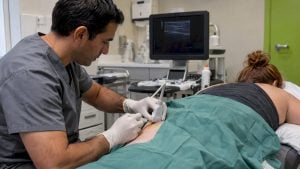
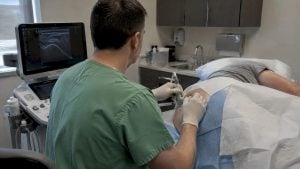
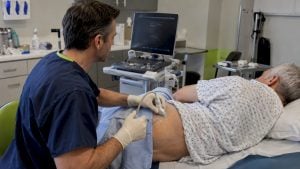
The process is straightforward. A small amount of blood is drawn from your arm, spun in a centrifuge to concentrate the platelets, and then injected into the tendon origin using ultrasound so the needle is placed where the damaged tissue actually is. The visit is typically brief, but the preparation and injection technique are not trivial details.

Not all PRP is the same
Preparation systems differ in how strongly they concentrate platelets and whether they filter out white blood cells (leukocytes). That difference can change the inflammatory environment inside the tendon after injection, according to the same AAOS patient guidance. When you evaluate any clinic, ask which system they use, whether the PRP is leukocyte-rich or leukocyte-poor, and whether the injection is image-guided. A clinic that cannot answer those questions clearly is a reason to keep looking.
What the research says about PRP for hamstring tendinopathy
The honest summary: encouraging signals, small studies, and conflicting designs.
| Study | Design | Main finding |
|---|---|---|
| Double-blind RCT, 2015 | PRP vs. autologous whole-blood injection, chronic proximal hamstring tendinopathy | No significant difference in physical function or quality of life at 6 months |
| Systematic review of RCTs, 2026 | 11 RCTs of PRP in extra-articular hip conditions, 5 on hamstring pathology | Hamstring studies favored PRP, with return to sport about 8 days faster on average; high heterogeneity |
| Systematic review of interventions | 12 studies, only 2 RCTs and 10 case series | Evidence base is thin and mostly low-level |
Two points deserve emphasis.
First, the 2015 trial compared PRP with another blood-derived injection, not with a placebo or with exercise alone. A finding of “no difference” tells you the two injections performed similarly, which does not prove that neither helps. It does suggest that the specific platelet concentration may not be the whole story.
Second, the 2026 review’s eight-day gain in return to sport is statistically significant, but it is a small number, and the authors flagged high variability in how the studies were run. Eight days is not the same as a transformed recovery.
Other work points the same cautious direction. A retrospective chart review and a pilot study looked at PRP for chronic proximal hamstring tendinopathy, and earlier reports described PRP as effective for proximal hamstring injuries. Uncontrolled case series and small pilots can show improvement, but they cannot separate the effect of the injection from the natural course of the condition or from the rehab people do afterward.
The AAOS characterizes PRP for chronic tendon injuries as promising but still evolving, and notes that the evidence is not strong enough to rank it above established conservative care such as physical therapy and exercise. We agree with that framing, and we would rather you hear it from us than discover it later.
PRP versus shockwave and rehabilitation
Patients often ask whether they should choose PRP or shockwave. They are not mutually exclusive, and they work differently.
Rehabilitation remains the backbone. Progressive loading remodels the tendon and addresses the strength, running mechanics and pelvic control that contributed to the problem.
Extracorporeal shockwave therapy (ESWT) delivers acoustic pulses through the skin to the tendon, with no needle and no blood draw. In a randomized trial of 40 professional athletes with chronic proximal hamstring tendinopathy, shockwave was compared with traditional treatment of anti-inflammatories, physiotherapy and hamstring exercises, and the shockwave group reported lower pain scores. It was a small study in elite athletes, so it should not be read as a guarantee for everyone. Shockwave is also commonly used for other tendons, including the patellar tendon at the front of the knee, which is a separate condition we evaluate on its own merits.
PRP adds a biologic stimulus directly into the tendon. Its main drawbacks compared with shockwave are that it is an injection, it can cause a temporary flare, it is usually not covered by insurance, and the evidence is still mixed.
| Option | Invasive? | Typical role | Main limitation |
|---|---|---|---|
| Progressive rehab | No | Foundation for everyone | Slow, needs consistency |
| Shockwave | No | Plateau after rehab | Several sessions, variable response |
| PRP | Yes (needle) | After rehab and shockwave stall | Mixed evidence, cost, post-injection flare |
| Corticosteroid | Yes | Short-term pain relief | May not help tendon recovery |
Who is a good candidate, and who should wait
In our experience, PRP makes the most sense for someone who:
- Has a confirmed diagnosis of chronic proximal hamstring tendinopathy or a partial tear, ideally with imaging.
- Has completed a legitimate rehabilitation program, usually at least three months, and still has limiting symptoms.
- Is willing to continue loading exercises after the injection.
- Understands the evidence is mixed and the result is not guaranteed.
It makes less sense, at least yet, for someone who has not tried structured rehab, whose pain is actually coming from the lumbar spine or sciatic nerve, who has a complete avulsion, or who expects a one-visit cure.
Many patients arrive hoping PRP is a magic bullet after physical therapy failed. In practice, a systematic review of the topic and our own clinical experience point the same way: PRP works best as a biologic boost to a structured rehab program, and less well as a standalone fix for a long-standing tendon that has already undergone significant structural change. If your rehab stalled because it was never progressed properly, the first answer may be better rehab, not an injection.
What to expect: the procedure, soreness and recovery
Before and during
Your provider reviews your history, medications and imaging. Many clinicians ask patients to avoid anti-inflammatory drugs around the time of treatment, since these may interfere with the response, so ask your physician what applies to you. The blood draw, preparation and ultrasound-guided injection usually fit into one appointment.
The first two weeks
Expect more pain at the injection site for roughly the first one to two weeks. That flare is a normal part of the process, and patients often mistake it for failure. Sitting can be uncomfortable, so a cushion and a temporary reduction in running or heavy lifting are common. Call your physician if you notice fever, spreading redness, swelling, or numbness or shooting pain down the leg.
Safety and risks
Reported adverse event rates after PRP for proximal hamstring tendinopathy range from 0% to 10%, most commonly post-injection pain and possible irritation of the sciatic nerve, which lies close to the hamstring origin. That proximity is another reason we insist on ultrasound guidance and an experienced injector.
Rehabilitation after the injection
A typical pattern is a short period of relative rest, then gentle isometric work, then progressive strengthening over several weeks to months. Tendons remodel slowly, so judging results at two weeks is too early. Most clinicians look at progress over three to six months, and the trials above followed patients for up to six months.
Cost and insurance
Cost is a fair concern. The AAOS notes that most health insurance plans, including workers’ compensation, do not routinely cover PRP, so it is often an out-of-pocket expense. Call your insurer before treatment to ask directly about eligibility. We do not publish a fixed fee because the plan depends on your diagnosis and how many areas are treated, so the best way to get a number is a consultation. Our overview of which insurance companies cover PRP injections explains the questions to ask your carrier. If you are weighing several out-of-pocket therapy costs at once, write them down side by side so you can compare what each adds to your recovery plan.
Our perspective on PRP for the hamstring
We approach this tendon with more caution than the marketing around PRP might suggest. At Nortex Spine and Joint, our physicians are Harvard fellowship-trained and board-certified, and our approach is to build a non-surgical plan around the cause of the pain, not only the symptom. For a hamstring tendon, that means confirming where the pain truly originates, checking the spine and hip, and making sure rehabilitation has been given a fair trial.
When PRP is appropriate, we treat it as one part of a plan. The injection is meant to support the tendon while rehab does the long work of rebuilding it. We also think consistency in preparation and technique matters as much as the product itself, which is why we are open about asking patients to question any clinic about its system and guidance.
We will tell you plainly when we think PRP is unlikely to help, when shockwave or more rehab should come first, and when a surgical opinion makes sense. A good treatment decision is one you can explain back to us in your own words.
— Felix
Next steps if you are in North Dallas
If buttock or high hamstring pain has lingered despite rehab, a consultation can clarify whether this is tendinopathy, a tear, or referred pain from elsewhere. Our team offers PRP therapy, broader regenerative medicine options and physical therapy under one roof, along with shockwave among our non-surgical treatments. For background on how we think about tendon problems in general, read our piece on PRP for tendonitis, or the pros and cons of PRP injections. You can contact the clinic to schedule an evaluation.
FAQ
Can PRP injections heal a torn tendon?
PRP is believed to support tendon repair through platelet-derived growth factors, but evidence of true tendon healing in humans is still limited. Partial tears may respond alongside rehabilitation, while complete avulsions of the hamstring from the bone usually need a surgical evaluation. An exam and imaging determine which category you are in.
How long does PRP take to work for hamstring tendinopathy?
Not quickly. Expect a flare in soreness for the first one to two weeks, then gradual improvement while you rebuild strength. Clinical trials have measured outcomes out to about six months, so judge results over months, not days.
Is PRP better than shockwave for hamstring tendinopathy?
There is no head-to-head answer strong enough to declare a winner. Shockwave is non-invasive and often tried first when rehab plateaus, while PRP is generally considered if progress is still inadequate. Some patients use them in sequence.
What is the fastest way to heal a torn hamstring?
There is no shortcut. Healing depends on the severity of the injury: minor strains and partial tears generally follow a staged rehab plan, while complete tears may need surgery. One review of randomized trials found PRP shortened return to sport by an average of 8 days, a modest gain, and not a replacement for rehab.
Sources
- Ultrasound-guided PRP or autologous whole blood for proximal hamstring tendinopathy: double-blind RCT (PubMed)
- PRP for extra-articular hip pathology, systematic review of RCTs (PubMed)
- Tendinopathies of the hip: current and future advances (PMC)
- Proximal hamstring injuries: tendinopathy and avulsion management (PMC)
- Platelet-rich plasma (PRP), OrthoInfo, AAOS
- Proximal hamstring tendinopathy: systematic review of interventions (PMC)
- Proximal hamstring tendinopathy: systematic review of interventions (PubMed)
- PRP for chronic proximal hamstring tendinopathy, retrospective review (PubMed)
- PRP injection for proximal hamstring tendinopathy: pilot study (PubMed)
- PRP as an effective treatment for proximal hamstring injuries (PubMed)
- Shockwave therapy for chronic proximal hamstring tendinopathy in professional athletes (SAGE)