
Regenerative medicine is defined as a class of non-surgical therapies designed to stimulate the body’s own repair mechanisms to heal damaged tissue, reduce chronic pain, and restore function. Options like platelet-rich plasma (PRP) and stem cell therapy have moved from experimental settings into clinical practice, though most carry early-stage evidence rather than full FDA approval. Knowing how to select regenerative treatments requires more than reading a clinic’s website. You need to understand your candidacy, the biological basis of each therapy, the strength of clinical evidence behind it, and the qualifications of the provider delivering it. This guide walks through each of those criteria in plain terms.
What key factors determine your suitability for regenerative therapies?
Candidacy for regenerative medicine is not universal. The right patient profile matters as much as the right treatment, and a thorough medical evaluation is the starting point for any responsible recommendation.
Common indications include chronic musculoskeletal pain, tendon injuries, osteoarthritis, and spinal conditions that have not responded adequately to physical therapy, anti-inflammatory medications, or corticosteroid injections. Many patients arrive at Nortexspineandjoint after months or years of trying conventional care without lasting relief. That pattern is actually a reasonable clinical signal: regenerative therapies tend to perform best when standard options have been exhausted but surgery is not yet warranted.
Your physician will assess several factors before recommending a specific therapy:
- Diagnosis accuracy. Imaging (MRI or ultrasound) should confirm the structural source of your pain before any injection is planned.
- Medical history. Autoimmune conditions, active infections, blood disorders, and certain cancers are contraindications for most regenerative procedures.
- Medication review. Anticoagulants and some anti-inflammatory drugs can affect platelet function and cell viability.
- Recent injections. Corticosteroids can inhibit or destroy regenerative cells, so at least 6–12 weeks should separate a steroid injection from a regenerative procedure.
- Realistic expectations. Regenerative therapies support healing; they do not guarantee it. Timelines for meaningful improvement typically range from 6 to 12 weeks post-procedure.
Honest physician assessment is non-negotiable here. A provider who tells every patient they are a candidate is not practicing evidence-based medicine.
Pro Tip: Bring a written list of every injection, medication, and supplement you have taken in the past three months to your evaluation. This detail directly affects which therapy is appropriate and when it can be safely administered.
What are the main types of regenerative treatments and how do they compare?
Choosing regenerative therapies starts with understanding what each option actually does at a biological level.
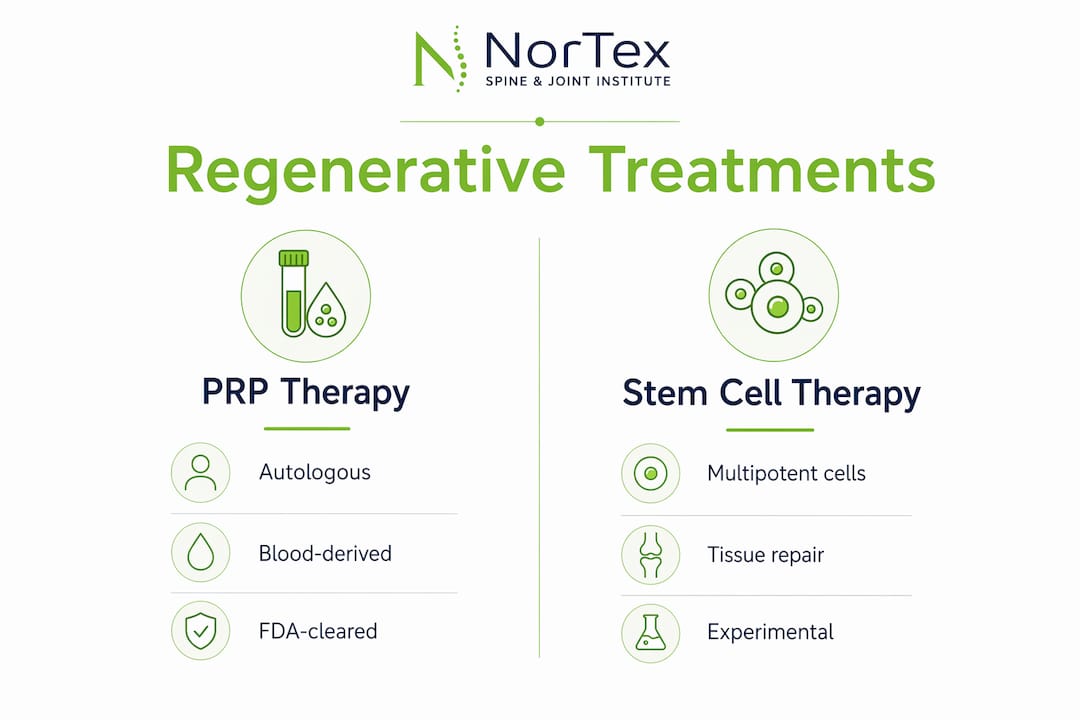
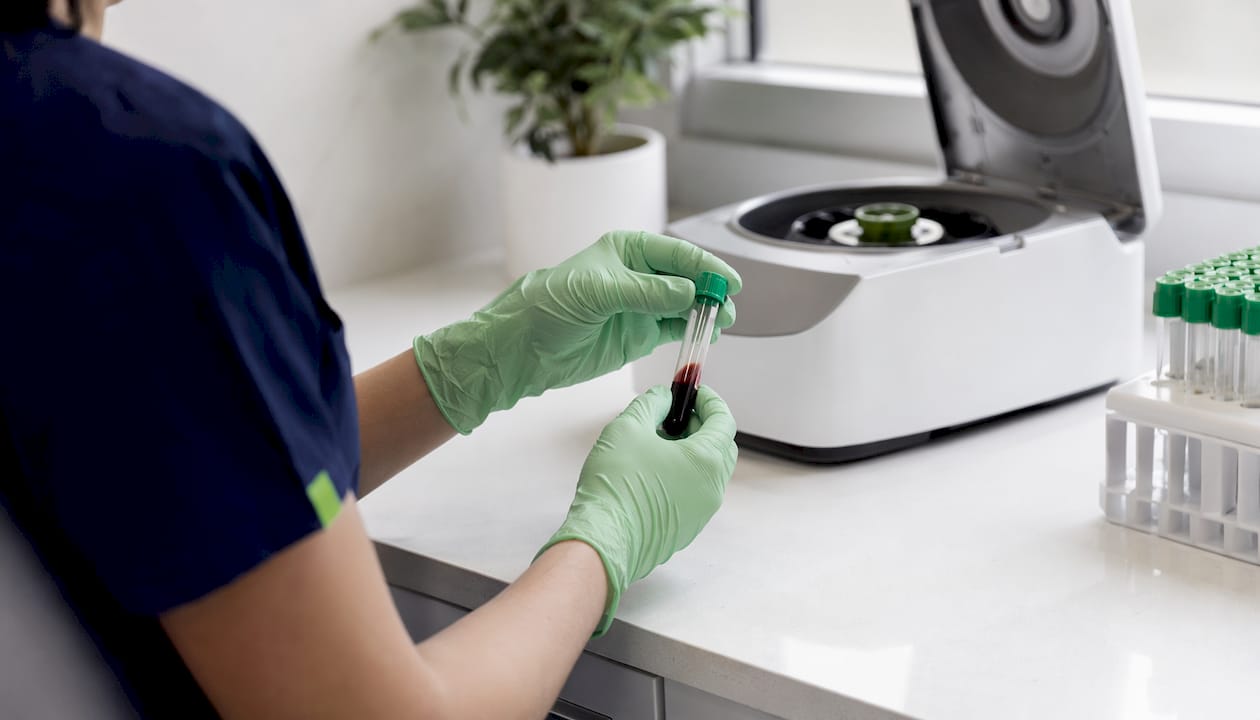
Platelet-rich plasma (PRP) is an autologous therapy, meaning it comes from your own blood. A small blood draw is centrifuged to concentrate platelets, which release growth factors that signal tissue repair and reduce inflammation. PRP is widely used off-label for orthopedic and pain indications, but it is not FDA-approved as a treatment. Its safety and efficacy rest on peer-reviewed clinical evidence rather than regulatory approval. That distinction matters when evaluating a provider’s claims. For lateral epicondylitis (tennis elbow), PRP outperforms corticosteroids at the six-month mark, making it one of the more evidence-supported orthopedic indications. You can review the clinical evidence for spinal applications through Nortexspineandjoint’s PRP back pain page.
Stem cell therapy uses cells capable of differentiating into multiple tissue types to support repair. Mesenchymal stem cells derived from bone marrow and adipose (fat) tissue are the most studied for orthopedic applications because of their differentiation potential and anti-inflammatory properties. Bone marrow concentrate (BMAC) and adipose-derived stem cells are the two most common sources used in clinical settings. Neither is FDA-approved as a drug; the cells are regulated as a procedure when minimally manipulated and used for homologous purposes.
Prolotherapy involves injecting a dextrose (sugar water) solution into damaged ligaments or tendons to trigger a controlled inflammatory response and stimulate collagen production. It carries a longer clinical history than PRP or stem cells, with moderate evidence for conditions like chronic low back pain and knee osteoarthritis.
| Treatment | Biological source | Primary applications | Evidence level | Regulatory status |
|---|---|---|---|---|
| PRP | Patient’s own blood | Tendon injuries, osteoarthritis, spine | Moderate (Level III–IV for spine) | Off-label; device FDA-cleared only |
| Bone marrow stem cells | Patient’s bone marrow | Osteoarthritis, cartilage repair | Early to moderate | Not FDA-approved as drug |
| Adipose stem cells | Patient’s fat tissue | Joint pain, soft tissue repair | Early | Not FDA-approved as drug |
| Prolotherapy | Dextrose solution | Ligament laxity, chronic low back pain | Moderate | Not FDA-regulated as drug |
The ASIPP 2025 clinical guidelines assign Level III evidence to lumbar intradiscal and epidural PRP injections for chronic low back pain, and Level IV evidence to facet and sacroiliac joint injections. That reflects cautious optimism, not a green light for every patient. For a balanced look at the pros and cons of PRP, Nortexspineandjoint’s clinical blog covers the evidence in detail.
Current musculoskeletal pain treatment options in 2026 increasingly integrate regenerative therapies alongside rehabilitation, rather than as standalone cures.
How do you evaluate regenerative treatment providers?
Provider quality is the single most controllable variable in your outcome. The therapy itself matters, but the physician delivering it matters more.
- Verify board certification. Look for physicians certified in pain management, orthopedics, physical medicine and rehabilitation, or sports medicine. These specialties have the diagnostic and procedural training relevant to regenerative injections.
- Confirm image-guided technique. Ultrasound or fluoroscopic guidance significantly improves injection accuracy. Ask specifically whether the physician uses imaging guidance for every procedure.
- Understand FDA clearance vs. approval. Nearly all PRP kits are Class II FDA-cleared devices for bone-graft mixing only. Use for joints or tendons is off-label. A provider who claims their PRP system is “FDA-approved for joint treatment” is misrepresenting the regulatory status.
- Watch for red flags. Guaranteed cures, high-pressure sales tactics, cash-only pricing with no itemized breakdown, and wide claims about treating unrelated conditions are all warning signs of non-reputable clinics.
- Ask direct questions. Before committing, ask how many procedures the physician has performed, what their complication rate is, and what peer-reviewed evidence supports the specific treatment they are recommending for your condition.
Pro Tip: Request the informed consent document before your appointment. A legitimate provider will give you time to read it, ask questions, and understand the investigational nature of the therapy before you agree to proceed.
Patient safety depends heavily on the physician’s specialty, training in guided injections, and honest communication about what the evidence does and does not support. You can find a useful framework for questions to ask providers through Nortexspineandjoint’s resource on regenerative injections.
Step-by-step process for selecting and preparing for treatment
Selecting effective regenerative solutions is a process, not a single appointment. These steps reflect what a well-structured evaluation looks like in practice.
- Research your condition first. Before consulting any provider, understand whether your specific diagnosis has published clinical evidence supporting regenerative therapy. PubMed and ASIPP guidelines are reliable starting points.
- Schedule a specialist evaluation. A qualified physician should review your imaging, take a full history, and confirm your diagnosis before recommending any injection.
- Disclose all recent treatments. Tell your provider about every steroid injection, local anesthetic, and anti-inflammatory medication you have used recently. Local anesthetics like lidocaine can compromise cell viability and should be avoided near the procedure window.
- Review the informed consent carefully. Legitimate programs provide transparent, evidence-backed plans with realistic outcome expectations. If a provider cannot explain the evidence basis for your specific treatment, that is a problem.
- Plan your post-procedure period. Most regenerative procedures require reduced activity for 48–72 hours. Some patients need a structured rehabilitation program afterward to support tissue remodeling.
Before your procedure, confirm the following:
- No corticosteroid injections within the past 6–12 weeks
- No NSAIDs (ibuprofen, naproxen) for at least 7 days prior, unless your physician advises otherwise
- Adequate hydration on the day of the procedure
- Arranged transportation if sedation is used
Key Takeaways
Selecting the right regenerative treatment requires matching your specific diagnosis to the appropriate therapy, verifying provider credentials, and understanding the current limits of clinical evidence.
| Point | Details |
|---|---|
| Candidacy comes first | A confirmed diagnosis and full medical history must precede any regenerative treatment recommendation. |
| Evidence varies by therapy | PRP has moderate evidence for specific indications; stem cell therapies remain early-stage for most orthopedic uses. |
| Regulatory status is nuanced | PRP kits are FDA-cleared devices, not FDA-approved treatments; off-label use is standard but must be disclosed. |
| Provider credentials matter | Board-certified physicians using image-guided technique deliver safer, more accurate regenerative injections. |
| Preparation affects outcomes | Avoiding corticosteroids and local anesthetics for 6–12 weeks before treatment protects cell viability and improves results. |
What I’ve learned about navigating regenerative medicine honestly
The patients who do best with regenerative therapies share one trait: they came in with realistic expectations and a willingness to participate in their own recovery. They did not arrive expecting a single injection to reverse years of joint degeneration. They understood that PRP or stem cell therapy works alongside rehabilitation, not instead of it.
The harder clinical reality is that this field still carries more promise than proof for many indications. The ASIPP guidelines reflect that honestly. Level III and Level IV evidence means we have reason for cautious optimism, not certainty. Patients who research regenerative medicine online often encounter clinics making claims that far outpace the published literature. That gap between marketing and evidence is where patients get hurt, financially and physically.
What I consistently tell patients is this: the therapy is only as good as the physician selecting it for you. A well-trained, board-certified physician who uses imaging guidance, discloses the off-label nature of the treatment, and sets honest outcome expectations is the foundation of a good result. The biological mechanism of PRP or stem cells is secondary to that clinical judgment. When you find a provider who leads with evidence and caution rather than guarantees, you are in the right room.
— Felix
Nortexspineandjoint’s approach to personalized regenerative care
Nortexspineandjoint serves patients across North Dallas who are looking for non-surgical options for chronic joint, spine, and musculoskeletal pain. The clinic’s board-certified physicians evaluate each patient individually, using imaging-guided techniques and evidence-based protocols drawn from current ASIPP guidelines. Treatment options include personalized PRP therapy and stem cell therapy, both delivered with transparent informed consent and realistic outcome expectations. Pricing is disclosed clearly, and no treatment is recommended without a confirmed diagnosis and a thorough candidacy review. If you are ready to find out whether regenerative medicine is appropriate for your condition, scheduling an evaluation at Nortexspineandjoint is a direct next step.
FAQ
What conditions qualify for regenerative treatment?
Chronic musculoskeletal pain, tendon injuries, osteoarthritis, and certain spinal conditions that have not responded to standard care are the most common indications. A confirmed diagnosis through imaging is required before any regenerative therapy is recommended.
Is PRP therapy FDA-approved?
PRP is not FDA-approved as a treatment. PRP kits are FDA-cleared Class II devices for bone-graft mixing only; use for joints, tendons, or spinal conditions is off-label and relies on peer-reviewed clinical evidence for its safety and efficacy profile.
How long should I wait after a steroid injection before getting PRP or stem cell therapy?
At least 6–12 weeks should separate a corticosteroid injection from a regenerative procedure. Corticosteroids can inhibit or destroy the regenerative cells, reducing the effectiveness of the treatment.
What questions should I ask a regenerative medicine provider?
Ask about the physician’s board certification, how many procedures they have performed, whether they use image-guided injection technique, what peer-reviewed evidence supports your specific treatment, and what the informed consent document states about the investigational nature of the therapy.
How do I know if a stem cell clinic is legitimate?
Legitimate clinics evaluate candidacy carefully, disclose the off-label or investigational status of treatments, provide itemized pricing, and do not guarantee cures. Red flags include high-pressure sales tactics, cash-only fees without explanation, and claims that the therapy treats a wide range of unrelated conditions.