

Back pain is one of the most common reasons people seek medical care, yet many of you want to manage it without relying on medications or surgery. That search for effective natural remedies for back pain can feel overwhelming. There are dozens of options promoted online, with widely varying levels of evidence and very different mechanisms of action. This article cuts through the noise. It gives you a clinically informed framework for evaluating your options, then walks through the most evidence-supported remedies across physical, movement-based, nutritional, and mind-body categories so you can make confident, safe choices.
Table of Contents
- Key takeaways
- 1. How to evaluate natural remedies for back pain
- 2. Heat and cold therapy
- 3. Massage therapy
- 4. Acupressure mats
- 5. Essential oils and topical herbal preparations
- 6. Yoga poses and structured stretching
- 7. Core strengthening and aerobic exercise
- 8. Nutrition and anti-inflammatory diet
- 9. Mindfulness-based stress reduction and sleep
- 10. Comparison of natural remedies by effectiveness and onset
- My clinical perspective on natural remedies for back pain
- When natural remedies need a clinical partner
- FAQ
Key takeaways
| Point | Details |
|---|---|
| Match remedy to pain type | Acute and chronic back pain respond to different natural approaches, so timing your strategy matters. |
| Movement outperforms rest | Staying active and doing structured exercise consistently produces better outcomes than bed rest or passive treatment alone. |
| Combine modalities | No single remedy works in isolation; layering heat, movement, nutrition, and stress management yields more stable relief. |
| Give it time | Core training programs need at least 8 weeks to show meaningful functional improvements in chronic pain. |
| Know when to seek care | Natural remedies are appropriate for most mechanical back pain, but red flag symptoms require prompt clinical evaluation. |
1. How to evaluate natural remedies for back pain
Before you try any remedy, you need a simple framework to judge whether it is worth your time, safe for your situation, and likely to help. Not all natural options are equal.
What to look for:
- Safety profile. Some herbal treatments for back pain interact with medications or are contraindicated in certain health conditions. Always check before adding supplements.
- Quality of evidence. Look for remedies supported by randomized controlled trials or systematic reviews, not just testimonials or small case reports.
- Mechanism of action. Understanding how a remedy works, whether through anti-inflammatory pathways, muscle relaxation, or neuromuscular strengthening, helps you match it to your specific pain driver.
- Ease of use. A remedy that requires specialized equipment or significant cost may not be sustainable. Prioritize options you can realistically maintain.
- Realistic timeline. Most natural approaches take weeks, not days, to show measurable improvement. Setting accurate expectations prevents early abandonment.
- Acute vs. chronic distinction. The most helpful approach depends on whether your back pain is new or has persisted beyond 12 weeks, reflecting a biopsychosocial model that integrates movement and mind-body strategies.
Pro Tip: Before self-treating, briefly document your pain pattern, what makes it better or worse, and how long it has lasted. This information helps any clinician you consult make faster, more accurate recommendations.
One additional consideration: most acute low back pain does not require imaging, and bed rest actively delays recovery. Reassurance, education, and maintaining normal activities are the foundation of early management, not passivity.
2. Heat and cold therapy
Heat and cold are the most accessible home remedies for backache, and when used correctly, they are genuinely effective.
Cold therapy works best in the first 24 to 72 hours after an injury or flare. It reduces local inflammation and numbs pain receptors. Apply an ice pack wrapped in a cloth for 15 to 20 minutes at a time, never directly on skin.
Superficial heat is the more widely supported option for subacute and chronic pain. Superficial heat is backed by moderate-certainty evidence for acute low back pain management, making it one of the stronger conservative recommendations available. Use a heating pad or warm compress for 15 to 20 minutes, two to three times daily. Moist heat, such as a warm bath or damp heated towel, penetrates more effectively than dry heat for deep muscle tightness.
Switch between cold and heat once the acute phase passes if you find contrast therapy more relieving. The key is consistency, not intensity.
3. Massage therapy
Massage therapy addresses back pain through several overlapping mechanisms: it reduces muscle tension, improves local circulation, and modulates pain perception through the nervous system.
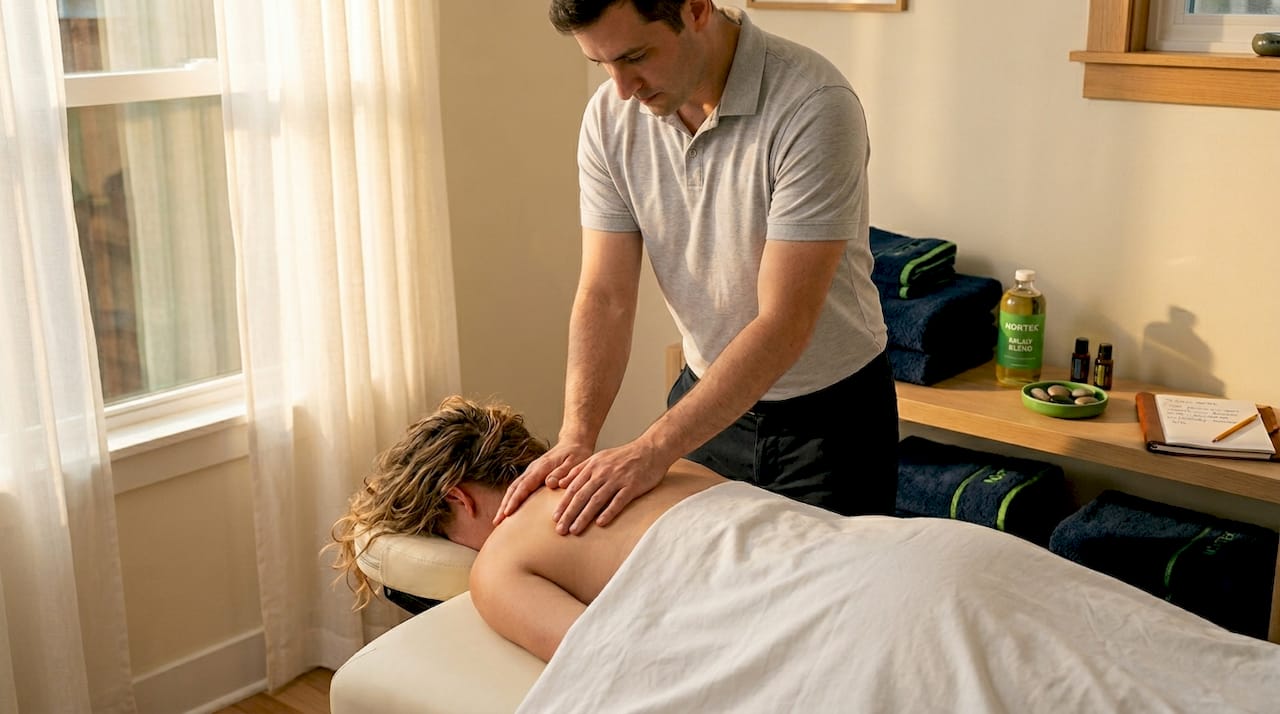
Heat, massage, acupuncture, and yoga are among the commonly recommended non-drug options for new low back pain, though massage and acupuncture carry lower certainty of evidence than exercise-based approaches for chronic presentations. That said, many patients who come in after trying medications first report that consistent therapeutic massage gave them their first meaningful relief.
For back-specific benefit, look for therapists trained in therapeutic massage techniques such as deep tissue or myofascial release, rather than general relaxation modalities. A session frequency of one to two times per week during a flare, tapering to monthly maintenance, is a practical starting point. Swedish massage can also reduce nervous system arousal, which is particularly useful when stress-driven muscle tension is contributing to your pain.
4. Acupressure mats
Acupressure mats are a lower-cost alternative to professional manual therapy, and the evidence for them is more substantial than their price point might suggest.
Using an acupressure mat for 20 to 30 minutes activates endorphin release, increases circulation, and promotes myofascial release in chronically tight tissue. In one randomized controlled trial, regular acupressure mat use produced an 81% reduction in pain scores after six weeks of consistent application.
Lie on the mat on a firm surface such as a yoga mat or carpeted floor rather than a soft mattress, which would reduce the pressure distribution. Start with 10 minutes per session if the initial sensation is too intense, and gradually increase. Most users adapt within three to five sessions.
5. Essential oils and topical herbal preparations
Essential oils for back pain are most useful as adjuncts to physical treatment rather than standalone therapies. Lavender, peppermint, and eucalyptus oils are the most studied for musculoskeletal pain applications, primarily through topical application mixed with a carrier oil such as coconut or jojoba.
Peppermint oil contains menthol, which creates a cooling counter-irritant effect that can temporarily reduce perceived pain intensity. Eucalyptus has documented anti-inflammatory properties in topical preparations. Lavender works partly through its effect on the autonomic nervous system, reducing stress-related muscle tension when inhaled or applied.
Herbal topical preparations including arnica gel and capsaicin cream have more clinical evidence behind them. Capsaicin depletes substance P, a neuropeptide involved in pain signaling, with consistent use over several weeks. Do not apply capsaicin cream to broken skin, and wash hands thoroughly after application.
6. Yoga poses and structured stretching
Movement is medicine for back pain, and yoga in particular delivers stretching, strength, and breath-based stress reduction in a single practice.
For chronic low back pain, exercise including stretching, balance training, and mindfulness-based stress management is among the most recommended long-term approaches. Yoga aligns with all three of those elements. Poses that are particularly beneficial include:
- Child’s Pose (Balasana): Gently lengthens the lumbar spine and relieves compression. Hold for 30 to 60 seconds.
- Cat-Cow (Marjaryasana-Bitilasana): Mobilizes the spine through flexion and extension, improving segmental movement.
- Piriformis stretch (seated or supine figure-four): Targets the piriformis and hip external rotators, which frequently refer pain into the low back.
- Hip flexor lunge stretch: Stretches the iliopsoas, which when chronically shortened pulls the lumbar spine into excessive lordosis and drives pain.
- Supine hamstring stretch: Tight hamstrings restrict pelvic motion and increase lumbar loading.
For yoga poses for back pain to be effective, hold each stretch for 10 to 30 seconds per repetition, as specified in ACSM guidelines for flexibility training. Rushing through stretches provides minimal benefit to connective tissue.
Pro Tip: Practice yoga poses in the morning before your spine loads up from daily activity. Many patients find that a 15-minute morning routine consistently outperforms sporadic longer sessions.
7. Core strengthening and aerobic exercise
If there is one category of natural pain relief for back pain that has the strongest and most consistent research support, it is structured exercise targeting the core and cardiovascular system.
Core muscles, specifically the transversus abdominis, multifidus, and pelvic floor, act as the lumbar spine’s natural stabilization system. When they are weak or poorly coordinated, the vertebrae and discs absorb disproportionate load. A core training program extended to at least 8 weeks, combined with adjunct therapies, produces more stable functional improvements than core training alone in chronic non-specific low back pain.
Effective core exercises include dead bugs, bird dogs, modified planks, and glute bridges. These exercises train spinal stability under controlled conditions without excessive lumbar loading. You can find a clinician-curated progression at back strengthening exercises recommended specifically for this population.
For aerobic exercise, moderate-intensity activity at 40% to 60% of heart rate reserve, combined with resistance training at 60% to 70% of one-repetition maximum, represents the evidence-based dose for improving back pain outcomes. Walking, swimming, and cycling are all appropriate starting points that carry low spinal risk.
8. Nutrition and anti-inflammatory diet
Back pain, particularly chronic back pain, frequently has a significant inflammatory component. What you eat directly influences systemic inflammation, and that influence reaches your spinal tissues.
The following anti-inflammatory nutrients have specific evidence for pain modulation:
| Nutrient | Mechanism | General Guidance |
|---|---|---|
| Omega-3 fatty acids | Reduce pro-inflammatory prostaglandins | 1,000 to 3,000 mg EPA/DHA daily from fish oil or algae |
| Turmeric/curcumin | Inhibits NF-kB inflammatory pathway | 500 to 1,000 mg curcumin with piperine for absorption |
| Magnesium | Regulates NMDA receptor activity in pain signaling | 300 to 400 mg magnesium glycinate daily |
| Vitamin D3 | Modulates immune response, supports muscle function | 2,000 to 4,000 IU daily; check serum levels first |
| Ginger | COX-2 inhibitor similar to ibuprofen in mechanism | 1 to 2 g dried ginger or standardized extract daily |
Anti-inflammatory diet components including these nutrients help reduce systemic inflammation linked to back pain signaling at the cellular level. Equally important is reducing pro-inflammatory inputs: refined carbohydrates, seed oils high in omega-6 fatty acids, processed meats, and excess alcohol all amplify inflammatory pathways.
9. Mindfulness-based stress reduction and sleep
Chronic pain and psychological stress reinforce each other through shared neurobiological pathways. Addressing the stress component is not optional for long-term relief. It is mechanistically necessary.
Mindfulness-based stress reduction has been shown in randomized controlled trials to produce pain reduction comparable to pharmacological treatments, with better adherence rates and no adverse effects. An 8-week MBSR program typically involves structured breathing, body scan practices, and non-judgmental awareness of pain sensations. This retrains the brain’s pain processing circuits, reducing the amplification that chronicity produces.
Sleep is equally underappreciated. Poor sleep increases inflammatory cytokines, reduces pain tolerance, and impairs the tissue repair that happens during slow-wave sleep. Practical strategies include keeping a consistent sleep schedule, limiting screen exposure 60 minutes before bed, and using a medium-firm mattress with appropriate pillow support for spinal alignment.
You can explore how to alleviate back pain naturally through a broader combination of these approaches.
10. Comparison of natural remedies by effectiveness and onset
| Remedy | Evidence Strength | Onset of Relief | Long-Term Impact | Ease of Use |
|---|---|---|---|---|
| Heat therapy | Moderate | Hours | Low (symptomatic only) | Very easy |
| Exercise/core training | Strong | Weeks | High | Moderate |
| Massage therapy | Moderate | 1 to 2 sessions | Moderate | Requires access |
| Yoga/stretching | Moderate to strong | 2 to 4 weeks | High | Easy to moderate |
| Acupressure mat | Moderate (RCT) | 1 to 3 weeks | Moderate | Very easy |
| MBSR/mindfulness | Strong (RCTs) | 4 to 8 weeks | High for chronic pain | Moderate |
| Anti-inflammatory diet | Moderate | 4 to 12 weeks | High | Moderate |
| Essential oils (topical) | Low to moderate | Minutes to hours | Low | Very easy |
For acute pain under 12 weeks, prioritize heat, gentle movement, and reassurance. For chronic pain, layer exercise, MBSR, and nutritional strategies for more durable outcomes. Avoid relying exclusively on passive remedies like heat or topical treatments, which address symptoms without modifying the underlying drivers of pain.
My clinical perspective on natural remedies for back pain
I have worked with many patients who arrive frustrated after months of trying various natural remedies without consistent results. The pattern I see most often is not that these remedies fail. It is that they are applied inconsistently, in isolation, or without adjusting for whether the pain is acute or chronic.
What actually works is persistence and layering. A patient who combines a structured core program with an anti-inflammatory diet and 10 minutes of daily mindfulness will almost always outperform someone doing only one of those things sporadically. The clinical literature on combined intervention outcomes confirms this pattern clearly.
My practical advice: start with two or three remedies you can genuinely commit to for eight weeks, track your functional improvements rather than just pain scores, and consult a clinician if your pain involves neurological symptoms, is worsening, or is not responding after six weeks of consistent self-care. Natural care works best within a supervised framework, not in place of one.
— Felix
When natural remedies need a clinical partner
Natural approaches form an excellent foundation for managing back pain without medications or surgery, and for many patients they are sufficient. But when back pain stems from disc pathology, joint degeneration, or nerve involvement, combining natural strategies with regenerative medicine can address the structural root cause rather than just the symptoms.
At Nortexspineandjoint, we build personalized treatment plans that integrate conservative care with advanced options like PRP therapy for back pain, which uses your body’s own platelet-derived growth factors to support tissue repair and reduce chronic inflammation. For patients whose pain has not resolved with natural methods alone, this kind of targeted, non-surgical intervention can be the missing piece. Explore your non-surgical treatment options or schedule a consultation with our North Dallas team to discuss a plan tailored to your specific condition.
FAQ
What are the most effective natural remedies for back pain?
Exercise and core strengthening have the strongest evidence for both acute and chronic back pain. Combining movement with heat therapy, mindfulness, and anti-inflammatory nutrition produces the best outcomes.
How long do natural remedies take to relieve back pain?
Most natural approaches require consistent application over two to eight weeks before producing measurable improvement. Core training programs show more stable results when maintained for at least eight weeks.
Can acupressure help with back pain relief?
Yes. Acupressure mat use for 20 to 30 minutes daily has shown an 81% reduction in pain scores after six weeks in a randomized controlled trial, making it one of the better-supported passive therapies available.
Is yoga safe for back pain?
Yoga is generally safe and beneficial for back pain when practiced with proper instruction and appropriate pose modifications. Avoid deep forward folds or spinal twists during acute flares.
When should I stop using home remedies and see a doctor?
Seek clinical evaluation if your pain includes numbness, tingling, or weakness in the legs, if pain follows a fall or injury, or if conservative home management has not improved your condition after six weeks.
Recommended
- Natural Remedies for Lower Back Pain That Actually Work – Nortex | Pain Management | Allen, Garland, McKinney & Plano Texas
- Home Remedies for Lower Back Pain: What Really Works? – Nortex | Pain Management | Allen, Garland, McKinney & Plano Texas
- Lower Back Pain Relief Tips That Really Work – Nortex | Pain Management | Allen, Garland, McKinney & Plano Texas
- How to Relieve Lower Back Pain at Home: A Quick Guide for Fast Relief – Nortex | Pain Management | Allen, Garland, McKinney & Plano Texas