
Platelet-rich plasma (PRP) for carpal tunnel syndrome is an injection of a concentrate made from your own blood, placed near the median nerve at the wrist, with the aim of calming the nerve and supporting tissue repair. Several randomized trials and meta-analyses report improvements in pain and function, some lasting beyond six months. Major orthopedic guidance still does not consider it a standard treatment. This guide covers both sides, so you can decide whether it deserves a place in your treatment plan.
TL;DR
- PRP is an autologous (from your own blood) concentrate of platelets and growth factors, injected near the median nerve, usually under ultrasound guidance.
- A 2025 meta-analysis found PRP and steroid injections both helped, with PRP showing advantages in pain and function at longer follow-up. Other reviews grade the certainty of the evidence as low.
- The American Academy of Orthopaedic Surgeons (AAOS) does not currently list PRP as a standard carpal tunnel treatment, so it is best considered after splinting and a proper diagnosis.
- Reported side effects are mostly short-lived soreness at the injection site, and no serious events were reported in the trials reviewed.
- Persistent numbness, weakness or muscle wasting in the hand needs prompt evaluation, because surgery may be the better option.
Table of Contents
- What carpal tunnel syndrome is, and how it is diagnosed
- How PRP is thought to work on the median nerve
- What the research reports
- How long can relief last?
- PRP compared with splinting, cortisone and surgery
- What to expect during and after a PRP injection
- Risks, side effects and cost
- Who may be a reasonable candidate
- Our perspective
- Talking with our team about PRP
- FAQ
- Sources
What carpal tunnel syndrome is, and how it is diagnosed
Carpal tunnel syndrome (CTS) happens when the median nerve is compressed as it passes through a narrow channel at the wrist. Typical symptoms are numbness, tingling or burning in the thumb, index, middle and part of the ring finger, often worse at night, along with a weaker grip.
Many patients come to a pain clinic after months of wearing a brace, avoiding activities and hoping the symptoms fade. That pattern is common, and it is one reason a clear diagnosis matters early. The National Institute of Arthritis and Musculoskeletal and Skin Diseases (NIAMS) notes that early diagnosis and treatment are important to avoid further median nerve damage, and that CTS is often diagnosed by physical exam, with nerve conduction studies used when the picture is unclear.
This matters for PRP because the injection treats a nerve under pressure, not a vague wrist ache. Neck problems, pinched nerves higher in the arm, thumb arthritis and peripheral neuropathy can all mimic carpal tunnel. A treatment aimed at the wrist will not help if the true source is somewhere else.
How PRP is thought to work on the median nerve
PRP is made by drawing a small sample of your blood, spinning it in a centrifuge to concentrate the platelets, and injecting that concentrate back. A 2023 review of injections for carpal tunnel describes PRP as autologous fractionated blood rich in growth factors, and notes that animal studies suggest benefits for wound healing and nerve regeneration. The same review reports symptom and nerve-parameter improvements in trials, while stating that further research is needed.
In practical terms, the working idea is that growth factors delivered next to the nerve may reduce local irritation and support the tissue around it. That is a reasonable biological rationale, but the translation into consistent, durable results for patients is still being worked out across trials.
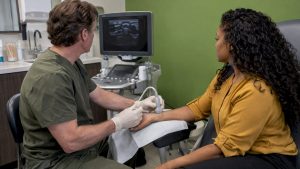
The procedure itself is simple. According to the AAOS carpal tunnel guideline, PRP is harvested by venipuncture and then injected, and injection risks are low. Most protocols use ultrasound so the needle can be placed precisely around the nerve while avoiding it.
What the research reports
The evidence is genuinely mixed, and it helps to read it in layers.
Meta-analyses that favor PRP at longer follow-up
A 2025 systematic review and meta-analysis in Neurology pooled 131 studies with 9,337 participants. Both PRP and steroid injections improved CTS severity and function. PRP showed greater reductions in severity scores beyond six months and better function scores at 2 to 6 months and 6 to 12 months. The authors concluded PRP was superior for pain and function over the long term, while the effect of steroids tended to wane.
The same analysis found no significant difference in symptom severity scores between PRP and steroids up to six months. Pain scores were lower with PRP only after six months. In other words, if you are looking for the fastest relief, steroids are comparable. The case for PRP is about what happens later.

A 2022 network meta-analysis in Frontiers in Pharmacology included 19 studies and 1,066 patients. It concluded that PRP is an alternative choice for CTS, ranking it second only to steroids and estrogen for efficacy by SUCRA ranking. That is a favorable placement, though not a claim that PRP beats every option on every outcome.
The caution in the data
Certainty matters as much as direction. A systematic review of ultrasound-guided PRP injections found that pain scores at 3 and 6 months and symptom severity scores at several time points were significantly lower in PRP recipients than in controls. It also graded the certainty of the evidence as low to very low because of risk of bias and imprecision. Functional scores and some long-term outcomes did not differ significantly in certain analyses.
The AAOS 2024 guideline is more reserved. It states that PRP is not considered a standard treatment for carpal tunnel syndrome even though many practitioners perform it. It summarizes one randomized trial with 12 months of follow-up, comparing PRP with saline, in which symptom and function scores improved similarly in both groups, although cross-sectional area of the nerve and electrodiagnostic measures showed some benefit from PRP. It also describes a 10-week trial where adding a single PRP injection to wrist splinting did not significantly improve on splinting alone.

How should you read all this? Reasonably: PRP has a plausible mechanism and a growing body of positive trials, but the studies differ in how they prepare PRP, how many injections they give and how long they follow patients. Those differences make firm conclusions hard, and they are the reason guideline bodies remain careful.
Summary of the main findings
| Source | What it reports | Certainty or caveat |
|---|---|---|
| Neurology, 2025 | PRP and steroids both helped; PRP better on pain and function at longer follow-up | Pooled analysis of many trials of varied quality |
| Frontiers in Pharmacology, 2022 | PRP is an alternative choice, ranked second only to steroids and estrogen | Ranking, not a head-to-head proof |
| Ultrasound-guided PRP review, 2023 | Lower pain at 3 and 6 months; better severity scores | Certainty graded low to very low |
| AAOS guideline, 2024 | Not a standard treatment; no clear long-term patient benefit | Professional society position |
How long can relief last?
This is the question patients ask most, and the honest answer is that studies disagree. The Neurology meta-analysis points to benefit continuing past six months, and a number of the individual trials follow patients for a year. The AAOS, on the other hand, concludes that PRP does not provide long-term benefits in non-operative CTS care, and its plain-language patient summary says PRP and corticosteroid injections usually do not give long-term improvement.
For planning purposes, it is sensible to think of PRP as a way to improve symptoms and function over a window of months, not as a one-time cure. If the underlying cause is ongoing, such as repetitive wrist loading, a workstation that keeps the wrist bent, or swelling from another condition, the nerve can be compressed again. Addressing those factors is part of any good plan.
PRP compared with splinting, cortisone and surgery
Splinting and activity changes
NIAMS describes nighttime splinting and reducing repetitive movements as nonsurgical options. They can improve symptoms in the short term but do not provide long-term improvement, and some people eventually need surgery. For early, mild symptoms, splinting is the sensible first step, and a PRP injection is usually discussed after that has been tried.
Cortisone (corticosteroid) injections
A cortisone shot does not heal the nerve, but it can reduce swelling quickly. A systematic review in the Annals of Family Medicine found strong evidence that local corticosteroid injections give short-term relief, and called steroid injection the most effective nonsurgical treatment in that review. The same paper lists possible complications of injection, including nerve injury, scarring, infection, skin changes, soft tissue thinning and tendon rupture. These are uncommon with careful technique, and they are the reason many physicians use ultrasound guidance and limit how many steroid injections a wrist receives.
So the practical comparison is this: steroid tends to work faster, PRP may hold up longer, and neither is reliably a permanent fix. The AAOS plain-language summary groups them together on that point.
Other injection options
A Medicare coverage determination cites a systematic review of 10 studies with 497 patients comparing dextrose (D5W), PRP, splinting, corticosteroid and saline. It reported that dextrose was likely best for symptom severity at 3 months, followed by PRP, and that both were more effective than splinting, corticosteroid or saline for symptom relief. That is a useful reminder that the field is still sorting out which injectate works best.
Surgery
Carpal tunnel release is a well-established operation. The AAOS 2010 guideline suggests a local steroid injection or splinting before surgery and recommends release when indicated. It also says early surgery is reasonable when there is clinical evidence of median nerve denervation, or when a patient chooses to proceed directly to surgery, and that another treatment or surgery is suggested when the current one has not resolved symptoms within 2 to 7 weeks.
Surgery is not a failure of conservative care. It is the right answer for some hands, and a good clinician will say so. If you are weighing procedures against each other in a broader sense, our article on PRP versus surgery walks through how we think about that decision.
What to expect during and after a PRP injection
- Evaluation. Your physician reviews your symptoms, examines your hand and wrist, and may order nerve conduction studies or ultrasound to confirm that the median nerve is the problem.
- Blood draw. A small sample of your blood is taken from a vein in your arm.
- Preparation. The sample is processed in a centrifuge to concentrate the platelets.
- Injection. The concentrate is injected around the median nerve at the wrist, typically guided by ultrasound.
- Recovery. Most people go home the same day. Soreness at the wrist is common for a few days, and your clinician will tell you which activities to limit while it settles.
Improvement, when it happens, is usually gradual over weeks rather than immediate, which is a different pattern from a cortisone shot.
Risks, side effects and cost
Because PRP is made from your own blood, allergic reactions to the injectate are not the concern they are with a foreign substance. The AAOS guideline describes injection risks as low. In the ultrasound-guided PRP review, no serious events such as infection or inflammatory reaction were reported in carpal tunnel trials over 1 to 24 months of follow-up. The Frontiers network meta-analysis likewise reported no adverse events in its included studies.
The most consistent finding is post-injection pain. A PubMed record of the Masiello review reports that pain at the injection site was more common with PRP than with other ultrasound-guided injections, with a risk difference of 0.10 (95% CI 0.01 to 0.20). Plan for a sore wrist for a few days and avoid scheduling the injection right before a heavy work week or a competition.
Cost is the other practical point. The AAOS notes PRP is relatively expensive because of the equipment used to separate the platelet-rich fraction, and insurance coverage varies by plan and by condition. Ask about the fee and coverage before you book, so there are no surprises.
If you have a bleeding disorder, take blood thinners, have an active infection or are pregnant, tell your physician before any injection. Those situations change the safety picture and need an individual decision.
Who may be a reasonable candidate
Based on the trials, PRP has been studied mostly in people with mild to moderate CTS who have not found lasting relief from splinting and activity changes. You may be a reasonable candidate to discuss it if:
- Your diagnosis is confirmed and the median nerve is clearly the source.
- Symptoms are mild to moderate, without constant numbness, weakness or thumb muscle wasting.
- Splinting and activity changes have helped only partly or temporarily.
- You want to avoid repeated steroid injections or are not ready for surgery.
If you notice constant numbness, dropping objects, or a thinning of the muscle at the base of your thumb, do not wait on injections. Those signs point to more advanced nerve compression, and you should see a hand surgeon or your physician promptly.
Other therapies sometimes combined with injections for musculoskeletal pain include shockwave, laser and pulsed electromagnetic field therapy. If you are curious about the last of these, this overview of PEMF therapy for pain explains what the research shows.
Our perspective
Many patients come to us after trying a brace, anti-inflammatories and sometimes a cortisone shot, and they want to know whether there is something between continued symptoms and an operation. That is a fair question, and we try to answer it without overpromising.
Our view is that PRP is a thoughtful option to discuss for selected patients, provided the diagnosis is secure. We are comfortable saying so because the trial data are encouraging in several analyses, the material comes from the patient’s own blood, and the reported risks are low. We are equally comfortable saying that the guidelines have not made it a standard, and that results vary from person to person.
What we put most effort into is the process around the injection: confirming the source of the symptoms, matching the treatment to the stage of the condition, and pairing any injection with rehabilitation and changes to how the hand is used day to day. Our physicians are Harvard fellowship-trained and board-certified, and our plans are designed to address the root cause of pain, not only the symptoms.
If PRP is not the right fit for your hand, we will tell you, and we will help you find the path that is, including referral for surgical evaluation when that is the better course.
Felix
Talking with our team about PRP
Nortex Spine and Joint is a regenerative medicine and pain management clinic serving North Dallas. Our PRP therapy program and broader regenerative medicine services focus on non-surgical care for chronic joint, spine and musculoskeletal pain, with physical therapy available to support recovery. If you are dealing with wrist, hand or other joint pain and want a clear evaluation and an honest discussion of your options, you can start from our landing page to request a consultation.
If you want more background on how we approach PRP in general, our guide to platelet-rich plasma treatment and our look at the pros and cons of PRP injections are good next reads.
FAQ
How do you treat carpal tunnel without surgery?
The usual first steps are nighttime wrist splinting and reducing repetitive wrist movements, which NIAMS says can ease symptoms in the short term. If those are not enough, injections such as corticosteroid or PRP may be discussed. A confirmed diagnosis comes first, since other conditions can mimic carpal tunnel.
Can a cortisone shot heal carpal tunnel?
A cortisone shot can reduce swelling around the nerve and give fast relief, and the evidence for short-term benefit is strong. It does not usually produce long-term improvement on its own, according to the AAOS plain-language summary. If symptoms return, your physician can discuss other options.
How long will PRP injections last?
It varies. Some trials and a 2025 meta-analysis report benefit beyond six months, and a few follow patients for a year, while the AAOS concludes PRP does not give long-term benefit in non-operative care. Expect improvement over months, not a guaranteed permanent result.
Is PRP for carpal tunnel safe?
PRP uses your own blood, and the trials reviewed reported no serious events, with temporary soreness at the injection site being the most common effect. Tell your physician if you take blood thinners, have a bleeding disorder or have an active infection. Ultrasound guidance helps place the needle accurately around the nerve.
Does insurance cover PRP for carpal tunnel?
Coverage varies by insurer and plan, and PRP is often not covered for this use because it is not a standard treatment. Ask for the fee and your plan’s position before you book.
Sources
- Carpal Tunnel Syndrome: Diagnosis, Treatment, and Steps to Take (NIAMS)
- Injections for treatment of carpal tunnel syndrome (2023 review)
- Efficacy of Platelet-rich Plasma Versus Steroid Injections (Neurology, 2025)
- Efficacy and safety of platelet-rich plasma in carpal tunnel syndrome (Frontiers in Pharmacology, 2022)
- Ultrasound-guided injection of platelet-rich plasma (systematic review, 2023)
- Ultrasound-guided injection of platelet-rich plasma (PubMed record)
- Management of Carpal Tunnel Syndrome (AAOS clinical practice guideline, 2024)
- AAOS Clinical Practice Guideline on carpal tunnel syndrome (2010)
- What Can Family Physicians Offer Patients With Carpal Tunnel Syndrome? (Annals of Family Medicine)
- CMS LCD L39023: Platelet Rich Plasma Injections for Non-Wound Indications
- PEMF for Pain: What the Research Shows and Who It Suits