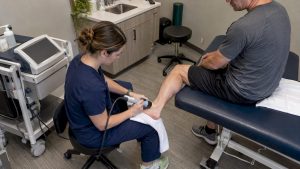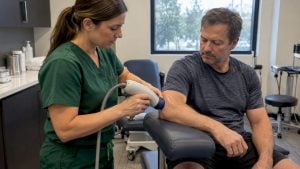

For musculoskeletal pain such as knee osteoarthritis, back pain, shoulder pain or tendon problems, most insurance plans in the United States do not pay for platelet-rich plasma (PRP) injections. Medicare does not either, outside a narrow wound-care use. That is the honest starting point. Below we explain why plans decline PRP, what that means for your costs, which related treatments are often covered, and what you can do if you want to pursue coverage anyway.
TL;DR
- Medicare’s national coverage for PRP is limited to chronic non-healing diabetic wounds, so PRP for joint, spine or tendon pain is not covered under Original Medicare.
- Major commercial carriers, including UnitedHealthcare, classify PRP for musculoskeletal conditions as unproven and not medically necessary, so expect to pay out of pocket.
- The consultation, diagnostic work, physical therapy and some other injections or procedures (radiofrequency ablation, for example) may be covered even when PRP is not, if you meet the plan’s criteria.
- Ask your insurer for a pre-determination in writing before you book, and know that a denial can be appealed, though success is not assured.
Table of Contents
- Why most plans do not cover PRP
- What Medicare does and does not cover
- Does stem cell therapy have insurance coverage?
- What may be covered around a PRP plan
- How to find out what your plan will pay
- If your plan denies the claim
- Paying for PRP when insurance will not
- Our perspective
- Talk with us about your options
- FAQ
- Sources
Why most plans do not cover PRP
Many patients assume that a procedure performed by a board-certified physician in a medical clinic will be covered. Insurance does not work that way. Coverage depends on whether the plan’s own medical policy classifies a treatment as proven and medically necessary for a specific diagnosis, and the physician’s credentials do not change that classification.
UnitedHealthcare’s commercial and individual exchange policy, effective January 1, 2026, states that PRP is unproven and not medically necessary because of insufficient evidence of efficacy. Its Community Plan policy uses the same coverage rationale. Other carriers publish their own policies, and wording varies, but the pattern is consistent enough that you should plan for a denial unless your insurer tells you otherwise in writing.
The variability argument
The central argument insurers use is standardization. PRP is made from your own blood, and the platelet concentration, white blood cell content and growth factor levels depend on the device and the centrifuge protocol used. Two clinics can both say they offer “PRP” and deliver meaningfully different preparations. Because of that, insurers say outcomes cannot be predicted with the certainty expected of an FDA-approved drug.
The FDA piece
There is a regulatory detail that is easy to miss. The FDA classifies the devices that prepare PRP as blood processing devices for wound management. When the same kind of device is used to prepare PRP for an injection into a knee or a spinal joint, that is generally an off-label use of the device. Clearance of a device is not approval of the treatment for joint pain, and insurers lean on that distinction.
“Experimental” is not the same as “ineffective”
The insurer’s label is a coverage classification, not a verdict that PRP does nothing. A 2025 meta-analysis on PRP for knee osteoarthritis reported that PRP may improve pain and function compared with placebo or hyaluronic acid, particularly with high-platelet preparations of at least 1,000,000 platelets/µL, with improvements seen at 3, 6 and 12 months. Reviewers also note that the published literature is limited by varied study designs and low-to-moderate quality evidence. Both statements can be true. The evidence is encouraging for some conditions, particularly knee arthritis, and it is still not strong enough to satisfy an insurer’s threshold.
We think patients deserve that balanced picture. PRP is not a guaranteed fix, and results vary with the condition, its severity and the preparation used.
What Medicare does and does not cover
If you are searching for whether Medicare covers PRP, the answer depends on why you want it.
| Use of PRP | Original Medicare |
|---|---|
| Chronic non-healing diabetic wounds | Covered under the national coverage determination, with specific criteria; coverage is limited to 20 weeks, after which local contractors decide |
| Knee, hip or shoulder arthritis | Not covered |
| Back or spine pain | Not covered |
| Tendon problems such as tennis elbow or rotator cuff injury | Not covered |
Local Medicare Administrative Contractors generally do not cover PRP for musculoskeletal indications either. Medical News Today’s overview of Medicare and PRP reaches the same conclusion and puts the cost of a single PRP treatment without coverage at roughly $500 to $2,500, with many people needing more than one. Actual fees vary by clinic, condition and preparation.
If you have a Medicare Advantage plan, check that plan’s own policy. UnitedHealthcare, for instance, publishes a separate Medicare Advantage policy on platelet-rich plasma therapies, and other Advantage carriers do the same. Read the one that applies to your plan rather than assuming.
Does stem cell therapy have insurance coverage?
Almost never. Stem cell and other biologic injections for joint and spine pain sit in an even less settled category than PRP. Insurers treat them as investigational, and the FDA has taken enforcement action against some clinics making broad claims about stem cell products for arthritis and other conditions, including a 2024 warning letter to a stem cell company. That is a reminder to ask any provider exactly what product is used, where it comes from and what evidence supports it for your condition. You can read about our approach on our stem cell page.
What may be covered around a PRP plan
Here is a pattern we see often. Many patients come in after trying several treatments, and they are surprised to learn that a regenerative plan has several parts with different coverage outcomes.
- Evaluation and diagnostics. The office visit, an exam and imaging ordered for a medical reason are usually billed to insurance like any other visit, subject to your deductible and copay.
- Physical therapy. Specialists observe that insurers are far more likely to cover the rehabilitation and diagnostic components of a regenerative program even when the injection itself is denied. PRP is best seen as a biological enhancement to a recovery program, not a stand-alone replacement for one. Our physical therapy program is built around that idea.
- Other interventional treatments. Some procedures with established coverage policies, such as certain epidural steroid injections, facet joint injections or nerve ablation, may be covered when you meet your plan’s criteria.
- Injury-related claims. If your pain stems from a motor vehicle accident, treatment may be handled through that claim instead. The rules depend on your policy and the claim, so confirm with your adjuster or attorney.
Coverage always depends on your specific plan, your diagnosis and documentation, so this is a guide to questions, not a promise of what your plan will pay.
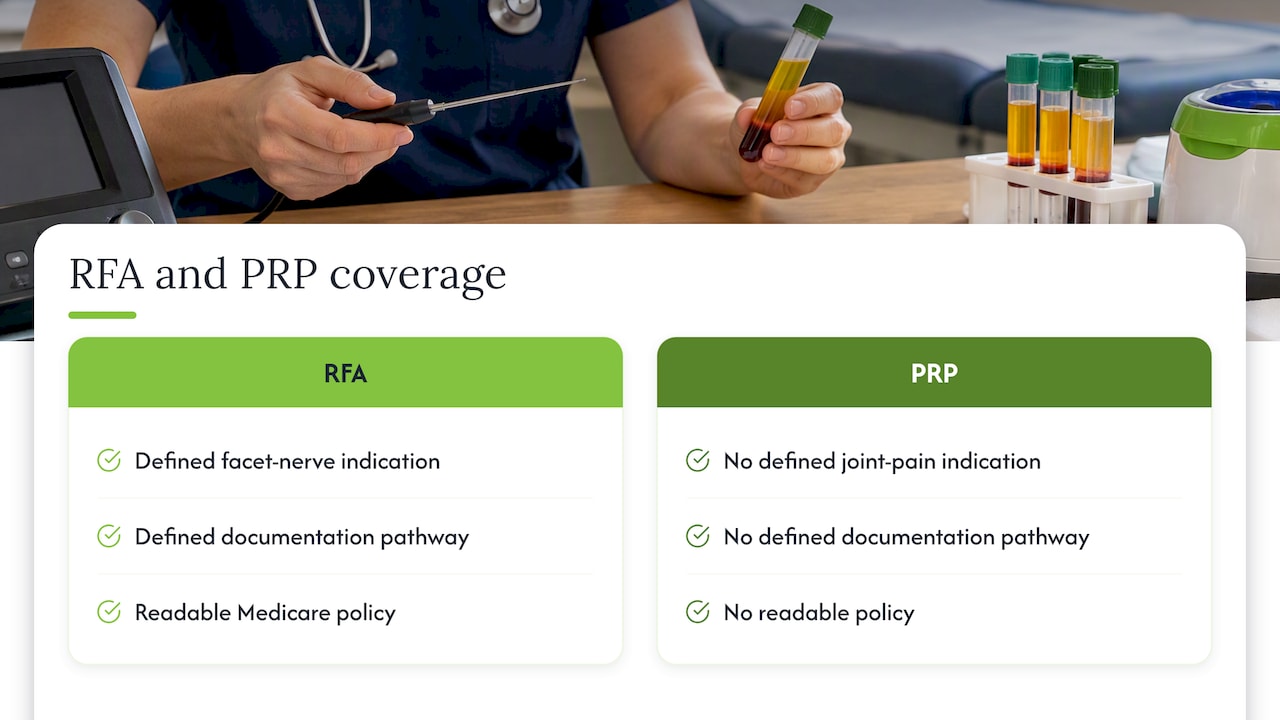
Does Medicare cover RFA?
Often yes, for the right patient. Radiofrequency ablation (RFA) of the facet joint nerves, sometimes called radiofrequency neurotomy, is covered under Medicare policies that set clear criteria. The Medicare local coverage determination for facet joint interventions (L38803) describes the kind of patient it addresses: moderate to severe chronic neck or low back pain that is mainly axial and causes functional deficit, present for at least three months, with documented failure of non-invasive conservative management. The full policy contains additional requirements, and the LCD that applies to you depends on which Medicare contractor serves your state, so check the one for your region or ask our team to review your records.
This contrast is useful. RFA has a defined indication, a defined documentation pathway and a policy you can read. PRP for joint pain does not, which is why the two are treated so differently.
How to find out what your plan will pay
Before you schedule, spend twenty minutes on the phone. It can prevent a surprise bill.
- Call the member services number on your card. Ask whether the plan has a medical policy on platelet-rich plasma and whether it applies to your diagnosis.
- Ask about the specific code. PRP injections are commonly reported with CPT code 0232T. Ask for a pre-determination of benefits for that code and your diagnosis, and request the answer in writing.
- Ask about the surrounding services. Confirm coverage for the consultation, imaging, physical therapy visits and any procedure code the physician recommends.
- Ask about network status. Using an in-network provider usually costs less than going out of network, though that does not change PRP’s classification.
- Write down the date, the representative’s name and a reference number. Verbal estimates are not guarantees.
- Ask our office to help with the documentation. If you decide to pursue coverage, your records need to show the diagnosis, your prior treatments and how pain affects daily function.
If your plan denies the claim
You have the right to appeal. Under HealthCare.gov’s appeal process, you can ask your insurer to reconsider, and if it still refuses, have the decision reviewed by a third party. A typical internal appeal includes a letter from your physician, your records, documentation of failed conservative care and recent peer-reviewed studies for your condition, such as meta-analyses on PRP for knee osteoarthritis.

If the internal appeal fails, you may qualify for an external review. The written request must be filed within four months of the denial notice. Be realistic, though. When a plan’s written policy lists PRP as unproven for your diagnosis, appeals are difficult, and we would not want you to count on one. Employer-sponsored self-funded plans may follow different rules, so ask your benefits administrator which process applies.
Paying for PRP when insurance will not
If you decide PRP is right for you, plan for self-pay. Our articles on what PRP treatments cost and costs, benefits and what to expect for knee PRP go into more detail, and we also have a post on which insurance companies cover PRP injections.
When you compare costs, think about the whole plan rather than the injection alone:
- How many injections are typically recommended for your condition, and how are follow-ups handled?
- What rehabilitation is recommended afterward? Our guide to post-PRP rehab explains why strengthening can start around two weeks, depending on your situation.
- What happens if you have a limited response and need to consider other options?
Some people also explore supportive, non-injection approaches alongside medical care. For example, one overview of red light therapy for knee pain discusses how it is used over several weeks. Evidence differs by device and condition, so discuss anything you plan to add with your physician.
Our perspective
We understand the frustration. You have a legitimate, painful condition, a physician recommends a treatment backed by encouraging research, and then the insurance letter says “unproven.” We do not think that label should be brushed aside, and we do not think it should end the conversation either.
In our experience, the patients who do best with PRP are those who understand it clearly from the start. It is an autologous treatment, made from your own blood, that may support the body’s repair processes in some conditions, with the best published evidence in knee osteoarthritis. It is not a guaranteed cure, results unfold over months rather than days, and it works best when combined with a rehabilitation plan. We would rather tell you that at the first visit than have you learn it after paying.
We also believe cost should never be a surprise. Before any regenerative procedure, we think you should know whether the plan covers it, what you would pay otherwise, and what the alternatives are, including conservative care, injections with established coverage and procedures like RFA. Sometimes the right recommendation is the covered one.
— Felix
Talk with us about your options
If you live in the North Dallas area and are weighing PRP against other non-surgical options, our team can review your history, explain which treatments fit your diagnosis, and help you understand the likely coverage picture. Start with our PRP therapy page, see PRP for knee pain, or visit our regenerative medicine overview to schedule a consultation.
FAQ
Is PRP covered by insurance?
Usually not for joint, spine or tendon pain. Many carriers, UnitedHealthcare among them, list PRP as unproven and not medically necessary for these conditions. Your own policy is what counts, so ask for a written pre-determination before treatment.
Does Medicare cover PRP injections?
Original Medicare covers PRP only for chronic non-healing diabetic wounds that meet specific criteria. It does not cover PRP for knee arthritis, back pain or tendon injuries. Medicare Advantage plans publish their own policies, so check yours.
Does Medicare cover RFA?
It can. Medicare local coverage policies for facet joint radiofrequency ablation set criteria such as chronic axial neck or low back pain lasting at least three months despite conservative care. Coverage depends on the policy in your region and on your documentation.
Can I use an HSA or FSA for PRP?
We cannot confirm that here, because eligibility depends on your plan administrator and on a physician’s documentation of medical need. Ask your HSA or FSA administrator before you pay, and keep your records and receipts.
What should I do if my claim is denied?
File an internal appeal with your physician’s letter, records and relevant studies. If that fails, you may request an external review within four months of the denial notice. Outcomes are not guaranteed, particularly when your plan’s written policy excludes PRP.
Sources
- UnitedHealthcare commercial and individual exchange PRP policy
- UnitedHealthcare Community Plan PRP policy
- UnitedHealthcare Medicare Advantage PRP policy
- CMS National Coverage Determination for autologous PRP
- CMS LCD L38803, Facet Joint Interventions for Pain Management
- Medical News Today, Medicare and PRP injections
- PRP for knee osteoarthritis meta-analysis (PMC)
- PRP literature review (PMC)
- PRP and rehabilitation review (PMC)
- FDA product classification for blood processing devices
- FDA warning letter, Safari Stem Cell
- HealthCare.gov, getting regular medical care
- HealthCare.gov, how to appeal an insurance decision
- HealthCare.gov, external review