
Radiofrequency ablation risks are, for most patients, limited to mild and short-lived side effects rather than serious complications. Studies documented on MedlinePlus show numbness and soreness fading within hours to days, while a PMC review of tumor ablation cases found major complications occur in a small minority of sessions. The bigger risks (bleeding, infection, organ or nerve injury) depend heavily on what’s being treated and who is holding the probe. Patient selection and imaging guidance are critical factors for keeping RFA safe.
TL;DR:
- Serious complications from RFA are rare, with major risks mainly related to bleeding, infection, or thermal injury depending on the treatment area.
- Post-procedure effects such as soreness, numbness, and a pain flare typically resolve within a few days, with severe issues like infections or nerve damage being uncommon when proper precautions are followed.
- The risk profile varies significantly depending on whether RFA targets nerves for pain relief or tumor tissue, with tumor ablation carrying a higher chance of bleeding and organ injury.
- Proper patient selection, imaging guidance, diagnostic nerve blocks, and sterile techniques are essential to minimize risks and improve safety outcomes.
- Most patients experience months of pain relief, though some may require repeat procedures due to nerve regeneration, with the overall benefit outweighing the low chance of serious complications in appropriate candidates.
Table of Contents
- Is Radiofrequency Ablation Safe? Understanding the Real Risk Profile
- What Side Effects Should You Expect Right After the Procedure?
- What Is Postablation Syndrome and How Long Does It Last?
- Serious but Uncommon Complications You Should Understand
- Does the Type of RFA Procedure Change Your Risk?
- How Providers Minimize Risk During RFA
- What Does Recovery Look Like, and When Should You Call Your Doctor?
- Who Should Not Have RFA? Contraindications and Precautions
- How Nortex Spine and Joint Approaches Safety and Informed Consent
- A Clinician’s View on Weighing Benefit Against Risk
- Talk to Nortex Spine and Joint About Whether RFA Is Right for You
- Sources
- FAQ
Is Radiofrequency Ablation Safe? Understanding the Real Risk Profile
You’re probably asking one question before anything else: is RFA safe enough to be worth it? For the vast majority of patients undergoing RFA for spine or joint pain, the honest answer is yes, with important caveats. The procedure carries a favorable risk profile compared with surgery, but “favorable” doesn’t mean “risk-free.”
Radiofrequency ablation works by using heat generated from an electrical current to interrupt pain signals traveling along a nerve, or to destroy abnormal tissue in the case of tumor treatment. That heat is precise, but it isn’t selective in the way a scalpel is. It affects whatever tissue sits in its path, which is why the risks of RF ablation cluster into two broad categories: things related to inserting the needle (bleeding, infection, nerve irritation) and things related to the heat itself (thermal injury to nearby organs or structures).
In pain management, where Nortex focuses its radiofrequency neurotomy procedures, the risk profile looks very different than it does for tumor ablation in the liver or kidney. A patient getting a lumbar facet neurotomy is not facing the same hazards as someone undergoing hepatic tumor ablation, even though both procedures share the same underlying technology. That distinction matters when you’re trying to weigh whether the procedure risks apply to your specific situation. We’ll walk through both contexts, because conflating them is one of the most common sources of confusion patients bring into a consultation.
What Side Effects Should You Expect Right After the Procedure?
Most patients experience a short list of predictable, manageable effects in the first few days. According to MedlinePlus, the temporary pain increase that follows RFA typically resolves within 2 to 3 days, and numbness at the injection site usually clears within a few hours.
Here’s what tends to show up:
- Soreness or tenderness at the needle insertion site, similar to a deep bruise.
- Temporary numbness near the treated area, usually gone within a few hours.
- A short-lived increase in pain, often called a “flare,” lasting about 2 to 3 days before easing.
- Mild bruising or localized swelling around the insertion points.
Many patients come in expecting instant relief and are unsettled when their pain feels worse for the first day or two. That flare is normal tissue response to thermal injury, not a sign the procedure failed. We tell patients to treat the first 72 hours like a minor sprain: ice the area in 15 to 20 minute intervals, rest more than usual, and use an over the counter analgesic like acetaminophen unless you have a reason to avoid it.
Avoid strenuous activity for the first day or two, but you don’t need to stay in bed. According to the Cleveland Clinic, RFA is minimally invasive compared with open surgery, and most patients resume normal daily activities well before a surgical alternative would allow. If soreness or numbness stretches on well past that window, or if pain climbs instead of settles, that’s a signal to call your provider rather than wait it out.
What Is Postablation Syndrome and How Long Does It Last?
Postablation syndrome is a recognized, named reaction that shows up mainly after tumor ablation rather than nerve-targeted pain procedures. It presents as a cluster of flu-like symptoms, including low-grade fever, fatigue, muscle aches, and general malaise, that typically begins several days after the ablation.
According to Mayo Clinic, postablation syndrome usually lasts about five days, though it can stretch to 2 to 3 weeks in some patients. That’s a wide range, and it’s the reason we spend real time on patient education before a tumor ablation procedure. Nobody wants to sit with a fever for a week wondering if something has gone wrong.
Postablation syndrome vs. infection: what’s the difference?
| Feature | Postablation syndrome | Infection |
|---|---|---|
| Onset | Several days after procedure | Can appear days to weeks later |
| Fever pattern | Low-grade, fluctuating | Often higher, persistent or worsening |
| Duration | Typically ~5 days, up to 2–3 weeks | Worsens without treatment |
| Associated signs | Fatigue, body aches, malaise | Localized redness, pus, spreading pain |
The distinguishing clue is trajectory. Postablation syndrome tends to plateau and gradually improve on its own. A true infection tends to get worse, not better, and often comes with localized redness, warmth, or drainage at the insertion site rather than generalized flu symptoms alone. If fever persists beyond a week or climbs above a low grade, we order bloodwork and imaging to rule out an abscess before assuming it’s just the expected reaction.
Serious but Uncommon Complications You Should Understand
This is where informed consent matters most, and where a rushed conversation before a procedure does patients a disservice. The serious radiofrequency ablation complications are uncommon, but they are real, and they differ depending on whether the mechanism is insertion-related or thermal.
Insertion-related risks stem from the needle or electrode itself passing through tissue:
- Hemorrhage from a punctured blood vessel.
- Infection or abscess formation at the insertion site or along the needle tract.
- Pneumothorax (collapsed lung), a risk specific to procedures near the chest cavity.
- Rarely, tumor cell seeding along the needle tract during oncologic ablation.
Thermal injury risks come from the heat itself spreading beyond the intended target:
- Bile duct injury or stricture when treating liver lesions close to major ducts.
- Damage to adjacent organs, including bowel, when a tumor sits near the abdominal wall or intestines.
- Burns at the skin surface from improperly placed grounding pads.
- Nerve injury with lingering numbness, tingling, or, rarely, motor weakness.
The PMC review of RFA complications documented major complication rates occurring in a small minority of hepatic ablation sessions, with mortality reported low in older data sets. Those numbers sound reassuring, and largely are, but they aren’t zero, and they vary depending on lesion location, liver function, and how many needle passes a case requires.
Location drives a lot of this risk. StatPearls notes that bile duct injury risk climbs sharply when a tumor sits less than a centimeter from a major duct, which is why interventional radiologists sometimes use hydrodissection (injecting fluid to physically push a vulnerable organ out of the heat zone) before firing the probe.
Here’s how these complications are typically managed when they do occur:
| Complication | Typical management |
|---|---|
| Arterial bleeding | Transfusion or embolization |
| Abscess formation | Percutaneous drainage plus antibiotics |
| Biliary stricture | Endoscopic retrograde cholangiopancreatography (ERCP) |
| Nerve injury | Neurology referral and monitoring |
| Pneumothorax | Chest tube placement in moderate to severe cases |
For pain-focused neurotomy at the spine, the picture is meaningfully calmer. A PMC review of radiofrequency techniques for chronic pain found no published reports of significant nerve damage in one large body of literature, though the review noted mixed evidence on how long pulsed RF’s pain relief actually lasts compared with conventional thermal RF. That’s an important nuance: pulsed RF may carry a gentler risk profile, but you may be trading some risk reduction for less certainty about durability.
Does the Type of RFA Procedure Change Your Risk?
Yes, substantially. The single biggest variable in radiofrequency ablation risks isn’t the technology itself. It’s what the technology is aimed at.
Tumor ablation (liver, kidney) carries a meaningfully higher-stakes risk profile:
- Higher likelihood of hemorrhage given the vascular nature of organs like the liver and kidney.
- Biliary injury risk when lesions sit close to ducts.
- Abscess formation, particularly in patients with compromised immune function.
- Elevated risk of liver failure in patients with underlying cirrhosis, since ablating tissue in an already-compromised liver leaves less functional reserve.
- Rare tract seeding, more likely with subcapsular tumors or multiple needle passes.
Nerve or pain-focused RFA (facet neurotomy, genicular ablation) carries a lighter systemic risk load, but its own specific concerns:
- Neuritis, or nerve inflammation, causing temporary burning or aching beyond the expected flare window.
- Sensory changes if the ablation zone extends slightly beyond the intended nerve branch.
- Rare motor weakness if a mixed sensory-motor nerve is inadvertently targeted instead of a purely sensory branch.
This difference shapes everything downstream, from how much imaging is used to how informed consent conversations are structured. A hepatic tumor ablation candidate needs pre-procedure liver function testing and a detailed discussion of biliary anatomy. A lumbar facet neurotomy candidate needs a successful diagnostic block first and a clear conversation about how long relief typically lasts. Follow-up protocols diverge too. Tumor ablation patients often get imaging at defined intervals to confirm the lesion is fully treated, while pain procedure patients are followed clinically based on symptom response.
How Providers Minimize Risk During RFA
Reducing radiofrequency ablation risks doesn’t come from a single magic step. It comes from stacking several deliberate safeguards, each of which closes off a specific failure point.
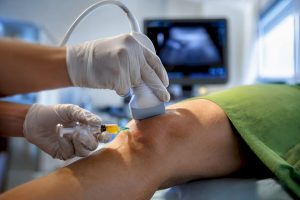
- Imaging guidance. CT, ultrasound, or fluoroscopy lets the provider watch the electrode in real time, keeping it away from vessels, ducts, and nerves it shouldn’t touch.
- Diagnostic nerve blocks before neurotomy. For pain procedures, a temporary numbing injection confirms the targeted nerve is actually the pain source before committing to ablation. The NCBI Bookshelf on radiofrequency ablation identifies diagnostic block accuracy as the single most important predictor of RFA success, more influential than the technical execution of the ablation itself.
- Medication and supplement review. Aspirin, NSAIDs, and even vitamin E can raise bleeding risk and are typically held before an elective procedure, per MedlinePlus guidance on pre-procedure planning.
- Sterile technique. Standard surgical sterility protocols reduce infection risk at every insertion point.
- Correct grounding pad placement. Placing the pad properly prevents skin burns, a preventable complication that has nothing to do with the target tissue.
- Cauterizing the probe tract on withdrawal. This step helps seal the needle path, lowering bleeding risk and, in oncologic cases, reducing the chance of tract seeding.
These are standard risk-mitigation steps referenced consistently across clinical reviews of the procedure, not proprietary tricks any single clinic invented.
Pro Tip: At your consultation, ask your provider directly which of these six safety steps they use for your specific procedure. A provider who can answer specifically, rather than vaguely, is usually one who does this often enough to have a real routine.
What Does Recovery Look Like, and When Should You Call Your Doctor?
Radiofrequency ablation recovery time is short for most pain patients. Many return to normal, low-effort activity within 24 hours, though we generally advise holding off on heavy lifting or strenuous exercise for a few days to let the treated tissue settle. Tumor ablation patients typically need a longer initial observation period, often including an overnight stay depending on the organ and lesion size.

Most discomfort during RFA recovery time follows the pattern already described: soreness, brief numbness, a 2 to 3 day flare. But a handful of symptoms warrant more than home care.
Call your provider or seek urgent evaluation if you notice:
- A fever that’s high or persistent beyond a few days, rather than the low-grade pattern typical of postablation syndrome.
- Worsening localized pain accompanied by swelling, redness, or warmth at the insertion site.
- Signs suggestive of internal bleeding: lightheadedness, rapid heartbeat, or a swelling that expands quickly.
- Jaundice (yellowing of the skin or eyes) following hepatic ablation, which can point to biliary injury.
- New numbness, tingling, or weakness that wasn’t part of your expected recovery.
Most practices schedule a follow-up call or visit within the first week specifically to catch these signals early. If a complication is suspected, expect bloodwork, and possibly imaging, before any further intervention is planned. Waiting to see if something improves on its own is reasonable for mild soreness. It is not reasonable for a fever that keeps climbing or pain that gets worse instead of better.
Who Should Not Have RFA? Contraindications and Precautions
Not every patient is a good candidate, and a thorough workup exists specifically to catch that before a procedure ever gets scheduled.
Absolute contraindications generally include:
- Patient refusal or inability to provide informed consent.
- Active infection at or near the planned treatment site.
- Certain uncontrolled bleeding disorders that haven’t been addressed beforehand.
Relative contraindications, meaning situations that require extra planning rather than automatic disqualification, include:
- Anticoagulant use. Medications like warfarin or newer blood thinners typically need to be paused for a defined window before the procedure, following timing guidance similar to protocols published by the American Society of Regional Anesthesia and Pain Medicine (ASRA). The exact hold period depends on the specific medication and your overall bleeding risk, which is why disclosure of every medication and supplement matters.
- Anatomy too close to critical structures, where imaging shows the ablation zone would sit uncomfortably near a major vessel, nerve bundle, or organ.
- Advanced cirrhosis in candidates for hepatic tumor ablation, where reduced liver reserve raises the stakes of any complication.
- Implanted devices, such as pacemakers, which require coordination given the electrical current involved in RFA.
Full disclosure of over-the-counter medications and supplements is not a formality. Even something as ordinary as fish oil or high-dose vitamin E can shift bleeding risk enough to change the plan. We ask about this at every consultation, not because most patients are on something risky, but because the ones who are tend not to realize it matters.
How Nortex Spine and Joint Approaches Safety and Informed Consent
At Nortex Spine and Joint, genicular radiofrequency ablation and lumbar radiofrequency neurotomy are built around a diagnostic-block-first model. Before we commit to ablating a nerve, we confirm through a diagnostic nerve block that the targeted nerve is genuinely the pain source. That step alone eliminates a large share of procedures that would otherwise fail or expose a patient to risk without benefit.
Beyond that selection step, our approach includes a pre-procedure medication checklist, imaging-guided electrode placement, and documented informed consent that walks through the specific risks relevant to your anatomy and diagnosis, not a generic list. Patients get clear, written medication guidance well ahead of the scheduled date, so there’s no last-minute scramble over whether to hold a blood thinner.
If you’re evaluating a provider for RFA, whether at Nortex or elsewhere, these are worth asking directly at consultation:
- Will you use imaging guidance, and which modality?
- Do I need a diagnostic block first, and what response threshold determines whether we proceed?
- Which of my current medications or supplements need to be paused, and for how long?
- What’s your protocol if I develop a fever or worsening pain afterward?
A provider who answers these specifically, rather than reassuring you in generalities, is one who treats safety as a process rather than a talking point.
A Clinician’s View on Weighing Benefit Against Risk
Patients often walk in assuming RFA is either a cure or a gamble. It’s neither. In my experience, the honest framing is that RFA is a tool that buys meaningful, often substantial pain relief for a defined period, and that period varies by patient. As the Mayo Clinic’s overview of radiofrequency neurotomy notes, relief frequently lasts months rather than indefinitely, and some patients will need repeat procedures as the treated nerve regenerates over time.
I recommend RFA when conservative care, physical therapy, activity modification, anti-inflammatory strategies, has been given a genuine trial and a diagnostic block has confirmed the pain generator. I don’t recommend it as a first step, and I’m skeptical of any practice that skips the diagnostic block to save a visit. That shortcut trades a modest scheduling convenience for a real increase in the odds the procedure won’t work.
What I want every patient to leave a consultation understanding is this: the risks of RF ablation are generally low and well characterized, but “low risk” is not the same as “no decision to make.” You’re choosing a procedure with a defined benefit window against a small but real chance of complications. That’s a decision worth making with full information, not partial reassurance. Documenting that conversation, and making sure a patient’s questions get answered before consent is signed, isn’t paperwork. It’s the actual practice of medicine.
— Felix
Talk to Nortex Spine and Joint About Whether RFA Is Right for You
If you’re weighing radiofrequency ablation against other paths, know that RFA is one option among several non-surgical treatments, alongside PRP therapy, regenerative medicine, and physical therapy, that Nortex Spine and Joint uses to treat chronic joint and spine pain without surgery. What sets a consultation apart here is the diagnostic-block-first process: before any ablation is scheduled, we confirm the nerve target actually explains your pain, so you’re not accepting procedural risk without a clear expectation of benefit.
Nortex offers genicular nerve ablation for knee pain and a full range of spine and joint treatments, each reviewed individually for your anatomy, medication history, and prior treatment response. If conservative options haven’t given you lasting relief, the next step is a consultation where we walk through your specific risk factors, alternatives, and what a realistic outcome looks like for your case. You can review the full range of treatment options and schedule a visit to get a personalized recommendation.
This article is general information, not a substitute for advice from a qualified doctor. Consult a qualified healthcare professional about your own circumstances before acting on anything here.
Sources
- Radiofrequency ablation for chronic pain: MedlinePlus Medical Encyclopedia
- Radiofrequency ablation – Mayo Clinic
- Complications of Radiofrequency Ablation of Neoplasms – PMC
- Percutaneous Radiofrequency Ablation of Liver Tumors – StatPearls – NCBI Bookshelf
FAQ
Are Radiofrequency Ablations Safe?
Yes, for most patients RFA is safe, with the majority of side effects being mild and temporary rather than serious. Studies on MedlinePlus show the typical pain flare resolves within 2 to 3 days, and serious complications remain uncommon, particularly for nerve-targeted pain procedures compared with tumor ablation.
What Can Go Wrong With Radiofrequency Ablation?
The main things that can go wrong fall into two groups: insertion-related issues like bleeding or infection, and thermal injury to nearby nerves, organs, or bile ducts. According to a PMC review, major complications in hepatic tumor ablation occur in a small percentage of sessions, and pain-focused neurotomy carries an even lower risk of serious harm.
Is Ablation Worth the Risk?
For many patients with a confirmed pain source, RFA offers meaningful relief that often outweighs its low complication rate, especially after conservative treatments have failed. Relief typically lasts months rather than permanently, according to Mayo Clinic, so whether it’s “worth it” depends on your specific diagnosis and how well a diagnostic block predicted your response.
Who Should Not Have Radiofrequency Ablation?
Patients with active infection at the treatment site, uncontrolled bleeding disorders, or who are unable to safely pause anticoagulant medication typically need to delay or avoid RFA. Those with advanced cirrhosis being considered for hepatic ablation, or anatomy placing critical structures too close to the treatment zone, need individualized evaluation before proceeding.
How Long Does RFA Pain Relief Last?
Pain relief from RFA commonly lasts several months, though the exact duration varies by patient and treated area. Because the nerve can regenerate over time, some patients need repeat procedures to maintain relief, according to Mayo Clinic’s overview of radiofrequency neurotomy.