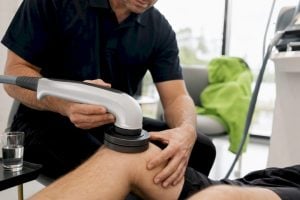

Shoulder pain prevention is defined as the practice of adopting targeted habits, exercises, and ergonomic adjustments that protect the rotator cuff and surrounding joint structures before injury or chronic dysfunction develops. The rotator cuff, a group of four muscles and their tendons that stabilize the glenohumeral joint, is the most commonly overloaded structure in the shoulder. Poor posture, muscular imbalances, and improper movement mechanics are the primary drivers of preventable shoulder injuries in active adults. The strategies outlined here draw on evidence-based clinical principles to help you reduce strain, maintain mobility, and protect your shoulder health over the long term.
1. Correct your posture to reduce rotator cuff stress
Rounded shoulders and forward head posture narrow the subacromial space, the gap between the rotator cuff tendons and the acromion bone above them. When that space narrows, normal arm movement creates friction against the tendons, which over time leads to tendinopathy or tearing. This is one of the most underappreciated contributors to shoulder pain, and it develops gradually through years of desk work, driving, and screen use.
Ideal shoulder alignment means your ears sit directly over your shoulders, your shoulder blades rest flat against your upper back, and your chest is neither collapsed nor forced open. The goal is what clinicians describe as “alignment without tension,” meaning you are not rigidly bracing but simply holding a neutral position. Many patients find this difficult at first because their thoracic spine has become stiff from prolonged sitting.

Correcting posture requires both awareness and targeted exercise. Thoracic extension stretches over a foam roller, chin tucks, and scapular retraction exercises all help restore the natural curvature of the upper spine and reposition the shoulder blades. These are not dramatic interventions, but practiced consistently, they create measurable change in how your shoulder moves and how much stress it absorbs.
Pro Tip: Set a phone reminder every 45 minutes during your workday to check your posture. A brief reset takes under 10 seconds and interrupts the cumulative strain that builds over hours of sitting.
Ergonomic adjustments reinforce postural correction. Your monitor should sit at eye level so you are not craning your neck forward. Your keyboard and mouse should allow your elbows to rest at roughly 90 degrees, with your shoulders relaxed and not elevated. These ergonomics for shoulder health adjustments reduce the baseline tension your shoulder muscles carry throughout the day.
2. Use proper lifting and daily movement techniques
Lifting mechanics directly determine how much shear force travels through the shoulder joint. Keeping a load close to your body reduces the lever arm acting on the shoulder, which lowers the demand on the rotator cuff significantly. When you reach out to lift something at arm’s length, the mechanical disadvantage multiplies the effective load your shoulder must stabilize.
Follow these guidelines for safer daily movement:
- Keep objects close to your chest when carrying them, especially anything over 10 pounds.
- Use both hands when lifting items from overhead shelves or out of car trunks.
- Use a step stool to bring overhead items within comfortable reach rather than reaching and straining.
- Use a dolly or hand truck for heavy boxes instead of carrying them with one arm.
- Pivot your whole body when changing direction with a load rather than twisting at the shoulder.
- Avoid holding your arm in an elevated or extended position for more than a few minutes at a time.
Repetitive overhead reaching is a particularly common cause of rotator cuff irritation in both athletes and people with physically demanding jobs. If your work requires frequent overhead activity, scheduling brief rest intervals every 20 to 30 minutes allows the tendons to recover and reduces cumulative microtrauma.
Pro Tip: When unloading groceries or moving boxes, make two trips instead of one. The few extra minutes are a worthwhile trade for the reduced shoulder strain.
3. Build rotator cuff strength with targeted prehab exercises
Prehabilitation, commonly called prehab, refers to preventive exercise that strengthens the muscles supporting a joint before injury occurs. For the shoulder, prehab focuses on the rotator cuff and the scapular stabilizers, the muscles that control how the shoulder blade moves and positions itself during arm motion. Weakness in these areas is the most consistent finding in patients who develop shoulder impingement or rotator cuff tears.
The most effective prehab exercises for shoulder injury prevention include:
- Face pulls using a resistance band or cable machine, targeting the posterior deltoid and external rotators.
- Band pull-aparts performed with a light resistance band held at chest height, strengthening the rear shoulder and upper back.
- Side-lying external rotations with a light dumbbell, directly loading the infraspinatus and teres minor.
- Wall slides performed with your forearms against a wall, training scapular upward rotation and serratus anterior activation.
- Prone Y and T raises with light weights, building lower trapezius endurance.
Prehab exercises should use light resistance with high repetitions, typically 15 to 25 per set, to build muscular endurance rather than maximal strength. This approach trains the motor control and blood flow patterns that protect tendons during repetitive activity. Treating these exercises as heavy strength work defeats their purpose and often leads to form breakdown and tendon irritation.
| Exercise | Primary Muscles Targeted | Recommended Sets x Reps |
|---|---|---|
| Face pulls | Posterior deltoid, external rotators | 3 x 20 |
| Band pull-aparts | Rear deltoid, rhomboids | 3 x 20 |
| Side-lying external rotation | Infraspinatus, teres minor | 3 x 15 |
| Wall slides | Serratus anterior, lower trapezius | 3 x 12 |
| Prone Y/T raises | Lower and middle trapezius | 2 x 15 |
A warm-up of 5 to 10 minutes with prehab exercises performed three times per week, with sessions lasting 8 to 12 minutes, is the recommended starting point. This frequency is achievable and sufficient to produce meaningful improvements in shoulder stability over four to six weeks.
4. Balance your training to prevent muscular imbalances
Muscular imbalance is one of the most common and preventable causes of shoulder impingement. Excessive pressing volume without adequate pulling work causes the anterior shoulder muscles to become dominant, pulling the humeral head forward and narrowing the subacromial space. This is the training pattern most often seen in patients who develop chronic shoulder pain from gym activity.
The table below illustrates the difference between a balanced and an imbalanced training approach:
| Training Variable | Imbalanced Approach | Balanced Approach |
|---|---|---|
| Push-to-pull ratio | 3:1 (more pressing) | 1:1 to 1:1.5 (equal or more pulling) |
| Rotator cuff work | Absent or minimal | 2 to 3 sessions per week |
| Scapular stabilizer focus | Neglected | Included in every upper body session |
| Overhead pressing frequency | High without preparation | Moderate with warm-up and mobility work |
Maintaining a 1:1 or 1:1.5 ratio of pulling to pushing exercises is the most practical programming guideline for preventing shoulder impingement. For every bench press or overhead press set you perform, you should be doing at least one set of rows, pull-downs, or face pulls. This ratio keeps the posterior shoulder and scapular stabilizers strong enough to counterbalance the anterior forces generated by pressing movements.
The scapular stabilizers, particularly the serratus anterior, lower trapezius, and rhomboids, control how the shoulder blade rotates and tilts during arm elevation. When these muscles are weak, the shoulder blade tips forward during overhead movement, reducing the subacromial space and increasing impingement risk. Prioritizing these muscles in your training is one of the most protective things you can do for long-term rotator cuff health.
5. Recognize warning signs and know when to stop
Not all shoulder discomfort signals the same level of concern. Minor muscle fatigue or a mild ache after a new exercise is expected and generally resolves within 24 to 48 hours. The distinction between normal training soreness and a warning sign worth acting on is one of the most clinically important judgments you can develop.
Stop activity and seek evaluation if you experience any of the following:
- Sharp or stabbing pain during or after movement, particularly with overhead reaching.
- Pain that wakes you from sleep or is consistently worse at night.
- Weakness when lifting your arm or rotating it outward.
- Clicking, catching, or grinding sensations accompanied by pain.
- Pain that persists beyond two weeks despite rest and activity modification.
Sharp or worsening pain during exercise is a clear signal to stop immediately, as continuing risks compounding tissue damage. Minor discomfort during rehabilitation is expected, but the distinction between tolerable soreness and a pain signal is critical to respect. Many patients who come to Nortexspineandjoint for evaluation report that they pushed through warning signs for months before seeking care, which consistently extends recovery time.
For acute shoulder pain in the first 48 hours, ice applied for 15 to 20 minutes every three to four hours reduces inflammation effectively. Wrap the ice pack in a towel to protect the skin. Gentle movement of the shoulder, within a pain-free range, should continue unless a fracture or dislocation is suspected, because maintaining shoulder movement preserves synovial fluid circulation and reduces the risk of adhesive capsulitis, commonly known as frozen shoulder.
Shoulder pain persisting beyond four to six weeks despite conservative care warrants imaging and a specialist consultation. At that point, an MRI can identify structural changes that physical therapy alone will not resolve, and early intervention produces significantly better outcomes than delayed treatment.
Key takeaways
Consistent posture correction, balanced training, and targeted prehab exercises are the three most effective shoulder pain prevention strategies available to adults without requiring surgery or medication.
| Point | Details |
|---|---|
| Posture drives impingement risk | Rounded shoulders narrow the subacromial space; correct alignment reduces tendon friction daily. |
| Prehab uses light resistance | Train rotator cuff muscles with 15 to 25 reps to build endurance, not maximal strength. |
| Balance push and pull training | Maintain a 1:1 to 1:1.5 pull-to-push ratio to prevent anterior shoulder dominance. |
| Respect pain signals | Sharp pain, night pain, or weakness lasting over two weeks requires professional evaluation. |
| Gentle movement prevents stiffness | Continuing pain-free range of motion preserves synovial circulation and prevents frozen shoulder. |
What I see most often in patients who develop chronic shoulder pain
The pattern I observe most consistently is not dramatic. It is a person who noticed a minor ache months ago, assumed it would resolve on its own, and continued training or working through it without modification. By the time they arrive at Nortexspineandjoint, what started as mild rotator cuff irritation has progressed to tendinopathy or early impingement that requires a much longer recovery.
The second most common mistake is a training program built almost entirely around pressing movements. Bench press, overhead press, and push-ups are not harmful exercises. The problem is performing them in high volume without any meaningful posterior shoulder or scapular work to balance the load. I have seen this pattern in both recreational gym-goers and competitive athletes, and it produces the same predictable result.
What actually works long-term is less dramatic than most people expect. Consistent prehab three times per week, a gradual approach to increasing exercise intensity, and a training program that respects the pull-to-push ratio will protect most shoulders from preventable injury. These habits are not complicated, but they require consistency over weeks and months, not days.
If your shoulder pain has persisted beyond a few weeks or is interfering with sleep and daily activity, do not wait longer to get it evaluated. Early assessment changes the trajectory of recovery in a meaningful way, and there are non-surgical options worth exploring before considering anything more invasive.
— Felix
When prevention is not enough: advanced options for persistent shoulder pain
For some patients, even diligent attention to posture, exercise balance, and movement mechanics is not sufficient to resolve chronic shoulder pain. This is particularly true when underlying tendon degeneration or partial rotator cuff tears are present. In these cases, conservative prevention strategies remain valuable, but they may need to be supported by targeted medical treatment.
Nortexspineandjoint offers PRP therapy for shoulder pain, a non-surgical treatment that uses platelet-rich plasma derived from your own blood to deliver concentrated growth factors directly to damaged shoulder tissue. PRP is designed to support the body’s natural repair process in tendons and joints that have limited blood supply and heal slowly on their own. If you have been managing shoulder discomfort for more than six weeks without meaningful improvement, scheduling a consultation with Nortexspineandjoint allows you to explore whether PRP therapy is an appropriate next step for your specific condition.
FAQ
What are the most effective shoulder pain prevention tips?
The most effective strategies are correcting rounded shoulder posture, performing rotator cuff prehab exercises three times per week, and balancing pressing and pulling movements in your training program. These three habits address the primary mechanical causes of shoulder impingement and rotator cuff overuse.
How often should I do shoulder strengthening exercises?
Prehab and shoulder strengthening exercises performed three times per week, with sessions of 8 to 12 minutes using light resistance and high repetitions, are sufficient to build the endurance and stability needed to prevent injury.
When should I see a doctor for shoulder pain?
Seek professional evaluation if you experience sharp pain, night pain, weakness, or discomfort that persists beyond four to six weeks despite rest and activity modification. Imaging such as an MRI may be needed to identify structural changes that conservative care cannot address.
Can poor posture alone cause shoulder pain?
Yes. Rounded shoulders and forward head posture narrow the subacromial space, creating friction against the rotator cuff tendons during normal arm movement. Over time, this mechanical stress leads to tendinopathy and impingement even without any acute injury.
Is it safe to exercise with shoulder pain?
Gentle, pain-free movement is generally safe and beneficial, as it maintains synovial fluid circulation and prevents stiffness. However, sharp pain, weakness, or pain that worsens with activity are signals to stop and seek evaluation before continuing exercise.