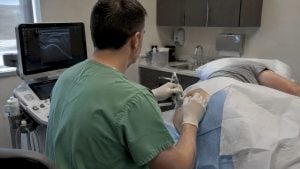

If you have been living with persistent muscle pain that keeps coming back despite stretching, massage, or physical therapy, you may have heard about trigger point injections as a possible next step. Understanding what is trigger point injection, how the procedure works, and what it realistically offers can help you make a more informed decision about your care. This guide walks through the science behind trigger points, the step-by-step procedure, clinical benefits and limitations, and how this treatment fits into a broader pain management plan.
Table of Contents
- Key takeaways
- What trigger points are and why they cause pain
- The trigger point injection procedure, step by step
- Benefits and limitations of trigger point injections
- Risks and side effects to be aware of
- When trigger point injections make sense
- My clinical perspective on trigger point injections
- Trigger point injections at Nortexspineandjoint
- FAQ
Key takeaways
| Point | Details |
|---|---|
| Targeted pain relief | Trigger point injections deliver medication directly into hyperirritable muscle knots to reduce pain and muscle tension. |
| Short-term benefit, not a cure | Clinical evidence confirms injections provide short-term relief and work best as a gateway to physical therapy. |
| Twitch response matters | Eliciting a local twitch response during injection confirms correct needle placement and predicts a better treatment outcome. |
| Local anesthetic preferred | Guidelines recommend local anesthetic alone rather than adding corticosteroids, which carry additional risk without added benefit. |
| Part of a broader plan | Injections are most effective when combined with physical therapy, postural correction, and root-cause treatment. |
What trigger points are and why they cause pain
To understand how trigger point injections work, you first need to understand what a trigger point actually is. Trigger points are hyperirritable muscle knots caused by chronic inflammation and microtrauma. When you press on one, it reproduces pain both at the site and in a predictable referred area, such as a shoulder knot that sends aching into the neck or down the arm.
These knots form when muscle fibers become contracted and cannot fully release. Repetitive strain, poor posture, physical injury, psychological stress, and prolonged inactivity all contribute to trigger point formation. Over time, the affected muscle develops a palpable taut band, and any pressure on that band activates familiar pain patterns.
The clinical impact extends well beyond local soreness. Trigger points can cause stiffness, limit joint movement, and contribute to broader chronic musculoskeletal conditions. A patient with a trigger point in the upper trapezius, for example, may develop restricted cervical rotation that affects daily activities like driving or looking over the shoulder.
Common muscle groups affected include:
- Upper trapezius and levator scapulae: Frequently involved in neck pain, headaches, and shoulder tension
- Infraspinatus and rhomboids: Common sources of mid-back and interscapular aching
- Quadratus lumborum: A frequent contributor to low back pain and hip stiffness
- Gluteus medius and piriformis: Often implicated in sciatic-pattern pain and hip dysfunction
- Temporalis and masseter: Associated with jaw pain and tension-type headaches
Understanding that trigger points produce both local and referred symptoms explains why pain sometimes seems to come from an area that was never directly injured. It also explains why standard imaging like MRI often shows no structural abnormality, even when pain is severe and debilitating.
The trigger point injection procedure, step by step
Many patients arrive at a trigger point injection appointment unsure of what to expect. The process is typically straightforward, takes fewer than 30 minutes, and requires no special preparation beforehand.
-
Palpation and identification. Your provider begins by pressing along the affected muscle to locate the taut band and its most tender point. This hands-on assessment identifies exactly where the needle needs to go. Some providers mark the skin with a pen before proceeding.
-
Skin preparation. The area is cleaned with an antiseptic solution. No sedation or numbing cream is typically needed, though a topical anesthetic is occasionally used for particularly sensitive patients or pediatric cases.
-
Medication selection. The procedure involves injecting medication directly into the trigger point, most often a local anesthetic such as lidocaine or bupivacaine. Saline is sometimes used as an alternative. Adding corticosteroids is generally discouraged because corticosteroids do not increase benefit and may introduce additional risk.
-
Needle insertion and twitch response. The needle is advanced into the trigger point, and your provider looks for a local twitch response, which is a brief involuntary muscle contraction. This response confirms accurate placement. Failure to elicit this response is typically associated with no improvement in symptoms.
-
Medication delivery and needle withdrawal. Once the twitch response is confirmed, the anesthetic is injected while the needle is slowly redirected to cover the trigger point zone. The needle is then withdrawn, and light pressure is applied to the site.
-
Immediate post-procedure assessment. You may feel a brief increase in local discomfort during the injection itself. Within minutes, the anesthetic begins to reduce pain, though mild soreness at the injection site can persist for one to two days.
Pro Tip: Discomfort during needle insertion is actually a positive clinical sign. It indicates that the needle has contacted the trigger point, which is necessary for therapeutic effect. If you feel a brief sharp sensation or muscle twitch during the procedure, that is the response your provider is looking for.
For injections near the upper back, neck, or other anatomically complex regions, ultrasound guidance improves accuracy and safety by allowing the provider to visualize neurovascular structures in real time.

Benefits and limitations of trigger point injections
Trigger point injection pain relief is real and clinically documented, but it is important to understand what the treatment can and cannot do. Setting accurate expectations from the start leads to better outcomes and less frustration.
What injections do well
Trigger point injections deliver rapid, localized pain reduction. The anesthetic interrupts the pain-spasm cycle that keeps a trigger point active, allowing the muscle to relax. This window of relief is functionally significant because it enables patients to participate more effectively in physical therapy, which addresses the underlying biomechanical causes of trigger point formation.
Injections with lidocaine produce less intense and shorter-duration post-injection soreness compared to dry needling without medication. For patients who are sensitive to post-procedure discomfort, this distinction matters when choosing between treatment options.
Trigger point injections vs. dry needling
A common question from patients is how trigger point injections compare to dry needling, since both target the same muscle structures.
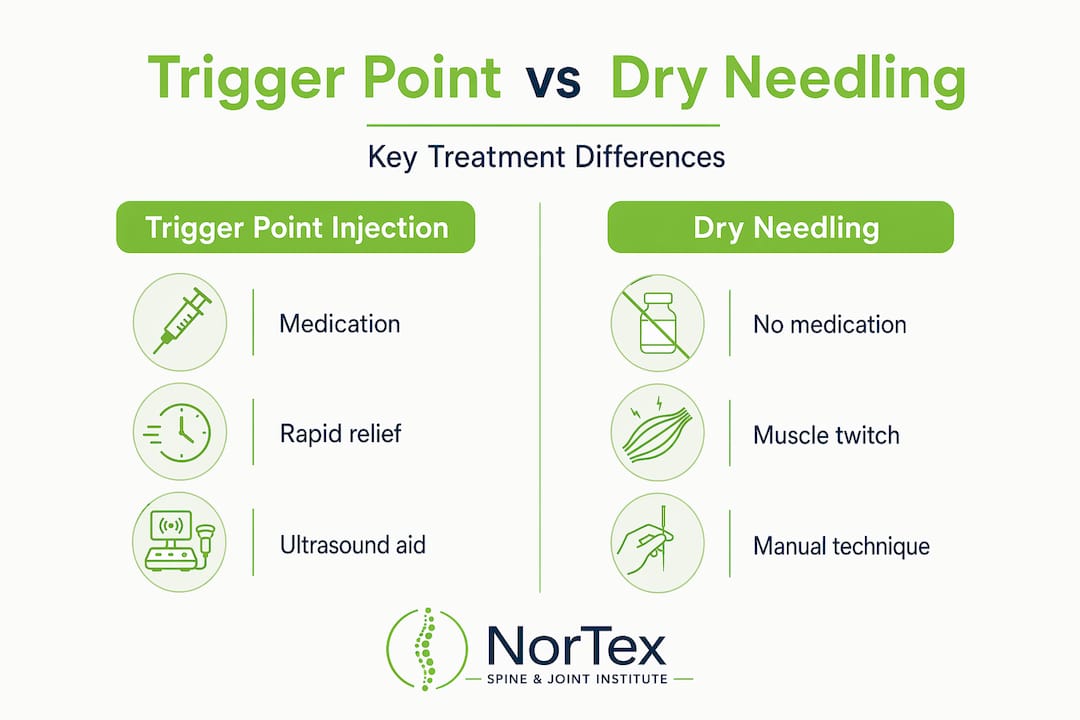
| Feature | Trigger point injection | Dry needling |
|---|---|---|
| Medication involved | Yes (local anesthetic, sometimes saline) | No |
| Post-procedure soreness | Generally less intense | Often more intense and prolonged |
| Short-term efficacy | Roughly equal effectiveness | Roughly equal effectiveness |
| Provider type | Physician or advanced practitioner | Physical therapist or certified practitioner |
| Insurance coverage | More commonly covered | Varies widely |
Limitations you should know
- Trigger point injections do not provide long-term cure and relying on repeated injections alone without addressing underlying causes leads to diminishing returns.
- Relief duration varies widely among patients. Some experience weeks of improvement; others feel relief for only a few days.
- Injections are not appropriate for all patients, including those on blood thinners, pregnant patients, or those with active skin infections at the injection site.
Pro Tip: The goal of trigger point injection therapy is not to replace physical therapy. It is to reduce pain enough that you can do physical therapy more effectively. Think of the injection as creating a window of opportunity, not a permanent solution.
Risks and side effects to be aware of
Trigger point injections are generally well tolerated when performed by an experienced provider. Still, understanding the risk profile helps you weigh the decision clearly.
Common mild side effects include:
- Injection site soreness: Expect some local tenderness for 24 to 48 hours after the procedure.
- Bruising or minor bleeding: Particularly common in patients who take blood-thinning supplements or medications.
- Temporary numbness: A normal effect of the local anesthetic that resolves within hours.
- Lightheadedness: Occasionally reported immediately post-injection, particularly in anxious patients.
Rare but serious risks deserve mention as well. Specialized anatomical knowledge is critical in avoiding complications such as pneumothorax, which is an accidental lung puncture, during injections into the upper back, shoulder girdle, or posterior neck. This risk is negligible in the hands of a trained physician who understands the underlying anatomy, but it underscores why provider selection matters.
Regarding medication safety, adding corticosteroids to the injection mixture is generally discouraged. Current guidelines recommend local anesthetic alone for most trigger point injections because corticosteroids carry risks including local tissue atrophy and systemic effects without producing measurably better outcomes.
For complex cases or injections near vascular or neural structures, ultrasound guidance significantly reduces injury risk by providing real-time visualization. Not every injection requires imaging guidance, but your provider should make that determination based on anatomical location and individual risk factors.
When trigger point injections make sense
Trigger point injections are not typically the first intervention offered. Most providers, including the team at Nortexspineandjoint, recommend them after conservative measures such as stretching, manual therapy, and over-the-counter anti-inflammatories have failed to produce adequate relief.
You may be a good candidate if you have persistent, palpable trigger points that cause reproducible pain and have not responded to several weeks of conservative care. Patients who cannot tolerate physical therapy due to pain severity also benefit from injections as an initial pain-reduction step that facilitates rehabilitation participation.
Frequency and repetition matter. Repeated injections are generally limited to cases where documented benefit has been established from prior treatments. Most practitioners recommend no more than three injection sessions per site within a six-month period, with the expectation that physical therapy is progressing in parallel. Consulting with a pain management specialist who can evaluate your full clinical picture is the most reliable way to determine whether injections fit your situation.
Pro Tip: Before your consultation, keep a pain diary for one to two weeks documenting where your pain occurs, what aggravates it, and what temporarily relieves it. This information helps your provider identify trigger point patterns and determine whether injection therapy is appropriate for your specific presentation.
Trigger point therapy works best as one component of a multimodal pain management strategy that addresses posture, movement patterns, muscle imbalances, and any underlying structural issues. Injections that are not paired with corrective rehabilitation often produce shorter-lasting relief.
My clinical perspective on trigger point injections
I have worked with many patients who come in expecting a trigger point injection to be a definitive solution. They have often tried massage, heat, and stretching for months, and they want the pain to finally stop. I understand that frustration completely. But one of the most important things I can communicate is that the injection is a tool, not an endpoint.
In my experience, the patients who get the most out of this treatment are the ones who use the relief window intentionally. They schedule physical therapy promptly after the injection while the muscle is relaxed, and they work with their therapist on the movement patterns and postural habits that allowed the trigger point to develop in the first place.
I also see a common misconception around how often injections should be repeated. Patients sometimes assume that because the first injection helped, continued injections will produce sustained long-term benefit. The evidence does not support that assumption. What the evidence does support is using injections strategically, within a structured plan, with clear benchmarks for functional improvement.
If trigger point injections help you participate more fully in rehabilitation and you are making measurable progress, that is a success. If you are returning for repeated injections without functional gains between sessions, that is a signal to reassess the overall plan and consider whether additional diagnostic evaluation or a different treatment approach is warranted.
— Felix
Trigger point injections at Nortexspineandjoint
At Nortexspineandjoint, trigger point injections are offered as part of an individualized, non-surgical pain management plan. The treatment is always evaluated in the context of your complete clinical picture, including movement assessment, history, and response to prior therapies.
For patients whose pain extends beyond muscle knots into joint degeneration or tissue damage, we also offer advanced regenerative medicine treatments including platelet-rich plasma therapy and stem cell therapy. These options target the underlying biological environment contributing to chronic pain rather than only managing symptoms. You can also explore PRP therapy for pain relief as a complementary or follow-on treatment, particularly for shoulder, back, or joint-related conditions.
If you are ready to move beyond temporary relief and toward a structured recovery plan, contact Nortexspineandjoint to schedule a consultation with our team.
FAQ
What is a trigger point injection used for?
A trigger point injection is used to relieve pain caused by hyperirritable muscle knots, called trigger points, that produce local and referred pain. It is most commonly used for neck pain, back pain, shoulder tension, and headaches related to myofascial dysfunction.
How long does trigger point injection pain relief last?
Relief duration varies by individual, but most patients experience improvement lasting from a few days to several weeks. Injections are not a permanent cure and work best when combined with physical therapy to address underlying causes.
Is trigger point injection the same as dry needling?
They target the same structures but differ in that trigger point injections use medication such as lidocaine, while dry needling uses a needle alone without any substance. Both have similar short-term effectiveness, but injections typically produce less post-procedure soreness.
What should I expect after a trigger point injection?
Mild soreness at the injection site lasting one to two days is normal. You may feel immediate relief from the local anesthetic, followed by a brief soreness phase before longer-lasting pain reduction takes effect.
Are trigger point injections safe?
Yes, when performed by a trained provider, trigger point injections are considered low-risk. Serious complications such as pneumothorax are rare and largely preventable with proper anatomical knowledge and, when indicated, ultrasound guidance.