
What makes non-invasive pain treatments worth considering?
Non-invasive pain treatments are clinically endorsed, effective alternatives to opioids and surgery for both chronic and acute pain. The CDC’s 2022 Clinical Practice Guideline states that nonpharmacologic and non-invasive therapies are preferred as first-line care for subacute and chronic pain, and are at least as effective as opioids for many common acute pain types. That is not a minor clinical footnote. It reflects a fundamental shift in how evidence-based medicine approaches pain.
The core advantages of these approaches include:
- Reduced pain and improved function without the dependency risks associated with long-term opioid use
- Minimal serious adverse events, as confirmed across systematic reviews supporting American College of Physicians guidelines
- Sustained improvements that often persist after treatment ends, unlike medication whose benefits typically stop when the prescription does
- Applicability across conditions including chronic low back pain, neck pain, osteoarthritis, fibromyalgia, and acute musculoskeletal injuries
- Active patient participation, which supports psychological well-being alongside physical recovery
Conditions that respond particularly well include chronic low back and neck pain, knee and hip osteoarthritis, and tension headaches. For patients who have tried multiple treatments without lasting relief, these methods often offer a more durable path forward.
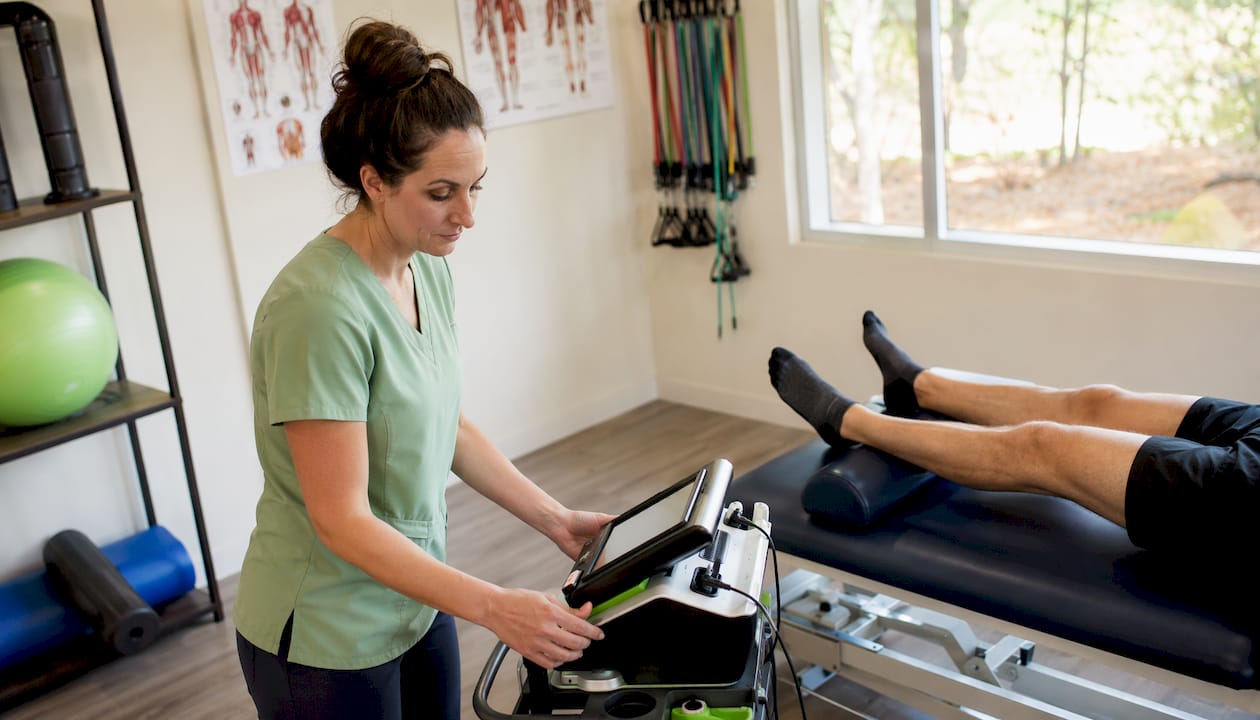
Common types of non-invasive treatments and how they work
Each of the following therapies targets pain through a distinct mechanism. Understanding those differences helps you and your care team select the right combination.
- Physical Therapy: Guided exercise and movement rehabilitation restore strength, flexibility, and neuromuscular control. Exercise-based therapy consistently improves both function and pain across chronic musculoskeletal conditions, with benefits that extend well beyond the treatment period.
- Acupuncture: Fine needles stimulate specific anatomical points, modulating pain signals through the nervous system. Needling therapies provide short-term improvements in pain and function and are most effective when integrated into a broader treatment plan rather than used in isolation.
- Transcutaneous Electrical Nerve Stimulation (TENS): Low-voltage electrical currents delivered through skin electrodes interrupt pain signal transmission. The American College of Physicians and the American Academy of Family Physicians both recommend TENS to reduce pain in patients with acute musculoskeletal injuries.
- Low-Level Laser Therapy (LLLT): Photobiomodulation uses specific light wavelengths to reduce inflammation and promote tissue repair at the cellular level. Research shows LLLT improves both function and pain in the short term for chronic musculoskeletal conditions. For a detailed look at how photobiomodulation supports recovery, particularly for adults over 40, the evidence is growing steadily.
- Cognitive Behavioral Therapy (CBT): CBT addresses the psychological dimensions of chronic pain by restructuring unhelpful thought patterns and building coping strategies. Psychological therapies show moderate-strength evidence for improving both function and pain at short, intermediate, and long-term follow-up.
- Yoga: Combining movement, breath control, and mindfulness, yoga reduces pain and improves function for chronic low back pain and fibromyalgia. Benefits extend into the intermediate term with consistent practice.
- Massage Therapy: Manual soft-tissue work reduces muscle tension, improves circulation, and modulates pain perception. Massage may offer short-term pain and function improvements, though patients should expect possible temporary soreness immediately after sessions.
- Chiropractic Care (Spinal Manipulation Therapy): Spinal manipulation therapy (SMT) delivers small to moderate short-term benefits for pain and function, with a low risk of adverse effects. Like acupuncture, SMT works best as part of a coordinated care plan rather than as a standalone treatment.
How a clinical approach shapes your treatment plan
Accurate diagnosis is the foundation of effective non-invasive pain care. Many patients arrive after trying multiple treatments that addressed symptoms without identifying the actual pain generator. A thorough evaluation, including detailed history, physical and neurological examination, and imaging review when indicated, allows for a personalized treatment plan that targets the root mechanical source of pain.

From there, shared decision-making becomes central. The WHO guideline for non-surgical management of chronic low back pain emphasizes that patient values, goals, and contextual factors must guide which interventions are selected and in what sequence. This is not a one-size-fits-all process.
The goal is not simply to lower a pain score. A function-first approach focuses on what you can do, not just how much you hurt, which improves psychological health and reduces reliance on medications over time. Key elements of a well-structured plan include:
- Identifying specific functional goals (returning to work, walking without limitation, sleeping through the night)
- Integrating complementary therapies that reinforce each other
- Monitoring adherence and adjusting the plan based on your response
- Coordinating across disciplines when needed, such as combining physical therapy with CBT
Pro Tip: Keep a simple daily log of your pain levels and functional activities. Patients who track their own patterns give their care team far more precise data, which leads to faster and more accurate treatment adjustments.
Risks, limitations, and when to consider further care
Non-invasive treatments carry a favorable safety profile overall. Across hundreds of randomized controlled trials, no evidence suggests an increased risk of serious treatment-related harms for any of the major non-invasive modalities. That said, realistic expectations matter.
Key limitations to understand:
- Temporary soreness is common after massage and some manual therapies, particularly in the first few sessions
- Response timelines vary. Some patients notice meaningful improvement within weeks; others require several months of consistent treatment before function improves measurably
- Not every patient responds equally. Factors like pain chronicity, psychological comorbidities, and baseline fitness all influence outcomes
- Access and cost remain real barriers. Insurance coverage for non-invasive therapies is inconsistent, and out-of-pocket costs can limit adherence
Signs that further diagnostic evaluation or escalation may be warranted include progressive neurological deficits, unexplained weight loss, pain that wakes you from sleep consistently, or functional decline despite a well-executed conservative care plan. These are not reasons to abandon non-invasive care entirely. They are signals to reassess the diagnosis and consider whether additional interventions, such as targeted injections or advanced regenerative options, belong in the plan. For patients managing persistent pain, non-opioid relief options can also be explored alongside conservative therapies.
The case for non-invasive care: a clinical perspective
The most common misconception I encounter is that choosing non-invasive treatment means choosing to do nothing. It is the opposite. Physical therapy, CBT, acupuncture, and exercise-based rehabilitation require active engagement. Patients who treat these therapies as passive experiences, showing up but not committing to home exercises or behavioral changes, tend to plateau quickly.
What actually works is a stepwise plan built around an honest diagnosis, realistic goals, and consistent follow-through. Many patients who come in frustrated after years of pain have never had a thorough functional assessment. Once we identify the specific pain generator and match it to the right combination of therapies, the trajectory often changes. Not always dramatically, and not always quickly. But measurably.
The evidence behind these methods is strong enough that the CDC and the American College of Physicians have made non-invasive care the recommended starting point, not a fallback. That clinical consensus reflects what we see in practice: patients who engage fully with conservative care often avoid surgery altogether, or arrive at any necessary intervention in far better condition than those who delayed.
How Nortexspineandjoint supports patients beyond conservative care
When non-invasive therapies have helped but haven’t fully resolved your pain, the next step doesn’t have to be surgery. At Nortexspineandjoint, we specialize in bridging that gap with advanced regenerative treatments, including PRP therapy, stem cell therapy, and customized rehabilitation programs designed for chronic joint, spine, and musculoskeletal conditions. These options target the biological root of pain rather than masking it, and they are built around the same patient-centered, evidence-based principles that guide conservative care. If you’re in the North Dallas area and want a personalized evaluation to determine whether regenerative medicine belongs in your treatment plan, contact Nortexspineandjoint to schedule a consultation.
FAQ
What does “non-invasive treatment” mean for pain management?
Non-invasive treatment refers to therapies that relieve pain without surgery, needles into tissue, or drugs, including approaches like physical therapy, TENS, acupuncture, CBT, yoga, massage, and low-level laser therapy.
Are non-invasive pain treatments as effective as opioids?
Yes, for many common acute and chronic pain types. The CDC’s 2022 Clinical Practice Guideline states that non-invasive, nonpharmacologic therapies are at least as effective as opioids and carry significantly lower risks of dependency and overdose.
How long does it take to see results from non-invasive pain treatment?
Timelines vary by condition and therapy. Some patients notice improvement within weeks, while others require several months of consistent treatment before function improves measurably.
Which conditions respond best to non-invasive pain management?
Chronic low back pain, neck pain, knee and hip osteoarthritis, fibromyalgia, and acute musculoskeletal injuries all show consistent evidence of improvement with non-invasive therapies like exercise, acupuncture, CBT, and manual therapy.
When should I consider moving beyond non-invasive treatments?
Progressive neurological symptoms, consistent pain that disrupts sleep, or measurable functional decline despite a well-executed conservative plan are signs to reassess the diagnosis and discuss whether advanced options like regenerative medicine belong in your care plan.
Key Takeaways
Non-invasive pain treatments are the clinically preferred first-line approach for chronic and acute pain, with evidence supporting sustained improvements in function and minimal serious risks.
| Point | Details |
|---|---|
| Guideline endorsement | The CDC and ACP recommend non-invasive therapies as first-line care before opioids for subacute and chronic pain. |
| Sustained benefits | Multiple non-invasive therapies improve pain and function beyond the treatment period, unlike medications that stop working when discontinued. |
| Safety profile | Across hundreds of randomized trials, no evidence shows increased risk of serious adverse events for major non-invasive modalities. |
| Function-first focus | Targeting what you can do, not just pain scores, improves psychological health and reduces long-term medication reliance. |
| Nortexspineandjoint | Offers PRP therapy, stem cell therapy, and personalized rehabilitation for patients who need care beyond standard conservative treatment. |