
Most patients notice mild to moderate soreness at the donor site and some swelling at the injection site, both of which typically ease within days to a few weeks. Minor complications such as bruising or transient numbness are common and resolve on their own, while serious problems are rare. Call your healthcare provider right away if you develop a fever, a rapidly expanding hematoma, bleeding that will not stop, spreading numbness, or sudden loss of function in the area.
TL;DR:
- Most patients experience mild to moderate soreness and swelling that typically improve within two to four weeks, with serious complications being very rare.
- The most discomfort occurs between 24 and 72 hours after the procedure, but pain, swelling, and numbness usually fade steadily afterward.
- Proper aftercare, including applying pressure for bleeding, using ice, and limiting activity, significantly impacts the comfort and speed of recovery.
- Harvest site pain is usually lower with a single-stick technique and can be further minimized by choosing appropriate anesthesia and site based on individual factors.
- Persistent symptoms beyond four weeks, or worsening numbness or swelling, should prompt immediate consultation with your healthcare provider.
Table of Contents
- What to expect day by day for the first four weeks
- Aftercare essentials: pain control, wound care, and red flags
- Your two-week recovery checklist
- Why recovery varies: harvest site, technique, and patient factors
- What happens at the injection site and how to respond
- What we hear from patients and how we plan for comfort
- How we support patients through BMAC recovery
- FAQ
- Sources
What to expect day by day for the first four weeks
Recovery after marrow harvest for a BMAC or stem cell injection tends to follow a predictable arc, and knowing the pattern helps you judge whether your own experience is on track. On the day of the procedure, you will be monitored briefly, have a pressure dressing applied, and bleeding will be confirmed stopped before you go home. The next two to three days are usually the most uncomfortable, with soreness and bruising at the donor site peaking and sometimes a short-lived flare at the injection site itself.
From there, most symptoms fade steadily over the following weeks:
- 24 to 72 hours: Donor-site soreness and bruising are at their worst; some patients feel a brief increase in joint or spine discomfort where the concentrate was injected.
- One to four weeks: Swelling and soreness resolve for most people; small areas of numbness or a residual hematoma may linger before fading completely.
- Beyond four weeks: Persistent symptoms are uncommon. If soreness, numbness, or swelling has not meaningfully improved by this point, it is worth a follow-up conversation with your provider.
A systematic review of stem cell-based injections found that most adverse events are transient swelling and pain that resolve within this one to four week window, which lines up closely with what we see in practice.
Aftercare essentials: pain control, wound care, and red flags
Good aftercare in the first two days does more to shape your comfort than almost anything else in the recovery process. The basics are simple, but they matter: control bleeding early, keep the dressing clean, and know what symptoms deserve a phone call rather than a wait-and-see approach.
- Apply firm pressure to the donor site for 5 to 10 minutes if any bleeding occurs, then keep the dressing dry and intact for about 48 hours.
- Start with acetaminophen for pain unless your clinician has specifically approved something stronger; NSAIDs are often avoided in the first days because they can affect platelet function and bleeding risk, particularly if you take blood thinners.
- Use ice for the first 24 to 48 hours on both the donor site and the injected joint or spine area, and keep the limb elevated when possible to limit swelling.
- Limit strenuous activity for several days, and avoid soaking the dressing in a bath, pool, or hot tub until your clinician clears you.
An institutional patient care sheet echoes this approach: press firmly if bleeding starts, keep the dressing dry for 24 to 48 hours, and watch for increasing redness or drainage, which can signal infection rather than normal healing.
Contact us promptly if you notice a fever, redness that is spreading rather than fading, heavy or uncontrolled bleeding, a hematoma that keeps growing, or numbness that worsens instead of improving.
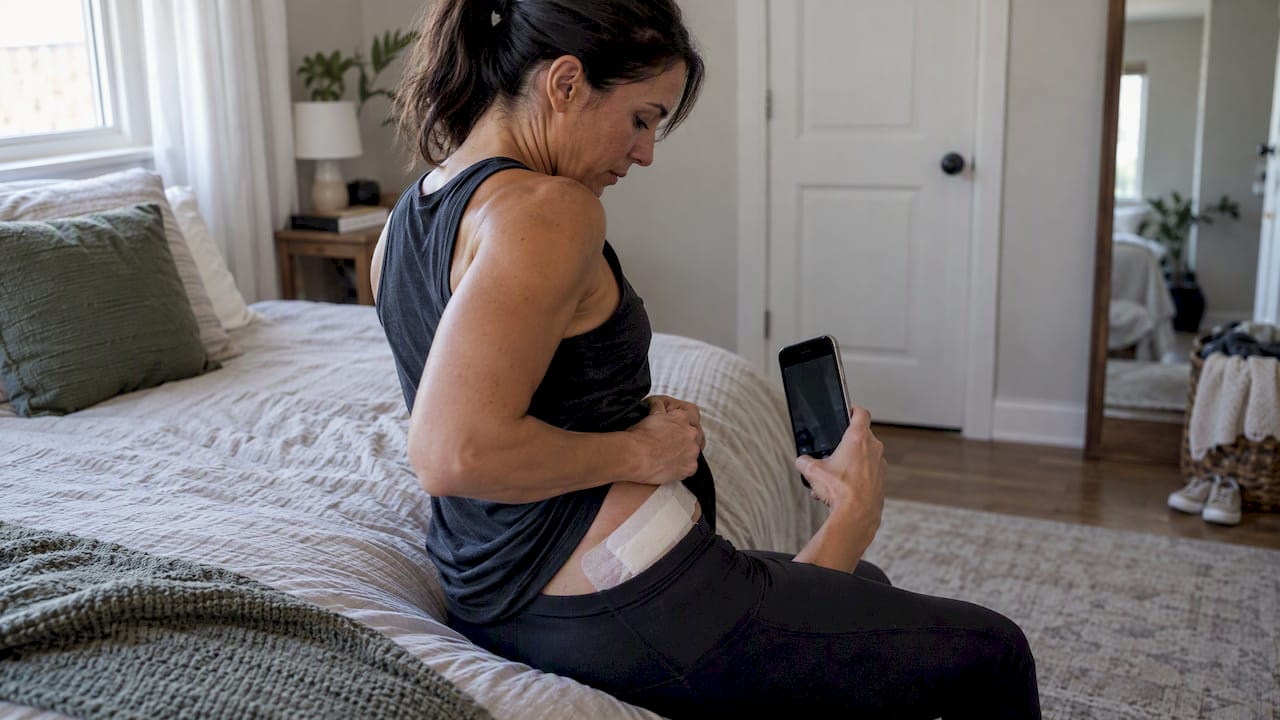
Pro Tip: Take a photo of the donor site on day one so you have a clear baseline to compare against if swelling or bruising seems to be changing over the following days.
Your two-week recovery checklist
Having a simple sequence to follow removes a lot of the guesswork that otherwise fills the first two weeks after harvest.
- Day 0 to 1: Keep pressure on the dressing if needed, avoid driving if you received sedation, and arrange a ride or help at home for the rest of the day.
- Day 2 to 7: Walk gently to support circulation, check the wound daily for changes, take scheduled pain medication as directed, and expect some disrupted sleep from soreness.
- Day 8 to 14: Gradually resume normal daily activity, taper off pain medication as symptoms allow, and note whether the injected area feels steadily better.
- At your follow-up visit: Bring notes on pain levels, any swelling patterns, and how your function has changed so your provider can judge whether recovery is progressing as expected or whether the visit needs to be moved up.
Most patients are back to light daily activity well before the two-week mark, though full return to higher-impact exercise is usually a separate conversation tied to how your joint or spine responds over the following months.
Why recovery varies: harvest site, technique, and patient factors
Not every patient recovers at the same pace, and the differences usually come down to a handful of identifiable factors rather than chance. Harvest site is one of the biggest: the iliac crest remains the most common site because it offers a strong balance of cell yield and manageable discomfort, while alternative sites like the tibia or humerus are sometimes chosen when positioning or proximity to the treatment area makes sense, as described in a technical note on harvest site selection.
Technique also plays a measurable role. A comparative study of aspiration methods found that a single-stick technique with redirection produced cell concentrations similar to a multiple-stick approach, while causing significantly less pain both during the procedure and in the 24 hours afterward. Single-stick harvesting is favored whenever the clinical situation allows it, as it tends to reduce immediate discomfort without compromising the quality of the sample.
Anesthesia choice shapes comfort as well:
- Local anesthesia alone is common for outpatient procedures but is associated with higher pain scores during trocar insertion and aspiration.
- Local anesthesia plus IV sedation reduces pain during these steps, according to a comparison of outpatient and inpatient BMAC procedures, though overall complication rates stay similar between the two approaches.
- Patient-specific factors, including anxiety level, bone density, anticoagulant use, and operator experience, all influence how much discomfort a given patient reports.
A prospective study of nearly 500 bone marrow aspirations reported a median pain score of 3.5 on a standard scale, with lower scores at the iliac crest compared with other sites, and found that clear pre-procedure education measurably reduced both anxiety and reported pain.
What happens at the injection site and how to respond
The joint or spine area that receives the BMAC injection goes through its own short recovery, separate from the donor site. It is common to feel transient swelling, stiffness, or a flare of discomfort for several days to a few weeks after injection, which reflects the body’s inflammatory response to the concentrated cells rather than a problem with the procedure itself.
- Mild swelling or stiffness in the first week is expected and usually improves with rest and ice.
- A pronounced effusion or severe swelling is uncommon but may require your clinician to aspirate the joint; this warrants a prompt call rather than waiting it out.
- Conservative care including brief rest, ice, and protected activity resolves most flares without further intervention.
- Analgesics such as acetaminophen can bridge the discomfort while the inflammatory response settles, though you should check with your provider before combining medications.
A retrospective series of BMAC-treated knees reported meaningful harvest or injection-site complications in about 5.3% of cases, nearly all of which resolved with conservative measures.
What we hear from patients and how we plan for comfort
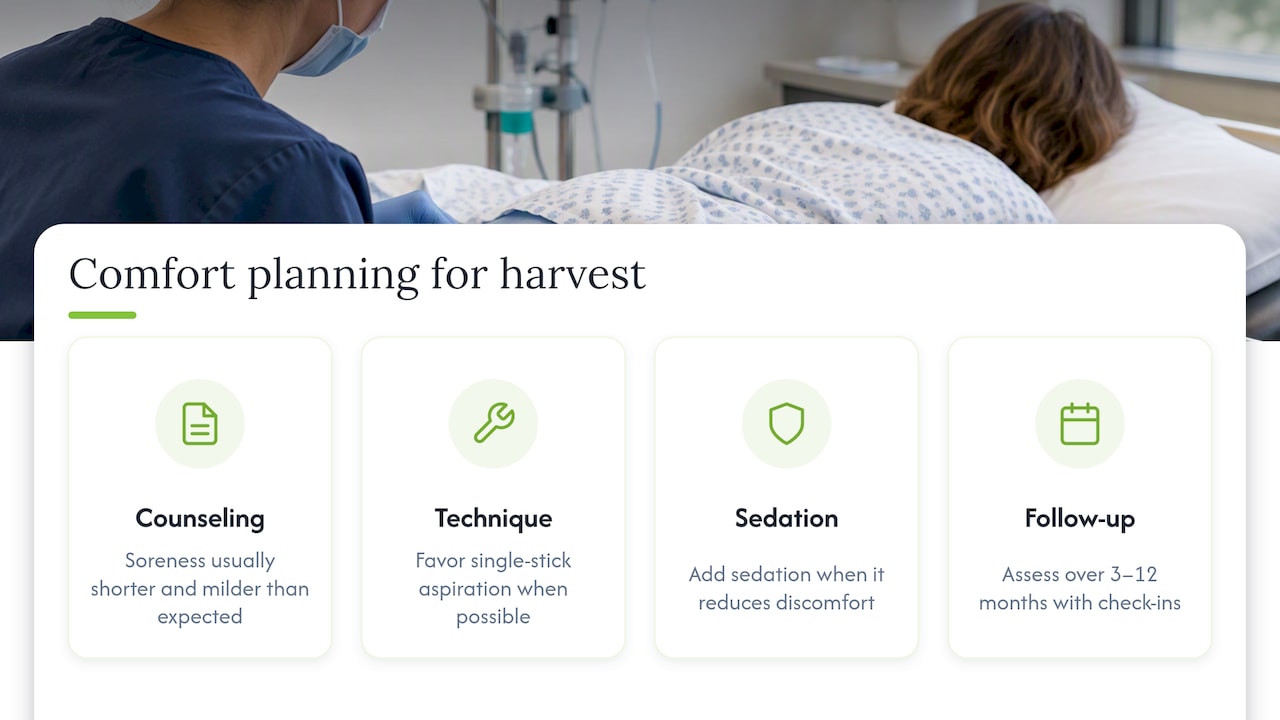
Many patients come in after trying injections, physical therapy, or even considering surgery, and they are often more anxious about the harvest than the injection itself. In practice, the soreness tends to be shorter and milder than people expect, which is part of why clear counseling before the procedure matters.
The choices of harvest site, needle technique, and anesthesia are based on each patient’s anatomy, anxiety level, and medical history, favoring single-stick aspiration and added sedation when likely to reduce discomfort without affecting the sample. Functional improvement from the regenerative injection itself is usually assessed over three to twelve months, not days, so we set that timeline early and check in along the way rather than expecting rapid change.
— Felix
How we support patients through BMAC recovery
We built our regenerative medicine program around the idea that harvest and injection are just the beginning of your care, not the end of it. Beyond the procedure itself, our regenerative medicine services include structured follow-up and, when helpful, physical therapy to guide you back to normal activity at a pace that matches how your body is healing.
- Our bone marrow stem cell therapy page walks through what the harvest and injection process involves before you ever schedule a visit.
- Our physical therapy team coordinates with your treating physician so rehabilitation timing matches your recovery stage rather than a generic schedule.
- Patients recovering from joint injections often find our PRP recovery guidance useful for activity pacing, since many of the same principles apply.
If you are weighing whether a BMAC or stem cell procedure fits your situation, or you want to talk through anesthesia options and what recovery would look like for you specifically, reach out to schedule a consultation through our regenerative medicine page.
This article is general information, not a substitute for advice from a qualified doctor. Consult a qualified healthcare professional about your own circumstances before acting on anything here.
FAQ
How long does bone marrow aspiration recovery usually take?
Most donor-site soreness and bruising improve within one to two weeks, with full resolution of swelling and minor symptoms typically by four weeks. Full functional benefit from the regenerative injection itself is judged over a longer window, often several months, separate from the harvest site healing.
What are the most common complications after bone marrow aspiration?
The most frequent issues are transient swelling, soreness, bruising, and occasional mild numbness at the harvest site, most of which resolve without treatment. A systematic review found an overall transient adverse event rate of about 12.3% across studied patients, with no major complications reported in the short term.
Does a single needle stick hurt less than multiple sticks?
Yes, a comparative study found that redirecting a single needle produced similar cell yields to multiple separate punctures while causing significantly less pain during the procedure and in the following 24 hours. We use this technique when the clinical situation allows it.
When should I call the clinic after my procedure?
Contact your clinic promptly for fever, bleeding that will not stop with pressure, a hematoma that keeps expanding, spreading redness, or numbness that worsens rather than improves. These are not typical parts of recovery and deserve prompt evaluation rather than a wait-and-see approach.
What determines how much pain I’ll feel during the procedure?
Anesthesia choice, harvest site, and needle technique all play a role. A study comparing outpatient and inpatient cases found that adding IV sedation to local anesthesia reduced pain during aspiration compared with local anesthesia alone, though complication rates were similar either way.