
Medial branch ablation can meaningfully reduce facet-joint neck or back pain for patients whose pain source has already been confirmed. The procedure works by disrupting the small nerves that carry pain signals from the facet joints, and it often provides months of relief for patients who respond well to diagnostic testing beforehand. The typical next step is a set of medial branch blocks, usually two, to confirm the joint as the true source of pain. We recommend discussing your block results and overall risk profile with a spine or pain specialist before scheduling the procedure.
TL;DR:
- Relief from medial branch ablation typically lasts from several months up to a year, with six-month success rates ranging from 45% to 63%.
- Candidates must respond to two separate diagnostic medial branch blocks showing at least 80% pain relief to qualify for ablation.
- The procedure involves heat to disrupt nerve pain signals, not joint repair, and some nerve regeneration can cause pain to return.
- Risks are low but can include temporary numbness, bruising, infection, or nerve injury, with careful guidance reducing these dangers.
- Proper diagnostic testing and patient selection are essential, as ablation is most effective when the true pain source is confirmed through dual comparative blocks.
Table of Contents
- What medial branch ablation actually does
- Who is a candidate: diagnostic pathway and selection criteria
- What to expect before, during, and after the procedure
- Risks, benefits, and what the evidence shows
- RFA versus injections and other conservative options
- Clinician perspective and safety checks before RFA
- How I counsel patients weighing this decision
- How we approach medial branch ablation at Nortex
- FAQ
- Sources
What medial branch ablation actually does
Each facet joint in your spine is supplied by small sensory nerves called medial branch nerves. When a facet joint becomes irritated or arthritic, these nerves carry the pain signal to your brain. Medial branch ablation, also called radiofrequency ablation or radiofrequency neurotomy, uses heat to interrupt that signal at the nerve itself.
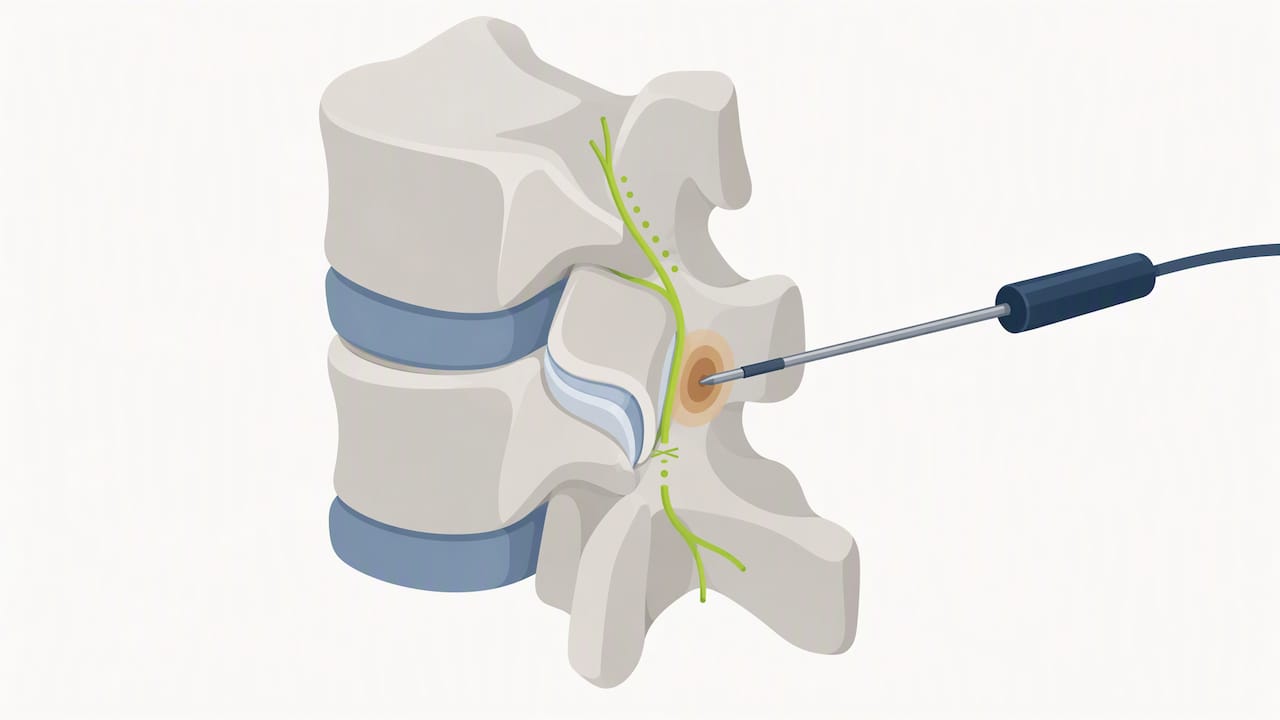
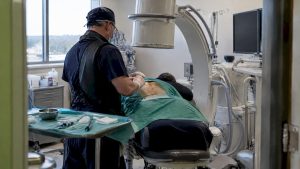
During the procedure, a needle is guided to the nerve using fluoroscopic X-ray imaging, then a radiofrequency current creates a small thermal lesion. Most clinics use conventional heat-based RFA, though pulsed and cooled variants exist and are used in select cases.
A few points matter when you are weighing this option:
- RFA interrupts pain signaling, it does not repair the arthritic or degenerated joint underneath.
- Relief is often substantial but temporary, since nerves can regenerate over time.
- The procedure works best when the correct nerve has already been identified through diagnostic testing.
Patients sometimes expect RFA to “fix” the joint. It does not. It quiets the nerve that reports pain from that joint, which is a different and more limited goal, but one that can still meaningfully improve daily function.
Who is a candidate: diagnostic pathway and selection criteria
Candidacy for medial branch ablation depends almost entirely on how you respond to diagnostic medial branch blocks (MBBs), not on imaging findings alone. An MBB involves injecting a small amount of local anesthetic around the suspected medial branch nerve. If your pain drops significantly afterward, that joint is likely the source.
Most guideline-concordant protocols require two separate diagnostic blocks performed on different days, a practice known as dual comparative blocking, before recommending RFA.
Many guidelines and Medicare coverage policies require relief of 80% or more on dual comparative blocks before approving radiofrequency ablation, a threshold described in CMS facet joint intervention coverage guidance. This high bar exists because a single block carries a real chance of a false positive from placebo response or spread of anesthetic to nearby structures. Requiring two consistent responses filters out patients unlikely to benefit from the longer-lasting procedure.
A typical diagnostic and selection sequence looks like this:
- Clinical history and exam suggest facet-mediated pain, often worse with extension or rotation.
- A first diagnostic medial branch block is performed under fluoroscopy.
- A second, confirmatory block is performed on a separate visit.
- Relief meeting the guideline threshold on both blocks supports moving to RFA.
RFA is less likely to help when pain stems primarily from disc disease, nerve root compression, widespread fibromyalgia-type pain, active infection, uncontrolled bleeding disorders, or pregnancy. Patients with these presentations usually need a different workup.
What to expect before, during, and after the procedure
Before your appointment, we review your medications, since blood thinners often need to be paused under your prescribing doctor’s guidance. You will sign consent paperwork and should plan for a ride home, since mild sedation is sometimes used.
During the procedure, you lie face down while the skin is numbed locally. Using fluoroscopic guidance, the physician positions a needle at each targeted medial branch nerve. Sensory and motor stimulation tests confirm correct placement before the actual lesioning begins, which helps avoid affecting nearby motor nerves. The ablation itself takes only seconds per level, and the full visit typically runs 30 to 45 minutes.
Afterward, most patients experience:
- Mild soreness at the injection sites for a few days, similar to a muscle strain.
- A short window, sometimes one to two weeks, before the fuller pain-relieving effect becomes noticeable.
- A routine follow-up visit to assess response and function.
Pro Tip: Track your pain level daily for the first two weeks after RFA so your follow-up visit reflects an accurate picture rather than a single good or bad day.
Many patients come in after trying physical therapy, medications, and injections without durable results, and the ablation is often the next logical step once blocks confirm the facet joint as the source.
Risks, benefits, and what the evidence shows
Radiofrequency neurotomy has accumulated a meaningful evidence base over the past decade, and it is worth understanding what that evidence actually supports rather than relying on anecdote.
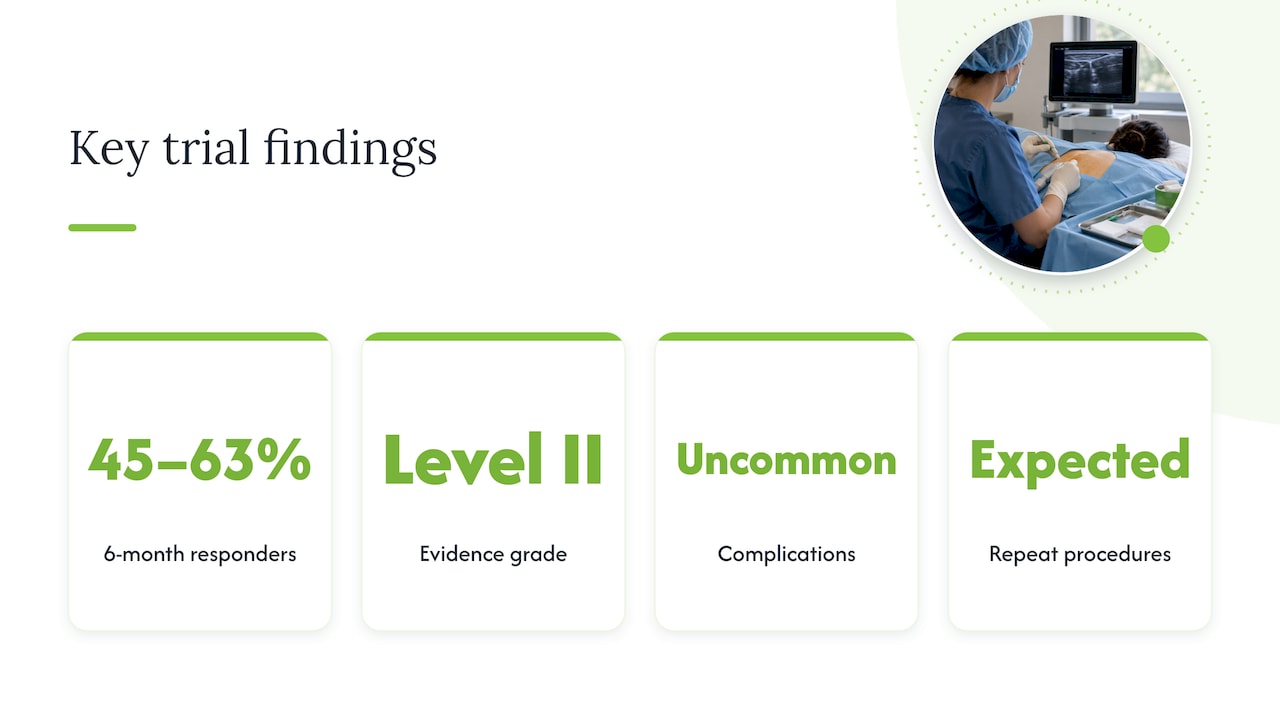
A systematic review and meta-analysis of randomized trials found Level II evidence supporting both short-term and long-term improvement in chronic low back pain for patients selected through diagnostic blocks with at least six months of follow-up. That is a meaningful evidence grade in interventional pain medicine, though it still reflects a mix of trial designs and patient groups rather than a uniform guarantee.
Six-month responder rates for at least 50% pain reduction typically range from about 45% to 63%, depending on patient selection rigor and technique, according to research on guideline-concordant dual block selection. Outcomes tend to improve when dual comparative blocks are used strictly and when the electrode is placed parallel to the nerve rather than perpendicular to it.
That same trial found no statistically significant difference between the two techniques, so neither should be assumed superior based on this result alone.
Complications are uncommon but can include temporary numbness, localized bruising, infection, or, rarely, unintended injury to a nearby motor nerve. Careful fluoroscopic guidance and motor testing before lesioning substantially reduce these risks. Because medial branch nerves can regenerate, relief is not permanent, and repeat procedures are a normal and expected part of long-term management rather than a sign of failure.
RFA versus injections and other conservative options
Intra-articular facet injections and therapeutic medial branch blocks can relieve pain, but that relief is often measured in weeks rather than months. RFA tends to last considerably longer in patients who were properly selected through diagnostic blocks, which is why many specialists reserve it for confirmed responders rather than offering it as a first step.
Conservative care, including physical therapy and oral medications, remains the reasonable starting point for most new facet-mediated pain, and regenerative options such as PRP are sometimes used adjunctively, though evidence for PRP in facet pain specifically is still limited compared with the RFA literature. Patients interested in broader non-surgical management strategies may find helpful information in joint pain causes and treatment options.
Practical factors that shape the decision include:
- How strongly and how consistently you responded to prior diagnostic blocks.
- Whether your goal is short-term flare control or longer functional improvement.
- Your willingness to repeat a procedure every several months to a couple of years.
- How your insurance plan or benefits structure the coverage for blocks versus ablation.
Clinician perspective and safety checks before RFA
When patients ask us whether RFA is right for them, the conversation almost always starts with their block results, not their MRI. A clean dual-block response tells us far more than imaging does about who will actually benefit.
Before moving forward, it is reasonable to ask your provider:
- What imaging guidance will be used during the procedure.
- How many diagnostic blocks were performed and what relief percentage they produced.
- What the physician’s experience level is with spinal interventional procedures.
- What sterile technique and complication protocols are in place.
Pro Tip: Bring your block results in writing to any RFA consultation. The relief percentage and duration matter more to your candidacy than how the pain feels today. You can review a fuller safety checklist for radiofrequency ablation before your visit.
How I counsel patients weighing this decision
I tell patients the same thing every time: RFA is a tool, not a cure, and it works best when the diagnostic groundwork has been done properly. Skipping or rushing the dual-block process almost always leads to disappointing results later. We weigh your functional goals, how you tolerated the diagnostic blocks, and your comfort with the idea of a repeat procedure down the line against what the evidence actually supports, not what we wish it supported. When the blocks confirm the joint, I am comfortable recommending RFA as a reasonable next step. When they do not, we look elsewhere.
— Felix
How we approach medial branch ablation at Nortex
We offer diagnostic medial branch blocks and radiofrequency ablation as part of non-surgical care plans tailored around your specific pain pattern and block results rather than a one-size-fits-all protocol. Our physicians walk through fluoroscopic imaging, candidacy criteria, and realistic timelines with you before any procedure is scheduled.
If you are preparing for a consultation, bring:
- Any prior spine imaging, including MRI or X-ray reports.
- A current medication list, especially blood thinners.
- A short symptom diary noting what worsens or eases your pain.
You can learn more about our lumbar radiofrequency neurotomy procedure or cervical facet radiofrequency neurotomy for neck pain, or review how we evaluate candidates through medial branch blocks. When you are ready to discuss your back pain therapy options, schedule a consultation with our team.
This article is general information, not a substitute for advice from a qualified doctor. Consult a qualified healthcare professional about your own circumstances before acting on anything here.
FAQ
Is medial branch ablation painful?
Most patients describe the procedure itself as causing brief pressure or a warm sensation rather than sharp pain, since the skin and deeper tissue are numbed first. Mild soreness at the injection sites for a few days afterward is common and typically resolves with rest and over-the-counter pain relief.
What are the downsides of nerve ablation?
The main downsides are that relief is temporary rather than permanent, since medial branch nerves can regenerate, and that a meaningful share of patients, even after careful selection, do not respond well. Less common risks include temporary numbness, bruising, infection, or irritation of a nearby nerve.
How long does a medial branch ablation last?
Relief commonly lasts from several months up to about a year or more, though individual duration varies based on selection rigor and technique. Six-month responder rates range from roughly 45% to 63% for at least 50% pain reduction, according to research on dual-block patient selection, and repeat procedures are a normal part of long-term management.
How long does it take to recover from a nerve ablation in the knee?
Genicular nerve ablation for knee pain follows a similar recovery pattern to spinal RFA, with mild soreness for a few days and noticeable pain relief often developing within one to two weeks. Most patients resume normal daily activity quickly, though strenuous exercise is usually limited for a short period after the procedure.